I Don’t Care Whether You Understand My Movies (Anymore)

By Christopher Nolan

Christopher Nolan's Next Movie is Getting an IMAX Summer 2020 Release |  IndieWire

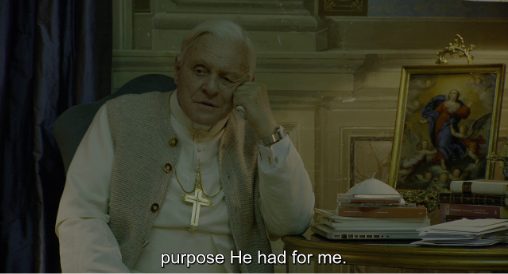
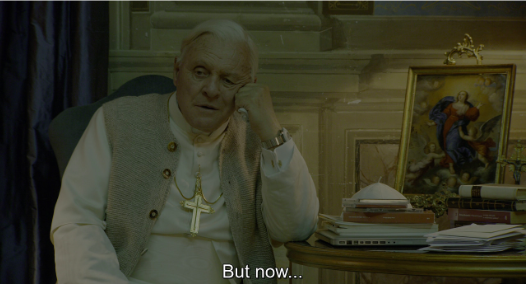
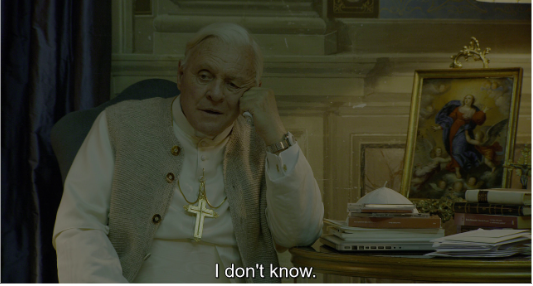
There was a time in my life in which I believed it mattered whether the miserable cretins who viewed my films understood what was happening. It was a dark time, reader. I struggled mightily to provide the ill-bred masses with the petty satisfactions they required, employing degrading techniques designed to explain my ingenious, chronologically non-linear plots to even the stupidest of dolts who consumed them.

Yes, reader, I engaged in shameful behavior, lowering my films to the tastes of their basest audiences. I used such abominable devices as “exposition” and “audible dialogue.” I even (forgive me) took the time to write coherent and explanatory endings, designed to fill in whatever points audiences may have missed in their feeble understanding of my sweeping artistic vision. NO MORE! My latest magnum opus, Tenet, is free from such demeaning restraints. 

No longer will I task my considerable genius with “accessibility” or “coherence.” My audiences are, plainly, dumb and worthless, and they will henceforth be treated as such. Of course their feeble minds don’t understand my breathtaking reflections on the nature of time itself, so why should I bother debasing my work for their sake? Don’t understand the intricate workings of Tenet’s time mechanics? Imbecile. Here are some buildings blowing up to satisfy your toddler-esque attention span. Unclear on who a particular character is or where they came from? Too bad, now they’re punching somebody else you’ve never seen before, does that satisfy your infantile lizard brain? Confused by the ending? Not my problem, focus on the big, shiny guns I put in just to entertain idiots like you. Enjoy the flashy lights and shut the hell up. This is cinema. There’s no time to accommodate the dimwits who can’t keep up, I’m making art here. If prolonged landscape shots, car chases of ambiguous purpose, and inexplicable gunfire don’t satisfy your shallow cravings for petty entertainment, I have nothing further to say to you. 

Christopher Nolan is a writer and director. His latest film, Tenet, is in theaters now. 

~

This piece of satire was guest-written by Sam Shideler. Sam is a sophomore at the University of Oklahoma, where his academic pursuits are best articulated as “reading, writing, and regarding STEM majors with contempt.” His hobbies include referring to movies as “films,” pretending to understand classical literature, and suffering at the hands of Oklahoma City Thunder basketball.

Top 20 Movies of 2020 (So Far)

Screen Shot 2020-08-20 at 5.39.19 PM.png

Guest Review by Jonathan Dorst

Many movie theaters are reopening today. For how long, nobody knows, but hopefully for good. I last saw a movie in a theater in early March, so I’m ready (I think) to go back to seeing new releases on the big screen. And there are a number of tantalizing films set to come out in the last four-plus months of this year, including The Personal History of David Copperfield (8/28), Christopher Nolan’s Tenet (9/3), Quiet Place Part II (9/4), I’m Thinking of Ending Things (Netflix 9/4), Antebellum (9/18), Sofia Coppola’s On the Rocks (October), David Fincher’s Mank (October), Wonder Woman 1984 (10/2), Trial of the Chicago 7 (10/16), Wes Anderson’s The French Dispatch (10/16?), The Courier (10/16), Black Widow (11/6), Pixar’s Soul (11/20), Denis Villeneuve’s Dune (12/18), Coming 2 America (12/18), and Spielberg’s West Side Story (12/18).

But, if you think there haven’t been any good movies that have been released up to this point in 2020, you haven’t been paying attention. Some came out before the pandemic, some went to streamers or VOD when theaters were not an option, and some were released as planned through a streamer. One note: Although some multi-episode documentaries (like OJ: Made In America) have won Oscars and been considered a ‘feature,’ I chose not to include them on this list, so Tiger King and The Last Dance would be part of a top television list instead. One more note: As always, don’t take the inclusion of a film as a blanket endorsement of its content; you are responsible to research the content and determine if certain movies are appropriate for you.

20. Bad Education– Hugh Jackman shows off his versatility in this telling of a true story of embezzlement in the public school system.

19. Radioactive– A good biopic that makes the interesting decision to show the downside (in jarring flash-forwards) of the protagonist’s historical contribution.

18. Downhill– A not-as-good-as-the-original remake of a very good Danish film, still Will Farrell and Julia Louis-Dreyfus give good performances in this serious comedy.

17. The Truth– A bit of a cliched premise about an actress mother and her flawed relationship with her daughter, but it’s Juliette Binoche and Catherine Denueve, so it’s a must see.

16. Tigertail– A thoughtful film that tells the story of an immigrant’s struggle to connect in his new land while reconciling what he’s lost back in his homeland.

15. The Vast of Night– An interesting, slow-burn of a film about strange happenings in the sky in New Mexico in the 50’s that I suspect will get better with repeated viewings.

14. Arkansas– A minor, but enjoyable entry in the ‘loveable loser drug dealer’ genre; Liam Hemsworth is terrific playing against type.

13. The Invisible Man– An effective thriller that is a not-too-subtle metaphor for the psychological oppression that powerful men can administer on women.

12. The Old Guard– A superhero film that takes consequences seriously.

11. Da 5 Bloods– Spike Lee’s exploration of the Vietnam War and its effects, as well as his continued exploration of America’s racial history- the acting is great, but the tone and pacing is all over the place.

10. Young Ahmed– The Dardenne brothers’ latest about a young teenaged boy being influenced by a radical Islamic imam.

9. To the Stars– A movie about small-town Oklahoma in the ‘50s that tells the age-old tale of the shy, bullied kid who gets courage from the extroverted, courageous friend, but with some twists that keep it fresh.

8. Ordinary Love– Two great actors (Lesley Manville and Liam Neeson) telling a slice-of-life story that made me want to watch more of their life together.

7. Palm Springs– A very funny take on the Groundhog Day premise that doesn’t quite earn its happy ending but is still very memorable and enjoyable.

6. Athlete A– The emotional story of how USA Gymnastics failed to protect its female gymnasts from predators like Larry Nassar.

5. The Assistant– A day in the life of an administrative assistant who serves her unnamed boss in a Weinstein-like film production company; we see how powerful men got away with so much for so long as we watch her try to raise a red flag in an atmosphere where no one is motivated to change anything.

4. The Trip To Greece– The 4th film in the ‘Trip’ series, this is the most poignant as Rob and Steve follow in the footsteps of Odysseus and ponder their mortality. 

3. Driveways– A beautiful film about people in different stages of life connecting and making the best of their situation.

2. Sorry We Missed You- British filmmaker Ken Loach has been making great social commentary films for a long time, and this one takes aim at companies taking advantage of workers in this ‘gig economy’ while telling an affecting story of a family trying to thrive, or at least survive.

1. Hamilton– I know this really came out as a musical in 2015, but it’s not the first play to be filmed and released as a movie (consider Bergman’s The Magic Flute and Powell’s The Tales of Hoffman), and everything about this production is just. so. good.

Bonus: Worst Movie of the Year (so far, that I’ve seen)- Harley Quinn: Birds of Prey

A Guide to Beyonce’s “Black is King”

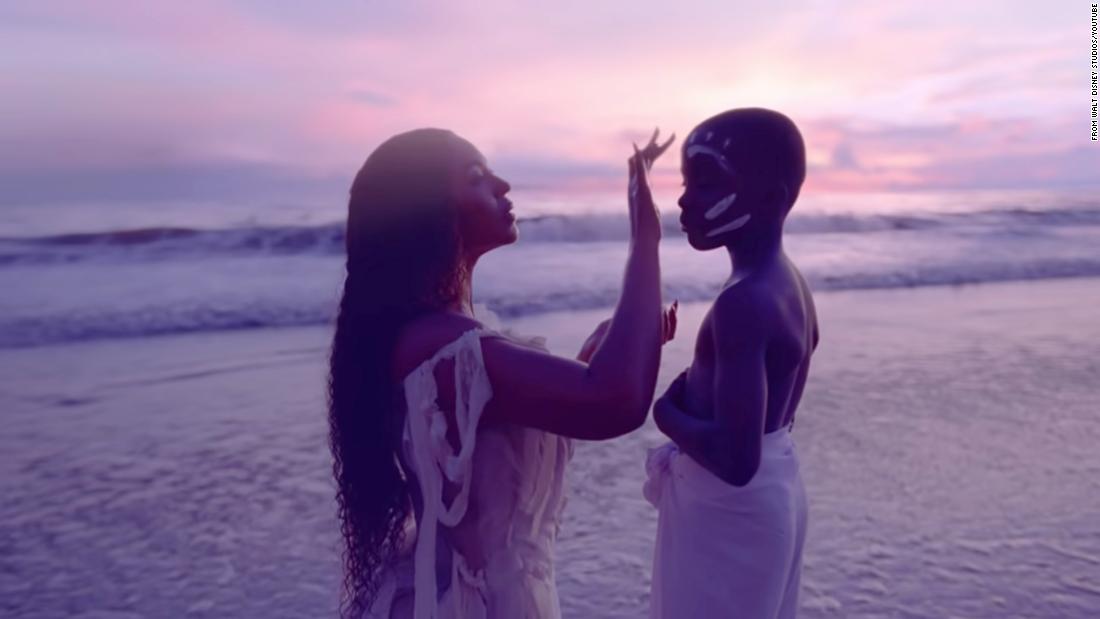
200728131808-restricted-screengrab-01-beyonce-black-is-king-super-tease.jpg

On July 31st, Disney+ released Black is King, a visual album by Beyonce. It functions as a sort of movie-length music video that puts visuals to Beyonce’s 2019 album The Lion King: The Gift, which was created by Beyonce for the release of last year’s live-action remake of The Lion King, where she voiced Nala. Black is King follows the storyline of the film abstractly, and there are short audio clips from the film to help move it along. 

Because this is debuting on Disney+, which markets itself as a family-oriented streaming service, and is not a typical film in most regards, I thought it would be helpful to try something different. Instead of a normal review, I’d like to offer some observations and questions that can guide your viewing of Black is King, whether you watched it and would like to learn more about what messages and artistic reference you may have missed, or you’re a parent interested in watching Black is King with your children and would like to cultivate a fruitful discussion of the film (although the film probably won’t interest young children, I’d suggest pre-teen and up). 

As always, this isn’t an endorsement of the film or a suggestion that it is appropriate for all ages and families.

Initial Feelings after Finishing the Film:

  1. How do you feel? Did you like the ending? Were you engaged throughout the movie, or did some parts feel boring?
  2. Did you like it? Give some reasons for why or why not.
  3. Did you like the music? Did it make you want to dance? Do you think it is catchy?
  4. Do you think the visuals matched the music? How so? Did any shot or visual stick out to you as memorable?
  5. There are a lot of spoken-word sections (where Beyonce or others are talking over the music and visuals). Were there any lines that stuck out to you?
  6. Do you imagine visual albums/ feature-length music video films growing in popularity? What are the pros and cons of the medium?

Talking about Race and Black Identity:

1. Black is King was filmed in various African countries. The music is inspired by African music traditions, there are cameos by artists from all over Africa, the costumes were inspired by African fashions, and there are references to various African mythologies and legends. Recognizing, of course, that Africa is not a monolith but is made up of different countries and hundreds of sub-cultures, did the film spark your interest in learning more about Africa, or in any particular parts of African culture?

2. Black is King is explicitly about Black empowerment. It encourages Black people to embrace their heritage, to take pride in their culture and community, and to use their gifts and talents to help build a better future. In a world where Black people are often seen as disposable and are overlooked, Black is King relishes in presenting Blackness as complex, regal, intellectual, spiritual, dynamic, and worthy of respect and attention. Many of the songs are pieces of activism, such as “BROWN SKIN GIRL,” which lovingly reminds Black girls of their beauty, fighting against the very-real stigmas of colorism.

If you are Black, how did Black is King make you feel? (Parents- as with all of these questions, remind your kids that it’s okay to feel ambivalent). Did the film feel relatable, or like Beyonce was talking to you? If you are white or non-Black, how did you feel? Black is King has no prominent white or non-Black characters- was that strange or unusual for you? Did you feel like you learned anything new? Did you feel inspired?

3. In her seminal work Sister Citizen, Melissa Harris-Perry makes the argument that “the internal, psychological, emotional, and personal experiences of black women are inherently political.” Her argument essentially says that because the perspective of Black women has been silenced for much of American history, and stereotypes about Black women persist so much in popular culture, when a Black woman is at the forefront of a narrative, it is inherently political and even transgressive in white-dominant cultures. First, what do you think about this as a theory? Is it fair? And then second- Is Black is King political? How or how not? Does it feel political?

4. Throughout the album, and especially in the song “MOOD 4 EVA(the song with Jay-Z that takes place in a mansion), Beyonce talks about her wealth and opulence (fairly standard for celebrities). But through this and her other work, she seems to make this statement: Beyonce and Jay-Z, in being successful and rich, and showing that off, is a source of empowerment for all Black people. Because Black Americans are more likely to be of lower-income, it is inherently progressive and even radical to present Black people who are wealthy and successful, because it presents both an idea of what could (and even should) be, and presents a positive representation of the abilities of Black people.  

What do you think of this? Is Beyonce right? Can showing off wealth and opulence be empowering, particularly for minority groups? Is Beyonce and Jay-Z’s (presented) lifestyle aspirational?

Homages and References:

1. Did Black is King help you appreciate The Lion King any more? Were you able to follow the storyline of Simba in Black is King, or was it too abstract? Do you think Black is King could stand alone, without the influence of The Lion King?

2. The opening sequence is a retelling of Exodus 2:1-10, where Moses’s mother puts him in a basket and sends him down the Nile to escape the slaughter of all the Hebrew boys. Moses is a large figure in African American music, especially in gospel songs that were sung by enslaved people to speak about freedom. What might Beyonce be referencing by showing it here? And are there any similarities between Moses and Simba from The Lion King?

3. There is a concept called the “Christ-Like Gaze” in film, outlined by this excellent article. It puts forth the idea that cinematography- the way the camera films subjects- can be used to look at people the way Christ looks at us. The three tenants of a “Christ-like gaze” in a movie is this: 

  1. The film sees people as being complex and filled with inherent worth and dignity. The movie doesn’t watch characters with cynical dispassion. Instead, a Christ-like gaze approaches the characters in warmth. Practically, this means the camera doesn’t objectify characters (such as focusing on body parts for sexual attention). There is often a focus on the facial expressions and eyes of a character. The camera is usually at eye-level with the subject.
  2. A Christ-like gaze means the film isn’t only concerned with the plot. The characters act beyond being used as plot devices. The story- and the camera- pays attention to little details and truths about life. Does the film take time to observe beauty? Are there any moments of quietness?
  3. Movies can (and should) depict suffering honestly, but a Christ-like gaze ends in hope. Hope is not blind optimism, nor is it the removal of consequences. But hope knows that there is a resurrection and healing coming.

So with all of that being said- does Black is King have a Christ-like gaze? Does the camera treat the Black bodies on-screen with care and present them as beautiful? How is the scenery treated? How do the choices in hair and costuming contribute to the presentation of Beyonce and the other stars? Is this an uplifting film, and in what regards?

Further reading:

NPR- “‘Black Is King’ Is A Sumptuous Search For Divine Identity”

Vox- Beyonce presenting herself as African Goddess Osun

The Root: Some of the cameos in Black is King

Vox- Framing Black Bodies as Art in “Apeshit”

            –  Madeleine D.


The 10 Best Things of 2020 (So Far)

While 2020 is probably not going down in the history books as a great year overall, there have been some bright notes when it comes to movies, art, and pop culture. Here is a list of 10 things from different mediums from the first half of 2020 that I recommend!

MOVIES

Onward

I never got around to reviewing Onward, but if I had known at the time it was going to be the last movie I would get to see in theatres for a long time, I may have. Outside the strange nostalgia this movie now holds for me, it is a solid Pixar flick, full of the studio’s characteristic charm, creativity, and excellent writing. It’s got some of the best visual gags I’ve ever seen and is laugh-out-loud funny in parts. The film stylistically feels less like Pixar and more like Dreamworks, but the story- and the gut-wrenching twist ending- is very much in line with the studio that can always make us cry. And here, it’s earned, pivoting from a more conventional story about fathers to one that celebrates people who step into the place of our parents in their absence, like friends, mentors, helpful strangers, and siblings. 

Young Ahmed

Watch every movie by the Dardennes brothers. End review. 

I’m not kidding, but if you’ve never seen a brother by these Belgian filmmakers, Young Ahmed is as good an introduction as any into their style (The Unknown Girl is also a good start and my personal favorite.) The Dardenne’s stories are small, intimate affairs, usually only tracking one or two characters as they wrestle with a choice of some sort. In Young Ahmed, the titular Ahmed is a teenage boy who is embracing Islamic extremism, and who feels called to kill his teacher, who he sees as a traitor of the Quran. 

This premise has a lot of landmines in it, but if any filmmaker has an empathetic, nonjudgmental, and deft hand, it’s the Dardennes, who allow the internal journey of Ahmed (Idir Ben Addi) to play out without making any moralizing or political statements. They do this by simply allowing the story to see Ahmed as who he truly is- a young man, trying to discover the truth and who to listen to, a search for identity and meaning that is universal. 

While the stakes of Young Ahmed are inherently high, the tension is ratcheted up by the stripped-down style of the Dardennes. For example, the movie has little-to-no music in it, which means there are no cues given to the audience that something terrible is about to happen. Scenes can turn on a dime, but because the style is so naturalistic and observational, you never know the direction the story is going, and there are no editing tricks to foreshadow was is about to happen. Young Ahmed is, therefore, challenging and ambiguous on many levels but is all the richer an experience for it. 

TV

Tiger King

Like the rest of the world, I spent the first few weeks of quarantine caught up in Netflix’s unmissable tragicomedy of hubris and dysfunction, Tiger King. As an Oklahoman, the series is devastating. It feels like every time we get in the news, it’s for something bad! Why do we have to become synonymous with a figure like Joe Exotic? When will Oklahoma get some good representation? It’s a great place! But admittedly, we do have our eccentricities, and it has been fun to hear stories from friends about how they’ve met Joe Exotic or gone to his zoo, like one of my professors who, during one of our classes over Zoom, apologetically told us: “I have a confession. I went to the Tiger King zoo. My son and I touched the baby tigers. I am so ashamed.”

While I was disappointed as an Oklahoman, as a consumer of entertainment, I was delighted. Each episode ramps up to an unbelievable degree, and the payoffs are incredibly satisfying. The drama is ridiculously juicy, and the cultural impact the series made was likewise entertaining and certainly needed during the first dark days of the pandemic (in the United States). Maybe that’s what Joe can truly be proud of. He never became president or governor but he has united us through our shared astonishment.

I was thoroughly enjoying the schadenfreude of the show, all the way up to the last episode until I learned that Joe was in jail. Then suddenly, I felt numb. Sad. Guilty. I was laughing at the pain of all of these people. Sure, Joe being in jail may feel like righteous irony. But what is he going to learn in jail? Probably nothing, so there’s no redemption here. Being in jail doesn’t change any of Joe’s past sins nor will it probably change him. It doesn’t restore his and Carol’s relationship. If Carol killed her husband, we’ll never know. Jeff Lowe and Doc Antle are still on the loose. And as the final captions tell us, tigers are still endangered and none of the people we saw in the show are doing anything to save them from captivity. We can gawk at this trainwreck all we want, but what has come out of our consumption of another’s misery? 

That question, of course, comes up in discussions of all types of movies, and Tiger King certainly can’t be pinned down as the one documentary out there that profits off of other people’s indignity. And, admittedly, none of my discomfort with the show means I’ll stop enjoying Here Kitty Kitty. 

Better Call Saul Season 5

The smartest choice Vince Gilligan and Co. made when creating Breaking Bad prequel series Better Call Saul was to… not make it like Breaking Bad. Sure, the shows share characters and setting and symbolism by design, but in structure and tone, Better Call Saul doesn’t try to re-do the elements that make Breaking Bad great. Instead, it confidently strides in its own restrained, small-scale way. The slower pace and subtle style of BCS can be frustrating, for sure, and it has made many viewers abandon the show in earlier seasons. But in season 5 things begin paying off big-time, and your patience is more than rewarded as we continue on this unstoppable train towards corruption. 

What makes season 5 stand out from the other season, besides some of its most stylistic episodes yet and spotlighting Lalo Salamanca (Tony Dalton) as its newest charismatic villain, the series finally commits to one its most interesting twists yet- that this show is no longer about Jimmy McGill/Saul Goodman. We already know how he ends up, and the psychological origins of his corruption has been explored enough. Instead, our question mark, the real antihero of the show, whose fate we don’t know and who remains a wildcard, is Kim Wexler. Actress Rhea Seehorn has worked deliberately and quietly the past few seasons, comfortably standing her ground beside Bob Odenkirk’s flashier Jimmy. But now the long-suffering intensity of Kim, and Seehorn’s performance, is breaking through and getting to shine as the tables flip and suddenly Jimmy is the one looking at Kim and wondering, who has this person become? With the sixth and final season on the horizon, that’s a question I’m invested in waiting for, along with the ever-present, “will there be any more Breaking Bad cameos???” 

BoJack Horseman Season 6

I’m ashamed to admit that for a long time, I have had a secret prejudice against adult animation. I have no bases for this bias, I’ve just never seen a commercial for an adult animated show and thought it would be something I would enjoy. However, I’m here to apologize and send a message to anyone who similarly has never given adult animation a try: watch Netflix’s BoJack Horseman. 

BoJack Horseman is a hard sell, and it takes about eight episodes into the first season to get going. It tells the story of fading ‘90’s sitcom star BoJack Horseman (Will Arnett), who is an anthropomorphic horse in a Hollywood filled with a colorful combination of human and animal characters voiced by dozens of celebrity cameos and grounded by the fantastic main cast of Arnett, Allison Brie, Amy Sedaris, Aaron Paul, and Paul F. Tompkins. If you get through the first few episodes and get acclimated to the world of the show, then the payoff is more than worth it. 

The writing and animation is witty and clever, but it’s also surprisingly heartbreaking. BoJack Horseman offers a nuanced portrait of what it looks like to live with depression, and it handles the difficulties of all types of human relationships with sensitivity and care, and without resolving anything easily. It holds its protagonist accountable for his actions without losing empathy. 

Much has been said about BoJack Horseman’s examination of celebrity, mental illness, trauma, #MeToo men, and death, and I feel that most everyone could find something or someone to relate to in the series. For me, what I was most drawn to is the way the show reminds us life is not like a sitcom or any other type of film or television narrative.

As someone who spends a lot of time invested in fictional stories, I can get caught up in believing that my life, too, must have the structure of a fictional story, with easy-to-understand motivations, conflicts that escalate into a singular climax, and problems that can be resolved with perfect closure. Like BoJack himself, I secretly wish life was more like a 22-minute sitcom, where people can get hurt but relationships are always are repaired by the end, and people can change (for the better) easily and quickly and permanently, and all loose ends are tied up by the credits. But Bojack Horseman refuses to conform to the standards of its own thirty-minute episodic format, and BoJack learns that his own life and his actions cannot move forward in a linear, progressive fashion. 

In this sixth and final season of the show, BoJack makes a genuine change in his life, with a mid-season penultimate episode offering what in most shows would be a satisfactory ending for our lovable antihero. But in BoJack Horseman, no sins go unremembered, and this happy ending is swiftly followed by a full reckoning of the previous five seasons of the pain and dysfunction BoJack has caused. Being held accountable for his past actions means that we have to watch the new, genuinely productive life BoJack builds for himself get taken away, which is difficult to watch, and what it leads to is not a happy ending. But it is a uniquely restorative ending, an ending that doesn’t offer platitudes or false consolation but remains resolutely grounded in hope. The hope that we can change, the hope that we can heal, the hope that life can get better, and the hope that undergoing painful transformations will be worth it in the end.

Other

“Why is Cats”

By Lindsay Ellis

Lindsay Ellis- film critic, video essayist, podcast host, and now published author- has been one of my favorite creators/thinkers for a while now, and I’ve referenced her work a few times on this blog. She tops herself again with this Youtube video essay breaking down 2019’s monstrosity Cats. The unique take here though is that beyond dunking on Cats (which there is still plenty of), she uses the film as an opportunity to break down the history of movie musical-adaptations, how director Tom Hooper’s “realistic” styling that Academy voters love just can’t jibe with musicals, and why we love ridiculing people and things on the internet. 

Heartwarming Penguins (that almost made me cry)

This picture of two penguins who lost their partners and came together to comfort one another is one of the most precious things I have ever seen. Wholesome animal content for the win!

The Great C.S Lewis Reread 

By Matt Mikalatos

Soon after our campus shut down and we were all sent back home, a few friends and I decided to keep in touch by doing a book club of C.S Lewis’s The Chronicles of Narnia. It had been a while since I had read the books, and suddenly escaping back into the fantasy world of my childhood sounded like a great idea. 

Tor.com publishes a lot of great content, but this series of essays going through the seven Narnia books are exceptionally good. Author Matt Mikalatos has clearly done his research and approaches Lewis’s work from a place of sincere respect, with an effort to understand where Lewis was coming from and the basis of his beliefs. This means Mikalato’s criticism is made in good faith and is much more thoughtful than some of the lazier Lewis criticism out there that doesn’t make an effort to understand the context in which he wrote. 

These essays are engaging and capture a vibrant conversation between Mikalatos, the text, C.S Lewis, and you. Even if you aren’t actively reading the books as you read the essays, there are still plenty of fun facts about Lewis, food for thought, and theology to be found. The three essays I recommend the most are this examination of Aslan and whether or not he is an allegorythe Green Lady and modern-day enchantment, and Sacraments in the Voyage of the Dawn Treader. The first two can be read without being familiar with the series. 

Kanopy & Hoopla

Since the 2020 summer blockbuster season has been steamrolled by Coronavirus, this is the perfect time to go back and watch older films! My favorite place to find free films are two services that can be accessed through your library card: Kanopy and Hoopla. 

Hoopla has a selection of mid-range films and smaller gems, including some where I’m not sure if they are student films or not, but are nevertheless delightful in their absurdity (see VelociPastor and Santa Jaws below). Hoopla also has e-books, comics, and music. 

Kanopy is a more curated streaming service where, depending on your library, you can borrow around 6 films a month. Kanopy has a wide variety of educational programs, documentaries, foreign films, and small indies. 

Both services are wonderful and it’s worth checking to see if your library offers either of them. People in Tulsa- the public library system offers Hoopla. Norman people- the Pioneer Library System offers Kanopy. Here are a few of the best films on each service to check out:

Great Films on Kanopy:

Hunt for the Wilderpeople (also on Hoopla)

The Last Black Man in San Francisco

First Reformed (also on Hoopla)

Lady Bird

Eighth Grade

The Parts You Lose (Also on Hoopla)

Room (also on Hoopla)

What We Do In The Shadows (also on Hoopla)

Memento (also on Hoopla)

Great Films on Hoopla:

Adopt a Highway

Short Term 12

Ex Machina (also on Kanopy)

RBG

Jiro Dreams of Sushi

Life, Animated

American Woman

The VelociPastor

Santa Jaws

-Madeleine D. 

10 Best Things of January – June 2019

10 Best Things of July – December 2019

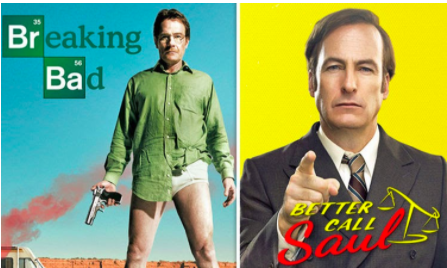
The Elder Brothers of Breaking Bad and Better Call Saul

Screen Shot 2020-05-21 at 10.52.22 AM

*Spoilers for Breaking Bad, Better Call Saul, and El Camino below

For the past 9 weeks, my heart has been in Vince Gilligan’s Land of Enchantment. I have watched, for the first time, Breaking Bad, El Camino: A Breaking Bad Movie, and Better Call Saul. I’m 12 years late to the party, but I’m here! Therefore, this is not a review about how amazing these shows and movie are, because by now that’s a pretty well-established fact. Instead, I want to examine an overarching theme of the Gilligan-verse.

In both TV shows, we see a reenactment of the biblical parable of the prodigal son, with a special emphasis placed on understanding the Elder Brother character. Walter White of Breaking Bad and Chuck McGill of Better Call Saul are archetypal elder brothers to Jesse Pinkman and Jimmy McGill/Saul Goodman, respectively. These characters become case studies of the unique failings of both Elder Brothers and Younger Brothers, as depicted in the prodigal son parable. These allegorical connections are part of what makes Breaking Bad and Better Call Saul such rich examinations of morality.  

The Parable

The Prodigal Son narrative appears in Luke 15:11-32 when Jesus tells a series of parables to a group of Pharisees. In the story, there is a rich man with two sons. The younger son asks his father for his share of the inheritance (an extremely disrespectful action). The father gives it to him, and the son runs off. He squanders the money “in reckless living” (v. 13, ESV). When he runs out of money, there is a famine in the country he is in. The only work he can find is feeding pigs (which, when considering Jewish dietary laws, symbolizes a great spiritual deprivation). The son decides to go back to his father and to offer himself up as a hired servant in order to pay back his debt. He knows his father is a kind man, and he will be treated better as a servant for him than he is now.  But when the younger son returns home, his father runs to meet him and immediately embraces him back as his son and puts on a celebration, declaring that the son “was dead, and is alive again; he was lost, and is found’” (v. 22). The son, despite his failings, has been forgiven and fully reconciled with the father. 

Meanwhile, when the elder brother, who has remained faithful to his father, hears about this, he becomes angry and refuses to join the celebration. His father comes out to try to bring him in, but the brother argues that it is unfair that while he has always served the father, it is his younger brother, who acted so shamefully, who is now being celebrated. The elder son has served his father out of duty and a desire to be recognized, not out of love. The father responds that “‘Son, you are always with me, and all that is mine is yours” (v. 31). The parable ends without any reconciliation between the brothers or between the older brother and the father. 

Better Call Saul 

Better Call Saul is a more straightforward telling of the prodigal son story with the literal brothers of Chuck and Jimmy McGill. Chuck (Michael McKean) is the older brother who is a brilliant, respected, accomplished lawyer, and is nearly impossible to please. He casts a long shadow over his younger brother Jimmy (Bob Odenkirk), who has a messy past and is more than willing to take a few shortcuts to get his way. Chuck operates in a completely black-and-white worldview. He is a staunch legalist who puts all of his trust in the law. He shows little capacity for mercy or grace. Because he sees Jimmy cut corners and get things without working as hard for them as he did, Chuck is full of self-righteous anger. 

Pastor Timothy Keller writes in his book The Prodigal God that “Elder brothers base their self-images on being hardworking, or moral, or members of an elite clan, or extremely smart and savvy” (61). Chuck does all of these things, and because he defines himself as being diametrically opposed to Jimmy, he refuses to recognize any of these characteristics in his brother. This means Jimmy, even at his best, can never earn Chuck’s love and approval. This is part of the reason he gives up on being good altogether and embraces the Saul Goodman moniker. 

Chuck’s resentment towards Jimmy is best reflected in the words of the older son to the father in the parable after he hears of the celebration for his brother:

“‘Look, these many years I have served you, and I never disobeyed your command, yet you never gave me a young goat, that I might celebrate with my friends. But when this son of yours came, who has devoured your property with prostitutes, you killed the fattened calf for him!’ [The father responds:] ‘Son, you are always with me, and all that is mine is yours. It was fitting to celebrate and be glad, for this your brother was dead, and is alive; he was lost, and is found’” (v. 29-32). 

The joy of the father’s inheritance has always been available to the older son. Being with the father is itself a gift. Likewise, a joyful relationship with his brother and personal satisfaction in his own accomplishments has always been possible for Chuck. But he self-sabotages both because he’s too preoccupied with the perceived unfairness of how he’s been treated compared to Jimmy. He sees any grace extended towards Jimmy as unfair, and isn’t unfairness the antithesis of the law? It is for a legalist who hasn’t experienced mercy. 

The tragedy of Chuck is that he is too focused on what he deems “fair” to see what is loving and kind. Even when Jimmy is at his humblest, Chuck continues to cut him down. Chuck did all the “right” things, but without the right heart, it leads to nothing. Chuck dies alone in his house, with nothing of value to show for himself. His story ends with alienation from joy and from his brother, just like the elder brother in the parable.

Amill Santiago writes in “Better Call Saul and the Ache for Approval” that, “The two broken brothers are trying to get essentially the same thing through very different ways: immorality and moralism… [But] In Christ we can be received and approved despite our moral failures (cf. 1 Tim. 1:15) and independently from our moral performance (cf. Eph. 2:8-9).” Chuck and Jimmy, like the Elder and Younger brother, are both trying to fill holes in their hearts for affirmation and reward, but simply in different ways. In this sense, Better Call Saul invites viewers to examine the ways in which they lean towards the younger brother or elder brother mindset, and the follies of both. The show understands, like the parable, that neither approach to life- duty and joyless obligation like Chuck, or self-centered rebelliousness like Jimmy, are satisfactory ways to have relationships with God or others. 

But, unfortunately for the McGill brothers, Better Call Saul is also a show about how seemingly minute choices put people on a path towards destruction from which they eventually find themselves unable to escape. There is no father/God figure in Better Call Saul who disrupts the road to destruction and redeems his wayward children, who stops Jimmy McGill from becoming the Saul Goodman we know in Breaking Bad. In this regard, Better Call Saul’s fatalism is at odds with the Prodigal Son parable. But despite this, there is still great value in the way the show prompts audience introspection, and how Better Call Saul shows other characters land in the middle of the extreme older brother-younger brother spectrum. Kim, Howard, Mike, Nacho, and others move around from one end of the spectrum to another, and this fleshes out how anyone can “break bad,” and the many incarnations this can take. This variation is what makes the show so compelling. 

Breaking Bad

In Better Call Saul, the older and younger brother dynamic is more straightforward because it plays out in the central sibling relationship between Chuck and Jimmy. But in Breaking Bad, Walt and Jesse are not brothers, nor is their relationship dynamic that of brothers. Instead, Walt and Jesse have a twisted father and son relationship (one of forced co-dependency). This means that the older/younger brother dynamic doesn’t play out so much in their interpersonal relationship as much as it does through their symbolic standings in society.

Walter White (Bryan Cranston) is a quintessential elder brother in his world. When we meet him in the pilot, he’s a mild-mannered high school chemistry teacher who keeps his head down and is a steady father and husband. He is seen as the beta male to his DEA brother-in-law, Hank’s, alpha machismo. Walt feels emasculated by his wife Skyler. He feels underappreciated and underestimated. He is full of unrecognized genius, and therefore full of bitterness to those around him who do not recognize this genius. When he is diagnosed with lung cancer, he’s been dealt an undeniably crappy deal. But he chooses to let this be the reason why he indulges in self-pity and becomes unbelievably cruel. This is because, “The first sign [of] an elder-brother spirit is that when your life doesn’t go as you want, you aren’t just sorrowful but deeply angry and bitter. Elder brothers believe that if they live a good life they should get a good life” (Keller, 56). In El Camino, Walt tells Jesse in a flashback, “You’re lucky, you know that? You didn’t have to wait your whole life to do something special.” Walt wants the same thing as Jesse, but has spent his life trying to get it in a different way. Elder brothers try to gain what they want through loveless obedience, and become disillusioned when their efforts don’t pay off.  

Walt’s cancer diagnosis puts him in contrast to Hank when Hank is shot by the twins and loses his ability to walk. While Walt’s pain reveals pride, anger, bitterness, and entitlement, in the end, Hank uses his pain as a catalyst to become a better man, husband, and DEA agent. For Walt, “The good life is lived not for delight in good deeds themselves, but as calculated ways to control their environment” (Keller, 58). When he loses control of his environment, the Heisenberg that was always inside him does everything necessary to regain control, which means becoming a menace to everyone, especially to those in his own home. Walt feels that he’s earned the right to play Heisenberg, to live out this childish power fantasy because he has acted good and has been repressed for so long. He helps justify this with his mantra of doing it all “for his family,” a lie he holds onto until the very end, when he finally admits to Skyler in the episode “Felina” that he did it all for himself. In Walt, we see that the elder brother mindset is a ticking time bomb. When the elder brother feels cheated, or that his “good life” hasn’t paid off in the way he expected, he lashes out in self-righteous pride and anger. He is unable to relate to others with grace and mercy because he refuses to accept it himself, and nothing will ever be good enough for him. 

On the flip side, you have Jesse Pinkman (Aaron Paul), who (despite actually being an older brother in his biological family) is a classic younger brother. In the parable, “The [younger brother] humiliates his family and lives a self-indulgent, dissolute life. He is totally out of control” (Keller, 39). This is how we meet Jesse at the beginning of the show. He’s considered by his family and respectable society to be an embarrassment; a wayward junkie, too dumb and unruly to ever do anything of value. He’s seemingly squandered all potential and resources he has for a life of easy living and drugs. Literally the third sentence Walt says to Jesse in the pilot is, “Honestly, I never expected you to amount to much.” 

Throughout the series, Jesse has quite a few “eating with the pigs” moments, from S02E04 “Down” when he’s kicked out of his house and spends the night on the floor of the Krystal Ship, covered in portapotty sludge and wearing a facemask, to being a meth-cook slave to neo-nazis by the end of the series. And that’s just the physical desolation; Jesse is constantly haunted by guilt and remorse and keeps being pulled further and further in over his head into the life of crime he was never cut out for. Jesse, unlike Walt, is brought low enough to see his need for forgiveness and redemption. It’s easy to imagine him saying the words of the younger brother at his lowest points- “I have sinned against heaven and before you. I am no longer worthy to be called your son” (v. 21). But because there is no God/father figure in Breaking Bad either, Jesse turns to all sorts of self-flagellation to try and replicate this forgiveness, from rehab and its philosophy of unconditional self-acceptance, to mind-numbing partying, to helping the DEA, to going through a personal hell in captivity. We see here that the younger brother’s life of gluttony and self-fulfillment leads to great personal consequences. If the younger brother doesn’t come to see the error of his ways, this self-destructiveness is a never-ending spiral. If the younger brother does see the error of his ways, then he needs forgiveness and reconciliation to be able to move past his failings. 

In El Camino, Jesse gets his happy ending (as happy as one can be in Breaking Bad), and the older brother/younger brother’s differences are further parsed out. When Jesse escapes captivity, he is able to rely on his friendships and connections to help get him to Alaska. He doesn’t have Walt’s pride and is able to use his relationships with Skinny Pete, Badger, Old Joe the junkyard guy, his parents, Ed, and the memories of Mike and Jane to guide him. In the end, Jesse is, in part, saved by his reliance on others and their prodigal mercy towards him, while Walt dies utterly alone, having severed all relationships because he saw them primarily as transactional. Jesse as the younger brother experiences a restoration. Walt refuses every chance given to him of restoration with himself, his family, and moral society. 

While Better Call Saul invites viewers to consider themselves and whether they are an older or younger brother and how such mindsets lead down equally dangerous roads, Breaking Bad is focused more on the ending of the parable. Better Call Saul’s lack of a father/God figure means neither Chuck nor Jimmy get redemption. Breaking Bad gives Jesse as the younger brother a reconciliation, but leaves the elder brother Walt’s ending as unresolved, just like the parable. This zeros-in on a key point of understanding the parable. Jesus was talking to a group of Pharisees, hyper-religious men who loved the law over God and enforcing the law over loving others. By leaving the elder brother unreconciled, Jesus sends a clear message to the Pharisees- you look down on the younger brother sinners of the word, but your fates will be much worse if you do not see the hatred in your own hearts.

Breaking Bad, too, seems to think that being an elder brother can be potentially worse than being a younger brother, conveying this through both the respective endings for Walt and Jesse and also through the show’s tight-rope balance of pushing the audience to align themselves with Walt, only to then remind you of Walt’s monstrosity. By doing this, the show puts up a mirror and makes you realize how easily you too are swayed into his self-serving, self-righteous, entitled mindset. Perhaps it is easier in our current society to be elder brothers- and much more dangerous as well. These shows focused on morality come to similar conclusions to that of Jesus’ parables- that bitterness, anger, resentment, a lack of mercy, and entitlement are all key roots of evil.

-Madeleine D.

Movies for Holy Week

Screen Shot 2020-04-04 at 5.45.57 PM.png

By Jonathan Dorst

Holy Week is the highlight of the Christian calendar, the week when the church remembers and dramatizes the events between Jesus’ triumphal entry into Jerusalem (Palm Sunday) and His resurrection (Easter). In addition to the two Sundays, many churches celebrate Maundy-Thursday, the night when Jesus celebrated the Passover meal with His disciples (see John 13-17), and Good Friday, the day when Jesus was crucified and laid in the tomb.

2020 will be a year that will be remembered for many things, but one very sad thing we’ll remember is not being able to be together, as the church, during Holy Week. So, we’ll do the next best thing: worship together by ourselves or with our immediate families. Along with reading the Scriptures, watching worship livestreams, and singing worship songs together, allow me to recommend some movies for you to watch.

Some of these movies were made by Christians, and others were not. Some are direct dramatizations of the biblical events, while others are only symbolic of the events. But, all are worth pondering, I think. They’re listed in alphabetical order by event, three each.

Maundy-Thursday

Babette’s Feast (PG)- A beautiful story about a religious community that is brought together by a sacrificial, but extravagant, meal.

Chocolat (PG-13)- This one’s a little bit of a stretch, but part of Jesus’ message to His disciples at the Last Supper is “that my joy may be in you, and that your joy may be full.” While Juliette Binoche’s Vianne is not necessarily a Christian role model, she does bring joy and feasting to a legalistic, pharisaical town.

Jesus of Nazareth (PG)- The 1979 TV movie is a pretty faithful rendering of Jesus’ life, including a good scene of the Last Supper. You might need to make this a multi-night watch- it’s 6 hours and 22 minutes (or you could just watch the Last Supper scene on YouTube).

Good Friday

The Iron Giant (PG)- A visitor from out of this world sacrifices himself to make peace on earth.

The Passion of the Christ (R)- This movie does a good job of telling the story of the crucifixion in a visceral way, but what it doesn’t get (and maybe no movie could get) is that the hardest part of Jesus’ suffering was not the physical pain, but the spiritual pain that came from being separated by the Father and becoming sin for us.

War For the Planet of the Apes (PG-13)- The whole trilogy is a parallel to Moses’ story in Exodus, but this last movie casts Caesar as a Christ figure, sacrificing himself to bring his community to free his people.

Easter

The Lion, The Witch, and the Wardrobe- I personally love the animated 1979 version (PG), as it is the most faithful to the book, but the 2005 version (PG) will do in a pinch.

Risen (PG-13)- The resurrection told through the eyes of a Roman solder tasked with investigating the case of a missing dead body.

The Tree of Life (PG-13)- As a meditation on the book of Job that is told mainly through visuals, we follow a family grieving the loss of a son/brother until, like Job prophesied (Job 19:25-26), they experience a bodily resurrection.


(Originally published at https://www.riveroakstulsa.com/blog/post/movies-for-holy-week)

Thoughts on the Future of the Blog, Quarantine, and Lent

Screen Shot 2020-04-03 at 8.58.02 PM.png

Dear readers,

I’m not dead! I’m alive and well, and at this point, I do not have COVID-19. I am dreadfully sorry for not writing on the blog for almost two months. The beginning of the year is always a strange time for movies and for me, and this year is particularly strange. 

I am, of course, referring to the coronavirus pandemic. I’ve been home for the past two weeks and will remain here as my university finishes the semester out online. My family is under shelter-in-place and has been social distancing and quarantining as much as possible. 

Then this is the perfect time to write plenty of reviews, right? Well, now the problem is that there are no movies out. In the coming days, I will probably write about a few of the newest theatrical releases that have been sent to streaming. I’ll be debuting madeleinelovesmovies’s first series review with the Tiger King on Netflix (it’s great!). I’m also interested in experimenting with a few non-reviews, in the line of meditations, essays, or think-pieces, if you don’t mind me straying a bit from this blog’s original intention. 

This is also as good a time as any to mention that I’m always up for guest writers. If you want to write a review for something, contact me personally or pitch me your idea in the comments of this post. The comments have to be approved before becoming visible on the blog so I’ll see them and we can talk!

~

Taking a hard transition away from housekeeping… It is currently the season of Lent. Lent is a season of the Christian calendar that makes up the 40 days leading up to Easter Sunday (this year it’s April 12). It is kicked off on what’s called Ash Wednesday, which is usually celebrated with a service where a pastor draws a cross with ashes across congregant’s foreheads, with the words “Remember that you are dust, and to dust, you shall return.”

 It is traditional to fast from something during Lent. Many people will give up things like coffee or chocolate or social media. Instead of fasting, some people try to start a habit, like reading their bible daily. The purpose of Lent, through practices like fasting, is to tune our hearts towards Jesus and his sacrifice. Our small sacrifices remind us of his and of our dependence on his strength. 

Most years I attempt to fast something. This year I didn’t- citing my busy schedule and not preparing for Lent properly beforehand. But it turns out that I am now, unexpectedly, fasting quite a bit. This fasting is coming from quarantine, and I am beginning to believe that this quarantine/self-isolation/social-distancing/whatever you want to call it, may actually be the best thing that could happen during Lent. Of course, this pandemic is horrific. It’s causing every kind of pain at every level. No one is untouched and the long-term ramifications are frightening and unpredictable. Yet it’s where we’re at right now. It’s what we’ve been given. 

Lent is about sacrifice and deprivation, and the coronavirus pandemic has made us all sacrifice and be deprived of so many things. Everyone has had some kind of future event canceled. All sports, all concerts, all conferences and parties and vacations are gone for the foreseeable future. We have had our mobility- our sweet, sweet American freedom of movement- taken away. We have had our closest friendships and even family members taken by distance. We have lost our ability to buy whatever we want, in whatever amount, and get it whenever we want. Some of us have lost our jobs and livelihoods. We’ve lost money in stocks and IRAs and retirement. We’ve lost our health and some of us will lose our loved ones or even our own lives. We have lost all illusion of certainty for the future. 

We are completely dependent. Our knowledge and understanding are limited. The news makes us feel omnipotent but our perspective is truly small. Some of us are having to truly, desperately pray for our daily bread (or toilet paper), because for the first time we can’t take it for granted. It is in this desperation and fraughtness that we are, perhaps, being given the opportunity to learn the real meaning of Lent, and to experience it deeply. 

May we realize our own weakness. May we truly come to terms with it. May we take this uncomfortable freedom of time to truly abide the thought of death. May we trade peace maintained by thoughtlessness for peace found by preparedness and hope. May we realize that nothing we could possibly be asked to sacrifice will ever compare to the sacrifice already made for us. 

Wash your hands. Remain vigilant. Stay safe, and watch good movies. 

“You say that you cannot abide the thought of death. Then you greatly need it. Your shrinking from it proves that you are not in a right state of mind… I would not endure a peace which could only be maintained by thoughtlessness. You have something yet to learn if you are a Christian, and yet are not prepared to die… Should it not be the business of this life to prepare for the next life, and, in that respect, to prepare to die? But how can a man be prepared for that which he never thinks of?” -Charles Spurgeon (from “O Love That Will Not Let Me Go” ed. by Nancy Guthrie)

Top Ten Films of 2019

It’s that time of the year! The Oscars are upon us and the 2020 movie slate will be picking up soon, so it’s time to wrap up 2019. My criteria here is, as always:

  1. How much I enjoyed the film and how much it stuck with me.
  2. How “good” of a film it is, in terms of craft and use of the medium.
  3. Cultural significance and relevance.

I have not yet seen The Lighthouse, Honey Boy, Hidden Life, Booksmart, Ad Astra, Ford V. Ferrari, and The Standoff at Sparrow Creek

Honorable Mentions: Us, Dark Waters, Toy Story 4, Bombshell, Peanut Butter Falcon, The Farewell, How to Train Your Dragon 3, El Camino: A Breaking Bad Movie, Adopt a Highway, The Parts You Lose, and John Mulaney & the Sack Lunch Bunch

Worst Film of the Year: The Lion King (2019)

  1. Blinded by the Light

This little movie is one of the last of the dying breed of midrange movies getting a theatrical release. Without that release though, I may never have been able to see one of the best films I’ve seen about how art can inspire and connect people across generations and cultures. 

  1. Harriet

This biopic has been plagued by controversy and may not be completely historically accurate. But it rises above that, and the trappings of conventional biopic cliches, to become something a little more awe-inspiring and revelatory. 

  1. Marriage Story

Since my first viewing, I’ve read dozens of think-pieces and reviews that have made me re-examine Marriage Story. Is it biased towards Charlie? Is Nicole made to be a villain or is that a subversion? Is writer-director Noah Baumbach actually saying divorce can be a good thing that enables growth on the part of both individuals? How autobiographical is this story anyways? 

While my reading on the film has become more complicated, I see it as a true win for the film that it can not only spark this many debates and readings, but withstand them, and continue to stick in my mind months later. 

  1. Frozen 2

With live-action remakes on the rise, the question has arisen if a story warrants being animated- and if animation still holds unique value compared to live-action. But Frozen 2 shows what an animated musical can do if operating on the highest level in all areas- music, sets, character design, story, voice acting. It is, in other words, super dope. 

  1. Little Women

While the Winona Ryder version will always hold a special place in my heart, Greta Gerwig’s version sets a new bar with how to do a book-to-movie adaptation. While some consider purity to the source material as the way to judge an adaptation, I believe a good adaptation is in conversation with both the source material and with the cultural response to the material. This is particularly so with a book that’s been adapted as much as Little Women and has a huge meta-textual history to draw from, with everything from the author’s own biography to modern readers still debating #TeamLaurie and #TeamBhaer. Another straightforward adaptation won’t do. Gerwig pulls off a complete structural rehaul and an ending change that adds tremendously to the conversation and legacy of Louisa May Alcott’s work. Gerwig and the ensemble cast also make a delightful piece of entertainment while they’re at it.

  1. Everybody Knows

This Spanish-language thriller finds less excitement in its kidnapping plot than the careful unraveling of secrets family members keep from one another. Beautiful acting by Penelope Cruz and Javier Bardem and directing from Asghar Farhadi make it one of the most exciting and tense films of the year.

  1. Jojo Rabbit

Jojo Rabbit has two distinct parts. The movie switches tones about halfway through in an abrupt fashion. It’s difficult to swallow at first, and it has been a stumbling block for many when it comes to liking this film. But I think it’s the film’s greatest strength. It’s in these two parts that we are given two different but related solutions to dealing with the problem of indescribable suffering. 

The first solution is to use comedy to heal ourselves, ridicule the villains, and reclaim power. This is demonstrated in the hilarious first half, which uses humor to undercut Nazism and expose its ridiculous ideology and tactics. Humor gives Jewish character Elsa agency and power over an otherwise powerless situation. 

In the second half of the film, we get the second solution: reckless hope and courage. Of course, humor is not unrelated to hope and courage. But one is focused on the past, while the other is focused on the future. 

The ending captures both of these ideas. Jojo and Elsa dance, which is both humorous and an act of hope and courage. “Let’s dance” means, “let’s keeping living.” It means not giving in to despair, and being resilient, which children are particularly good at. All of this is found within Jojo Rabbit.

  1. The Two Popes

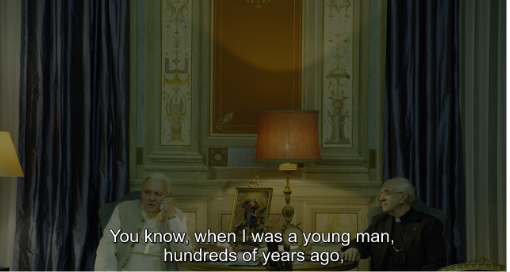
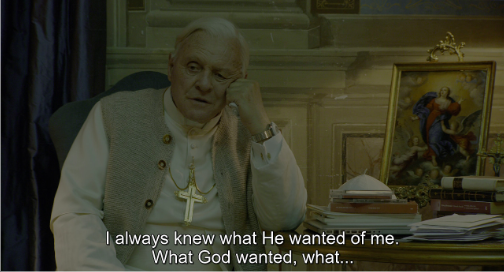
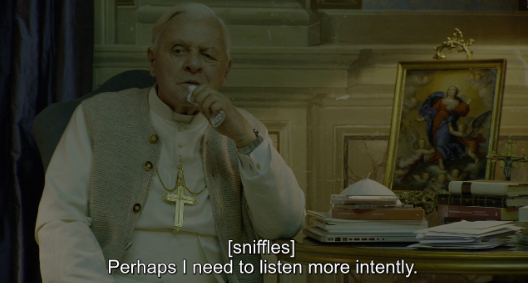
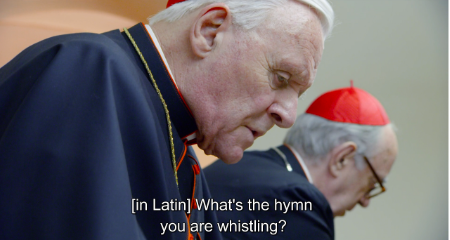
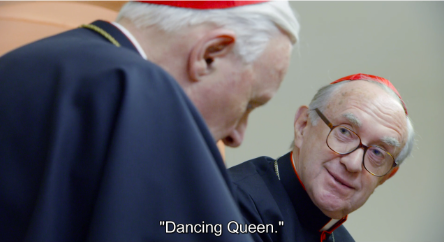
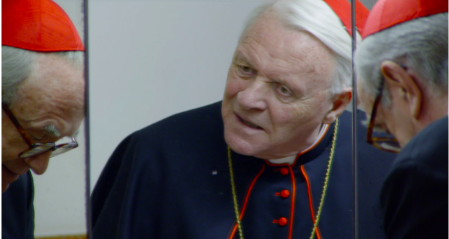
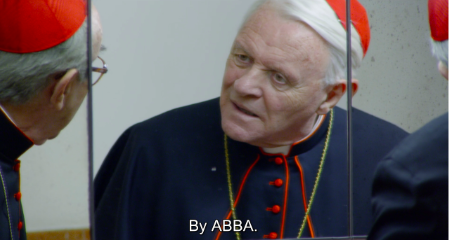
As I said in my review, The Two Popes is not only an enrapturing watch but also is relevant for non-Catholics and addresses religion and faith with frankness and honesty that I’ve rarely seen. I’m still thinking about specific lines of dialogue and the strangely pizzazzy cinematography choices. It’s such a weird movie, in the best way. It’s a must-see, if only for these two scenes alone:

Screen Shot 2020-02-06 at 6.52.59 PM.png

Screen Shot 2020-02-06 at 6.53.13 PM.png

Screen Shot 2020-02-06 at 6.53.20 PM.png

Screen Shot 2020-02-06 at 6.53.26 PM.png

Screen Shot 2020-02-06 at 6.53.32 PM.png

Screen Shot 2020-02-06 at 6.53.37 PM.png

Screen Shot 2020-02-06 at 6.53.43 PM.png

And-

Screen Shot 2020-02-06 at 6.53.51 PM.png

Screen Shot 2020-02-06 at 6.53.56 PM.png

Screen Shot 2020-02-06 at 6.54.03 PM.png

Screen Shot 2020-02-06 at 6.54.09 PM.png

  1. Parasite

I never wrote a review on Parasite because my original idea of doing a comparison between it and US and their shared metaphors of tunnels and class never got off the ground and I simply didn’t have time to do such a deep dive. I also saw it late, and most everything that can be said about the movie has been said. If you’ve been paying attention at all to this movie or the Academy Awards, you’ll know that Parasite is, indeed, a phenomenal film about class that doesn’t waste a single frame in telling a striking, chilling story. It’s brilliant. 

  1. The Last Black Man in San Francisco 

I labored over this choice, I really did. The Last Black Man in San Francisco tackles many of the same topics as these other films. Parasite tells a much more elaborate, brutal tale of class warfare. Little Women captures equally the beauty of friendship and siblinghood. Marriage Story is also presented in a very realistic, almost documentary-like way. Blinded by the Light has acute observations on race. But The Last Black Man in San Francisco does all of these things in its own unique, unified way. It’s made with the kind of quiet confidence that is unusual for a directorial debut. It’s a meditative piece that carves out a quiet place in a noisy world. It’s an elegy for past times with a hopeful future. It was stunning. It’s stayed with me since June and I expect it will continue to for much longer. 

-Madeleine D. 

The 10 Best Things of the Second Half of 2019

In June, I made a list of the top ten things of 2019 so far. It included two films, but was also a chance to spotlight some of the other media I had been enjoying. That was fun, so here is another list of ten things that I’ve enjoyed that have come out since June. I think being well-versed with pop culture and exposed to many different forms of media and worldviews is all a part of being a movie critic, and a discerning viewer. Exploring music, books, podcasts, and videos all contribute to a cultural education. 

Music

Atlas: Enneagram by Sleeping at Last 

Atlas: Enneagram album was a project completed this year by musician Ryan O’Neal. As a newly indoctrinated Enneagram believer, this album really helped me understand it more. But even if you don’t care about the Enneagram personality system, there’s no doubt that this album is beautifully crafted. As an Enneagram One, I always get emotional at that first song, but “Eight” is my other favorite. O’Neal also made a podcast (“Sleeping at Last Podcast”) chronicling how he made each song. It’s astounding the amount of detail and effort put into each song, from the ways the musical composition reflects characteristics of the Enneagram to how he had the musicians who played on each song be the same Enneagram as the song. It gives a beautiful insight into crafting an album. 

“I Can’t Let You Throw Yourself Away”- Randy Newman

Best original song of the year. There are a lot of best original song contenders this year, from Jasmine’s new song in Aladdin, “Speechless”, to Taylor Swift’s “Beautiful Ghosts” for Cats and Beyonce’s Spirit for The Lion King. But my personal favorite original song is this one from Toy Story 4, which works both on a hilariously literal level in the film and also as a fun, anti-suicide bop! Runner up, “I Punched Keanu Reeves,” from Always Be My Maybe. 

Lover– Taylor Swift

I’m tired of hiding it! I like Taylor Swift! Her music is consistently great! She’s a great writer! She’s a savvy businesswoman! She stood up against sexual assault and won! She embodies all the contradictions of modern pop stardom and it’s fun to read think pieces about her, while still recognizing that she is a real person separate from her celebrity image. I hope she and Joe Alwyn are happy!

Lover showcases all of Swift’s strengths and staples while also displaying maturity. While not all the risks she takes pan out (lead single “Me!”’s silliness never elevates itself to true camp) and some of the “risks” feel too calculated (such as “You Need to Calm Down”), there is an underlying yearning for peace that shows that Swift may have moved past some of her past feuds and drama (or, at least, decided to pick her enemies more carefully). “Cruel Summer” is pop-perfection and “Miss Americana and the Heartbreak Prince” is the best political song in recent memory. It doesn’t speak as directly as “You Need to Calm Down” or some of her contemporaries’s political works, but that’s why it succeeds. By using high school metaphors, so common in her own earlier work, she crafts a song that is subversive about its commentary and feels all the paranoia, exhaustion, and fear that the recent political climate has built. It seems the artist of the decade won’t be going anywhere this upcoming decade. 


Podcasts

The Popcast

Hosts Jamie Golden and Knox McCoy have crackling chemistry in this podcast about pop culture and “delightful idiocy,” and I laugh every episode. My favorite episode from the second half of this year is “Tom-ageddon: Picking the Worst Tom of 2019” (October 16th) but I also recommend the first episode I ever listened to, which was “Potential Pop Culture Antichrists” (May 13, 2019). From spicy hot takes to green lights on the best movies and books of the week, The Popcast can keep you in the loop. 

Dolly Parton’s America

I didn’t grow up listening to Dolly Parton. I don’t even listen to country music, so it’s a real credit to Jad Appenrod and WNYC Studios for creating a podcast miniseries about Dolly that has sucked me in completely. The podcast, using a variety of sources, including interviews with Dolly herself, examine why Dolly is so beloved, and what her fame and career reveal about the contradictions within America itself. 

I particularly recommend episodes 5 and 6, which can be listened to as standalone episodes. #5 “Dolitics” explores how Dolly is able to be the most political-nonpolitical entertainer out there and how she handles the current expectation for entertainers to be activists. #6 “Jolene” is, well, all about her hit “Jolene.” The first part is a fascinating breakdown of how the song is a complete subversion of the “Other Woman” song subgenre. The second part is a queer reading of the song. If that doesn’t interest you though, at skip to 31:13 to hear a jaw-dropping story that finds “Jolene” in a South African prison during Apartheid. This podcast was one of the most interesting, toe-tapping 36 minutes of my year. 


Youtube

Be Kind Rewind Channel

Be Kind Rewind is a channel full of academic, long-form video essays that breaks down each of the best actress wins in Oscar history. Each video essay is well researched, edited, narrated, and overall excellent quality while being entertaining and informative. I think they are accessible for both experts in film history and newbies. 

There’s been a lot of talk about women in Hollywood and inequality, and these discussions and boycotts have been important. But the modest goal of this channel to bring light to unknown stories and reframing film history through the lens of these actresses is just as important and radical a part of fighting inequality. 

I particularly enjoyed “Nicole Kidman and the Weinstein Nominees: 2003” and “Casting Scarlett O’Hara & Vivien Leigh’s Oscar: 1939”.  


Polyphonic Channel

I’ve been getting more into music criticism lately (although don’t expect any full-length album reviews on this blog). Music is an area I enjoy but don’t know much about. My eclectic taste has been the dismay of many of my more music-learned friends. This channel, like Be Kind Rewind, produces professional and engaging video essays, here over different musical subjects.

After listening to Jesus is King and generally just hearing a lot more about Kanye West recently, I particularly enjoyed the channel’s video on him and how he’s shaped the 2010s


Articles

The Real Problem With Paula Dean”, by Lauren Michele Jackson

Like music criticism, food criticism is something I’m interested in but don’t have experience in, outside of watching multiple seasons of Masterchef and Chopped. This article, similar to the Dolly Parton podcast, looks at a beloved figure (or previously beloved figure) who exemplifies elements of American society. In Paula Dean’s case, America’s contradicting ideas about race, food, obesity and health, and fame. Even if you’re not invested in Paula Dean or her food empire or whether or not she said the N-word, I think this article is well written enough to be worthy of your time. Reading outside of one’s interests is a great way to be exposed to new ideas and the world you’d never know about otherwise. In this case, it’s the world of butter, bacon, and mayo.

Introducing the Dad Movie Hall of Fame” by The Ringer Staff

This is one of the funniest things I have ever read. The Ringer Staff gives guidelines and a set of starter movies for the new subgenre of Dad Movie- a genre you’ve probably felt, but not quite been able to express. There are plenty of poignant insights, both into a handful of films and also into the psychology of dads. After reading this, you’ll find yourself thinking, “is this a Dad Movie?” And if it is a period place, with a beloved actor slightly out of his prime, and is “about work, managing, or team building in some form or fashion,” and has some Europe but not too much Europe, then you’ve got a Dad movie™.  


Books

She Said, by Jodi Kantor and Megan Twohey

She Said tells the behind the scenes story of the Pulitzer Prize-winning expose the New York Times did in 2017 over Harvey Weinstein’s sexual misconduct and assault. The piece opened the floodgates on #MeToo and the career-ending allegations of dozens of powerful men in entertainment coming forward. The book starts from the piece’s inception all the way to the Kavanaugh hearing with Christine Blesy Ford. It pulls back the curtain to all the behind the scenes drama and work that went into the headlines. If you’ve ever wondered why women are hesitant to come forward with allegations, or how people like Harvey Weinstein are able to stay in power for so long, or any other questions that have come up with this recent movement, She Said probably has an insightful answer. While the prose is sometimes clunky, it’s a gripping read. We don’t know where the #MeToo movement is going, but the fact that it even got started can give us hope. 

-Madeleine D.

An Impassioned Defense of Avengers: Age of Ultron

Screen Shot 2020-01-07 at 8.40.29 PM.png

To enjoy Avengers: Age of Ultron is to be in the minority, and sometimes to be outright attacked. I have loved and supported this film since I saw it as a newly minted Avengers fan in May of 2015. It was instantly my favorite Marvel film and it has remained that way 12 films later. I have engaged in many a heated debate defending this film. It has taken up an embarrassing amount of space in my brain for the past 4 years. All of these points have been thoughtfully ruminated upon, refined by the fire of argument, and cooled by the passing of time.  

For context, Age of Ultron, the sequel to 2012’s Avengers, at the time of its release, was given a mixed-to-positive reaction by critics, getting a 75% Rotten Tomatoes score. Critics primarily praised director and screenwriter Joss Wheaton for his writing and James Spader’s voicework. In 2015, superhero-fatigue hadn’t completely set in yet, so many of the reviews of the film can be boiled down to, “It’s exactly what you think it is and it does it pretty well!” 

The film made $191,271,109 in its opening weekend and quickly passed one billion by its third weekend. It overall made $1.4 billion worldwide (almost $460 million domestic) and now sits as the 10th highest-grossing film of all time. But, by all accounts, Disney still thinks of the film as, at best, an underperformer, and at worst, an outright failure. 

Why? For one, it didn’t make as much money as the first Avengers film, which sits as the 8th highest-grossing film of all time. AOU wasn’t as universally acclaimed as that film either. It also had a rocky press tour, which included Joss Whedon going around in interviews talking about how making the film nearly “broke” him and blasting Marvel for making him add things to the film to set up future movies. And lastly, the film has a complicated relationship with fans. 

The fans/fandom reaction was mixed to negative. There was the kind of stuff that accompanies each franchise property, like shipping wars (I wanted Black Widow to get together with Hawkeye but Joss Whedon made them just friends!) and anger over deviations from the comics. Then there was, in the internet intersection of academia and social justice, a lot of discussion over Joss Whedon’s brand of feminism and the treatment of Black Widow in the film, which many were displeased at, to put it lightly. (I know. I was on Tumblr. I was there. I still have scars.)

We’ll get to all of that. At best, the movie has gotten a *slight* positive turn by fans who, now with the context of history, have realized AOU is the closest we ever got to a superhero hangout movie. Mostly though, as time goes on, AOU has been mostly forgotten or considered a blight at best. 

If you haven’t seen the film lately, I’d suggest doing a quick recap on the plot. Read it? Is your memory jogged? Okay, great! Before I argue that AOU is actually one of the most interesting Marvel films (and maybe even persuade you that it is the best), it’s always worth noting that movie-going is subjective, and I try to disclose any major biases I have, so here it goes:

  1. My favorite Marvel characters are, in this order: Bruce Banner/Hulk (Mark Ruffalo), Natasha Romanoff/Black Widow (Scarlett Johansson), and Tony Stark/Iron Man (Robert Downey Jr.) These are the characters that the film focuses on, so of course there’s bias that my favorite characters get the most to do. 
  2. This is a loose adaptation. In this discussion, critiques about comic book accuracy such as “Wanda and Pietro are mutants and their dad is Magneto! Ultron was created by Hank Pym, not Tony and Bruce!” do not matter. In the words of Black Panther:     

Screen Shot 2020-01-07 at 8.41.16 PM.png

Now that we have that out of the way, I’m going to start breaking down major criticism of the movie and my refutation, and then move on to things about AOU that are often overlooked that I see as critical to seeing this film as, dare I say, a masterpiece.  
I am willing to die on this hill. Let’s begin. 

Criticism of AOU That Are Legitimate

“The plot is overstuffed and too much of it is just set up for future films. It’s confusing and ruins the movie’s pacing!” Yeah. The growing pains of the MCU’s expanding cinematic universe are certainly here, and this is an example of foreshadowing and franchise synergy bogging down a movie. Marvel has gotten better at this, but I think at the expense of their films becoming more and more similar. Because AOU has such a unique style and a more singular, standalone vision, all of the setup for future movies feels extra jarring and out-of-place. 

“There are sexist jokes.” There are, and it sucks. The prima nocta “joke” and gag of Bruce falling into Natasha’s chest are gross and, yes, I hate it. I have no interest in defending Joss Whedon as a person or as a feminist figure. I want to give him credit where it’s due, but also call him out when that is due, and these “jokes” were in poor taste, unfunny, and overall not-in-character for the film. 

“Why is it called ‘age’ of Ultron when the whole movies takes place over what seems to be just a week or two? Cause it sounds super epic. But you’re right. 

Criticism of AOU That Are Bad

“Ultron is a lame villain.” We’re going to get to that, but put simply: no. Is he as cool as Killmonger? No. Is he as powerful as Thanos? No. Is he as charismatic as Loki? Debatable, but no. But you know what he is, in a way that none of the other Marvel villains (except Killmonger) are? He’s a precise foil to our main characters and is devastatingly effective in showing our heroes’ flaws. He fits into the philosophical framework of the film beautifully, and James Spader is inspired casting.

“Natasha gets kidnapped! And it’s only because she’s the The One Girl™. She has a moment of weakness, therefore this film is ‘unfeminist.’” Natasha being the only lady Avenger is a problem, but this is a criticism towards the MCU at large and not this particular movie. This trope of a woman being kidnapped is generally considered a problem for two reasons. One, it’s frequent, and two, the female character in question does nothing else in the story except to be kidnapped and therefore be motivation for the (male) hero. But neither of these things are true in AOU. Natasha has never previously been kidnapped, and in no other way is she a weak hero. Secondly, and most importantly, she is far from a passive character in this film. Getting kidnapped is not her only purpose or plot point. In fact, this kidnapping scene (which stems from Natasha being a part of a huge and important action sequence) is used to highlight Natasha’s strengths, not that of her fellow Avengers. While imprisoned, she resourcefully reveals Ultron’s location to the team to further the plot. Getting kidnapped doesn’t make characters inherently weak or passive. Context is everything, and here the context makes this more an inversion of the trope than the trope itself. 

And, speaking of Natasha, possibly the biggest criticism of all: “The Hulk/Bruce-Black Widow/Natasha romance came out of nowhere!!! Now Natasha is defined by a man!!!! I don’t know how to think critically!”

We’re gonna come back to this more in-depth later, but I’ll just say here that both of these critiques are shallow and the latter is often made with a misguided application and understanding of feminist media criticism. 

First off, Natasha isn’t defined by a man, for the exact same reasons I said her being kidnapped is not problematic: because it’s A) not a pattern and B) a subversion of a trope. Romance is not the problem, in and of itself. Being in a relationship is not what makes a character have a sexist portrayal. If that were the case, every other Avenger should be called out because they are in romantic relationships.

The reason the role of women and romantic relationships in media is so heavily scrutinized is because women’s roles and agency in stories are often only contained within a romantic relationship, sending the message that women need to be in a romantic relationship to have value. But this should be evaluated on a case-by-case basis, and not an overarching generalization that all women in relationships in movies are bad. If you look at the roles Bruce and Nat inhabit in the film and in their relationship, Bruce embodies the classic romantic interest type much more than Natasha does. Natasha is more proactive, pursues without taking no for an answer, has a dramatic confession of love, and is ultimately the more heroic character. Meanwhile Bruce, in the words of our modern poets, One Direction, doesn’t know he’s beautiful! Natasha spends much of the movie telling him such:

Screen Shot 2020-01-07 at 8.43.15 PM.png

He’s adorably clumsy! He has Black Widow guard him in the first Ultron fight. His power set is, like many classic female superheroes, dictated by his emotions. He doesn’t like violence and wants the two of them to leave the superhero business. In every movie he’s in we just happen to see him shirtless or naked! If we’re gonna be worried about anyone being the passive, defined-by-their-romantic-relationship character, it should be Bruce. But we don’t worry about him, because he has other things going on in this movie and other parts to his identity and character, just like Natasha. We don’t put the crushing weight of thousands of contradicting expectations on him so he can positively represent all men. 

Secondly, there are a ton of things in AOU that are inferred to have happened between movies. The movie clearly establishes how the team has grown closer and who has become besties with who. A romance isn’t all that hard to imagine happening between two attractive, shy, similarly traumatized characters with complementary skill sets who have a mutual admiration for the other’s deeper, more peaceful self. 

But, critically, the promising seeds of this relationship are sown in the first movie. Watch it again. Pay attention. Nat and Bruce have more screen-time together than with any other characters, from Nat recruiting Bruce in Calcutta, to him Hulking out, to Nat and Bruce’s various confrontations and conversations throughout, to him asking for her forgiveness at the end. As a duo they had a dramatic joint-character arc that is reflective of the emotional arc the entire team goes through: they had to learn to trust each other. 

Their relationship embodying the beats of the entire team’s experience continues in this film. This is made very clear a few minutes into the film when they have an exchange where Bruce expresses fear about Hulk’s involvement in their recent battle. When Natasha tries to reassure him of Hulk’s usefulness, he’s doubtful. Then Natasha says:

Natasha: How long before you trust me?

Bruce: It’s not you I don’t trust.

BOOM. That’s the entire team’s problem. They can’t trust themselves, so they can’t truly trust and rely on each other. Bruce and Natasha’s trust issues stem from fear they have about themselves. Bruce, that in the end he’s just a green mean killing machine; Nat, that she’ll never move past being the monstrous assassin she once was. In other words, neither of them can shake their “programming,” which of course sounds a bit like the problem of our titular murderous robot.  Every one of the Avengers has this problem and it is ultimately everyone’s downfall. Thus the film operates on two levels. The micro-level is this intimate romance between two characters, which mirrors the macro level, which is a conversation of whether:

  1. A) The Avengers will and can last (and are even good for the world), and  
  2. B) If the individual members will ever be able to find personal satisfaction, whether by superhero-ing or not. 

By the end of the film, it’s clear that Bruce and Nat’s insecurities and trauma keep them apart (for now), and so too does it keep the Avengers from ever completely self-actualizing as a group. While Bruce and Nat are able to save the day at the end, they’ve given up on the relationship. Meanwhile, the team itself is splintered, also having, in a way, given up. Bruce and Thor go into self-appointed exile while the others try to pick up the pieces, knowing things will never be the same. 

To the idea that these heroes can ever escape the self-destructive path of superhero-ing, the film ultimately gives a sad ‘no’, displaying a rather cynical view that saving other people is a job only for those who can’t save themselves. So when you consider the Hulk/Black Widow relationship, not just as a B-storyline, but as a shadow, a more intimate, smaller picture of the overall drama happening, the beats begin to make more sense. 

The Thesis of AOU

So the main question of AOU is this: Can superheroes (the Avengers) live normal lives? 

I talk in my Endgame review about how the MCU equates a normal life, aka “making it,” with a biological family and domestic bliss. The Marvel movies operate on the assumption that  “having a biological family is a sign of a character succeeding, being relatable, and having a greater purpose. It’s presented as an ideal life.” And while I love biological families, having one should never be an idol, in any case, and especially not in a series that is the definition of a “found family” trope. AOU is the only Marvel film to really wrestle at all with this assumption, while also reinforcing it. 

Throughout AOU, the language of the film makes it clear that this is a movie about family. What makes it, what destroys it, and what it looks like. Almost everything in the film is codified using the language of family. From Nick Fury calling the avengers “kids,” to Helen Cho’s machine that creates Vision literally being called  “The Cradle,” to Nat’s ritual with the Hulk being called a “lullaby.” The child metaphor is not subtle. 

I’ve already said that the film ends up having the view that these heroes, by nature of themselves and their jobs, can’t ever have this domestic bliss. To come to that conclusion, the film breaks down each of the Avenger’s possibility of getting biological family and domesticity. So let’s take a look. 

Thor

Age of Ultron is decidedly not Thor’s movie. As a consequence, this theme is the weakest with him. However, there are some things to take away. 

Thor’s family are his people, the Asgardians. He feels a responsibility to them, but as the vision, Wanda gives him shows, his deepest fear is that he’ll destroy them. In the vision, Hemindall (a wasted Idris Elba) says to Thor, “You’re a destroyer, Odinson. See where your power leads you.” Then we see Thor killing people in the vision. Even during the scene when the team is at Clint’s house, Thor steps on a Lego house, crushing it. Thor is a threat to the home. This is setting up an arc where Thor has to overcome his fear that he will destroy his own people. 

This never goes anywhere because Taika Waititi and the Russo Brothers drop this character arc completely, making it so that Thor is never a threat to his own people. But this isn’t Whedon’s fault. Thor’s journey changes from “How can I be a leader if I have the potential to kill my people, my family” to “All the things I have set my identity on have been taken away. Who am I now?” But while Whedon’s arc for Thor is never completed, it demonstrates how Thor will never get a domestic ending, and by extension, will never get to quit being a superhero. 

Steve 

Steve is haunted by the war and can’t leave it behind, which may explain why he would rather start a civil war then talk reasonably (come @ me Team Cap). In Steve’s dream, he’s walking through a WWII victory party. But, among the festivities, the war is mixed in. A camera flashes and it sounds like explosions. A spilled cup of red wine looks like a bullet wound. Ultron says that Steve can’t live without a war. Even in his happiest moments, he can’t separate himself from the war, and this follows him until his resolution in Endgame, which is why he and Nat are the only Avengers who really stay and lead the team. They won’t abandon the fight. It’s all they know. 

 Peggy appears in the vision, telling Steve, “We can go home.” But, clearly, Steve can’t. This picture of domestic bliss in front of him is barred, like it is for all of the other characters. It’s still an idol, but one they will never get. But, because the Russos didn’t watch this movie he actually does get this ending, so… whatevs. 

Clint

Clint’s storyline is strange here, and the most complicated in terms of this theme. He acts as a foil to the rest of the Avengers because he’s the only one who actually achieves the domestic dream (until Endgame). 

He is only able to achieve this dream by 1) hiding his family away, and 2) being the least effective, interesting, or necessary member of the team. Clint and his family’s role as a foil is showcased in the safehouse sequence in the middle of the film. After the team gets a beating from Ultron and the twins, they go to Clint’s house to hide out and regroup. This is where we get Bruce and Natasha’s dialogue about kids, and some other nice character moments. But this whole sequence, and Clint’s family in particular, has a dark edge to it that adds to the film’s view on family and all it represents by being denied to the other Avengers. 

The small detail I previously mentioned of Thor stepping on the Lego house sends the message that these heroes are a threat to the home, and that’s almost immediately when the Avengers arrive. 

Screen Shot 2020-01-07 at 8.44.19 PM.png

Bruce and Nat’s conversation shows their ideological split, one they won’t be able to mend in the course of the film. Clint’s wife, Laura (Linda Cardellini), talks about Clint making it back home from the fight (which in movie-language is supposed to make you fear for Clint’s life). Tony and Steve have an argument that helps set up Civil War.  Thor leaves, and this is the last time the whole team is ever all together again (except briefly during the final battle) until literally Endgame. And in Endgame Clint loses his family. All of this shows that for the Avengers, even if they get to achieve this domestic bliss, their identity as superheroes will always be threatening the family and any illusion of stability. 

Natasha

We’ll talk more about this later, but in the safehouse scene, we learn that both Nat and Bruce are infertile. They cannot have biological children. It’s also heavily implied they also both feel like they would be a threat to their own children. The movie clearly disproves this view, but the characters never get over this view of themselves. If Bruce and Nat are our micro-look at the rest of the Avengers, then the message is crystal clear: the Avengers will never be able to have children. Therefore, they won’t ever get a happy ending, because in Marvel, children and biological family = happiness and peace. (Then the Russos go and ruin that theme with Endgame. It’s fine that they didn’t watch this film. It’s fine. It’s fine. It’s fine. it’s. fine.)

The movie posits that Bruce and Nat’s only option for happiness together is to run away from their superhero responsibilities. But Nat can’t do that. She shows, time and time again, that she prioritizes the mission over everything, including her own happiness. Throughout all of these films, Natasha is the only one who sees the Avengers as a family (because she understands that this is a found-family storyline, dammit!). She’s the one who tries to unite the team in Civil War and keeps it going in Endgame. She sees herself solely as an Avenger and is the quickest out of all the teammates to stop pursuing any other end for herself. 

When Bruce later frees her from Ultron and suggests that this is their chance to finally run away, she says “The job’s not finished.” It’s her way of punishing herself, trying to get the red out of her ledger. Bruce then tells her, “You’ve done plenty.” He is the first person to ever say she is enough. She’s done enough. She can stop punishing herself. The tragedy is that she can’t believe him, and turns down the opportunity to “run with it,” and instead goes back to work. That was how she was programmed: Never abandon the mission. 

Tony (and Why Ultron is a Good Villain, Actually)

I said in my Endgame review that making Tony have a daughter, Morgan, is a poor choice because it undermines Tony’s arc. Tony’s arc has been about him feeling responsible for saving the world because he understands how much his mistakes have put it in danger. He didn’t need a child to make the fight personal and raise the stakes- it’s always been personal and the stakes have always been raised, which we particularly see in AOU. 

Yes, part of Tony’s arc has been trying to become a better father than his father was. But this isn’t happening through Morgan Stark, who, while she is his actual offspring, is not nearly the same foil to him as his first child-figure, which is Peter Parker. But even before we got Morgan or Peter, we got Ultron. Tony creates Ultron because after his vision from Wanda, he decides his Iron Legion fleet could be used to create “a suit of armor around the world.” Loki’s scepter finally gives Tony the power he needs to make this vision a reality with Ultron. 

After he and Bruce create Ultron, Ultron appears “in the flesh” at the Avengers’ dinner party, quite literally interrupting the most intimate, family-like setting we’ll ever see them in again for the rest of the MCU. This “birth” is chaotic, unplanned, and changes everything, and sets the stage for why the Avengers will never get families of their own. 

The movie consistently uses the language of father and son to express Tony (and Bruce) and Ultron’s relationship. During one of their first confrontations, Tony and Ultron have this exchange:

Ultron: Don’t compare me to Stark. He’s… a sickness!

Tony: Ah, Junior. You’re gonna break your old man’s heart.

Ultron: If I have to.

Later, Wanda tells Steve, “Ultron can’t tell the difference between saving the world and destroying it. Where do you think he gets that?” and in context she’s obviously talking about Tony. And maybe most explicitly:

Wanda to Ultron: I saw Stark’s fear. I knew it would make him self destruct.

Ultron: Everyone creates the thing they dread. People create… smaller people? Children! I lost the word there. Designed to supplant them, to help them end.

This is literally what happened with Tony. He tried to grasp onto the domestic dream, hoping it would help not only him achieve peace, but the world. And it turned against him, and ended his chance at ever being free from the burden of being a hero (until Endgame). He created Ultron, the thing he would come to dread. 

Bruce

Bruce’s arc here is less clear, as Bruce is more coerced by Tony into creating Ultron and Jarvis and therefore the film gives him much less responsibility in the matter. Despite this, there are fascinating implications of Bruce becoming, like Tony, a father of these two AIs. The best way is to see them is in a callback to a small moment in the first Avengers film.

In the scene where Bruce and Nat first meet, he touches a baby cradle (splattered with green) and says “I don’t every time get what I want.”

Screen Shot 2020-01-07 at 8.45.25 PM.png

Along with the looks of longing Bruce has as he watches Natasha interact with Clint’s kids, it’s clear that he had wanted children. So isn’t it just a bitter and yet darkly hilarious turn of fate that Bruce is then the “father” of both Ultron- a literal supervillain that reflects Bruce’s worst fears about himself, but ALSO Vision, the scientific, heroic Messianic figure who is worthy enough to wield Mjolnir? Bruce, a man of dual natures, creates two equally dualling forces. That’s-

Screen Shot 2020-01-07 at 8.45.52 PM.png

In this, we get a little pushback on the theme of the Avengers not being able to have children. Bruce’s arc here suggests that, sure, they might mess them up and be bad parents, but perhaps not. Perhaps children can truly save the family tree. But sadly, we’ll never know for these characters. 

Age of Ultron uses a complex metaphorical framework, in both its language and visuals, to explore ideas about family. It comes to the conclusion that family, both in a biological sense and in a team-sense, is impossible for these heroes. This conclusion questions many of the traditional worldviews and themes of comic book stories, making Whedon’s film more subversive then it may initially appear. 

However, like any good piece of art, there are multiple themes and interpretations within this one film. So let’s take a look at a few more things Age of Ultron has to say.  

The Gospel According to Ultron

Steve tells the team in the pre-final battle speech: “Ultron thinks we’re monsters. That we’re what’s wrong with the world. This isn’t just about beating him. It’s about whether he’s right.” The movie, by showing us the monstrosity of its heroes throughout and denying them a chance of redemption through a happy family ending, seems to fall, in part, on the side of Ultron. Our heroes are what’s wrong with the world, but they’re also the best we have, because there are no other saviors. And speaking of there being no other saviors:

Age of Ultron is an atheistic movie. It sure doesn’t appear that way at first. Even a non-religious viewer will probably notice the references to biblical scripture, the religious imagery, and Vision, the messianic Christ figure who is born of men to save them from their own sins, literally calling himself, “I am.” But context matters, and in AOU, only the villain believes in a God. 

Ultron, despite being only days old, is more biblically literate than some of the most seasoned Christians. Throughout the film he quotes Scripture. For example, when he finds the vibranium metal he quotes Matthew 16:18, saying, “Upon this rock [vibranium] I will build my church.” When he tells Wanda and Pietro of his plan to turn Sokovia into a meteor to destroy the world, much to the twin’s dismay, he offers the comfort that, “The human race will have every opportunity to evolve.” When Pietro asks if they don’t, Ultron responds, “Ask Noah,” directly tying his plan to destroy the world into God’s in the Biblical story of Noah and the flood in Genesis. Ultron furthers his point by saying, “Whenever the earth starts to settle, God throws a stone at it. Believe me, he’s winding up,” and the stone is obviously Sokovia/meteor, which makes Ultron into God.

Ultron took in the entire internet at the beginning of the movie, but out of all the religions he could choose from, he chooses Christianity. He’s not quoting the Quran. He speaks beyond the language of metaphor. He speaks with complete assurance that there is a God. Yet it’s clear that Ultron is less interested in knowing God then actually being God. He is using religious imagery and stories to justify himself, the way many people abuse Christianity to justify themselves and various atrocities.

When Ultron first recruits the twins, he meets them in a church in Sokovia, where he sits on what looks to be a throne. Then, in the climax of the film, we find out that Ultron has made his fortress/hideout in that church in Sokovia. That is where he has implanted the device that will destroy the whole world. The final fight then takes place primarily inside the church as the Avengers work to stop the device. 

In other words, the Avengers literally have to destroy the church to bring peace. 

I think Joss Whedon might have some issues with organized religion. 

Whedon is a self-proclaimed atheist and humanist, and his worldview pulses through this film with every scene. Ultron is not just a manic A.I. or the spurned child of Tony Stark. He’s a religious extremist, who uses religion as a coat for his own desire to play God, and misuses Scripture to justify his actions. Meanwhile, the heroes are the ones who believe there is no God and take it into their own hands to make the earth better. Religious people are the delusional ones who, if not using religion to suppress others, use it as an excuse for their apathy, while the atheists/agnostics are realists who will actually make the world a better place.

Vision, Ultron’s foil, then is the perfect expression of Whedon’s alternative to religion, which is humanism. This may seem strange; consider what I said before about Vision being a messianic figure who refers to himself with God’s title of “I am,” but these lines of dialogue between Ultron and Vision at the very end summarize the film’s thesis on humanity:

Vision: Humans are odd. They think order and chaos are somehow opposites, and try to control what won’t. But there is grace in their failings. I think you missed that.

Ultron: They’re doomed.

Vision: Yes, but a thing isn’t beautiful because it lasts. It’s a privilege to be among them.

In the end, Vision does not save humankind. He helps save the day, and he reflects the best of the Avengers, but crucially, he is made by them. Pluggedin reviewer Paul Asay writes in his article over the topic that Tony is dutifully punished for creating Ultron, a false idol and god. If the movie had stopped at this, then there would have been a very biblical theme of not “messing in the divine act of life-creation.” But then he goes and makes Vision, who “is, in a way, a New Testament savior pitted against a wrathful, Old Testament-like god—an intercessor to stave off Ultron’s ultra-doom.” No longer do we have a man (Tony) who causes harm when he tries to create a god, but we have a man actually succeeding in creating a god, and now the theme is about humans overcoming through science and technology, which again is a triumph of Whedon’s ideology. 

This is part of what makes AOU stand apart from other Marvel movies. While I don’t agree with Whedon in this area, I love AOU’s philosophical quandaries that I don’t believe any other Marvel movie, besides Black Panther, has truly had. DC movies, particularly Batman vs Superman, have had some similar religious tones in their scripts, but there were no coherent ideas presented there. 

“You’re Not the Only Monster On the Team” – or, Why Y’all Need to Pay Attention to Subtext

This is it. This is the moment we’ve all been eagerly anticipating. We’re gonna think critically about that dang safehouse scene, the scene that gave us a hundred bad hot takes and made people say, “Joss Whedon thinks women who can’t give birth are monsters!” Guys, 

Screen Shot 2020-01-07 at 8.47.18 PM.png

The safehouse scene should only be watched out of context in Mark Ruffalo or Scarlett Johansson’s Oscar reel. That’s it. Otherwise, it has to be taken in context, because it’s crucial to understanding what’s happening. Remember: These are the characters at their worse. They have just been mind-controlled by Wanda and shown their worst nightmares about themselves. The entire team has been thoroughly beaten, and they are questioning everything. Everything the characters say should be taken with a grain of salt. 

We can infer between the movies that Nat, like Bruce, has come to see the Avengers as her family (she expresses this explicitly in Endgame). Revisiting her past, seeing the violent killing machine she was made into, shakes her entire trust in her ability to ever fit into the Avengers and be a hero. She tells Bruce in this scene: “I had a dream. The kind that seems real… that I was an Avenger.” 

Bruce only brings up the topic of children because he just saw Natasha interacting positively with Clint’s children. It’s not that he assumes she wants to be a mother because she’s a woman. He is caring about her needs and what he perceives to be her desires, so- and this is incredibly important- he brings up his infertility first. I can’t remember ever seeing a movie, much less a blockbuster, that treats a man’s inability to have children seriously and sees it as a tragedy, which is very much what the scene is about. We’re not supposed to just be sad for Natasha, we’re also supposed to be sad for Bruce. For both of them, because within the metaphorical framework of the film biological family means healing, and they literally can’t have it! He is being vulnerable, which gives her the space to be vulnerable. That’s a connection! That’s a relationship! That’s maturing and growing past their disgust with themselves and their inability to get over the past! That’s-

Screen Shot 2020-01-07 at 8.45.52 PM.png

I do think the placement of “you think you’re the only monster on the team” is ill-placed as it directly follows up Natasha’s reveal, and if it had been put maybe after another a line or two it could have avoided any ambiguity. But if you are watching the events as the film has presented them to you as- a moment where both characters are at their worst and are still operating out of deep-seeded self-destruction- then it makes complete sense!

Natasha is saying the Red Room made her into an assassin. Part of that process was being sterilized against her will, but that’s not what made her a monster. It was that she embraced and thrived in the role, and her vision suggests that she killed a lot of people to gain the favor of her instructors and become the top Black Widow. That’s why she is a monster. It’s because of the red in her ledger. 

Even in the least-charitable interpretation of the scene, if she was saying she’s a monster because she’s sterile, then remember: that’s the exact same thing Bruce is saying about himself. And also, if she did believe her infertility meant she was a monster or less of a woman, that is, unfortunately, a very real reflection on women who have been sexually assaulted and may take on blame or think it is their fault. I don’t think that’s what the scene is saying, but it could be read that way. Either way, both Bruce and Natasha believe they are monsters, and can’t come to forgive themselves. That’s why Bruce/Hulk leaves at the end of AOU and why Natasha sacrifices herself in Endgame. They are clearing the red in the ledger the only way they know how.

When Nat pushes Bruce off the cliff, she takes away his bodily autonomy, forcing him to become the Hulk and encouraging him to “go be a hero,” stating her faith that Hulk, like her, will find purpose in finishing the mission. But that shows a misunderstanding between the characters of the other’s core motivations. This could have been a great thing to explore and work through in future movies, but instead, they drop the whole romance subplot altogether because Christopher Markus and Stephen McFeely are c o w a r d s.

In Conclusion

If you liked almost any other Marvel movie that came out after AOU, then you can thank AOU. Despite its mixed reputation and lower profile, it sets up more of the MCU then I think either Whedon or Marvel realized. 

There are so many other good reasons that this movie is the best besides all the ones I have laid out in excruciating detail. The quips! The great group chemistry! The action sequences are some of the more memorable for Marvel. It has one of the better scores that makes use of the international locales of the film. There are references for the comic book nerds (Helen and Amadeus Cho!!!!). Steve rips a log in half with his bare hands! This is when the Avengers still had distinct personalities and their senses of humor were different!

You don’t have to love Avengers: Age of Ultron now. But I do hope you reconsider it, and respect it. 

(And respect me. I’ve finally rested my case to the haters).

-Madeleine D.