Boldness in Storytelling: Star Wars: The Rise of Skywalker, Jojo Rabbit, and Cats

Screen Shot 2020-01-07 at 8.29.03 PM.png

*Spoilers for The Rise of Skywalker 

I’ve said before that I’d rather have a movie that takes risks and sticks to a bold vision than one that plays it safe and is dull. When I say bold vision, that doesn’t mean the movie has to be big or flashy. Avengers: Endgame is a big, flashy film, but doesn’t have as bold a vision as, say, Paul Thomas Anderson’s Phantom Thread, which is a much quieter film but sticks to its guns and has fascinating ideas. 

But after seeing the wild trio of WWII satire comedy Jojo Rabbit, the final movie of the newest Star Wars trilogy, and Cats, I have been forced to ask myself if I really, really do prefer boldness. 

Star Wars

You’re probably here for a review of The Rise of Skywalker, and you’ve probably already seen it and have a lot of thoughts. 

I like Star Wars, but would not call myself an invested fan. I enjoyed The Force Awakens, primarily for the promising new characters, and I really liked The Last Jedi, because it tried to move the franchise away from nostalgia and tired patterns towards a new future. It challenges Star Wars fans to imagine a more inclusive Star Wars, and it made the franchise less escapist.  

Unsurprisingly, it’s now one of the most divisive films in recent history. Not that director Rian Johnson couldn’t have gone about his radical reimaginings with more grace towards the original fanbase, but I can never forgive The Rise of Skywalker for doing him dirty and almost entirely retconning everything he tried to do. There are ways director JJ Abrams could have tried to unite the fanbase without erasing or ignoring everything Johnson introduced. The way it was handled reeks of desperation and cowardice. 

I usually see movies knowing most of the spoilers, but I didn’t for Rise of Skywalker, so there ended up being three moments I involuntarily threw up my hands and sighed. 

  1. Rey is a Palpatine- I’ve never been punched in the face, and I don’t know if Rian Johnson has either, but now we both know how it would feel. 
  2. Han and Ben/Kylo moment- I know Harrison Ford hasn’t cared about Star Wars for a while now, but after seeing this, I question if he’s ever had any genuine enthusiasm for anything in his entire life. 
  3. When Rey and Ben kiss- Writer/director Joss Whedon once said, “Don’t give people what they want, give them what they need.” This choice gives people neither of these things, which in a fandom as divided as Star Wars, with a movie as fanservice-y as this, is actually quite an accomplishment, I guess. 

There is a distinct lack of identity to ROS, despite the film trying to namecheck and cameo every part of the Star Wars legacy. It shows, more than anything, that Star Wars has to change. It can’t continue like this, and it’s going to take a very strong creative force (not a Dollar Tree-Spielberg) to move the franchise into new territory. Not everyone will like it, but that’s what bold vision takes. 

One of the worst parts of ROS is the hastily completed redemption arc of Ben Solo. We all knew it was coming, but that doesn’t excuse that there is absolutely no attention paid to the fact that he’s been, in effect, a fascist. In a world with a rising number of actual fascists, extreme alt-righters, and incels (these three things are not all the same, but there is a heavy overlap), Kylo Ren being one of them can’t be treated lightly. 

So if Star Wars isn’t going to teach you how to redeem a fascist, then Taika Waititi will. 

How to Redeem a Fascist: Jojo Rabbit vs Rise of Skywalker

Jojo Rabbit is a dark comedy about WWII and Hitler that tears apart the ideology of the Nazis. With the rise of neo-nazism today, a movie that is both critical of nazism but also has compassion for those who have been taken in by it is critical. 

The film tells the story of a 10-year old boy (a fantastic Roman Griffin Davis) living in Nazi Germany near the end of WWII who is one of Hitler Youth and discovers Elsa (Thomasin McKenzie) a Jewish girl his mother (Scarlett Johansson) is hiding in their house. His interactions with Elsa challenge all that he’s been told about the Jews and the war, and he comes to terms with the lies he’s believed. 

The film is able to show how those with hateful ideology prey on vulnerable young people by promising things that all people universally want- to be loved, accepted, and made to feel important and powerful in a world where so much is out of our control. By emphasizing throughout just how young Jojo is, the audience is reminded just how vulnerable and easily persuaded children are, which helps us root for Jojo’s redemption, even as he says and does terrible things. It reminds us to be compassionate for the scared child within all of us. 

Jojo is redeemed by the end of the film by realizing what he’s been taught is wrong, and then, with the help of others, finding love, identity, and community outside of this ideology. The people who help him don’t ever condone or excuse his bad actions, but they don’t give up on him. Most importantly, they offer Jojo alternatives. In our age of calling people out on social media and “canceling” people, it is very easy to say someone is doing something bad, but there’s very little offering of something better. That’s where the hope is in Jojo Rabbit. 

Meanwhile, in Star Wars, Ben Solo is a mass murderer and a father-killer who says he’s drawn to the light side every few scenes, but only changes when he’s healed by Rey, to whom he already has a force-connection with. Then he has a quick exchange with his dead-dad, and then he helps out Rey and then dies. 

Now there is no explicit outlining of the First Order’s ideology, but from context, visual cues, and the history of Star Wars, it’s clear they are supposed to be like the Nazis.* That makes Ben Solo, a young man who was taken in by Snoke/the First Order, fit to compare to Jojo. 

When Ben goes to the light side, he doesn’t have to reckon with his ideologies and past (besides being forgiven by dead dad.) There’s no conscious uncoupling with the systems that were approving and supporting his vile behavior. There is no real alternative he joins with, except Rey. Because in the Star Wars universe you can just switch to the “light side,” Ben never has to unlearn all of his behaviors and hateful thoughts like Jojo does. And Ben dies heroically, which, ironically enough, is a key component of fascism, the cult of death. When it comes to Ben vs Jojo, this lyric from Hamilton sums it up well- “dying is easy, young man, living is harder.” Jojo has to live with the continued consequences of having been a part of an evil institution. Ben does not. 

Even worse is that Rise of Skywalker implies Emporer Palpatine created Snoke to manipulate Ben, because then it’s like Ben was somehow mind-controlled and manipulated into becoming a neo-nazi, which makes it easier to excuse his behavior and it reduces the systematic and structural ways youths are pulled into ur-fascism to one individual bad apple. 

Jojo Rabbit never does this, instead showing the systemic and structural ways youths are pulled into ur-fascism/nazism while also not negating personal responsibility and choice. These complex choices make Jojo Rabbit a bold movie that doesn’t run from controversy or relevant commentary. But it isn’t controversial because it’s trying to be provocative or just rile people up. It’s for good reason. And it’s an overall excellent film. 

And then there’s Cats

Cats

There’s been a lot of great memes about Cats. Reviews for the film have basically become a genre within themselves. It’s a movie so inexplicable that it makes it hard to talk about, and you’ve probably already decided whether you’re going to see it or not.

But while making a movie of the musical “Cats” was probably a fundamentally bad idea, this film is bold through the level of seriousness and commitment everyone, from the actors to the director, takes with this movie. It’s ridiculous and nonsensical and contains the eternal sin of somehow being able to make beautiful-human Idris Elba look like a naked mole-rat, but once you surrender to it, at least it tried. Honestly, I’d rather have something like this, with its breathless enthusiasm and wild disregard for things like “decency” and “respectability” than something that feels soulless and engineered. It’s unhinged, but isn’t it kinda beautiful that it can all bring us together in utter dismay? 

There’s this great story about Harold Prince, a legendary theater producer, who met with Andrew Lloyd Webber about his musical “Cats” and was insistent that there must be some kind of deeper analogy and theme behind the story (sounds like a man after my own heart) but simply could not figure out what they must be. He said to Webber, “‘I don’t understand. Is this about English politics? (Are) those cats Queen Victoria, Gladstone, and Disraeli?’ He looked at me like I’d lost my mind, and after the longest pause said, ‘Hal, this is just about cats.’” 

Sometimes, you have to surrender and realize that this is just about Cats. 

-Madeleine D. 
*Video essayist Lindsay Ellis has an excellent video on this subject of Star Wars, the First Order, and Fascism: https://www.youtube.com/watch?v=XAVeyXwy3BE


A Passover Story: A Guide to the Symbolism of “Uncut Gems”

Related image

By Jonathan Dorst

The book of Exodus in the Old Testament is a story of two types of people and two ways of living. The first type of person and lifestyle is represented by Pharaoh in his drive to build bigger and bigger buildings and work his (Jewish) slaves seven days a week (Exodus 1:14) to produce the marvels of Egypt. The other type of person and lifestyle is represented by Yahweh God in His desire to have a (Jewish) people who are defined by their just and loving relationships to one another and their ability to rest (Exodus 20:10).

The dramatic highlight of the book is when God brings about a series of ten plagues upon Egypt to convince Pharaoh to let His people out of their slavery. When, nine plagues in, Pharaoh is still resolute in not allowing the Israelites to leave, God finally unleashes His angel of death to kill every firstborn son in Egypt. While the Egyptian families are devastated, the Israelite families are spared by spreading blood over the doorways of their homes, signaling to the angel to pass over their homes.

In Uncut Gems, the new film from (Jewish) filmmakers Josh & Benny Safdie, we see a man torn between these two ways of living and unsure of what type of person he wants to be. Howard Ratner (Adam Sandler) is a (Jewish) jewelry store owner who, from the beginning of the film, is working overtime to pay off his gambling debts at the same time that he’s trying to find the money to place his next big bet. As we follow him through a series of failures and new ideas, we find ourselves exhausted at the energy Howard must put forth to build his empire, try to satisfy both his family and his mistress, and keep ahead of his creditors and their goons. The Safdies do a great job of keeping the tension ratcheted up at an almost unsustainable pace.

In the middle of the film, however, we are treated to a peaceful scene that happens in the home of Howard’s father-in-law. His extended family is celebrating Passover together and we watch as they go through the motions of the traditional meal, at one point having Howard name each of the plagues- blood, frogs, gnats, locusts, etc…- while dipping a finger in their wine and throwing it on their plates. This Passover ceremony is a snapshot of the film as a whole, as we follow Howard, the materialist who can’t stop working to achieve, through close call after close call (plague after plague), hoping that he’ll finally stop making bad decisions and begin valuing relationships over money before he gets to his own final plague. While the film doesn’t go as literal as the 1999 film Magnolia, with its frogs raining from the sky, it does still clearly give us visual hints of the plagues, as when a character pours red Gatorade into Howard’s fish tank (Exodus 7:20-21).

One of the key images in the film is the door to Howard’s jewelry shop. This door, with bulletproof glass windows, automatically locks so that people can only get in after someone inside the shop buzzes them in. Halfway through the film, however, the door starts to get stuck, and after using a hammer to try to jolt it into working, Howard uses some metal shavings above the door to get it to open. Without giving away spoilers, the dramatic highlight of the movie comes when the shavings above the door are swept away and a literal bringer of death is summoned through the door.

Whereas Moses, the human protagonist of Exodus, “[chose] rather to be mistreated with the people of God than to enjoy the fleeting pleasures of sin” (Hebrews 11:24-25), Howard simply has to choose to slow down and live the rich life he already has. At certain moments, as when he is talking to his wife and daughter, Howard gets close to giving up his greedy schemes and settling in to a restful contentment with the good life he already has. But, ultimately, he is seduced by the way of empire, the way of Pharaoh and every other world builder whose avarice is unlimited, believing that that way of life is the best way to be truly alive. And we know, as we watch his folly, that there must be a better way of living- that our hearts were made for relationship, and the God who wants our hearts also gives us the rest that we need.

Check out more of Jonathan’s reviews at:

https://www.patheos.com/blogs/chorusinthechaos/author/jonathandorst/

My Top 40 Films of the Decade

By Jonathan Dorst

The decade spanning 2010-2019 was a great decade for film. It saw many new, ethnically diverse, voices behind the camera, such as Barry Jenkins, Ava DuVernay, Jordan Peele, Taika Waititi, Ryan Coogler, Asghar Farhadi, Alex Garland, and Damien Chazelle, as well as veteran directors like Terrence Malick, Christopher Nolan, Paul Thomas Anderson, Alexander Payne, and the Dardennes doing their thing. The rise of Netflix and Amazon gave a greenlight to many good films that would have never seen the light of day in a market increasingly intolerant to anything not franchise or horror-related. The rise of Movie Pass and other subscription services (I love being an AMC A-Lister, I have to say) proved that traditional theaters have a lot of avenues still to explore before ceding to the streaming services. Who knows what the upcoming 20’s will bring (hopefully not a stock market crash like the last century’s 20’s brought), but I can’t wait to see the stories that will be told on the big screen in the future.

Here is my list. It was very hard to whittle down to 40. If I’d kept going to 50, I would have included some combination of the following: In a Better World, Mud, Shoplifters, Beautiful Boy (2010), The Social Network, Birdman, Silence, The Lobster, The Salesman, The Big Short, The Mill and the Cross, Won’t You Be My Neighbor, Hugo, A Separation, 12 Years a Slave, The Witch, Eighth Grade, Take Shelter, Frances Ha, Arrival, and The Light Between Oceans.

  1. The Tree of Life– a profound exploration of life and death, and the grace, pain, and beauty in between. More of my thoughts here.
  2. Whiplash– an intoxicating look at the thin line between pushing someone towards greatness and pushing them too far.
  3. Inception– a retelling of Theseus and the Minotaur, as well as a sly commentary on film creation, this movie has big ideas and still works as an action/heist film.
  4. The Past (2013)- we may be through with the past, but the past is not through with us, and reliving it is sometimes as hard as seeing through a rain-splashed windshield.
  5. Another Year– a touching, grounded look at the effect of a loving married couple and the normal, everyday kindness they show to those around them.
  6. Ex Machina– a retelling of the creation story in Genesis mixed with the standard, but piercing, questions that good sci-fi asks about humanity and artificial intelligence.
  7. Fences– a character drama that asks the questions, what is a life well-lived, and what do we owe one another in the midst of the struggles of life? Read more of what I thought here.
  8. Parasite– one of the best commentaries on class that works on so many different levels.
  9. The Kid With a Bike– I am just a sucker for the Dardenne Brothers’s style of storytelling- dropping you in the middle of a person’s life and giving you a compassionate view of their struggles without the paint-by-numbers plot or explanatory dialogue. This is one of their best films.
  10. Manchester By the Sea– not all tragedies end in understanding, not all pain gets healed; life is more complex than that, and this movie gets that in a profound way.
  11. Get Out– a tale about the commodification of black bodies and the fear implicit in finding out that even your allies don’t always have your best interest in mind.
  12. Marriage Story– a truthful, though not unhopeful, story that reminds us that dissolving a marriage is like pulling off a band-aid and realizing there’s a gaping wound there.
  13. Annihilation– a study in self-destruction with a great cast and solid sci-fi scenario.
  14. August Osage County– I’ve known dysfunctional families, where sometimes the only reason they see each other is out of duty, and this film’s characters rang true.
  15. Baby Driver– the best movie of one of our best working directors, Edgar Wright. You can read my thoughts on it here.
  16. Hell or High Water– a dudes’ movie, eminently rewatchable, with a great relationship between the two brothers at its core.
  17. L’Attesa– a film that boasts beautiful compositions and Juliette Binoche’s eyes which express so much grief and emotion. You can read what I wrote about it here.
  18. The Unknown Girl– a compassionate look at the question of what responsibility we have towards our neighbors who might be strangers.
  19. Us- a reminder that the line between the haves and have-nots is a lot thinner than most of us think.
  20. A Hidden Life– you can read my thoughts on Malick’s second best film here.
  21. Phantom Thread- a story about a controlling man changed by a woman is also a story about how love upsets our carefully laid plans, and is also a story about accepting death.
  22. Her– the truth at the bottom of this tale is spot on- we lose a lot when we substitute disembodied relationships for real relationships.
  23. The Immigrant– a criminally ignored work of art from the great James Gray; Marion Cottillard is brilliant.
  24. Inside Out– Pixar is operating on a different level from any other animation studio, and this is my favorite Pixar; all parents & would-be parents need to see this.
  25. Selma– a biopic that sidesteps the great-man-singlehandedly-changes-history fallacy and presents a rather balanced and insightful view of the period.
  26. Certified Copy– one couple experiences their whole relationship in a day, is what I think happened in this mysterious, but thoughtful film.
  27. Before Midnight– the realistic and hopeful conclusion to a wonderful trilogy about relationships; if Before Sunrise ponders what might be; Before Sunset, what could or should be; Before Midnight ponders what is.
  28. Hunt for the Wilderpeople– a family favorite, maybe the most re-watchable movie on this list.
  29. The Last Black Man in San Francisco– a mournful but playful look at gentrification, displacement, and the longing for home.
  30. Brooklyn– Brooklyn- a more romantic view of immigration than The Immigrant, but a thoughtful story with wonderful performances, particularly by Saoirse Ronan.
  31. Lady Bird– growing up is hard, and having your kid grow up is even harder.
  32. Spotlight– a somber, piercing look at one of the worst systemic crimes and cover ups the world has ever seen.
  33. Black Panther– if Wakanda is a stand-in for America, this is a thoughtful exploration of foreign policy with the background of America’s racial scars.
  34. First Reformed– what does God want from us personally when it comes to global issues like environmental catastrophe?
  35. The Act of Killing– a shocking documentary that reminds you that evil is banal and especially easy to encourage when a government sanctions it.
  36. Nebraska– a film that makes more sense the older you get. Bruce Dern forever.
  37. Ida– how much of your life is based on your parent’s religion and nationality, and how much would your life change if you found out those things were much different than you thought?
  38. Moonlight– a very honest (and cinematic) look at what life might be like growing up without love.
  39. Jiro Dreams of Sushi- a profound meditation on the beauty of work and the pursuit of excellence.
  40. Avengers: Age of Ultron– my daughter (the Madeleine who loves movies) opened my eyes to all that Joss Whedon had going on under the surface in this film, even if much of it didn’t pay off with future directors veering from Whedon’s vision.

Check out more of Jonathan’s reviews at:

https://www.patheos.com/blogs/chorusinthechaos/author/jonathandorst/

Holiday Roundup: Last Christmas, Peanut Butter Falcon, A Beautiful Day in the Neighborhood, Marriage Story, and Bombshell

Last Christmas

t_7765212358264afe8489db58850b4dfd_name_854702c4_fc2f_11e9_8906_ab6b60de9124_scaled.jpg

*Spoilers

In a possible attempt to be the anti-Hallmark Christmas movie, Last Christmas tries to be five different movies in one, with each storyline being just off-kilter enough to not be formulaic or guessable. 

Once you think you’re watching a quirky romance, you’re actually watching the psychotic breakdown of a woman who is falling in love with the ghost of the man who gave her a heart transplant last Christmas (“Last Christmas, I gave you my heart”- get it? GET IT?!). Once you’ve adjusted to the ghostmance, you’re actually watching a workplace rom-com. Then, wait- this movie is actually about the rise of xenophobia with Brexit and rising politicals fears. Then you’ve got a subplot about a woman who’s scared to come out as gay to her family. But wait again! This movie is actually about the holiday spirit as a woman is faced with the realities of being homeless. But it’s all cutesy enough not to feel, you know, uncheerful. 

I can’t say the film does any of these stories or tonal shifts well. It’s too busy trying to tie all these half-baked ideas together that it never gets around to saying anything. 

Yet… it charmed me?

Stars Emilia Clarke and Henry Golding really do have nice chemistry, and Clarke is immensely charismatic. The holiday cheer is undeniable throughout the film, yet there’s also a refreshing amount of admission that for many people, Christmas is still wrought with real problems.

At most, Last Christmas is a rental. I doubt it will be remembered as a Christmas classic. But it might just be remembered like the WHAM! song it’s based on- often irritating, but sometimes it hits you just right. 

Peanut Butter Falcon

Peanut+Butter+Falcon+2.jpg

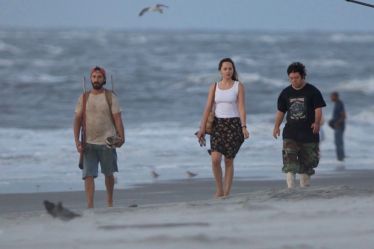
Like many critics have already pointed out, Peanut Butter Falcon is reminiscent of the works of Mark Twain, particularly The Adventures of Huckleberry Finn. The story of a young man with down syndrome (Zack Gottsagan) escaping from his care facility and joining an outlaw (Shia LaBeouf) on the run is the best kind of a feel-good buddy dramedy. It has both the heart and the smarts, and great performances all around. 

It also captures the deep South authentically. It’s able to portray some of the worst aspects of the region without feeling condescending or patronizing (unlike some films, *cough* Three Billboards Outside Ebbing Missouri *cough*). 

The only weak spot is the ending, which feels hastily wrapped up in a way that suggests the screenwriters didn’t know how to end the story. But it doesn’t ruin the film and, in a way, keeps the overall fable-like tone. Peanut Butter Falcon is a great choice for an almost all-ages movie night and is, as the kids say, truly wholesome. 

A Beautiful Day in the Neighborhood

20beautiful2-videoSixteenByNineJumbo1600.jpg

A Beautiful Day in the Neighborhood plays like an episode of Mr. Roger’s Neighborhood, but for adults. Because of that, Mr. Rogers (played by Hollywood’s Mr. Rogers, Tom Hanks), isn’t really the lead. This film isn’t going to give you more insights into Rogers, like last year’s excellent documentary Won’t You Be My Neighbor? will. But if you want to understand what it’s like to be on the receiving end of Roger’s gentle teaching and affirmations, and maybe think through some anger or bitterness you’ve been holding onto, this movie is the perfect way to do it. It’s an ideal holiday movie in this regard, and a great watch. If the documentary answers the question of who Mr. Rogers was, then this film answers the question, “How was his show and teaching style effective?” Just keep in mind that this film is for teens and adults- there won’t be much for kids. 

Marriage Story

Marriage-story-header.jpg

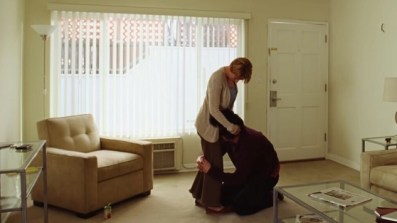
A lot of praise has already been heaped on Marriage Story, and with good reason. It truly is a great film, full of raw emotion, layered performances, and a lot of truth. 

I don’t usually let distance from a film’s subject matter keep me from commenting upon it. But as someone who doesn’t have any experience with the deeply complicated and personal topics of the film, I feel particularly ill-equipped to say much about Marriage Story. I think it will speak to everyone in a different way. All I’ll say is that I highly recommend it. 

Bombshell

ENTER-BOMBSHELL-MOVIE-REVIEW-MCT_57175731.jpg

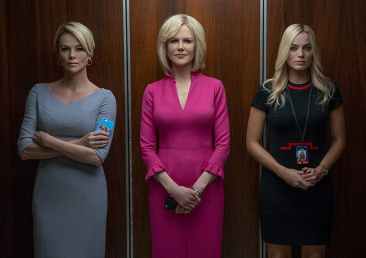
Bomshell is this year’s Vice or The Big Short, using an Adam McKay-lite style to tell the story of the women who brought down Fox News’s Roger Ailes and broke some of the first ground of what would become the #MeToo era of exposing sexual harassment and assault.

When talking to a friend of mine who was interested in seeing the film, he admitted that he was reluctant because he felt the trailers had made the film seem like it was going to be saying all men are evil. He is also conservative and didn’t want to sit through two hours of bashing Fox News. I was able to tell him that while this film isn’t pro-Fox News or its particular brand of conservatism, Bombshell is less concerned with liberals vs. conservatives and more concerned with right vs. wrong, no matter what side of the aisle you’re on. There are jabs at both liberals and conservatives, and there are voices in the film that speak to the positives of Fox News. It’s a much more balanced film than either of McKay’s works. 

The point of Bombshell is not to say “men are trash” or to condemn all conservative news outlets. Instead, it is to show how a system of power and predators can be built, how it’s controlled, and why so many are victims to it. This system is not just a Republican thing- it’s a human thing. The film makes it clear the paranoia this system feeds and how high the stakes are for the women who come forward with allegations. It shows that changing any social ill takes both individual leadership and institutional change. 

Bombshell isn’t content with just exposing Roger Ailes. Instead, it goes beyond one bad man and interrogates many of the elements that go into making a workplace toxic. By examining these systems, the film engages in a form of sociological storytelling. That makes it a film that goes beyond being timely into being important.

-Madeleine D.

Top 50 Favorite Movies: (Part 2 of 2)

This is the second and final part of a list of my top 50 favorite movies of all time. The films are NOT in any numerical order because each film means something different to me, and their significance has changed as I have changed. This is under no pretense a “best movies of all time” list.

I judge these films on three criteria.

  1. Quality of the filmmaking
  2. Relevance and message (social perspective, if it accomplishes what it sets out to do, and what I believe it adds to the world.)
  3. How much I like it (enjoyability factor, my viewing experience, personal significance, etc.)

These are all, of course, my opinion, and will change over time and as I see more great films. I hope you will share your favorite movies, and maybe want to check out a few of mine!

Fiddler on the Roof

🎶If I were a rich man. Daidle deedle daidle Daidle daidle deedle daidle dumb🎶

The Avengers

The Avengers began an incredible era of superhero filmmaking, and despite being relatively small compared to films it would later spawn (like Endgame) the first Avengers movie still remains one of the strongest Marvel entries in terms of memorable character interactions and action sequences. 

The Sound of Music

This movie’s music is, as the kids say, fire. Julie Andrews? Perfect. Everything else? The ideal movie musical. 

Pete’s Dragon (1977)

Pete’s Dragon holds a special place in my family’s history, but even without the nostalgia, this film is the ideal family movie. The story of a boy and his dragon has memorable performances by Jim Dale, Mickey Rooney, and Helen Reddy, the music is catchy, the animation and live action hybrid isn’t too shabby, and if you have only seen the lifeless 2016 remake, you’re doing yourself a disservice. 

Finding Nemo

Do I really need to defend Finding Nemo? Pixar’s ocean odyssey about parent-child relationships and letting go is breathtaking storytelling, a true epic. 

Okja

Bong Joon-ho’s whimsical and dark parable about the modern food industry didn’t convince me to go vegetarian, but it did take my breath away. The energy and boldness of the film is only comparable to Sorry to Bother You (also on this list). If an Alice in Wonderland-like adventure into a funhouse mirror version of our corporate food-branding landscape isn’t intriguing enough, watch it for Jake Gyllenhaal basically playing a Batman villain, Tilda Swinton playing twins, and Paul Dano giving a performance that may make you cry. 

Hunt for the Wilderpeople

Taika Waititi’s sweet and spunky story of a boy and his foster dad running through the New Zealand wilderness to hide from the authorities is laugh-out-loud funny and often touching. Sam Neil is at his grumpiest and newcomer Julian Dennison is a talent to be watched. Don’t believe me? Please just watch this scene with Taika Waititi’s cameo

Inkheart

As I say in my review of the film: 

“There is something otherworldly and magical about seeing prestigious actors in B-level fantasy roles that I will never grow tired of. Helen Mirren riding a unicorn, Jim Broadbent watching on as Andy Serkis is eaten by a mythical shadow-monster, and Paul Bettany talking to a ferret and breathing fire is the movie I never knew I wanted.”

Get Out

Get Out is the kind of film that could only be made by a comedian, and it’s just an added bonus that Jordan Peele is already a master horror director on his first go. Comedy and horror both explore a culture’s taboos and anxieties, poking and prodding at them in different ways that may make you laugh or scream, or in the case of Get Out, both. 

Mulan

This Disney animated princess movie is also a full-blown war movie, with stunning animation and a great soundtrack. Don’t mess it up, upcoming live-action remake!

Up

People talk about the first ten minutes of this film being one of the best (and most emotional) scenes in cinema, and it is. But the rest of the movie is just as excellent as a meditation on moving on without loved ones, chasing old dreams, and realizing the life you are given is the best adventure you can have. 

The Hunchback of Notre Dame

This underrated Disney adaptation of Victor Hugo’s classic has major tone problems, but when it’s not trying to do a Genie rip-off with Jason Alexander’s gargoyle, it’s a dark and sophisticated tale about injustice and a look at what can happen to a religious man who doesn’t understand his own religion. I can’t watch the “Hellfire” sequence without getting chills. 

It

I’m a wimp when it comes to horror movies, but It (the first one) captured my heart with its Goonies-style “Losers Club” and a scary, but more just odd, Pennywise, played by Bill Skarsgard. It’s immensely watchable and unnerving.

Sorry To Bother You

Have you ever wondered why corporations are able to monetize activist movements so efficiently? Have you ever felt the effects of capitalistic dehumanization? Have you ever wondered what a half horse-half man abomination would look like? Well, Boots Riley has the movie for you in this bizarre retelling of Dante’s Inferno, as our protagonist travels further and further into the darkness of our societal ills. 

Short Term 12

One of the reoccurring motifs in this movie comes from the fact that the youth at the care unit are there voluntarily, and if they run past the gates, they’re free and the staff can’t touch or restrain them. So frequently kids go awol and try to run away. The staff members run after them and follow them as far as they can, walking behind them, and waiting for the kids to collapse or choose to go back with them. 

This image, of walking with someone, refusing to leave them, never giving up on them, and always being there to listen, struck me deeply as a moving portrait of the good shepherd in the Bible. It’s a depiction of what Jesus says he does for us, and in return, we can do for others. This is what it means to live life with people.

Shoplifters

Shoplifters tells the story of a makeshift family at the edges of society in modern-day Tokyo. It raises questions about when doing the moral thing is not the legal thing with sensitivity and care. 

Annihilation

My favorite film of 2018, this psychological thriller starring Natalie Portman brings up questions of self-destruction with a sinister yet stunning alien backdrop. Come for the sci-fi adventure, stay for an existential crisis. 

First Reformed

Paul Schrader’s story of a pastor with a crisis of faith over his fear of climate change still haunts me. 

Avengers: Age of Ultron

There is a unique form of persecution that comes with telling people Avengers: Age of Ultron is your favorite and the best Marvel movie. This film has signs of growing pains, as it was one of the first MCU movies to really start expanding the universe and setting up multiple movies in one film, but despite these problems, it is the most thematically coherent (and bold) of the Marvel films and has some of the best character moments of any superhero film. It sets the MCU on the journey it takes through to Endgame. Not to be dramatic, but I will stand by this film until I die. 

Little Women (1991)

Little Women is the movie equivalent of being given a reassuring squeeze of the hand by a loving family member. Louisa May Alcott’s classic has been adapted many times (and we’ll get another interpretation next week from Greta Gerwig) but I think this adaptation captures best the novel’s energy and tenderness. Winona Ryder and Christian Bale, in particular, give charismatic performances.

The Princess Bride

You can quote it, I can quote it, we all can quote it, and with good reason. The Princess Bride is a perfect film. 

Unknown Girl

The Unknown Girl is a movie about boundaries and thresholds. Characters attempt to cross thresholds, both physically and metaphorically. Our heroine must cross various cultural boundaries to try to find and share the truth- and it’s hard. She isn’t always successful, and we see the fallout as people try to stop her. 

As a Christian, I worship a man who never saw a boundary he wouldn’t cross. He never hesitated to talk to people because of their gender, ethnicity and nationality, class, history, or reputation. He never let cultural lines and customs stop him from reaching out to others in love or saying what needed to be said. The Unknown Girl gives me an example of seeing this in a modern context, and it gives me more courage to do so in my own life. 

Return of the King

It’s hard to stick the landing, but Peter Jackson’s Lord of the Rings trilogy does so with gusto. And no, there are not too many endings. 

Fellowship of the Ring

The one that started it all is basically a flawless film. The fellowship is brought together, the conflicts between characters foreshadow the larger conflicts between countries and ideologies to come, and there is memorable line and after memorable line (One does not simply walk into Mordor. You… shall not… pass!!!! Yes, but what about second breakfast?)

The Two Towers

The middle movie of the Lord of the Rings Trilogy is my favorite because it best balances the expanding scope while still having small character building moments. Gollum and Eowyn are introduced into the story, we get a mini Shakespearean drama with the court of Rohan, Aragorn starts being pulled out of the shadows into the light, and Merry and Pippin are fleshed out beyond being comic-relief. My fan side and critic side are united.

Postscript, 7/10/2021: Honorable mention is Mamma Mia! (2008)

Quiet Faithfulness and Courageous Resistance in “A Hidden Life”

Guest review by Jonathan Dorst

51595305_303.jpg

In Romans 13, the Apostle Paul lays out a general principle of Christian citizenship: “Let every person be subject to the governing authorities. For there is no authority except from God, and those that exist have been instituted by God. Therefore whoever resists the authorities resists what God has appointed, and those who resist will incur judgment. 

But, what about when the governing authority is the Third Reich, a government intent on ridding the world of all who are not of the ‘Aryan race’? Did Paul mean for the people of Germany and Austria during the Nazi regime to quietly fall in line and never put up a resistance? 

Interestingly, just a few verses after the opening verses of Romans 13, Paul writes, “Therefore one must be in subjection, not only to avoid God’s wrath but also for the sake of conscience” (Rm 13:5). Why would he mention the conscience if he intended for obedience to be automatic? And, to further complicate (or, depending on your perspective, to further balance) things, how does one reconcile Paul’s later admonition to keep the 10 Commandments as the law of love, and that “Love does no wrong to a neighbor”? (Rm 13:10).  

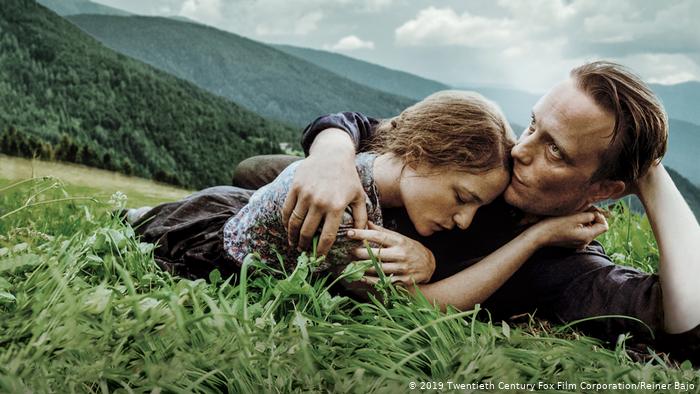
These are the moral questions that director Terrence Malick is asking in his latest film, A Hidden Life. The film is a portrait of a real-life conscientious objector, Franz Jägerstätter, a Catholic Austrian farmer who refused to serve the cause of Hitler and the Nazi Party during World War II. Much like the more well-known figure, Dietrich Bonhoeffer (a Lutheran pastor who was actually part of an assassination plot to kill Hitler), Jägerstätter finds the courage to resist from his faith. 

This is Terrence Malick’s ninth feature film, spanning five decades that began with 1973’s Badlands. It is his best film since 2011’s The Tree of Life and his most accessible (and most linear) film since 1978’s Days of Heaven. All of Malick’s trademark stylistic touches are present in A Hidden Life: gently rolling Steadicam, an emphasis on the beauty of nature, a compassionate gaze towards his subjects, limited dialogue with much of the story told through visuals, voiceover, and a judicious use of classical music. But, whereas, some of Malick’s recent films have felt almost like a parody of his style (I’m looking at you, Song to Song), here his style is perfectly suited for the patient viewer to truly contemplate the difficulty of Franz’s choices, and by implication, the experience of all conscientious objectors who are made to be martyrs. 

A Hidden Life brings to mind the classic 1966 film A Man For All Seasons, as well as the more recent Silence (2016) and Hacksaw Ridge (2016), and, to some degree, Braveheart (1995). What those films accomplish through dialogue and confrontations, Malick accomplishes through quiet interactions and visual symbols. And like A Man for All Seasons and Silence, the character of God is questioned even as the duty of men is at the forefront. When a priest in A Hidden Life says, “God only cares about the heart,” we have to ask ourselves whether God is a pragmatic, ends-justifies-the-means kind of deity, or whether He calls us to a radical obedience in both body and soul.  

While we have the benefit of 20/20 hindsight of what the proper response to Hitler should have been, there’s no doubt that our choices would have been immeasurably harder had we lived in the uncertainty of the time before Hitler was defeated. The best movies call us to confront our own character and beliefs, and A Hidden Life gives us the gifts of time and story to help us ask ourselves who we are and who we might be when put in an impossible situation. It’s one of the best films of the year and one of the best uses of three hours that I spent all year. 

Check out more of Jonathan’s reviews at:

https://www.patheos.com/blogs/chorusinthechaos/author/jonathandorst/

Top 50 Favorite Movies: (Part 1 of 2)

This is part one of a list of my top 50 favorite movies of all time (part two will come next week). The films are NOT in any numerical order because each film means something different to me, and their significance has changed as I have changed. This is under no pretense a “best movies of all time” list.

I judge these films on three criteria. 

  1. Quality of the filmmaking
  2. Relevance and message (social perspective, if it accomplishes what it sets out to do, and what I believe it adds to the world.)
  3. How much I like it (enjoyability factor, my viewing experience, personal significance, etc.)

These are all, of course, my opinion, and will change over time and as I see more great films. I hope you will share your favorite movies, and maybe want to check out a few of mine!

Harry Potter and the Order of the Phoenix

This is my favorite of the Harry Potter films because it turns the series from being about a boy at magic school to a story about a boy and his friends fighting fascism and systematic suppression of information! It explores Harry’s relationships with the various adult figures in his life as he is caught between their various ideologies and becomes more aware of the way they are each trying to use him for their personal agendas. 

Children of Men

Alfonso Cuaron’s best film stays with you, feeling both relevant and timeless, with evocative imagery and a call for empathy. 

Now You See Me 2: The Second Act

I’m not gonna lie- this is a terrible movie from just about every standpoint except the acting. But it is so ridiculous, over-the-top, and shameless that I can’t help but love it. 

Memento

An incredible screenplay, brilliant framework and a masterclass in detailed-oriented storytelling. Memento is one of Christopher Nolan’s best works. 

The Space Between Us

Three things keep this movie afloat:

  1. Absolute sincerity in the central young-adult romance
  2. A truly puzzling ethical dilemma the characters wrestle with
  3. Gary Oldman and his luscious locks hamming it up

The Emporer’s New Groove

The Emporer’s New Groove never fails to make me laugh. This animated, 100 jokes a minute comedy is perfected by delightful voiceover work from Patrick Warburton and Eartha Kitt as Kronk and Ezma.

A Christmas Story

A favorite of my family, A Christmas Story contains classic scene after classic scene that satirizes the American celebration of Christmas while also ultimately being a sweet ode to every family’s holiday eccentricities. 

The Three Amigos

This movie is about the importance of coming together as a community to fight injustice. It’s about living your life not as if it’s a dress rehearsal, but the real deal. It’s about facing your personal demons, which just may be, in the case of this movie, a big scary man named El Guapo. 

Eighth Grade

This may be the best modern film about pre-teens out there. Comedian Bo Burnham uses his characteristic wit and sharp observations to make something bittersweet and ultimately hopeful. The kids struggle, but they’ll be alright. 

The Florida Project

When it comes to films about poverty- particularly when they involve children- they are usually accused of either being too upbeat or being “poverty porn.” The first accusation can stem from a failure to recognize the humanity of people who are usually only acknowledged as political talking points. The second accusation can often be correct, especially if the filmmaker has no personal experience with poverty, but the accusation can also be made out of disgust and fear. Sean Baker’s The Florida Project, in my mind, is neither of these things. The story of a girl growing up in a budget hotel outside of Disney World is not precious, but also gives its characters moments of joy and beauty. It also showcases William Dafoe playing a real-life superhero.  

Despicable Me

I’m sorry Megamind fans, but this is the better of the animated villain-turns-good-guy movies. Steve Carrell charms as Gru, a lower-level supervillain who ends up adopting three little girls and becomes the super dad he never knew he could be. Yes, it’s hard to revisit this movie if you have minion-PTSD, but trust me, it holds up. 

Jonah: A Veggie Tales Movie

This was the first movie I remember seeing in theaters. The soundtrack is true art, the animation and voicework excellent, and, fun fact, because of this movie I begged my parents to name my younger sister Jonah. They didn’t.

Elf

Modern Christmas classic. You’d have to be a cotton-headed ninny muggins to dislike Elf

The Incredibles

Brad Bird’s film explores complicated family dynamics and the ethics of being extraordinary, all while being smart, hilarious, and exciting. 

The Hate U Give

Don’t despise this film for its youth. The Hate U Give, based on the young-adult novel by Angie Thomas is a nuanced and unflinching look at police violence, how it affects the family and friends of its victims and the discourse around such incidents. Amandla Stenberg here is a revelation. 

Joe vs The Volcano

This absurdist satire with Tom Hanks and Meg Ryan is criminally underrated. The two stars have great chemistry and plenty of ridiculous scenarios to act against in this subversive rom-com. 

The Tree of Life

You have to watch Tree of Life knowing two things. One: it’s not going to make much sense the first watch. Two: it’s a lyrical retelling of the biblical story of Job. Be patient and openminded, and let the beauty of Terrance Malik’s magnum opus sink in. 

It also has dinosaurs in it. 

AND Roger Ebert.com just named it the #1 film of the decade! 

West Side Story

When you’re a jet you’re a jet all the way!!!!!

The Muppet Christmas Carol

This is- objectively- the best A Christmas Carol adaptation. This is not up for debate. 

College Road Trip

This woefully overlooked comedy starring Raven-Symone and Martin Lawrence still makes me laugh no matter how many times I see it, mining comedic gold out of an overprotective father’s efforts to keep his college-bound daughter close to home. It also features Danny Osmond in a singing, John Candy in Planes, Trains, and Automobiles– esque role. 

The Godfather

I don’t think I need to explain why this film is great. It lives up to its hype. 

The Goonies

You can’t get more classic-adventure-movie than Goonies!

Night of the Hunter

L O V E  / H A T E on the knuckles. “Leaning on the Everlasting Arms.” This sinister film is a stylistic masterpiece and highly memorable. 

Dead Poet’s Society

“O Captain my Captain!” TEARS. 

The Dark Knight

The Dark Knight changed superhero movies forever, ushering in a dark age (both literally and metaphorically) with its more grounded aesthetic and political undertones. The movie is nonstop action and intrigue, driven by the iconic Joker performance by Heath Ledger. 

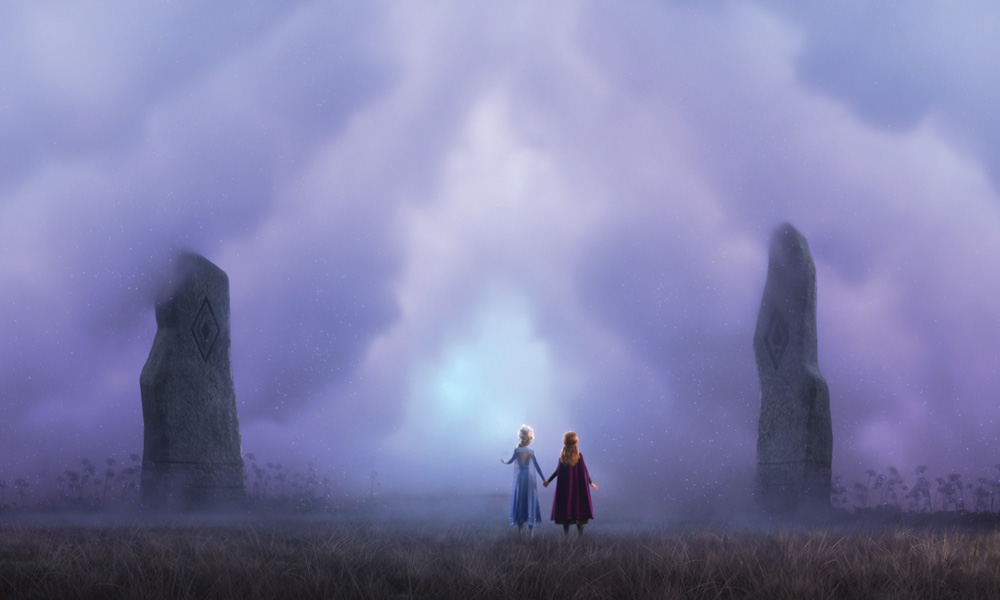
Taking It To Eleven: Frozen 2

frozen-2-9.jpg

*Major spoilers!

The biggest complaint I’ve heard about Frozen 2 is something along the lines of “Frozen didn’t need a sequel.” To which I say, does anything ever need a sequel? How do you even justify a fictional story continuing? No fictional story actually needs to be continued. Sure, we know why Frozen 2 actually exists: to make money. So do all sequels. The question is really, is the sequel a good film? 

I would also argue that, of all the animated movies out there that could benefit from a sequel, Frozen is one of the top. Frozen was a rush job from Disney- reworked at the last minute and plagued with production troubles from the beginning. The film is oddly paced, tonally inconsistent, and hints at darker themes but is stubbornly shallow in many regards, including its half-hearted jabs at Disney’s past that acts as meta-commentary. But, despite the chaos, there was enough gold there, enough sparks of inspiration, that it became a worldwide phenomenon (and one of the most financially successful films of all time). 

So Frozen 2 is a test: can Disney understand what parts of Frozen made it so popular, trim the fat, and get to the core? Can Frozen 2 build upon the first, or will it be a retread, with all the warts of the first? 

In my opinion, Frozen 2 is an excellent sequel. It builds perfectly upon the first. 

Frozen 2 figures out what people love about Frozen: the sister bond between Anna and Elsa, the music, the timeless-yet-progressive-but-not-too-daring script, the dark undertones of Elsa’s powers and how she is a mirror for whatever “differentness” you feel, and the primal urge to scream-sing as you pretend to blast ice from your hands. Frozen 2 takes all those things to an eleven. It has an epic quality that many animated films aren’t able to capture. It takes elements from horror and superhero and fantasy films and weaves them together through exciting visual and narrative choices that present a truly moving spiritual coming-of-age story of Anna and Elsa. 

The animation is stunning. Comparing this film to the first, it’s astonishing how sharp and clear the animation is after just six years. The music is also as compelling as the first, although because the whole soundtrack is more elevated and heightened, there is no one standout “Let it Go,” despite Disney marketing “Into the Unknown” as such (personally it’s “Show Yourself” that sends shivers down my spine each time I listen to it).

The shaky foundations laid for each character in the first film get expanded upon. Anna is given more substantive character traits than quirky and clumsy and is transformed into a believable leader. She makes several tough decisions and sacrifices in the film and multiple emotional moments. 

Kristoff is relegated to the sidelines, but he does get a great musical number. His storyline is primarily a comedic b-storyline about trying to propose to Anna, but under that is a rather touching lesson in learning how to be a more mature partner. He also says the two most romantic lines of the movie (and possible any Disney movie ever): “I’m here. What do you need?” and “My love is not fragile.” His storyline is a continuation of a theme from the first film: that true love isn’t instant; relationships, both the romantic and familial kind, take work. 

As for Elsa, she continues to represent all the weird and repressed older sisters out there. She gets all the grandiose moments, but those are balanced with exploration of her shy and reserved personality, traits which aren’t framed as something to get rid of. She is loved and accepted by the more spunky and extroverted Anna, and as long as Elsa continues growing and loving people, then it’s okay. 

Like its predecessor, Frozen 2 hints at much deeper themes and ideas but hesitates to commit to them. For example, after much fanfare, Elsa is not confirmed to be LGBTQ+. Also, this movie stresses that Anna and Elsa’s parents were kind and loving, and not the abusive ones Frozen sort of suggested they were. But overall, Frozen 2 follows through much more than Frozen, and in the words of Anna’s song, sometimes it’s enough for someone (or a studio) to just do the “Next Right Thing.”

The biggest example of this is that Frozen 2 is kinda about reparations. In this case, it’s about honoring a treaty made with the Northuldra people (an indigenous people group based on the real-life Sámi people in primarily Norway and Sweden). In the film, Anna and Elsa’s grandfather (king of Arendelle) made a deal with the Northuldra people, but then killed their leader and started a battle that ended up imprisoning the Northuldra and some Arendelle people in a forest. To make amends to the tribe and end their imprisonment, Anna has to break a dam, which will unleash enough water to destroy Arendelle. All of the people of Arendelle have been evacuated, but Anna still makes the decision to sacrifice the kingdom to make things right. While I am not familiar enough with the Sámi people to know how they have been treated historically, it’s hard to not draw similarities in this story with the current conversation in America about reparations and making amends for the centuries of genocide and disenfranchisement of Native Americans, African Americans, and other people groups. However, because Disney is a major corporation and not in the business of revolution, Elsa swoops in at the last minute and uses her powers to redirect the water, saving Arendelle. So, yay! We fixed colonialism and we didn’t have to sacrifice anything in order to implement reparations!

Despite the lack of consequences in this film, compared to Disney’s other film about Native Americans and white settlers, 1995’s Pocohantas, this is a big improvement. Frozen 2’s colonialism commentary doesn’t both-sides the argument like Pocohantas, which showed the settlers and the Native Americans as equally responsible for the destruction of the Native Americans. And Disney signed an actual treaty, promising respectful representation, with the Sami people for Frozen 2 and hired Sami people ascultural consultants. Yet, Frozen 2 does, like Pocohantas, frame one man as the instigator of violence and the embodiment of racism and hatred. If that one guy hadn’t been so fearful of the people he didn’t understand, then everything would have worked out! Luckily, though, two people can fix this one guy’s actions years later. 

But while those are all things to consider, I still appreciate the effort and zeal of the film, even if it only goes halfway. It’s a positive movement for the Disney company and gives families plenty to talk about, and can even be integrated into conversations about Thanksgiving and the holiday’s origins. 

Frozen 2 exceeded all of my expectations and I think it sets a new standard, not just for sequels, but for Disney animation. Now the question is: is the world ready for a Frozen 3?

Seven Great Thanksgiving Movies (That Aren’t Specifically About Thanksgiving)

Screen Shot 2019-11-21 at 3.43.35 PM.png

Many of us this Thanksgiving will be spending time with family and friends, and with that often comes a time where you need to pop in a movie. So, I’ve curated a list of Thanksgiving movies that could do the trick!

But there’s a catch: none of these movies are about Thanksgiving, take place at Thanksgiving, or are in any way related to the holiday. Instead, I think they embody the themes of Thanksgiving, including thankfulness, family, rest in the midst of busyness, cross-cultural communication and restoration. These seven films are listed in no particular order. 

(P.S: as always, before gathering the family around any of these movies, be sure to check the rating and content of these films to determine if they are appropriate for your audience) 

1. Horton Hears a Who! (2008)

This animated adaptation of Dr. Seuss’s beloved work is driven by the combined super-sonic energy of Jim Carey as the voice of Horton and Steve Carell as the mayor of Who-ville, along with clever visual gags and storytelling. The film is all about Horton caring and advocating for the dignity and protection of the Whos, and a sweet subplot about the Mayor coming to understand his son for who he is- and not who he wants him to be- makes the film a lesson in parental love, community, and tolerance, with the ever-important message that a person’s a person, no matter how small. 

2. The Space Between Us (2017)

This earnest teen romance is about Gardner (Asa Butterfield), the son of an astronaut, who is born on Mars and comes down to earth to meet his long-time penpal Tulsa (Britt Robertson). Tulsa and Gardner go on the run from NASA, pursued by Dr. Shepherd (a delightfully hammy Gary Oldman). Along the way, Gardner experiences life on Earth and shows a jaded Tulsa the beauty around her. 

On Earth, Gardner asks everyone he meets, “What is your favorite thing about Earth?” He helps people be grateful and realize how being alive is a gift unto itself. It’s an expression and exercise in thankfulness. Another driving storyline is Gardner trying to find his father, with the help of Tulsa, who is in the foster system herself and has never had a real family of her own. The revelation of Gardner’s father’s identity is, well, predictable, but like all of this movie, it’s so charming and sincere that it might make you hug your family members a little tighter this Thanksgiving.

3. Cloudy with a Chance of Meatballs (2009)

Another animated film based on a beloved children’s book, Cloudy with a Chance of Meatball tells the story of Flint Lockwood (Bill Hader) an oddball inventor/scientist who builds the machine that turns water into food, making food rain over the town. 

Most obviously, the food on display here is as scrumptious as your Thanksgiving spread, (although the film does take a dark turn into a warning against overconsumption), but there are other connections to Thanksgiving beyond the turkey. This film also focuses on the relationship between a father and son, and the importance of looking beyond each other’s eccentricities. It also shows the importance of taking responsibility for your actions and getting help from others, and that everyone has something to offer. 

4. Christopher Robin (2018)

Ewan McGregor stars as a grown-up Christopher Robin, now a jaded, workaholic father who finds himself playing again with his childhood friends like Winnie the Pooh, Tigger, and Piglet. The “dad you work too hard” narrative isn’t a new one by any means, but Christopher Robin is one of the best of the genre. Bringing Winnie the Pooh and company to life could easily veer into uncanny-valley territory, but Christopher Robin doesn’t, through marvelous special effects and some very game actors. Here are lessons about the importance of resting, not putting your identity in your work, and the value of childlike wonder. 

5. Little Miss Sunshine* (2006)

No movie quite puts the fun in dysfunction like Little Miss Sunshine! The family dramedy is a classic road trip film that pulls great performances out of its ensemble cast, including Steve Carrell, Abigail Breslin, and Paul Dano. Whether you identify with the Hoover clan or not, you can probably relate to the ups and downs of being with family, and the ultimate joy of strong family bonds. 

6. Coco** (2017)

Pixar’s film about a young boy traveling through the Land of the Dead during Dia de los Muertos is a gorgeous animated treat. While Dia de los Muertos isn’t the Mexican version of Halloween or Thanksgiving, it does touch on some of the same ideas as these holidays do. 

I said in my review of Coco that the film “acknowledges death, believes that there is an afterlife, teaches children that death isn’t something to be afraid of, and celebrates family.” Thanksgiving is a time often spent with family, and as such, it will be, for many of us, the first time without a certain family member, those who have passed away. Or maybe we are spending it alone, or are spending it with unsafe/toxic family members. Coco explores all of these dynamics and can be a comfort as you navigate this holiday and the rest of the holiday season. 

7. The Unknown Girl (2017)

This is one of my all-time favorite movies so I kinda just wanted to put it on the list so that more people will be aware of it, but it really does have Thanksgiving themes! After she refuses to open the door to a woman one night, Dr. Jenny Davins (a mesmerizing Adèle Haenel) learns the woman was murdered soon after. Dr. Davins, feeling guilty over not helping the woman, goes on a quest to learn the woman’s name and what happened to her, becoming unrelenting in the face of those who want to keep her silent. 

The movie is all about the question of our responsibility to strangers. How much of the suffering of others do we really need to care about? When tragedy hits a community, what should be the community’s response? How much should we put ourselves on the line to cross cultural boundaries and thresholds? What does it mean, practically, to believe in the sanctity of life and give someone dignity posthumously? I believe Thanksgiving is a time to survey our communities and their culture, and ask these kinds of questions. 

*Thanks to Scott Morris for the suggestion!
**Thanks to Kaitlin Glasgow for the suggestion!

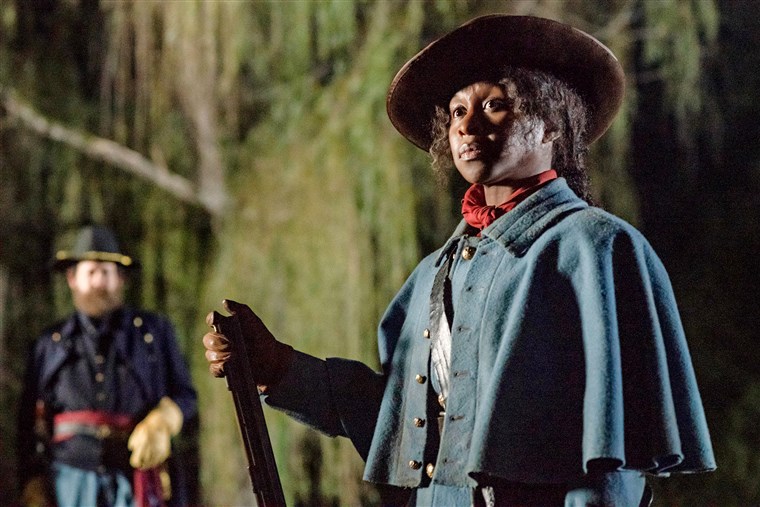
One Day I Hope To Pay For This Movie With a $20 Bill With Her Face On It: Harriet

191103-harriet-cs-1059a_68d3f51e565202078330dcac50d9cb4c.fit-760w.jpg

Harriet is the first film about the famous underground railroad conductor, Harriet Tubman. Directed by Kasi Lemmons, Harriet will finally break ground on an overdue story. While this would usually give the film an edge, it has been plagued with various criticisms since its announcement, which has hampered public excitement. I think several of the critiques are understandable and worth considering, and I would recommend reading responses by black critics for more insight. However, for this review, there wasn’t any criticism that I agreed with that pertains to the film directly. 

Harriet is, in many ways, a by-the-numbers biopic. Sometimes Oscar-bait speeches and historical reverence threaten to bring it down. However, those moments never bring down the film too much. There are a couple of reasons why I think Harriet is able to rise above being a subpar biopic into a great film.

  1. There simply aren’t a lot of biopics of black women.
  2. There is a strong emphasis on family, and it’s genuinely touching to see Harriet’s family play such a key role here. It helps humanize her and balance out the more superhero-esque feel the movie tries to go for. 
  3. Harriet’s Christian faith is leaned into. There are moments of this film that remind me of Luc Besson’s The Messenger: The Story of Joan of Arc. Harriet is not nearly as stylized or flat-out weird as that film (although explicit connects between Harriet and Joan of Arc are made) but it does take Harriet’s religion seriously. One of the reasons I love The Messenger is because when I saw it, I realized it was the first time I had seen a movie focus on, and take seriously, a woman’s religious faith. 
  4. There are several stylistic choices (including the depictions of her visions) that elevate the film and make it feel worthy of the big screen. 
  5. The whole cast is wonderful. Lesley Odom Jr. and Janelle Monae are excellent and charismatic, and director Kasi Lemmon’s son Henry Hunter Hall, in particular, is a surprise. He has a cool “look” and is a scene-stealer. Joe Alwyn is fine as the (mostly fictitious) son of Harriet’s owner. In all honesty, though, I spent most of his screen time thinking about how strange it is that he’s dating Taylor Swift, and that his southern accent is pretty good for a Brit
  6. And speaking of Brits, Cynthia Erivo is our titular hero, and she’s incredible. There are two aspects to her performance that stuck out in particular. First is Erivo’s acting in the scenes where Harriet arrives in Philadelphia and has to learn how to be free. I had never considered this- acting free after a lifetime of enslavement- as a difficulty freed African Americans had to face, but Erivo is able to wordlessly communicate Harriet navigating through this new world through observation and imitation of those around her. And second, Erivo conveys a deep inner life of Harriet that we aren’t privy to. I always felt like Harriet, no matter how quiet she was being, had an incredibly complex mind and a thousand thoughts going at any given moment. 

Harriet is American History, biopic, slavery, and feminist storytelling 101. It’s a primer that will hopefully be an access point for many people. I don’t mean this to be derogatory in the least; this means I want another movie about Harriet Tubman, and other movies about all sorts of black women and other heroes (or villains) of history. 

After all, Harriet Tubman’s last words were, “I go to prepare a place for you.” It seems in that spirit that Harriet will hopefully help prepare a place for even more stories like it, stories that can go even further, higher, and deeper.