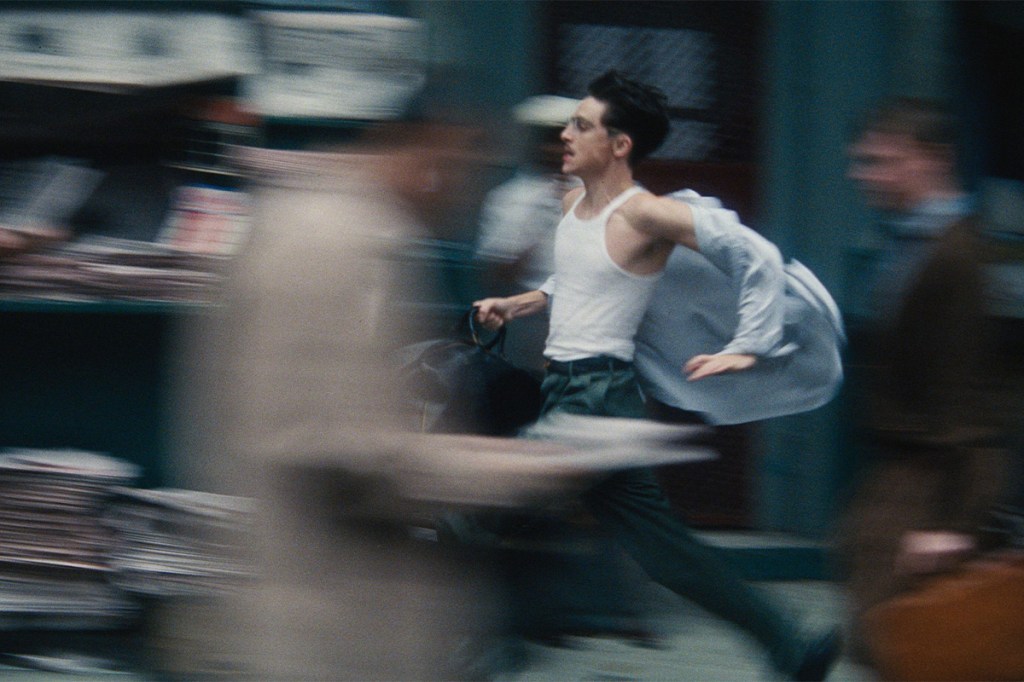
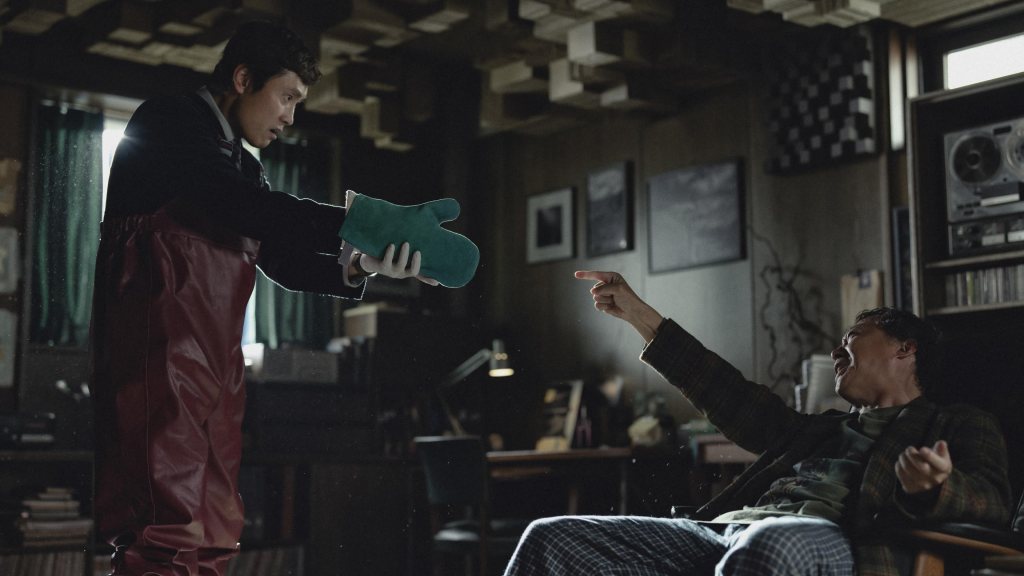
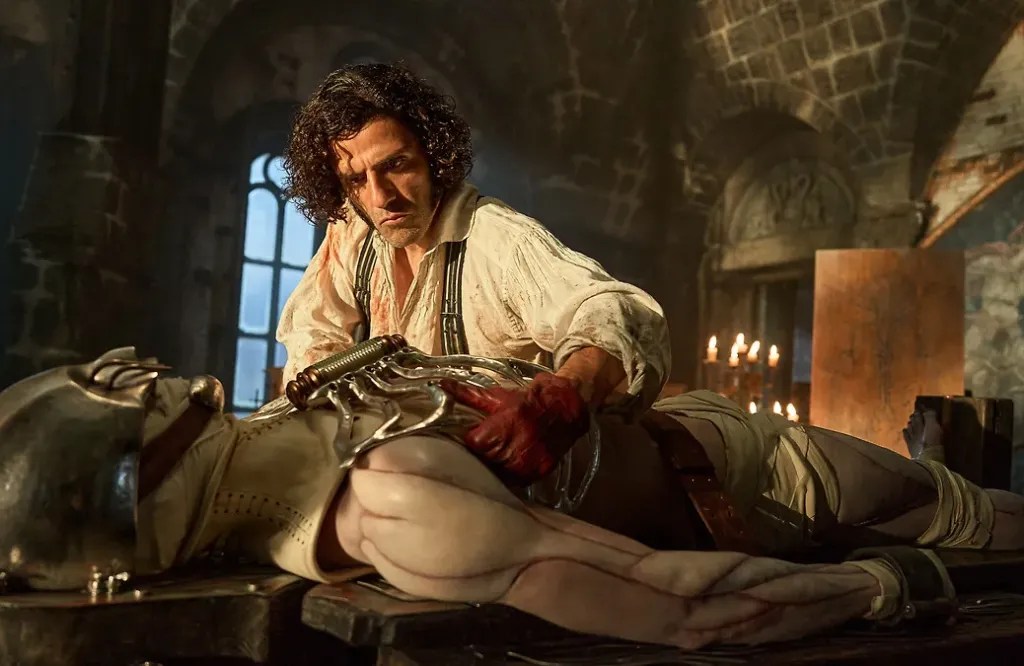
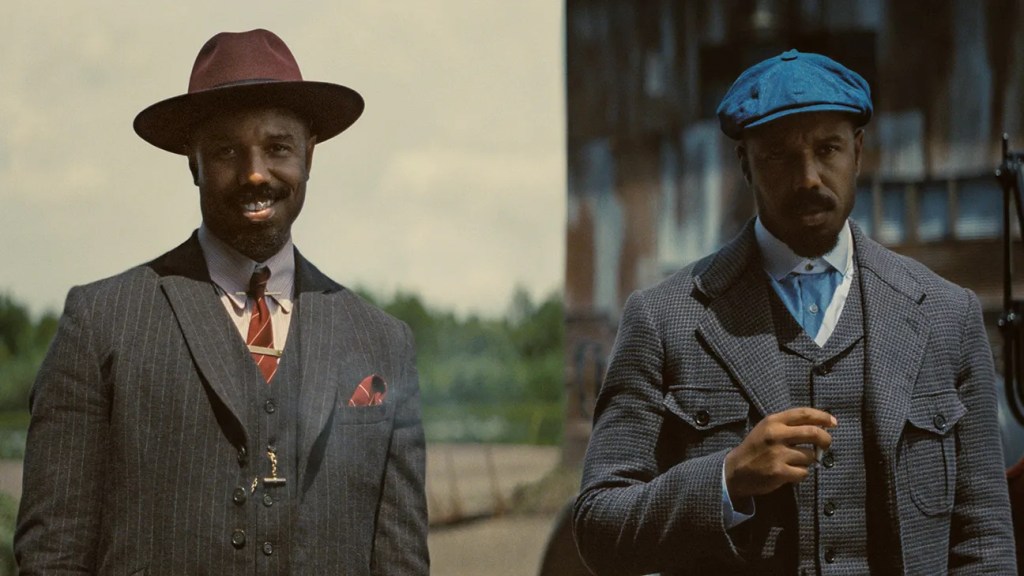
My Top Ten Films of 2024

It’s four months into 2025, which means it is the perfect time to release a best of 2024 list…. right? Right? Well, better late than never! It’s a slow season for the theaters right now, so if you’re still up for catching up on a few of last year’s releases, here are my recommendations. And if you missed my normal Oscars coverage, I wrote a piece not about the nominees themselves, but the spiritual undercurrents of the awards ceremony, for Byfaith magazine.

2024 was a weird year for movies. Last year’s strikes pushed several movies around in the release schedule, and a gap in the production schedule meant we didn’t get the normal amount of blockbusters or tentpole pics. I found myself underwhelmed on the whole, and my best movie-going experiences tended to be with movies I can’t recommend in good conscience (I love you Madam Web, Kraven the Hunter, and Venom 3). Still, the following are true gems that I think will stand the test of time in representing 2024 well. 

10. Good One


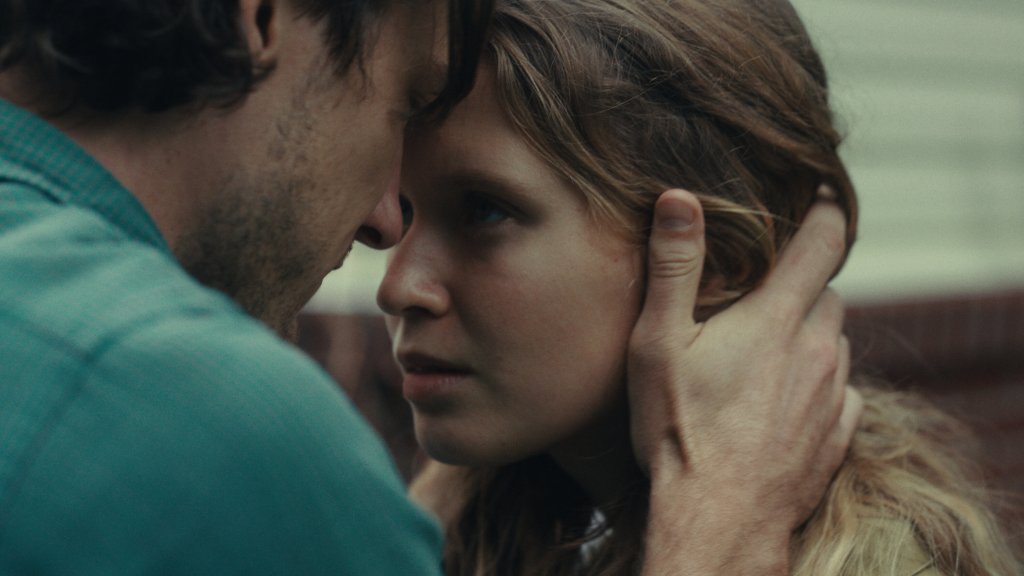
This small, quiet indie never got the recognition it deserved as one of the best scripts of the year. The film follows 16-year-old Sam (Lily Collias) as she accompanies her father (James Le Gros) and his friend (Danny McCarthy) on a camping trip. Various tensions mount between the trio, and Sam becomes more and more aware of how her female body- even among what should be the safe company of her father- makes her other, different, and even vulnerable. The film is incredibly nuanced and the performances are very naturalistic, making this almost feel like a documentary. Even the most shocking moment of the film is done so quietly and deftly that it might take a moment to recognize what has happened– which itself is how many of the most terrible experiences in our lives tend to play out. 

The film reminded me of 2023’s The Starling Girl in how well it understands the unique perils and horror of female adolescence, and the maddening state of being at an age where people will treat you as either a child or an adult based on whatever is most convenient to them. It is a deft picture of how and why some men protect one another’s bad behavior, even at the expense of women they love. And it is a cautionary tale– a sad parable– about the betrayal of not truly listening to one another, of being so caught up in our own insecurities that we become blind to reality around us. Good One does all of this without making any character a villain and without ever hitting a false, preachy, or melodramatic note. It’s an astounding feature-length debut by director India Donaldson, and absolutely worth seeing. 

9. We Live in Time

There are two main criticisms I’ve come across about this romantic drama starring Florence Pugh and Andrew Garfield. 

1) It’s a weepy tear-jerking melodrama. To which I say: sometimes you want to enjoy a weepy tear-jerking melodrama, and not many are as well-acted as this one! And few are as romantic and take as big of swings, such as allowing the characters to be truly flawed, even unlikeable. 

And 2), the non-linear storytelling is confusing and doesn’t serve the story. I do agree with this criticism. The film’s choppy nature, moving back and forth along the timeline, doesn’t feel as planned out as a film like Greta Gerwig’s Little Women, which used this same strategy to great emotional effect. While occasionally the film manages to use this framework well, it mostly feels random and a bit alienating. However, the sheer charisma of the actors, and a script that lingers on messier emotional truths than I’m used to seeing from this kind of film, all overcome the flaws and make this a film I’m already excited to rewatch. 

8. I’m Still Here

This year’s best foreign film Oscar winner and one of the best picture nominees, I’m Still Here deserves every accolade it received. It tells the true story of the Paiva family in 1970s Brazil during the military dictatorship. Fernanda Torres is truly incredible as the matriarch Eunice, who holds her family together and seeks justice when her husband, a political dissident, is abducted. The film is excellent as an immersive experience into this moment in history, but it is equally moving as a story about how people possibly continue on with their lives after grave injustice. The film rests on Torres’s shoulders, but the ensemble here is wonderful too. The film’s ability to make you connect and love this family instantly, with their scenes feeling so lived in and natural, is one of the most impressive elements of any film I saw this year. Brave the subtitles and check this one out, I don’t think you’ll regret it.

7. The Book of Clarence

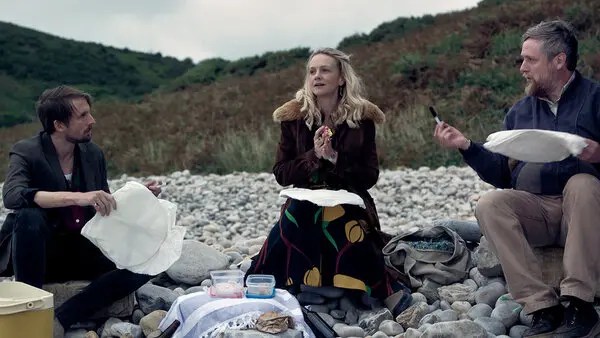
This criminally overlooked biblical epic came out last January, and it’s a shame that the studio seemingly had no faith in it and buried it completely. I’ve written before about my Commandments for Biblical Movies, and that my main criteria for any kind of religious-adjacent movie is that it needs to be, if nothing else, interesting and well-made. The Book of Clarence is bold, self-assured, and idiosyncratic. It tells the (obviously fictional) story of Clarence, a poor man who sees Jesus performing miracles and decides to fake some miracles of his own to get the same attention (and money). 

What sounds on the surface like an irreverent, jokey parody film ends up being a deeply earnest story about doubt and faith. Through its fictional narrative, it ushers you into a distorted wonderland-mirror version of the Gospel that makes you see the actual Gospel narrative with fresh eyes. It’s a parable, and Jesus loves using parables because they disarm us and let the truth sneak past our natural defenses. Book of Clarence turns the typical trappings of sword-and-sandal biblical epics, a film genre we are familiar with, on its head, to tremendous effect. And star LaKeith Stanfield continues to be one of our best actors working today, with, in my opinion, a nearly perfect filmography. Easily the most creative, off-the-beaten-path film on my list. Don’t miss it!

6. The Wild Robot

I laughed, I cried, it moved me, Bob. The animation is stunning. The score is excellent. Strong voicework across the board. This story about motherhood and community was a balm to my soul. Yes, this is technically based on a children’s book, so it is IP, but it is so lovingly handcrafted that The Wild Robot feels diametrically opposed to the more soulless animated movies of the year (looking at you, Despicable Me 4). While watching, I thought of children in my life I want to show this movie to, to inspire wonder in their hearts and build their moral character. 

The film’s main achievement to me is a deeply countercultural message about how, instead of “finding yourself” by looking within yourself and casting aside all responsibility to other people, you actually become more of yourself within the bounds of community, within the responsibility you have to other people. Being beholden to others is actually part of learning who we really are. The titular wild robot here doesn’t shake her programming on her own; she loses her programming and becomes truly free when she assumes responsibility of caring for a little duckling, and becomes entrenched in the community of animals on the island she finds herself. And even in a Christ-like move, she brings the enemy animals who hate her and each other together at great sacrifice to herself. Jesus loved us and saved us while we were still sinners and enemies to him. The Wild Robot depicts this beautifully. 

5. The Apprentice

Admittedly, I don’t know who this movie is for. The Apprentice, about the rise of Donald Trump in the 80s and his relationship with lawyer Roy Cohn, does not paint Trump in a good light, so I can’t imagine it will inspire his fans to see the movie, nor change their minds about him. Yet it’s too nuanced to feed the egos of those who disdain him- with only a few exceptions, the movie (admirably, I think) avoids taking easy shots at the things that make up Trump’s popular caricature. While these qualities keep the film from being any kind of box office success, they result in a fascinating picture. 

I think the greatest triumph of the film is that it makes the case that, like all of us, Donald Trump was not made in a vacuum. He is the product of our culture, a consequence of it. And for those of us who hate him, a reminder that we are perhaps not so incapable of being like him as we might think. Even divorced from its real-life counterpart, as a cautionary morality tale and character drama, it absolutely succeeds. And while I’ve never been a huge Sebastian Stan fan, his work here is absolutely exceptional, one of the best biopic performances I’ve ever seen. 

4. Sing Sing

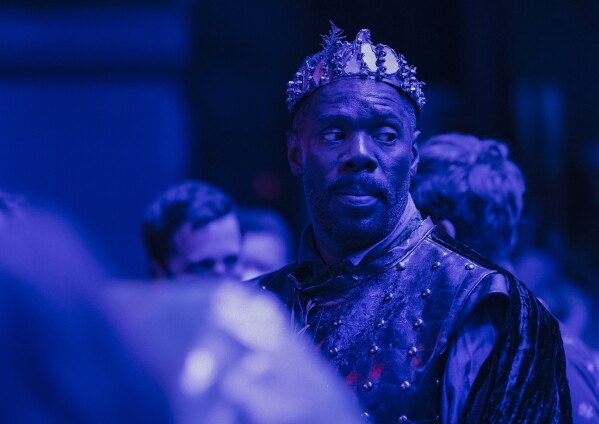
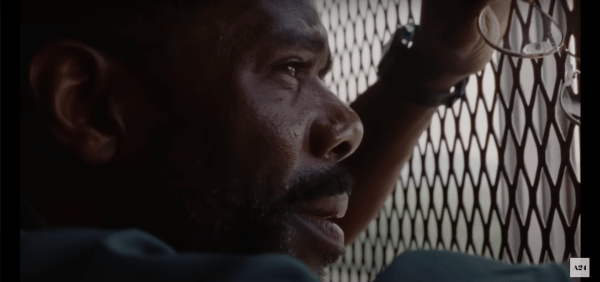
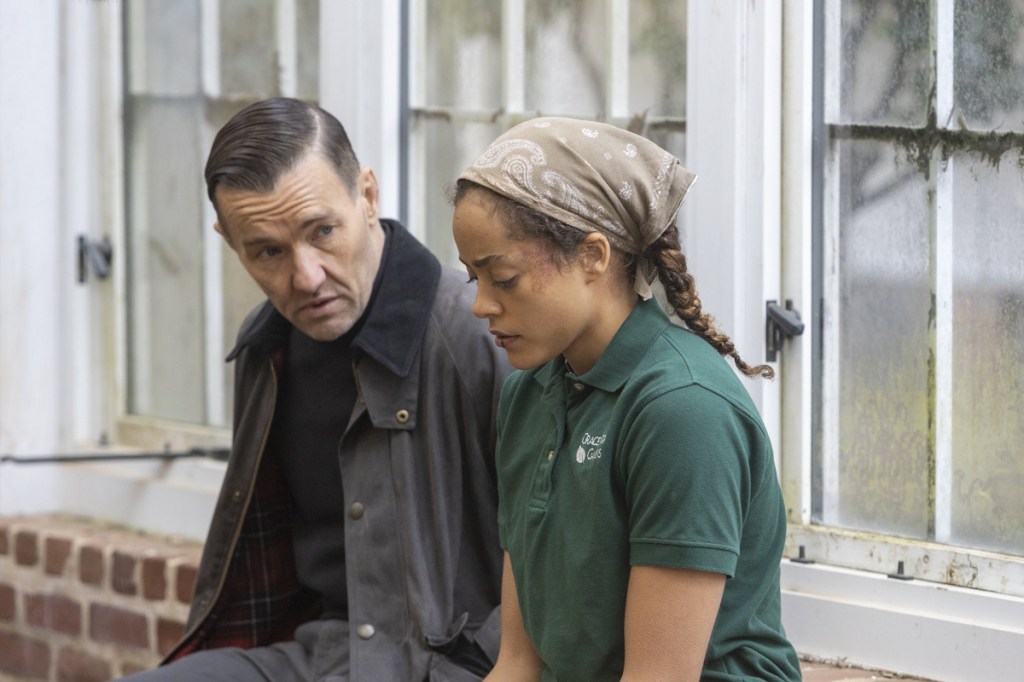
I wrote a lot on Sing Sing and how it deeply moved me, so I won’t elaborate much here, except that Coleman Domingo deserved more than just an Oscar nomination! Like The Wild Robot, this movie is about the need for community and courage to live life with hope. 

3. Thelma

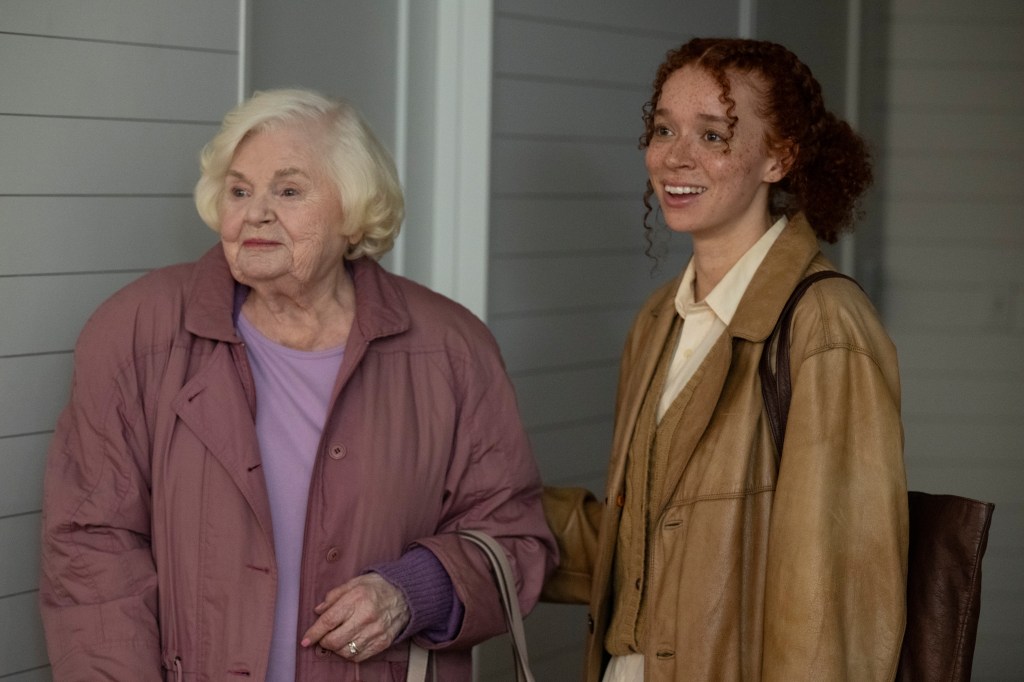
This is still the most entertaining comedy of the year. Featuring a terrific ensemble, a touching portrait of an intergenerational relationship, and action movie homages, this is a crowd-pleaser in the best sense.

2. Conclave

I have had some spirited discussions over this movie! Conclave has sat heavily with me since I saw it. Not just the intriguing thought experiment at the heart of the film (and the twist that infuriated some but I’ve continued to mull over) but its depiction of the business of ministry. Ralph Fiennes is the anchor here as Cardinal Lawrence. Lawrence reminded me of so many pastors and ministry leaders I know– flawed men and women who are weighed down by the responsibility on them, emotionally distant from God but earnestly clawing onto His robes with desperate hands, trying to do the right thing in the meanwhile. They live out the embodiment of Peter’s words: “Lord, to whom shall we go? You have the words of eternal life.” Watching him navigate the political and the personal, walking into confrontations with hunched shoulders and shaking hands, quietly bearing the brunt of people’s outbursts and slander and anger as he wrestles with God internally, was one of the most thrilling experiences of the year. It’s a stunning performance and a must-see film.

1. A Real Pain

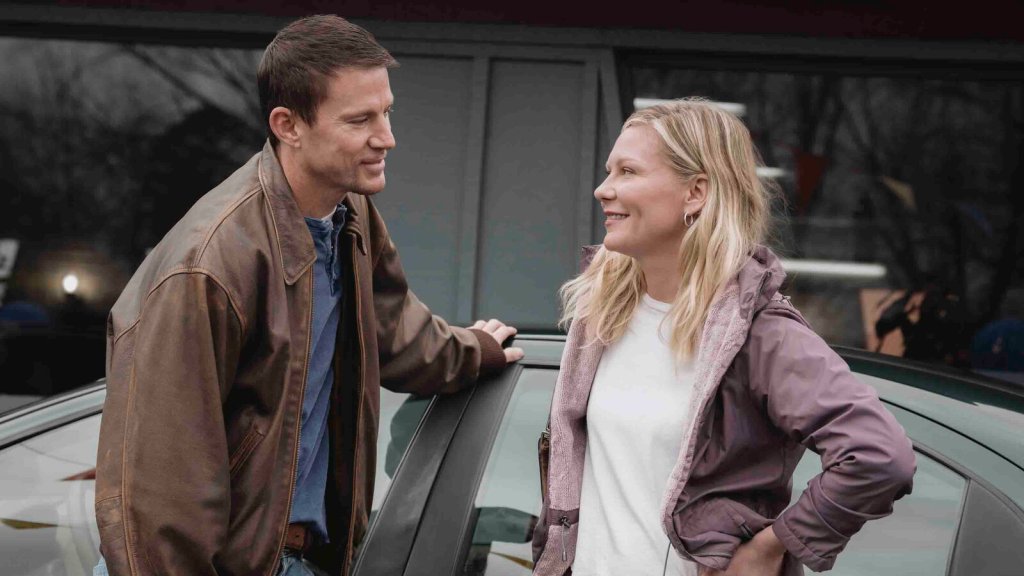
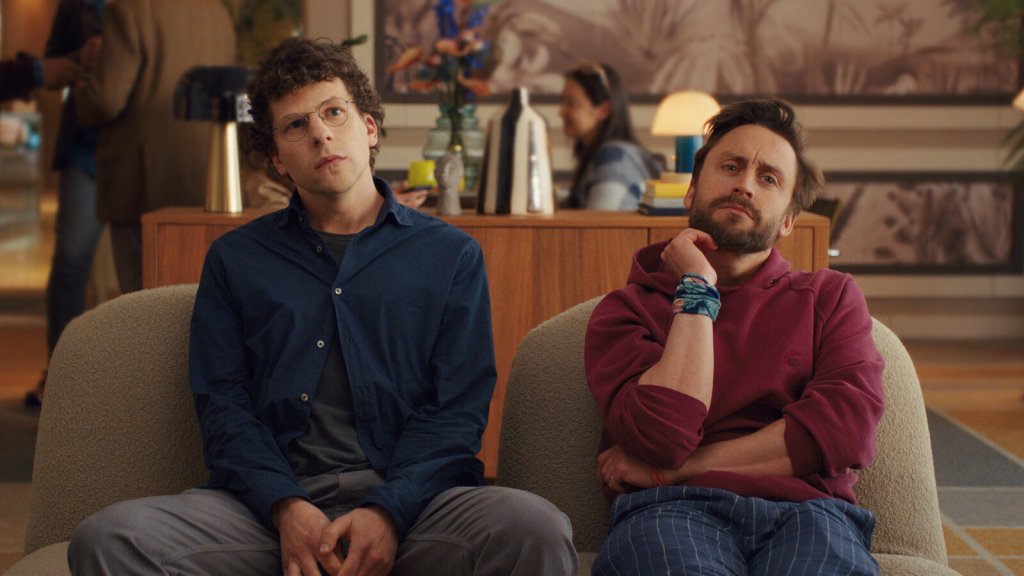
I’m astounded by how good this is. No notes from me, Mr. director/writer/actor Jesse Eisenberg. Nothing in this film strikes a false note. Kieran Culkin’s performance is flashy in a way that made it a guarantee he would receive more attention than Eisenberg’s (even though Eisenberg’s performance is a very important and compelling counterbalance. The film also has an excellent ensemble surrounding the two leads). But I’m not cynical about it because I don’t think there’s another actor working right now who has the live-wire energy of Culkin. It has the best characteristics of his Roman Roy performance but is still distinct. He is electric to watch, and props to Eisenberg for giving him a great script. There was not a moment of this movie where I wasn’t totally engrossed. A Real Pain asks thoughtful questions about grief and how we experience and express it differently (and what outward displays of pain get socially acknowledged, and which do not). It’s a small movie, but despite its conventions (road trip indie! There’s one every year) it still felt different from everything else I saw this year.

Honorable Mentions: Nosferatu, Civil War, Between the Temples, The Brutalist, A Quiet Place: Day One, The Promised Land, His Three Daughters, and Juror #2

Worst Movies of the Year: Megalopolis, Drive Away Dolls, and Deadpool and Wolverine

– Madeleine D.

Sing Sing and the Redemptive Imagination

Stories of the sort I am describing are like that visit to the deck. They cool us….Hence the uneasiness which they arouse in those who, for whatever reason, wish to keep us wholly imprisoned in the immediate conflict. That perhaps is why people are so ready with the charge of ‘escape.’ I never fully understood it till my friend Professor Tolkien asked me the very simple question, ‘What class of men would you expect to be most preoccupied with, and most hostile to, the idea of escape?’ and gave the obvious answer: jailers.” –C.S Lewis

“Why should a man be scorned if, finding himself in prison, he tries to get out and go home? Or if he cannot do so, he thinks and talks about other topics than jailers and prison-walls?” – J.R.R Tolkien

At Sing Sing maximum security prison, there is a theater program.

Initially created because of the psychological and social benefits of participation in the arts, the program grew from just a nice initiative to something much deeper and profound for the participating inmates. 

In their cells, they plead their case for clemency and parole and sweat in the summer heat. On stage, they fight battles and win noble wars. In the yard, they keep their heads low, avoiding the ire of guards. On stage, they recite soliloquies written for kings and wear robes and crowns. In Sing Sing, they are men defined by the past. On stage, they are whomever they want to be. 

For Divine G (Colman Domingo), an innocent man who has been wrongly imprisoned, the program is a lifeline. 

Sing Sing is a narrative film, but is based on the true Rehabilitation Through the Arts theater program that began at Sing Sing and is now in several New York prisons. The movie even centers on a real play that was written and put on in the program. Domingo plays a real man, John “Divine G” Whitfield, who cameos in the film. The majority of the ensemble cast are also formerly incarcerated actors, many of whom are alumni of this exact program.

The film has to walk a very thin tightrope. It would be easy for this to be an unholy mashup of Shawshank Redemption and Theater Camp and become saccharine and cliche. To the cynical viewer, there may be moments when the film misses the mark and becomes a bit cheesy or softens the edges of its characters and their circumstances. But I personally think Sing Sing earns its powerful moments of catharsis, primarily through restrained filmmaking and an extraordinary performance by Colman Domingo (let this be the rallying cry of his Oscar campaign!). This movie has moments that allude to the horrific injustices of our penal system. But it is not ultimately about the justice system or the details of life in prison. If that’s what you’re looking for, it’ll disappoint. Instead, the film’s main focus clearly is, first, showing the dignity and personhood of these men, and second, how art is a beautiful and necessary means for building hope, dignity, and imagination. 

As a Christian, while watching the film and observing these themes, I couldn’t help but reflect on the concept of Redemptive Imagination. I don’t think I’ve seen a movie that illustrates the concept as perfectly as this one.

What is Redemptive Imagination? It is an imagination which is being redeemed through the work of the Holy Spirit. Whether you think of yourself as creative or not, everyone has an imagination that is constantly at work. We use our imaginations, yes, for artistic endeavors, like writing, creating visual art, making music, and much more. But we also use them to anticipate scenarios and situations we may encounter. Imagination feeds our anxieties, but also can stir in us bravery, passion, love, and action. Our imaginations and memories are entangled in a dance of fact and fiction. Our imaginations fill in the gaps created by the mysteries and uncertainties of our lives. Imagination is not a fleeting fancy, useless daydreaming that only the idle enjoy. Our imaginations have a serious, material impact on our day-to-day lives. Used well, our imagination builds greater realities. Used poorly, it destroys. But it is always being used. What takes up the most space in your imagination is the greatest indicator of what you love the most. 

Being a Christian means I have signed my allegiance over to God, but that’s just the beginning. I call Christ my Savior, but my heart, mind, and body continually rebel against what I know God wants for me. I am a person divided– both sinner and saint. As Paul writes in Romans, “For I do not understand my own actions. For I do not do what I want, but I do the very thing I hate… For I have the desire to do what is right, but not the ability to carry it out” (7:15,18). I am forgiven and loved by God, justified by the blood of Christ. That can never be taken from me. But now the work of the Holy Spirit is sanctification, the process of forming me more and more into the likeness of Christ, restoring me to full personhood, where my soul and my flesh will not be divided and at war anymore.

If my imagination is the war room in which the deepest passions of my heart are created, revealed, and acted upon, is that not the best place for the Holy Spirit to invade? If He can influence my imagination, then so much of me– my creative urges, my ambitions and dreams, my worldview and interpretations of circumstances– will be brought under His power. My imagination is, after all, a beautiful gift from God, first used in Eden by Adam to name the animals. It is a gift that has been led astray, but now can be transformed back to its original glory.

So what does a redeemed imagination in action look like? Here are some examples.

The tension of living as a sinner-saint is often exhausting. I swing from feeling like I am God’s gift to humanity, to feeling inhuman and unworthy of anything. On my pharisaical days, my redeemed imagination reminds me of Jesus, and his example humbles me and reminds me of how I need Him so desperately. On days when I feel the crushing weight of my sin and weakness, my redemptive imagination reminds me that God is making me into a new creation (2 Corinthians 5:17), and even angels long to understand His love and redemptive plan for me (1 Peter 1:12). 

When my fellow church member annoys me. My regular imagination decides there is ill will behind their awkwardness and eccentricities. My imagination makes excuses for me to avoid them, and see them as less than myself. But a redeemed imagination remembers they are also made in the image of God, an eternal being like myself. A redeemed imagination tries to picture what understandable, sympathetic reasons could make them act the way they do. A redeemed imagination makes me consider how I could treat them more tenderly and how I could picture us as members of the same family. 

A redemptive imagination helps me anticipate heaven with joy and excitement. It also helps me see with more clarity the important work to be done on Earth. Imagining what God is doing on Earth to bring about the Kingdom of Heaven helps me live more intentionally, but not put my ultimate hope in this world.

Finally, a redemptive imagination helps me see God’s invisible work all around me. Those repeated run-ins with my neighbor no longer look like a coincidence: What kind of relationships might God be calling me to foster with her? How do I love her better? The messy period of my life where everything went wrong and I was at my worst? That is not the end. With a redemptive imagination, I can begin to try to understand and believe– although maybe not fully, maybe not in this lifetime– that there is a bigger story at work that is redeeming these failures and sufferings. 

We participate in the work of crafting our imaginations every day. The media we consume dramatically informs our imagination. The stories we tell about ourselves and others reveal the narrative scripts we believe we are living out (Am I the hero here? Am I a victim? Is this a comedy? Is it a tragedy?). Our daily work, where we live, our cultural moment, our hobbies and interests, and so many more influences, are always informing our imagination. 

In Sing Sing, the theater program is a place where the inmates cultivate a redemptive imagination for their lives. Some ways this happens in the film:

A character refers to Divine G as the n-word. Divine G stops him, telling him that here, they don’t use that word. Instead, they call each other “Beloved.” Throughout the movie, the men refer to each other as Beloved. Their imaginations have changed. They are beholding one another more deeply and profoundly. It is a world that uses the n-word that is out of touch with the truth. Their redeemed imaginations allow them to actually see reality: that every person is, indeed, Beloved.

Divine G allows another man, Divine Eye (played by Clarence “Divine Eye” Maclin, playing a version of himself) to join the theater program. Divine Eye is a rough character, coming in with a big attitude and aggression that threatens to hurt the hard-won sanctity of the program. But Divine G sees artistry in Divine Eye, the potential for tenderness and talent and beauty that Divine Eye can’t even see in himself yet. And over the course of the film, being a part of the program does bring that out of Divine Eye. What made Divine G take a chance on Divine Eye? A redeemed imagination. 

When he joins the program, Divine Eye suggests the troupe perform, for the first time, a comedy. So they write a comedy– a time-jumping, hilariously idiosyncratic, imaginative play that includes Egyptian pharaohs, gladiators, cowboys, Freddie Kruger, Hamlet, and more. These men are in prison. Many will never be released or go home again. They will be forgotten. Their stories seem tragic. But in this exercise of imagination, they turn themselves into the heroes of a comedy. They act out, in essence, the idea that my life may look like a tragedy, but that’s not the whole story.

In church, when we sing hymns, I rarely feel all the words. When we sing “It is well with my soul,” in the moment, I almost never feel like it is well with my soul. But I sing those words not as some kind of lie, but to live into them. I am using my imagination to identify with something that is perhaps not yet true about me, but will be with the work of the Holy Spirit. My imagination clings to these words and my identity begins to take shape around them, because the passions of my heart now have something to be affixed to. When the inmates in Sing Sing play these roles, they are living into what is not yet true about themselves, but one day, will be. They are not heroic, victorious figures. And they are not free yet. But one day they will be. Maybe not on this side of heaven. But their story is ultimately a comedy, not a tragedy, because one day, we will all be free and home again.

Not everyone is made for community theater, but we are all artists. Whether your medium is the stage, the written word, the canvas, the home, the spreadsheet, the office building, the city, the church, the school, the hospital, the friendship, the family, the neighborhood, and everything and anywhere in-between, our imaginations are at work. Whether we are inmates at Sing Sing or live lives of freedom and comfort, we are all, with Creation, waiting to “be set free from its bondage to corruption and obtain the freedom of the glory of the children of God.” (Roman 8:21). As we await that ultimate emancipation, we use our imaginations to hold tightly to this deeper reality.

-Madeleine D.

Top Ten Movies of 2023

I know we’re four months into 2024 now, but in my opinion, it’s never too late to do a top-ten movie list! Some of these films only recently hit streaming, so it’s a perfect time before the summer movie season to catch up on some of the best that 2023 had to offer. 

2023 was the year of strikes, streaming, and surprises, with superhero movies across the board flopping at the box office, and Barbie and Oppenheimer creating one of the biggest box office events we’ve seen in years. If my top ten list were to have a theme, though, it would be that of mid-range movies (and foreign films) showing they still have a place in a crowded, blockbuster-centric media market. 

I have not seen: The Iron Claw, Ferrari, Napoleon, Poor Things, Beau is Afraid, Origin, Alice Darling, Saltburn, Polite Society, All of Us Strangers, The Creator, and Flora and Son

10. The Zone of Interest

As I wrote in my analysis of the film’s Oscar chances, The Zone of Interest is one of the most brilliant historical films I’ve ever seen, telling a story about the Holocaust that is unrelenting in its brutality without ever showing any violence on screen. It is confrontational to modern audiences and applicable to modern tragedies as much as it is an examination of the past. It sticks to its guns and is directed with clarity and precision by Jonathan Glazer. 

It’s a testament to this craftsmanship that one of the most powerful moments of the film happens after the movie ends, with the ending credits containing the most disturbing piece of music I’ve ever heard. Listening to it, I felt suffocated, unable to move in my seat as the lights began to rise. It felt like the musical equivalent of a panic attack, “the acoustics of hell”. I have never had that kind of an experience in a movie theater before, and the film completely earned it. The Zone of Interest is a must-see, and I hope its legacy spans far past this year.

9.  Reality

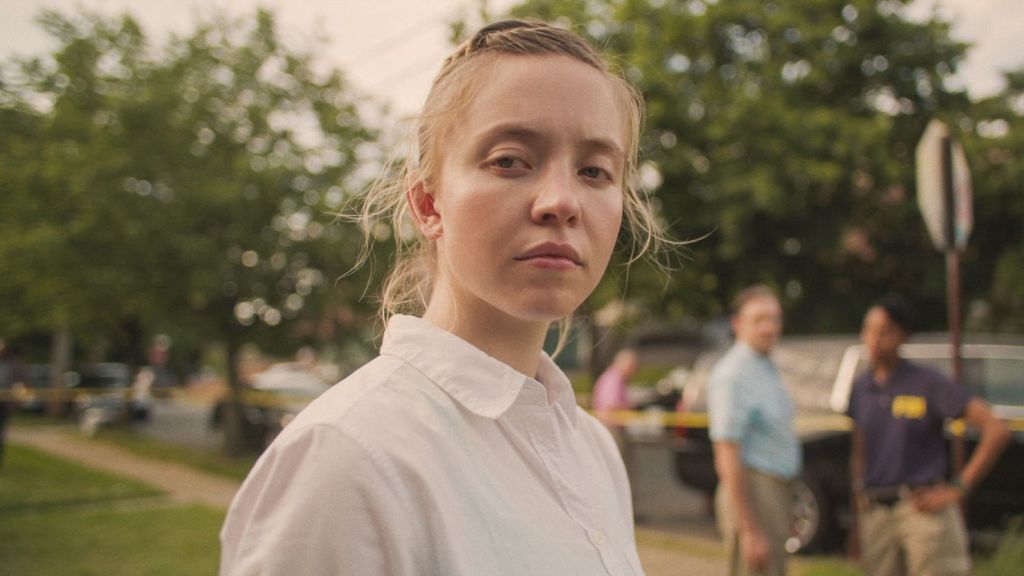
This film, which was only released on Max, tells the true story of Reality Winner (Sydney Sweeney), an NSA translator who was arrested and sentenced in 2017 for leaking intelligence regarding Russia’s interference in the 2016 election. All of the film’s dialogue is verbatim from the FBI interrogation transcripts, and it shows in real-time the arrest of Winner. 

The film’s greatest strength is its acting. Josh Hamilton, who I’ve loved since his role in Eighth Grade, is a scene-stealer as one of the FBI agents. Sydney Sweeney, who has gained a lot of momentum with several other recent projects like Anyone But You, is very impressive here, balancing the ambiguity of Reality’s motivations with the seemingly naive, innocent way she presents herself. What’s most striking about the film is just how… well, real it is. Movies about spies, espionage, political intrigue, and law enforcement are often predictable, overly quippy, and full of tropes. Here, the characters act like real people- awkward attempts to be polite, asking about things like taking care of pets and using the bathroom, and making jokes to ease the tension. And because it is a verbatim transcript, the film also lets the politics speak for itself, in a way that is gripping, refreshing, and unsettling to watch.

8. Priscilla

Sofia Coopola’s sensitive, thoughtful story of Priscilla Presley is a beautiful contrast and companion piece to Baz Lurhamn’s 2022 Elvis biopic (which I also loved). The two could not be more different stylistically, and that’s what makes them a glorious double-feature. 

Some have found Priscilla frustrating, saying it does not help us understand the real-life Priscilla Presley very well. The movie ends, fairly abruptly, once she leaves Elvis. If you are hoping for a true biography of the full life of Priscilla Presley, Coppola does not deliver. But I think Coppola was drawn to this story because of the way Priscilla’s experiences with Elvis touch on so many themes in Coppola’s work: rich women trapped by their wealth, young women coming of age, complicated relationships with older men, the loneliness of all of these things. The Priscilla here is archetypal, even though my experiences are nothing like hers, I saw glimpses of myself, my own life, in hers. Because of this, in another year saturated with biopics, Priscilla stood apart. 

7. Killers of the Flower Moon

As someone from Oklahoma, I am always thrilled to see Oklahoma represented in media, and in the past few years, a few high-profile projects (Reservation Dogs, Tulsa King, the upcoming Twisters) have begun to bring more attention to the state. Martin Scorsese’s Killers of the Flower Moon tells one of the darkest chapters of the state’s (and country’s) history, in this sprawling epic, based on the book by David Grann. 

When I first saw the film, my conclusion was that it was well-made, well-acted, and compelling, but suffered from a lack of focus. The book focuses more on the FBI, and it is structured so that the tragedy unfolds slowly, with the sheer number of murders piling on and on, suffocating the reader and building momentum so it is a big shift and relief when the FBI shows up and the conspiracy begins to be discovered. The movie suffers from not building momentum in this way, leading to a leisurely pace that doesn’t convey the overwhelming nature of this conspiracy to the audience. The film centers on Ernest and Mollie Burkhart (Leonardo DiCaprio and Lily Gladstone), but drifts away from Mollie about halfway through and struggles to make us connect deeply with any of the other Osage characters. 

I think all of those problems still remain. But as time has passed, the film has lingered with me. I remember the gut-wrenching moments of betrayal between Earnest and Mollie. I think about Martin Scorsese, showing up at the end of the film, indicting both himself and the audience for consuming tragedy for entertainment. I think of the beautiful Oklahoma plains, lovingly filmed, and the depiction of Osage culture that I had never been exposed to before. It has stayed with me in a way some of the other big award films of the year have not. 

It might not be remembered as one of Scorcese’s best, but I do think everyone should (if you have the endurance) see it. 

6. Godzilla Minus One

While Oppenheimer may have been the bigger movie about WWII nuclear warfare and survivor’s guilt, Godzilla Minus One is my personal favorite of the two. This Japanese production gets back to the basics of Godzilla’s origins with a story about a Japanese WWII kamikaze pilot who deserts his mission and survives the war. When Godzilla begins terrorizing Japanese shores, the pilot sees this as his chance to atone for his guilt. 

I’m writing this after seeing Warner Brother’s Godzilla x Kong: The New Empire, the fifth film in the “MonsterVerse” franchise. I enjoyed the film- it is exactly the movie you think it is: loud, big, dumb, silly, unnecessary, and a really good time. In Godzilla X Kong, Godzilla is nothing more than an animal. A smart animal, and sometimes even nearly like a superhero. But there is no meaning to Godzilla or his presence- he’s just there to fight other kaiju and be a nuisance to the human world. Meanwhile, Godzilla Minus One tells an emotionally resonant story about its human characters, and is also able to 1) comment on Godzilla as an enduring cultural symbol, 2) make commentary on Japan post-WWII and 3) have a universal theme about choosing to live. It’s a genuinely moving movie that also has impressive action scenes and visual effects (that it won the Oscar for!) Even if you don’t usually enjoy monster/kaiju movies, I think there is something here for everyone. 

5. The Starling Girl

After peaking too early in the year, The Starling Girl lost any chance at awards momentum and has been overlooked by many this year. This is a shame, as it has really stuck with me and remained one of my favorite films of the year. I’ve already written about its thoughtful portrayal of a fundamentalist religious community and the way it captures young women stuck in purity culture. Something that has also come to mind is how, like Priscilla, this also explores questions of agency in an age-gap, imbalanced power-dynamic relationship, from the woman’s perspective, with a female director/writer. Two movies aren’t enough to signal a trend, and they certainly aren’t the first, but I am curious if films like these are connected to the fallout from the #MeToo Movement. Directly after the watershed moment of that movement in late 2017, we had multiple films come out that drew upon the themes of the movement and/or directly showed how it came about, such as Women Talking, She Said, The Invisible Man, Tar, The Assistant, and Bombshell, among others. But now we’re getting some other films which are exploring the grey zone of these dynamics and relationships, less concerned with clarity and condemnation and more with pondering how these relationships happen and what they feel like to the people in them. It’s fascinating to see, and I want to see more movies like The Starling Girl get made. 

4. The Teacher’s Lounge

In a less competitive year for international features, The Teacher’s Lounge would have won the Oscar. This German drama about a middle school teacher (an astounding Leonie Benesch) whose effort to solve the mystery of theft in her school blows up into a full-out war between students and faculty, is a parable about our current moment. Questions of surveillance, censorship, the media, cancel culture, and multiculturalism all play out in a 7th-grade classroom. The movie is tense, thought-provoking, and incredibly well-written, acted, and directed. I cannot recommend it highly enough. 

3. Master Gardener

This is one of the strangest films of the year. I don’t understand what writer/director Paul Schrader was thinking or going for here (although I sure did try!) and, unlike the two other films in his “Man in the Room” trilogy, I’m still not sure if it’s actually good. But I saw this film in July, and it’s remained compelling to me since. It’s provocatively weird and uncomfortably earnest, and I’ll always admire a film that goes for it, even if the “it” is a bit baffling. 

2. Past Lives

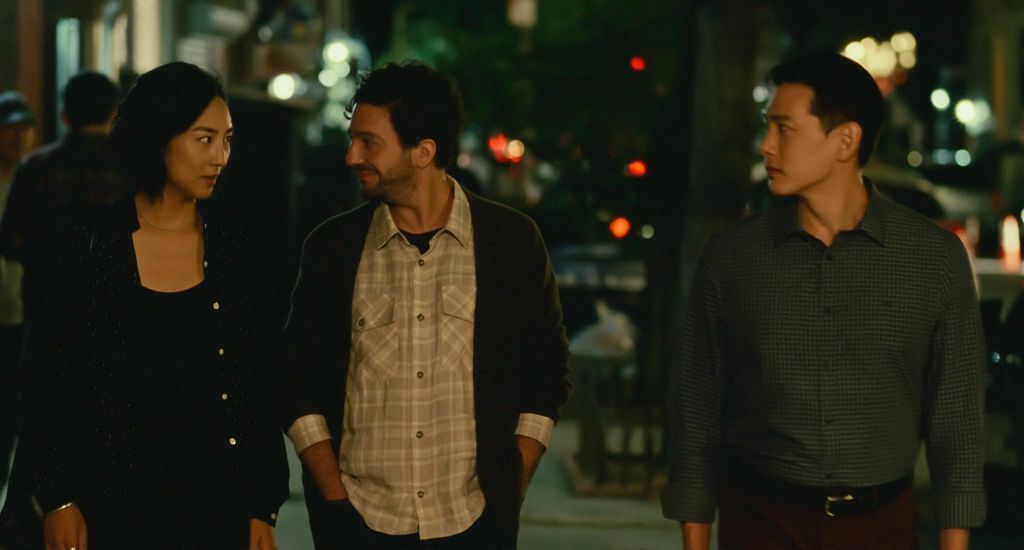
The directorial debut by Celine Song, Past Lives is a meditative drama about a Korean-Canadian woman who reconnects with her childhood crush, and wrestles between her desires about what could have been with him, and her marriage to an American man.

What’s remarkable about Past Lives, beyond its lush cinematography and excellent cast, is how it is able to tell a specific, unique story about Asian-Canadian/American immigration and being torn between cultures, and also a universal story about unmet desires, regrets, and layered, unexplainable relationships. I thought about dozens of people watching Past Lives: my childhood best friends, my what ifs, the people I’ve met recently who I wish I could have known as children, my family and the pain of being apart from them, and the feeling of being in a place where no one is from where you grew up, so they’ll never really know that part of you. This film elicited a deeply emotional response from me, and I can’t imagine it wouldn’t do the same to anyone else. 

There are other layers here that I love, well put in this review by Brett McCracken. While the film didn’t win either of its Oscar nominations, I hope the recognition it did get will ensure that we see more from Celine Song; she’s a talent to watch.

1. The Holdovers

It’s rare that I see a movie and immediately know the next time I’m going to rewatch it. But before I even finished The Holdovers, I knew I was going to watch it again the following holiday season, and hopefully, for many holiday seasons to come. Even beyond its retro ‘70s aesthetic, The Holdovers feels timeless, and I think that comes from its disarming sincerity. From the trailer, you know exactly what you’re getting: a Christmas tale about a group of curmudgeonly misfits bonding together. And for the most part, the movie tells that story completely straight, without a hint of irony, a dramatic twist, or any undercutting of the emotional beats. As I watched the film, I kept expecting the film to take a more cynical turn, or shy away from the more melodramatic moments. But it never did. The film is not at all boring or predictable to watch- there are many unexpected story points and the way the characters develop is nuanced and engrossing- but the movie doesn’t try to subvert expectations. But by telling its story so well, it somehow does that anyway. Next time you’re feeling a bit melancholy and need good company, give The Holdovers a shot.

Honorable Mentions:

Nyad, Theater Camp, Next Goal Wins, Dungeons and Dragons: Honor Among Thieves, Spider-Man: Across the Spiderverse, Haunted Mansion (look, I liked it!!!), You Hurt My Feelings, May December, Anatomy of a Fall, The Color Purple, Are You There God? It’s Me, Margret, and The Deepest Breath

Worst movies of the year: Ant-Man: Quantumania, Foe, & My Big Fat Greek Wedding 3

The Real Winner of the Year: Music in movies. This year we got the likes of

  • “I’m Just Ken,” from Barbie
  • “Peaches” from Super Mario Bros Movie
  • All the songs in The Hunger Games: The Ballad of Songbirds and Snakes
  • “Wild Uncharted Waters” from The Little Mermaid
  • The musical adaptation of The Color Purple
  • The musical planet in The Marvels
  • “Camp Isn’t Home” from Theater Camp
  • Taylor Swift’s The Eras Tour and Renaissance: A Film by Beyonce in theaters 

Runner up: Fantastic new young actors! We had Dominic Sessa in The Holdovers, Abby Ryder Fortson in Are You There God? It’s Me, Margaret, Leonard Stettnisch in The Teacher’s Lounge, and Milo Machado Graner in Anatomy of a Fall. I hope to see all of them again soon.

– Madeleine D.

A Guide to the 2024 Best Picture Nominees

The Oscar nominees are out, and while you might have heard quite a bit about the various snubs (was Greta Gerwig robbed?!) you might not have heard as much about some of the actual nominees. For that, I offer up this guide to the ten Best Picture nominees and give you some background on the nominees, an evaluation of their awards chances, and my own thoughts on the films. I hope this guide can help you in your journey of winning your Oscar ballot and beating all of your friends appreciating this great year of cinema. 

American Fiction

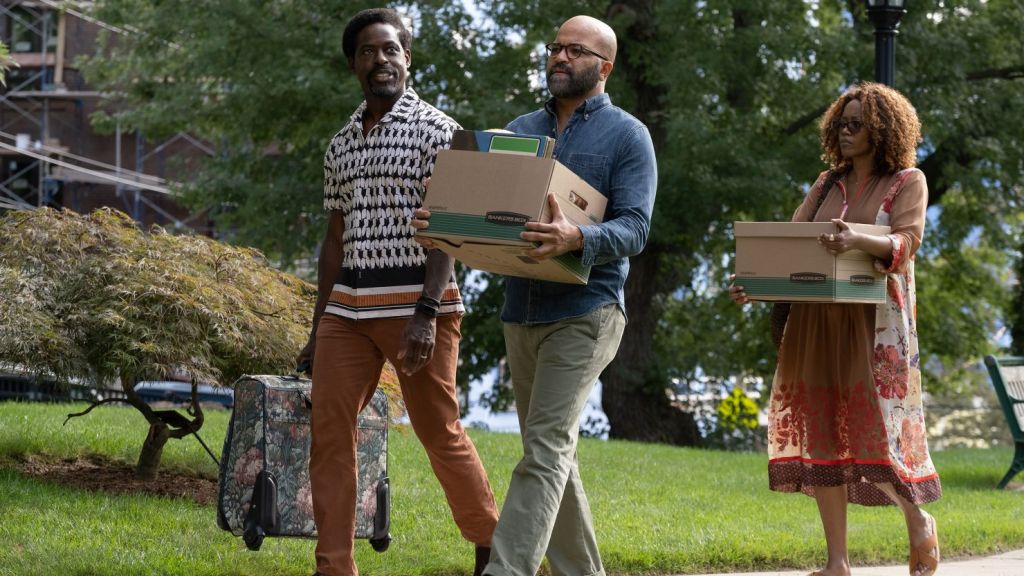
American Fiction stars Jeffery Wright as Monk Ellison, an author fed up with the publishing industry’s treatment of Black writers and literature. He swears not to stoop to the levels of artistic degradation he sees in his contemporaries, yet when his estranged family faces several crises, in desperation, he writes a novel that embodies everything he hates. When it becomes an unexpected success, Monk finds his life spiraling as he tries to keep up his lie. 

The film received five nominations: Best Picture, Best Actor for Jeffrey Wright, Best Supporting Actor for Sterling K. Brown, Best Original Score, and Best Adapted Screenplay by Cord Jefferson (based on the book Erasure by Percival Everett). This is also Jefferson’s directorial debut. While the trailers make this seem like a full-on comedy (and there are some very funny scenes of satire), the majority of the film is actually a serious family drama. 

It is unlikely that American Fiction will win in any of its categories due to bigger contenders. Its best chance is Adapted Screenplay, which tends to reward more experimental films that don’t win best picture but are highly respected (such as last year’s Women Talking, 2019’s JoJo Rabbit, 2018’s BlacKkKlansman, 2017’s Call Me By Your Name). I think American Fiction’s greatest competition in that category is Barbie. There doesn’t seem to be much momentum for American Fiction yet, but perhaps the film can rally and secure that win. 

I personally didn’t enjoy American Fiction as much as I wanted to. I think Jefferson has a lot of interesting ideas and a few of them are brilliantly executed, but only a few of them. I think the movie buckles under the weight of too many threads and ideas that aren’t fully explored or resolved. I also found the family drama a bit stilted. While I don’t know if this role as Monk’s brother is his best role, I love Sterling K. Brown and would be thrilled for an upset win for him, although he is in what may be the most competitive category of the whole ceremony. Jeffrey Wright is also excellent and very deserving, although he is up against Cillian Murphy and Paul Giamatti, so a win is very unlikely. While it might not walk away with anything, I do hope this gives Jefferson’s career momentum so he can make another film. He’s certainly a filmmaker to watch and I look forward to his next project. 

Anatomy of a Fall

Anatomy of a Fall, one of two international features on this list, is a French drama about a writer (Sandra Hüller, who also stars in The Zone of Interest) who is accused of pushing her husband to his death out of a window, a crime to which their blind son is the only witness. The film is half family-drama, half-court drama, with explorations of gender politics, marriage, and morality. And, like American Fiction, it is about a writer and the level of identification an artist may or may not feel with their material, and if we can morally judge a writer for what they write. The entire cast here is excellent. Milo Machado Graner, who plays the son, is a wonderful discovery; I hope he gets more work. While at times slow, the film ended up grabbing me with the careful way the pieces of the puzzle are unveiled in this compelling mystery.

It is nominated in four other categories: Best Actress for Sandra Hüller, Best Director for Justine Triet, Film Editing, and Original Screenplay. It is unusual that it is not nominated for Best International Feature (the reason why is quite a saga), but even if it were, it would have still been competing against fellow Best Picture nominee The Zone of Interest and dark-horse contender Society of the Snow. In the end, I don’t think Anatomy of a Fall will take home any awards. It did win Best Screenplay at the Golden Globes, so that would be my strongest guess for a win, but I think if the Academy takes a democratic approach this year, they’ll use this screenplay category to reward The Holdovers or Past Lives. It would be a shame for it to not get any wins, but I’m glad it is getting the attention it deserves with the nominations. 

Barbie

Barbie was one of the most talked-about films of the year, breaking multiple box office records and being widely well-received and reviewed. If you somehow didn’t know, it is about Barbie (yes the toy doll) leaving Barbieland and going into the real world and fighting the patriarchy.

Despite its success, there has been a noticeable souring towards the film, starting with Jo Koy’s comments on the film in his Golden Globes monologue. Then the nominations came out and there was an uproar about the perceived snubs of Greta Gerwig for director and Margot Robbie for Best Actress, particularly in light of Ryan Gosling’s Best Supporting Actor nomination as Ken (ignoring that America Ferrera did get a Best Supporting Actress nomination). Then there was a backlash to the backlash, saying the uproar over the snubs distracts from Ferrera’s success and they are not really snubs. I think all of the talk has made it much harder to predict how Barbie will end up faring– will Academy voters, sick of the drama, ignore the film? Or will they feel bad for Gerwig and Robbie and award the film? Do they see the box office and critical acclaim as enough? 

I enjoyed Barbie (and I particularly enjoyed the “Barbenheimer” phenomenon), but it did not move me deeply. But it did truly move and capture the imaginations of many people I know, men and women alike, and it created ongoing conversations about feminism, film, and the history of Barbie toys and pop-culture significance the whole year. I think there is something deeply impressive in that. Regarding the perceived snubs, I do not think Robbie was snubbed. I think she gave a great performance that grounded the movie, but I think her biggest contribution to the film was her work as a producer, for which she is recognized with the best picture nomination. 

As for Gerwig, I think there is an interesting contrast in how Christopher Nolan and Greta Gerwig have been treated in terms of being considered “auteurs.” The narrative around Oppenheimer has been incredibly Nolan-centric, focusing on his love of cinema, and how he did not compromise on his desire to use certain filming techniques, to shoot on film, and to use practical effects. This is his magnum opus. Meanwhile, the narrative around Barbie has been much more democratic, with Gerwig and Robbie giving much praise to their cast and to each other. However, I would argue Barbie is as distinctly directed as Oppenheimer, with its successful elements very indebted to Gerwig’s artistic point of view and themes that can be seen in her earlier works of Little Women and Lady Bird (yes Nolan has been working a lot longer, but also Gerwig has only made three films and all of them have been nominated for best picture). While Gerwig certainly received praise for Barbie, I have to wonder if the narrative around the film had been more focused on her, if that would have helped her be seen as an auteur worth recognizing.

That being said, she still has other shots at winning an award. Outside of Best Picture and the Supporting Actor and Actress, it was nominated for Costume Design, two Best Original songs for “What Was I Made For,” and “I’m Just Ken,” Production Design, and Best Adapted Screenplay for Gerwig and Noah Baumbach. My hunch is that Barbie will get a few of the technical awards, and one of the songs (I think “I’m Just Ken” should win, but “What Was I Made For” is also excellent and probably feels more respectable to the Academy). I think it is in a neck-and-neck race against American Fiction for screenplay, with maybe the perceived snubs meaning people will choose Gerwig to make up for the slight. If Barbie goes home empty-handed, there will be plenty of commentary on whether it was because of misogyny or not. But it is worth considering that the Academy has a history of not rewarding films that are big blockbusters, which Barbie certainly was. But as long as Ryan Gosling performs “I’m Just Ken,” at least we, the audience, will be winners. 

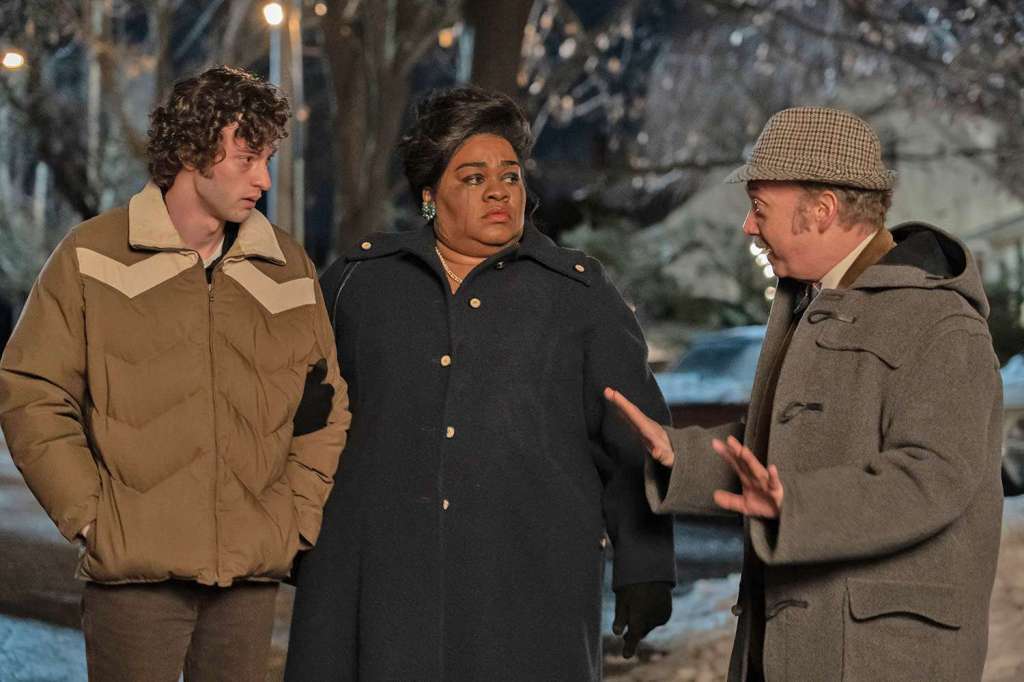
The Holdovers

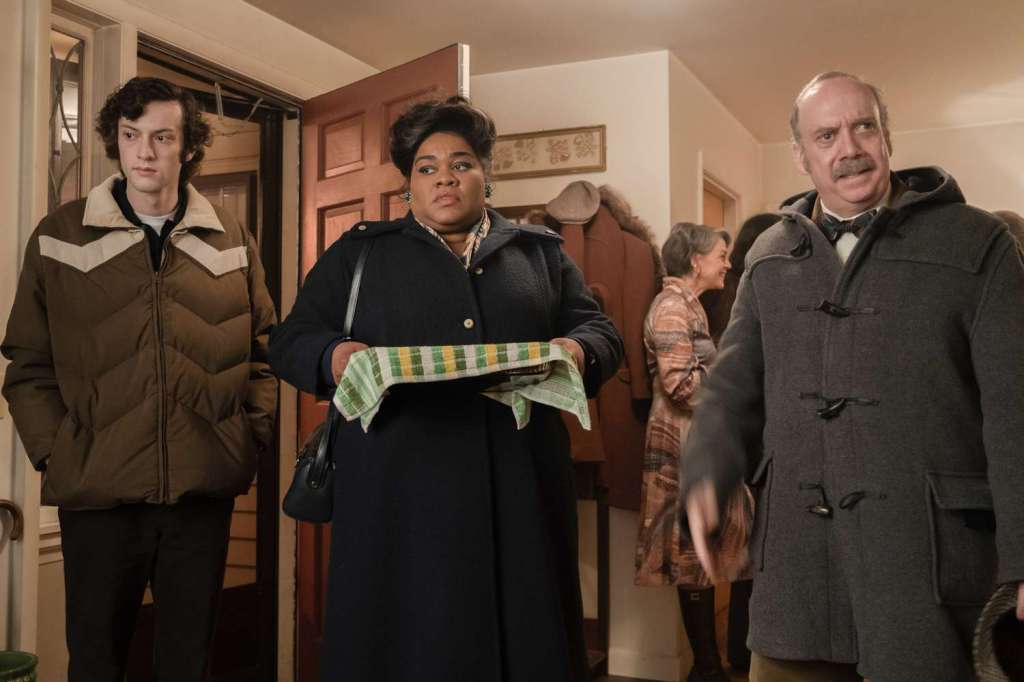
Full transparency: The Holdovers is my favorite film of the year. The story of a curmudgeonly teacher at a New England boarding school who bonds with a student and a cook left over the winter break is perfectly and sincerely made. I can see myself watching it for holidays to come. Initially, the buzz around its debut at Telluride made it seem for a moment like it was the Best Picture frontrunner, but its awards momentum has since dwindled, although it remains a favorite among many.

While it has nominations for picture, Film Editing, and Original Screenplay, it is in the actor and supporting actress categories that the film has the strongest chance. Paul Giamatti won the Golden Globe for the film in the musical or comedy category, as did Da’Vine Joy Randolph for supporting. However, Giamatti will now be going up against Cillian Murphy for Oppenheimer, who won the Golden Globe for drama. This is a classic toss-up: will the Oscars want to award a long career like Giamatti, or an exciting (relatively new-ish) up-and-comer like Cillian Murphy? My bet is on Murphy, but I think we’ll only really be able to tell where the momentum is close to the ceremony. 

 Randolph’s main competition should be Danielle Brooks, who accomplished something in The Color Purple that I will never forget– truly a lightning bolt of a performance. However, I did love Randolph’s work here, and The Color Purple’s award chances have significantly fallen, and with that, Brook’s opportunity. Otherwise, America Ferrera is the dark horse contender if the Academy rallies around Barbie. I don’t see The Holdovers going home completely empty-handed though, between Giamatti and Randolph. And it shouldn’t- go see it!

Killers of the Flower Moon

Martin Scorsese’s epic about the murder of the Osage in 1920s Oklahoma scored ten nominations, including Best Director, Robert De Niro for Best Supporting Actor, Lily Gladstone for Best Actress, Cinematography, Costume Design, Editing, Score, Original Song (“Wahzhazhe (A song for my People)”), and Production Design. Leonardo DiCaprio was notably snubbed, after receiving a Best Actor nom from the Golden Globes.

The film’s best shot seems to be Lily Gladstone, who won the Golden Globe in the drama category, but she faces fierce competition from Emma Stone for Poor Things, who won the Golden Globe in the musical/comedy section. Stone has already won an Oscar (for La La Land), and there seems to be a strong push for Gladstone, making her my choice. The second best guess would be a director win for Scorsese, although all signs are pointing towards Christopher Nolan.

Most award seasons tend to have a movie that garners tons of nominations and acclaim but walks away empty-handed (including Scorsese’s own Gangs of New York and The Irishman, both films with over 10 noms but no wins). If Gladstone doesn’t win, that could be this film’s fate, which I think would be a shame. While I feel there were some structural issues in the film that weakened the momentum of the story, in comparison to the book, and the effort to center the Osage people derailed by Marty’s love of gangster stories and Leonardo Dicaprio, I think the film overall was incredibly powerful, well-told, and memorable. 

Maestro

Maestro, a biopic about the life of composer and conductor Leonard Bernstein, and written, directed, and starring Bradley Cooper, has been a strange film in the awards race. There seems to be an air of obligation around its nominations, with the general sense being that yes, this is a very well-made film about an important subject, and Cooper swings for the fences, and Carey Mulligan is very good…but also isn’t it a little obnoxious how self-important and perfectly awards-tuned this film is? Doesn’t it sometimes border on feeling like a sketch about an award-winning film? I’ve yet to hear anyone say Maestro is their favorite film of the year. It all makes me wonder if Maestro actually has enough support from the Academy to garner a win, especially after not taking anything home at the Golden Globes and the snub of Cooper for director.

It’s nominated in seven categories, with Cooper and Mulligan for lead actor and actress, Cinematography, Makeup and Hairstyling, Sound, and Original Screenplay. I would gladly give it Cinematography, I think that is the best part of the film and representative of its technical brilliance, but even that seems unlikely, as does any other win. I’m not heartbroken over this; while there are moments I appreciated in the movie and I think the lead performances are indeed excellent, the film was confusingly structured and I walked away not feeling like I understood Bernstein’s career, his marriage, or his inner life well. It felt like the movie was so concerned with being grand that it forgot to be good.

Oppenheimer

Oppenheimer has garnered the most nominations with thirteen. My prediction, based on its Golden Globe wins and buzz, is that it will win six of them: Director for Christopher Nolan, Best Actor for Cillian Murphy, Robert Downey Jr. for Best Supporting, Cinematography, Film Editing, and Score. I do not think it will win Best Supporting Actress for Emily Blunt (a nomination that puzzles me; Blunt did her best with the material but I didn’t find the role or her casting to be unique or revelatory), Costume Design, Adapted Screenplay, Sound, Production Design, or Makeup and Hairstyling.

Oppenheimer feels like the ideal movie to award- it was critically acclaimed, a giant box-office success (but not toooo successful, and in part due to Barbie/Barbenheimer), an awe-inspiring ensemble, and a chance to give Christopher Nolan a career award and right the wrong of the snub of The Dark Knight, which arguably haunts the Oscars to this day. It’s also a biopic and a World War II movie and a movie about a tortured scientist genius, all of which tend to do very well with the Academy. It’s a great awards narrative and a very respectable choice. Oppenheimer was not one of my personal favorite films of the year, but I appreciated what it accomplished and the epic scope of the story it told. It was tremendously acted and crafted. I wouldn’t be opposed to any of those wins, and I certainly think it represents and defines 2023 in film more than many of the other nominees. 

Past Lives

Past Lives is my second favorite film out of these nominees. Written and directed by Celine Song, starring Greta Lee, Teo Yoo, and John Magaro (all three of whom I would have loved to see nominated), the film follows Nora (Lee), a writer whose family immigrated from South Korea to Canada when she was young, leaving behind her childhood sweetheart, Hae (Yoo). Nora marries an American man (Magaro), but feels herself torn between her husband and her past when Hae comes to visit her in New York, reuniting the two after 24 years.

There’s so much to be said about this movie, which I’ll talk more about in my next post about my favorite films of the year (stay tuned!). But I agree with all the critics who say it is one of the best films of the year and has an incredibly tight script, wonderful performances, and explores its subject matter gracefully and with focus and tenderness. The movie only has two nominations, for Best Picture and Original Screenplay for Song. While The Holdovers and Anatomy of a Fall give it hard competition, since it has barely a chance at best picture (I think its acclaim peaked too early), I’d love to see Past Lives win for screenplay. Don’t miss this one!

Poor Things

This is the one nominee I have not seen, so I cannot speak to the quality of Poor Things, I can only give it some context. Directed by Yorgos Lanthimos (The Favourite, The Lobster), this Frankenstein-esque tale of a woman brought to life and setting out on a journey of self-discovery has been garnering buzz for a long time. It won the Golden Globe for musical or comedy (Oppenheimer won for drama) and won a Best Actress award for Emma Stone, whose performance has been near-universally praised. Outside of Best Picture and Actress, the film is also nominated for Director, Cinematography, Costume Design, Editing, Makeup and Hairstyling, Score, Production Design, Adapted Screenplay, and Best Supporting Actor for Mark Ruffalo.

I’m very fond of Ruffalo (mostly because of his work in one of the greatest films of all time) and I think people forget that he has a strong awards history- this will be his fourth Best Supporting Actor nomination (the others being for The Kids Are Alright, Foxcatcher, and Spotlight). I’m not sure this is his best performance (in fact, I sincerely doubt it when we’ve got Dark Waters, Zodiac, Infinitely Polar Bear, and, of course, Now You See Me 2) and he’s probably going to be beaten by Marvel co-star Robert Downey Jr, but this is a nice career boost for him. Along with a potential win from Stone over Lily Gladstone, I could see the film winning Costume Design, Makeup and Hairstyling, and Production Design.

While there is a lot of love for Poor Things, it has also been controversial due to its extreme sexual content and questions over whether it is truly as empowering as it seems. I think this might mean there is a quiet but substantial section of the Academy that will not vote for it for Best Picture. It’s the dark horse contender, but I still think Oppenheimer is the one to beat. 

The Zone of Interest

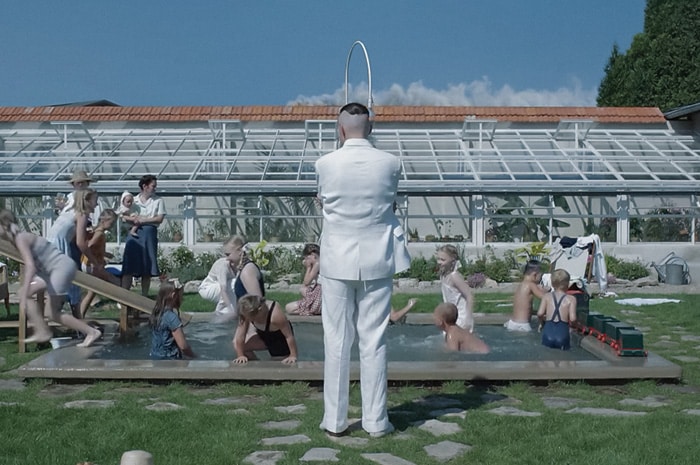
The Zone of Interest is the most unsettling, unique film of the year (except perhaps for Poor Things). The movie focuses on Auschwitz commander Rudolf Höss and his wife Hedwig as they raise their family and chase domestic bliss in their home right outside of the concentration camp. The film never directly shows what is happening inside the camp. Instead, it’s all about the details. Screaming and gunshots can be heard faintly in the distance in nearly every scene. A servant washes blood off of Rudolf’s boots. The children swim in the pool, and in the background a train passes by. The family sits around the dinner table and an imposing tower of the camp stands behind them. The movie is all about being complicit, about how seeking comfort can lead to willful ignorance and detachment. It is about the Holocaust, yes, but it is also about all of us.

The film has been criticized by some for not directly showing the atrocities in the camp, but I think that is completely missing the entire point of the film. That is a strength of the movie, not a flaw. We’re to the point where there is an entire genre of Holocaust films that has its own tropes and cliches. How have we turned one of the greatest human atrocities into something predictable? Zone of Interest, in its radical detachment, interrogates this entire genre. If we’re hoping the Oscars reward novelty and breaking boundaries in film, I think Zone of Interest deserves some wins.

The film received five nominations, with Best Director for Jonathan Glazer, Adapted Screenplay, Sound, and International Feature. I would personally vote for Jonathan Glazer for Best Director, but I think it is almost certainly going to Nolan. Zone of Interest should, and most definitely will, win for Sound and International Feature (especially since it’s not going up against Anatomy of a Fall in that category). Very well deserved.

In Summary:

I predict will win: Oppenheimer

Dark horse pick: Poor Things 

My personal favorites: The Holdovers, Past Lives, Anatomy of a Fall, The Zone of Interest, Killers of the Flower Moon

Christian Vocation and “The Bear” Season 2

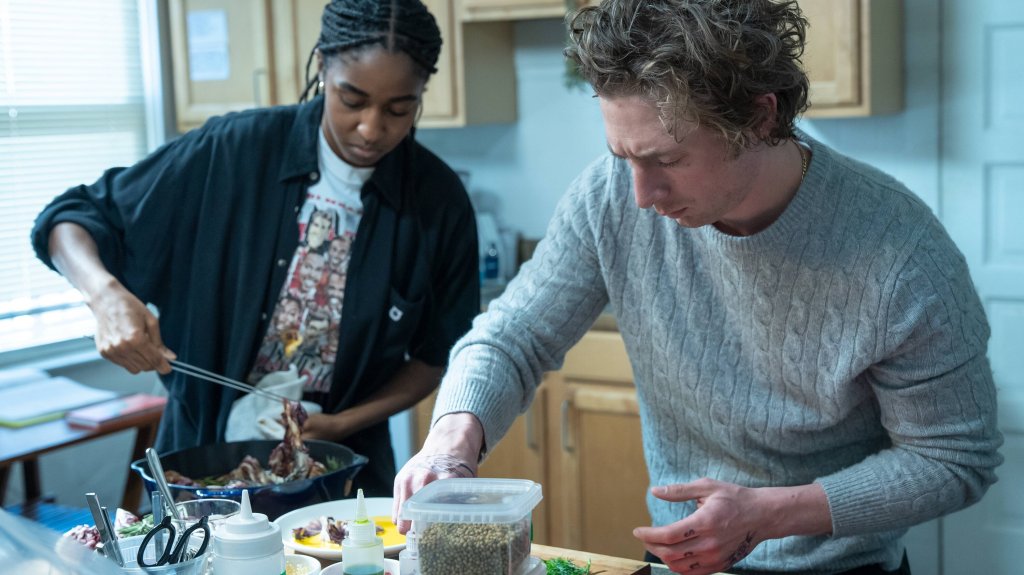
FX and Hulu’s The Bear recently dropped its second season. The show, which came out in relative obscurity last summer but then exploded in popularity, has become a phenomenon and is being hailed as one of the summer’s best shows. The first season followed Carmen “Carmy” Berzatto (Jeremy Allen White), a fine dining chef, as he returned to his hometown of Chicago to take over his deceased brother’s floundering sandwich shop. Season 2 finds Carmy and the staff shutting down the sandwich shop and opening a fine dining restaurant, The Bear, in its place. The real heart of the show is its ensemble of the rough-around-the-edges kitchen staff, and season two finds many of them embarking on journeys of professional and personal growth. The show has many themes- the ruthlessness of the culinary world and the toll it takes, family trauma, found family, the sacrifices it takes to become the best, and cooking as hospitality.

Woven in with all of those themes is a beautiful ode to vocation, and an honest one. And as I watched, I saw in some of the character’s stories illustrations of some of the core Christian doctrines around vocation. The Bear is not an explicitly religious show, but that doesn’t mean it can’t be deeply insightful, even biblical, about the nature of work. So that is what I want to explore here: how The Bear, particularly in this season, gives us insight into how a Christian can think about vocation.

In Tim Keller’s book, Every Good Endeavor, he starts off by analyzing a short story by J.R.R Tolkien, called Leaf by Niggle. In the story, a painter named Niggle tries to paint a gorgeous tree. He spends his life on this painting, yet due to circumstances and his perfectionism, he is only able to paint one really good leaf on the whole tree. Then Niggle dies, feeling like a failure. In the afterlife, Niggle is invited to a heavenly country, where he sees the tree he had always imagined in his mind and tried to paint. The tree is real. The tree is real and beautiful and will be enjoyed forever in this heavenly place. In retrospect, we see that Niggle’s life on earth was about reflecting and imitating and making known to others this real, beautiful thing- even though his efforts were small and clumsy. Because the tree is real, Niggle’s painting, no matter how incomplete, had meaning. 

In this, we see a vision for Christian vocation that is both realistic and beautiful. As Christians, we believe that God is in the business of restoration, and he is truly making all things new (Revelation 21:5). He has not abandoned Earth; he is restoring it and will bring it to perfection in the fullness of time. And in the meanwhile, he delights in using our human work to bring about that restoration. That restoration comes because we know and believe in a deeper truth, which is that of the work and love of Jesus. What the world sees as lost causes, the Christian can see as a yet-to-be-used canvas of God’s mercy. That is, in essence, Niggle’s Tree, the truth that a Christian can work from and find hope and inspiration in. Our efforts– artistic or otherwise– are best when they are reflections of God’s truth and his plan for the world. 

Yet at the same time, we live in a broken world, and are sinful, imperfect vessels. Therefore, none of the good work we do will be complete in this world. Like Niggle, circumstances, and our own selves, get in the way of good work. Most of the time, our work will not look fruitful at all; it will look like failure, or an incomplete mess. This is the result of the curse given to Adam and Eve in Genesis 3 after they sin. God tells them work will no longer be always pleasurable or easy. It is now cursed, characterized with “thorns and thistles”, and only “by the sweat of your face” (3:18-19). Both of these realities hold comfort. When our work is frustrating, we find comfort in the truth that it is that way because of sin, and we can’t expect our work to always be good. This protects us from the bitterness and resentment that comes with unrealistic expectations. But at the same time, our work is always inherently valuable when it is done to please God, because it is like the leaf- it is connected to something that is real and perfect, even if our efforts are not.

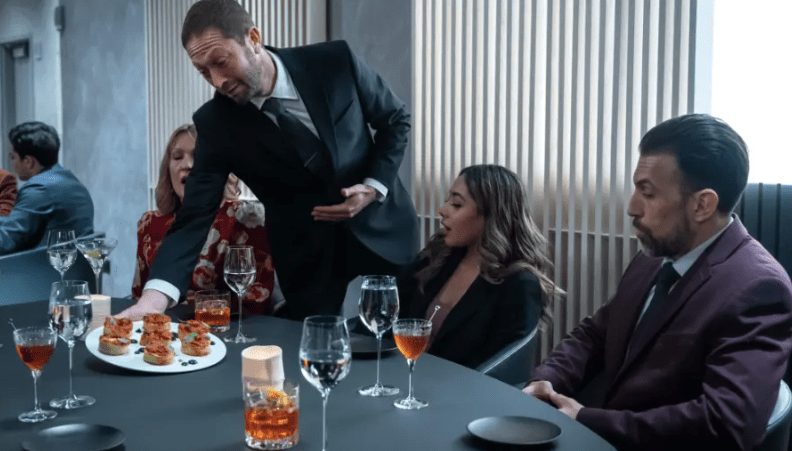
In The Bear, various characters get glimpses of “the tree.” They get a glimpse into what a beautiful, perfected version of their work is, and it is what pushes them to strive harder to better their own craft and, more importantly, value the human relationships their work gives them. This is best illustrated in episode 7, “Forks,” which follows Richie as he interns as a stage at a high-end restaurant. He arrives at the restaurant angry at the position and bitter about his life; he lacks purpose and fears he will soon be driven out of Carmy’s restaurant, a restaurant he’s not even sure he wants to work in but is the only place he’s ever fit in. 

But as his work goes along, he gains an appreciation for the staff who work there. He sees the pride the employees take in their work, and how they are able to link all of their work to the relational interactions they have with guests. The hospitality of the restaurant is not ultimately about the quality of the food, it’s about the way food and presentation can be used to make someone feel seen, and therefore cared about. When Richie serves a special deep-dish-pizza-inspired plate to some guests visiting Chicago, he is connecting with them through service, and the delight both he and the guests experience is transcendent. That is the tree, that is the vision of what fine dining can be that Richie takes back with him when he goes back to The Bear. And even though his time at The Bear won’t necessarily be made up of transcendent moments (the opposite, actually), the newfound respect for himself and his vocation fuels him and makes the way he does his work more beautiful and purposeful, no matter the actual impact of the work itself.

Meanwhile, Tina, Ebra, and Marcus are also all sent off to nurture their talent, with the first two going to culinary school and Marcus taking an apprenticeship in Copenhagen to study under a dessert chef. After butting heads with Sydney in the first season, Tina has now softened and become more open to change and focused on sharpening her craft. This openness earns her the rightful role as Sydney’s sous chef and this season she flourishes. Ebra is hesitant and intimidated by culinary school, but eventually finds the courage to continue. And Marcus is finally given the space for his interests to be nurtured, and is reminded of something important by the other chef, Luca, which is that there is freedom in realizing you can’t, or won’t be the very best, and that humility actually allows you the chance to learn. And, Luca adds, that you have to spend time out in the world to be any good in the kitchen. Which is to say, we can’t be solely defined by our work.

One of the best moments of the show happens in the penultimate episode, when Natalie admits to Sydney she hasn’t eaten that day, so Sydney makes her an omelet. Sydney later tells Carmy that that was the best thing she did that day. Sydney is being reminded of the tree– that this job is about serving and loving someone else with the gifts she’s been given. That is what the restaurant is ultimately for. 

Tina lays down her pride to become better than she ever thought she could be. Marcus and Ebra take the leap to invest in their gifts and embrace the humility it takes to get better. Richie learns how to work with a purpose that is outside of himself. Sydney is reminded of the true heart of her work.

But Carmy, tragically, is the one who doesn’t learn any of this. During the opening night of the restaurant, Carmy gets locked into the walk-in fridge. Despite his setback, the staff is able to handle the rest of the night without him, successfully finishing the night. But Carmy can’t handle it. Instead of being proud of the fact that his staff was strong enough to handle things without him, he spirals, even ending up (accidentally) telling his girlfriend Claire that their relationship was a waste of time and focus. 

Richie then calls him out, comparing Carmy to his mother Donna (played by Jamie Lee Curtis), who we are introduced to in a flashback episode. In that episode, Donna, on the brink of a meltdown, makes the family an extravagant holiday meal, but no one can enjoy it because she’s martyring herself over it. She complains that she’s overwhelmed, then won’t take any help offered to her, and when the meal is done, she won’t accept or believe any amount of compliments about it. She desires to cook for her family as an act of love and sacrifice, but she is so consumed with herself that it isn’t anything but a narcissistic act of attention.

Carmy might not be so far gone, but in that moment, that’s what he’s doing. He is not enjoying the restaurant for what it is and for the satisfaction of using his gifts and blessing others with it; or seeing his staff step up and do their jobs beautifully. Instead, he’s mourning that, by being stuck in the fridge, he is not being able to prove himself and justify all he’s sacrificed. And that is what makes it impossible for him to believe in the chance at a romantic relationship, or any life outside of the kitchen. As long as he finds all his worth in his job, he can never imagine a life outside of it. A Christian view of vocation counteracts this, because Christians don’t find their worth and identity in themselves or their skills, they find it outside of themselves in Christ. Carmy has chased his dreams and given it everything he has, but it hasn’t made him happy, because the perfect “tree” will always be beyond himself and his own abilities.

The season ends with uncertainty: the staff has experienced some triumphs, and the restaurant’s first night was a success, but various relationships are in a precarious place, and Carmy is once again his own worst enemy. Most of the characters, through their experiences this season, have seen the tree. They have seen the deeper reality underneath their work, and it has resulted in more humility, teamwork, and respect for one another. But will they be able to hold on to that vision and mindset against hardship?

I can only imagine what will be cooking (sorry not sorry!) for season three.

– Madeleine D.

The Hopeful Worlds of David Lynch

A guest review by Kevin McGuire

David Lynch must be fun at parties. There seem to be few other explanations for how the director has cemented himself as a modern Hollywood legend. It’s not financial, his one voyage into blockbusters (the original Dune) was a disaster on all fronts. It’s not a result of playing popularity games (see this ad for Lost Highway gleefully touting “two thumbs down” from critics Siskel and Ebert). And it’s definitely not from making self-congratulatory celebrations of the industry, as his most acclaimed feature, Mulholland Drive, explicitly skewers the Hollywood mythos. Yet he’s routinely cited as one of the most influential and iconic modern directors by both critics and peers, most recently being invited for a cameo in Steven Spielberg’s semi-autobiographical ode to filmmaking The Fablemans

Dive into any entry in Lynch’s catalog, and this status becomes even more bewildering. The vast majority of Lynch’s works inhabit an oddly distorted surrealism, one rooted in real-world locations and contemporary concerns, yet powered by a supernatural “dream logic”, impossibly lingering on a tightrope that refuses to offer viewers either rational explanations or an invitation to fully suspend their disbelief and enter into an escapist fantasy. This sense of ambiguity between imagination and reality provides the artistic engine to capture an audience’s attention. Parallel to the conspiracies and detective stories permeating and orbiting nearly every entry in Lynch’s filmography, this atmosphere of ambiguity amplifies each narrative and character. And yet, for as wonderful as the textures and feel of this incorporeal surrealism are, Lynch hardly stands alone in his ability to conjure them to the screen. Some other ingredient must also be present to not only captivate audiences while watching, but also fix the productions in memories long after viewing. 

This “secret ingredient” is thematic in nature. Specifically, what elevates Lynch’s filmography to such singular recognition is in the way it engages and invites viewers to explore existential topics of meaning and morality in the face of the modern world. Simply asking questions or positing answers to these topics alone isn’t enough to stand out. There are numerous critically lauded filmmakers who explore similar visual and emotional spaces at the boundaries of fantasy and reality, whose careers either predate or parallel Lynch, such as Luis Bruñuel, Ingmar Bergman, Andrei Tarkovsky, William Peter Blatty, Lars von Trier, to name only a few. And yet, there’s a reason that the adjective “Lynchian” has been coined to refer to a particular cinematic language in a way that hasn’t been done for any of these other acclaimed filmmakers who by most measuring sticks seem equally deserving. Although Lynch’s catalog contains a fair degree of diversity, a number of repeated motifs and themes form the core of his thematic exploration. 

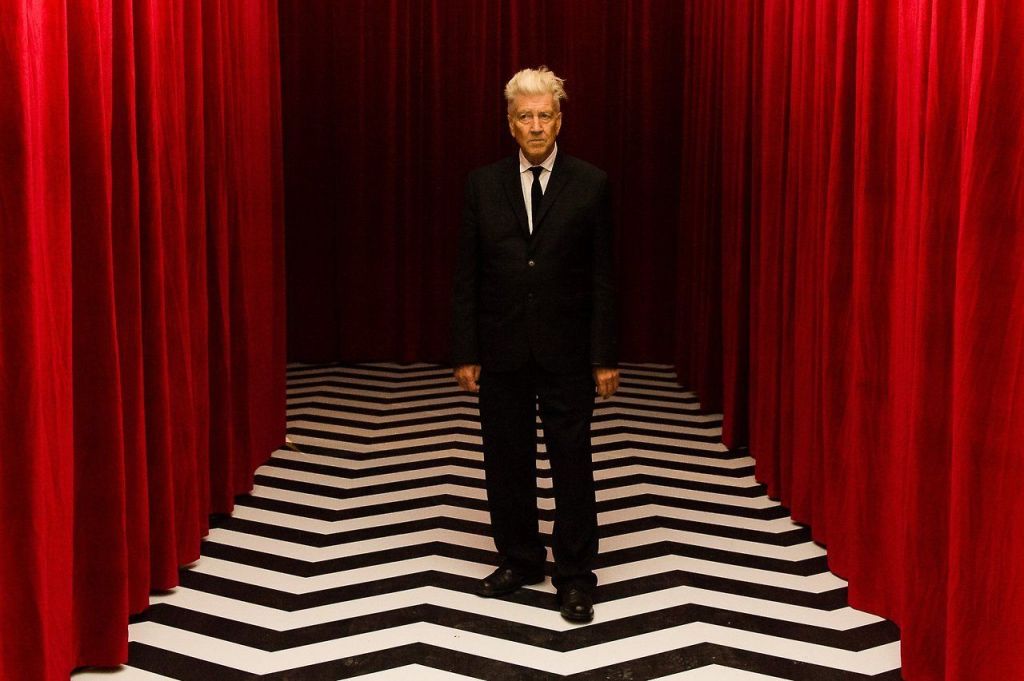
This is what we will seek to explore here: a few of the key themes and ideas that distinguish his work as “Lynchian” through the lens of Twin Peaks, which is to date the most monolithic of Lynch’s works, and the one which best captures and develops the themes he has been chasing his whole career. Spoilers for Twin Peaks throughout.

Continue reading “The Hopeful Worlds of David Lynch”

A Brief Guide to the 2023 Best Picture Nominees

Hello readers! Despite my lack of updates, I have continued watching movies. In honor of the Oscars on Sunday, here is a guide to the ten best picture nominees, with my thoughts and predictions. 

All Quiet on the Western Front

The German Netflix film All Quiet on the Western Front joins a long tradition of war films that win over the academy. 2019’s 1917 is the easy comparison, but Dunkirk, Hacksaw Ridge, and even Darkest Hour and JoJo Rabbit all were heavy-hitters within the last six years, and countless more before then. Because of that, it was easy for me to be a tad dismissive of the film going in (here we go again….), but now having actually seen it, it’s not to be dismissed: this is an excellent film. The battle sequences are remarkable technical achievements, maybe not as flashy as 1917’s one-continuous shot setup, but vivid and immersive nonetheless. The story is well-told, the ensemble is naturalistic, and the score is extremely memorable. Most uniquely, the film incorporates elements from the horror genre. There is a scene with tanks that feels directly drawn from War of the Worlds, or any number of monster-movies. This adaptation of All Quiet on the Western Front is a worthy addition to the war genre canon.

Yet, overall, I’m torn. It’s excellently made, but except for a few unique creative choices, it feels too similar to other movies of its kind. Very good, but very similar. So I ultimately think it’s fair to give the film a nomination, but not for it to win best picture, and it doesn’t seem like it will. The real question is whether it’ll win best international feature, which it is also competing in. Logic would say it would, but maybe having it compete in two categories will end up splitting its votes, leading to an upset with the other nominees, particularly The Quiet Girl or Argentina, 1985, both movies I’ve heard excellent buzz for. 

Avatar: The Way of Water

My friend summarized Avatar 2 this way: “It’s about how colonialism is bad, space whales are good, and how dads should chill and go hang out on a beach with their kids.” I couldn’t put it better myself. Avatar: The Way of Water accomplished what it set out to do: be a visually stunning technological achievement with a basic but satisfyingly archetypal story. It is far better than the original, and for me, scratches the fantasy-epic itch. But despite being the biggest movie in the world, there has been virtually no discussion of it. No one I know is clamoring to talk about the movie, because there’s just not much to talk about. I was highly entertained and impressed with the movie, but there’s no substance here. Because of that, it has no chance of winning, but as they say, it’s just an honor to be nominated. 

The Banshees of Inisherin

I think Banshees is going to be the “Power of the Dog” of this year: a film with a lot of merit on its own, and a strong fanbase of academy voters, but is a little too niche to win using the Oscar’s ranked-order voting system, which favors the average #2 or #3 pick. I love Banshees more than Power of the Dog, and 100 times more than Martin McDonagh’s last award contender, Three Billboards Outside of Ebbing, Missouri, a movie I, uh, did not like. McDonagh is in his wheelhouse here, though, crafting a parable that not only is about the Irish civil war, but more broadly, about friendship and legacy. We rarely see movies that deeply explore friendship, and certainly not one as unique as this one, a tragicomedy about a man’s existential despair and how it makes him self-destructively cut others out of his life in a desperate attempt at making a creative legacy for himself. I’d be happy to see it win, and if not for best picture, then for best original screenplay, or perhaps an upset from Colin Farrell for best actor. 

Elvis

Elvis is a bit of a mess, but it’s also one of the most interesting and enjoyable movies I watched this year. Baz Luhrman misses the mark in some regards, but these blunders can’t take away from Austin Butler’s momentous performance (and it’s looking like he might be the unlikely frontrunner, based on his recent Golden Globes and BAFTA wins). You walk away feeling like you’ve been transported to the 50s and 60s, blinded by the star power of a great icon. It is unlikely to win best picture, but again, Butler has a good chance of bringing home the gold.

Everything, Everywhere, All at Once

EEAO has become the dark horse frontrunner. It has become a movie that symbolizes the happy medium between the big blockbuster, audience-pleasing filmmaking of Top Gun and Avatar, and a successful, artistically impressive indie film. Coda, last year’s best picture winner, was similar in this regard. Also in EEAO’s favor is that it builds upon Parasite’s groundbreaking wins in Asian representation, and it has two star turns by Michelle Yeoh and Ke Huy Quan, with strong assists from fellow nominees Jamie Lee Curtis and Stephanie Hsu. While I didn’t personally love the film (in my review I talked about appreciating the family narrative, but thinking that it got lost in the chaos of the movie), I would gladly support its win. Quan is a near-lock for best-supporting actor, and Yeoh is in a neck-and-neck race with Cate Blanchett for best actress, it seems like a tossup. Angela Bassett was long-considered the lock for best supporting actress, but Jamie Lee Curtis has won several recent awards, which means the race is still wide open!

The Fablemans 

I felt more mixed emotions watching The Fabelmans than I did any other movie on this list. Is this story by Steven Spielberg, about his childhood and early career, self-indulgent? Is it okay for it to be? Is this story about his mother’s affair brave for him to tell, or strangely voyeuristic? Is he saying artists, by necessity of their craft, must be somewhat selfish and willing to sacrifice close family ties? Does he show remorse and regret about it? Or all of the above?  More than anything, perhaps, The Fabelmans is a movie that exemplifies the complexity of an artist telling his own story, memorializing himself with the kind of insight an outsider couldn’t get, but without the distance and perspective history can give. I think ultimately The Fabelmans is a movie anyone interested in filmmaking, film history, and Spielberg’s work should see. While it hasn’t stuck with me enough to be one of my favorite movies of the year, I respect that it made me deeply feel, think, and debate.  At this point, The Fabelmans doesn’t seem to be the forerunner for best picture, but never underestimate Hollywood’s desire to reward a movie about Hollywood. And, early on, Michelle Williams seemed to be the frontrunner for best actress, but her momentum has seemed to slip in favor of the other Michelle in her category.

Tár

I loved Tár, but it’s understandably one of the most polarizing films of the year. Initially,  I had been told this movie was a brash takedown of cancel culture, which I was uninterested in. It actually is a much more thoughtful, ambiguous movie about high art, prestige, and power, and how prestige and high art must, by definition, hold levels of exclusivity and power to remain prestigious and considered high art. Cate Blanchett is, unsurprisingly, absolutely incredible. She’s impossible to take your eyes off, she carries this movie effortlessly, and we’re lucky to get to see such a skilled performer in such a juicy role. If you don’t have patience for long scenes of talking, symbolism, and cryptic endings, this might not be the movie for you, but you might surprise yourself if you try it. 

There’s a lack of chatter about it that seems to indicate it won’t win, but Cate Blanchett and Michelle Yeoh are in a deathmatch for best actress. I would be happy with either; I think Blanchett’s role is more classically awards-friendly (although not at all cheap, and she carries this movie more than Yeoh does EEAO), but I would love a science-fiction/fantasy genre performance like Yeoh’s to be awarded.

Top Gun: Maverick

What can I say about Top Gun: Maverick that hasn’t been said? It saved the box office. It’s also a sequel and reboot of a nostalgic franchise. It’s a great ensemble, and Tom Cruise and Miles Teller are fantastic. It also kinda feels like military propaganda. Its stunts are incredible and it is a really well-made, highly enjoyable, audience crowd pleaser. And, it’s not breaking any new ground. In my humble opinion, I don’t think Maverick was the best film of the year, but it certainly was one of the most significant films of the year, and will be looked back on in film history as defining 2022, so I think its recognition is very well deserved. When it comes to the Academy, I think it will treat Maverick similarly to how it treats Marvel movies, in giving it several technical awards in lieu of any of the bigger ones.

Triangle of Sadness 

In a year full of movies and shows that took on the 1% (Glass Onion, White Lotus, The Menu), Triangle of Sadness managed to get the academy attention the most. Why? I honestly have no clue. Triangle of Sadness resists normal storytelling conventions with an almost episodic-like structure that loosely follows a young modeling, Instagram-famous couple on a cruise. The first act dwells on their selfishness and dysfunction, the second act features a barf-o-rama that knocks everyone down a few pegs, and in the third act, a working-class hero emerges for us to root for. But I found the commentary of the film to be blunt, unoriginal, and not particularly funny or insightful. I just didn’t find it to be interesting, and its lack of awards chatter makes me think it won’t walk away with any awards. 

Women Talking 

Women Talking, based on a novel of the same name and the story loosely based on real-life events, follows a group of Mennonite women deciding whether to leave their religious community, where they’ve been continually subject to sexual assault, or to stay, or to fight. There are some choices made in how the film is structured that makes it less engaging (for example, we don’t get some important scenes for individual characters until much later in the film, making it hard for the first part of the film to understand and connect with some of the key characters). However, some of these structural problems are overcome by the strength of the ensemble (Rooney Mara and Ben Whishaw are particular standouts), and the story is deeply compelling. 

There has been no discussion about it actually winning best picture, but I’m glad it has been recognized with a nomination. And while there was a bit of an uproar about no female directors being nominated, I’m not particularly disappointed director Sarah Polley was not nominated; I think she leads the film well but the direction is not particularly remarkable. I would have loved to see Charlotte Wells for Aftersun or Gina Prince-Bythewood for The Woman King. 

In Summary:

I predict will win: Everything, Everywhere, All at Once

Dark horse pick: The Banshees of Inisherin 

My personal favorites: The Banshees of Inisherin, Tár, Elvis, Women Talking

Happy Oscars!

– Madeleine D.

Becoming Moral People: The Character Arcs of Jesse Pinkman and Kim Wexler

Besides movies, my other favorite thing to write about on this blog are the tv shows Breaking Bad and Better Call Saul. A prequel series to Breaking Bad, Better Call Saul follows Jimmy McGill (Bob Odenkirk) as he goes from an earnest-yet-crafty underdog to the thoroughly corrupt criminal lawyer Saul Goodman. Beside Jimmy is Kim Wexler (Rhea Seehorn), his confidant-turned-wife and accomplished lawyer who discovers her own dark side as she assists Jimmy in his schemes. Better Call Saul also introduces characters like Mike Ehrmantraut, Gus Fring, and Hector Salamanca, expanding the world and setting the stage for Breaking Bad. 

Better Call Saul (BCS) wrapped on its sixth and final season in mid-August to critical and audience acclaim. Its finale cements the show’s legacy as equal to that of Breaking Bad (BB) and a tremendous achievement in its own right. But I’m not actually interested in analyzing the entire final season or finale here. Instead, I want to take a deeper look at both shows by focusing on the parallels between two characters: BCS’s Kim Wexler, and BB’s Jesse Pinkman (Aaron Paul). I think the characters’ respective endings illuminate both shows’ ideas on guilt, atonement, and redemption. While neither show mentions God or has characters professing faith, BB and BCS are both deeply spiritual and obsessed with questions of morality. Despite them being firmly “secular”, there is much to gain from taking a Christian lens to both shows. 

I also just really, really love both of these characters and want to talk about them.

So why compare Kim to Jesse? Jesse and Kim are the most moral characters in both shows. Both characters wrestle with their guilt and seek redemption. If the central flaw of both Walter White and Jimmy McGill/Saul Goodman is their self-deception, Jesse and Kim’s central characteristic is their honesty about themselves. As the secondary protagonists and moral centers of their respective shows, Jesse and Kim’s stories are in direct conversation with one another. And in the penultimate episode of BCS, they even share a scene, flashing back to an unseen moment early in the BB timeline (as seen in the image above). 

This scene is more than just fanservice, it serves to highlight these parallels that have been carefully built between the characters. At this moment, they pass by each other at a critical intersection: Kim is leaving Saul’s office after finalizing her divorce from Jimmy, on her way to leave Albuquerque for Florida. Meanwhile, Jesse is about to partner himself and Walt to Saul and take another definitive step down his Bad Choice Road, which will lead him by the end of the series to a place similar to Kim– leaving town for Alaska, a trail of destruction behind him, forever changed. But they are in very different places internally when each leaves Albuquerque. 

Let’s do an overview of Kim’s storyline. Kim starts as a by-the-books, noble lawyer who has worked hard to leave behind her working-class roots to become successful and respected. She becomes disillusioned while working for a corporate firm and decides to quit and go pro-bono. She, like Jimmy, identifies as an underdog, as someone underestimated by the legal establishment. But as the show goes on, she also is revealed to be just as capable as Jimmy at scheming, eventually working with him to disgrace and debar Howard Hamlin (a rival lawyer). When that scheme ends up with criminal Lalo Salamanca killing Howard, Kim realizes how far she has allowed herself to go. She discovers a streak of cruelty within her that allowed her to do this to Howard. And she realizes how enabled she is with Jimmy; they bring out the worst in each other. With this crisis of conscience, she gives up her law license, breaks up with Jimmy, and moves to Florida. 

In Florida, we see that Kim has committed herself to a self-imposed exile. She changes her appearance, losing her blonde power ponytail for a brunette dye job and shaggy haircut. She trades her power suits for jean skirts and t-shirts. Everything she says is reserved and unopinionated, never taking a stance or making a clear choice. She has muzzled herself. Her name is still Kim Wexler, but she’s only an echo of the person we once knew. The fate she tried to escape through her career she has now embraced as a form of self-punishment. 

She finally goes back to Albuquerque to confess to Howard’s widow about the nature of his death and give an affidavit of her testimony, leaving her fate up to the law. After she does that, we see her breakdown crying on a bus (in a moment reminiscent of Jesse’s screams as he flees the compound in the final moments of BB). It’s cathartic– she’s finally come clean in every way that she can. But it’s also sobering– even all of that is not enough. Nothing she does can ever free her of the guilt. It will always haunt her because there has not been any external judgment on her.

In this lies a deeply embedded moral paradox in all of us: we like to be our own judge. That way, we can let ourselves off the hook. When I do something wrong, my first instinct is to justify, minimize, and ignore it. I love to proclaim myself “not guilty.” 

Yet I think for each of us, there comes a time in our lives when we do something truly horrible, horrible enough that it forces us to finally see ourselves plainly; something we can’t justify, minimize, or ignore. And in these moments, being our own judge is the worst thing in the world. When we have to face how flawed we really are, we also must face how flawed our judgment really is. How can we forgive ourselves? We have no authority to do so. When faced with this, people tend to go one of two ways: harden their hearts and ignore the issue of conscience and guilt, or relentlessly self-condemn and self-hate as a sort of recompense. 

Kim does the latter. Kim’s self-exile in Florida and later confession is her doing everything she can to avail herself of her guilt. But in a moral universe without a merciful, forgiving God who has provided some way of atonement, she can never truly be free. She is stuck being her own judge, and she knows she doesn’t have the authority to grant herself mercy. 

Kim keeps her name, but loses her selfhood as penance. 

Meanwhile, Jesse loses his name, but keeps his selfhood. At the end of El Camino, he is given a new name: Mr. Driscoll. The name “Jesse Pinkman” is dead, a ghost. But unlike Kim in Florida, Jesse/Driscoll doesn’t have to change who he is, his selfhood. He is changed; the events of the series have deeply changed his personality and worldview. But his change was growth, maturation at a heavy cost. That’s different from Kim’s intentional reinvention of herself, the meek character she’s chosen to play because she’s too afraid of who she is.

Externally, Jesse has permanent scars on his face, an eternal reminder of his past. They physically embody the PTSD and suffering he carries. But internally, Jesse has grown past many of the flaws that caused the events of BB. No longer is he naive and passive, instead, he takes action to fight for a better future. He is no longer obsessed with earning approval through macho posturing. Instead, he has developed true strength that stems from his love for others. 

 In other words: physically, he carries his past, but internally, he has a form of freedom from it. Kim is the opposite: externally, she has used her appearance to create distance from her past. But internally, she is shackled by it. 

Why is this? Jesse feels the same remorse as Kim, so why is he able to leave Albuquerque in such a different state? Jesse objectively does much more harm throughout BB than Kim does in BCS (although we could argue about his agency vs Kim’s). But in both of them, we see the same desire to repent and change after coming to terms with what they’ve done. So how can Jesse go to Alaska and be at peace with himself? How can he allow himself a second start, while Kim languishes in a self-inflicted purgatory? 

It comes down to the consequences they face. In the final episodes of BB, Walt hands Jesse over to captivity by Todd Alquist and his neo-nazi gang. Jesse is forced to cook meth, watches Todd kill his girlfriend Andrea, and lives under the threat of Todd killing Andrea’s son Brock. Jesse endures this methslavement for six months. By the time he gets to Alaska, he has had an “eye for an eye” treatment of his sins, or at least as much as he could ever reasonably get in this world. This hellish experience was the direct consequence of Jesse trying to atone for everything by teaming up with Hank. By teaming up with Hank, Jesse chose to accept the consequences of his actions and go down the path of making things right, and it led to this.

But when it’s all over, Jesse is, in a way, suddenly free. He has experienced pain and suffering like the suffering he caused for other people. He will always carry scars, internally and externally, from these experiences, yet Jesse has been able to “do the time.” He’s served the sentence the universe gave him; now he can have a second chance. Even though he never faced legal judgment, he faced a sort of metaphysical/divine power’s judgment, lived through it, and now can walk free and anew. It’s a severe mercy, but it’s still a mercy. 

But Kim doesn’t get that severe mercy. She could have continued her life exactly as it was post-Howard. No one would have ever punished her. Yet Kim wants to be judged, because at least that way, she wouldn’t have to live with the guilt of having gotten away with something. One gets the sense that Kim hopes she would get caught, or something would happen to her.

In the essay “A Life Not Worth Living,” Jami L. Anderson summarizes Jesse’s arc, writing this: 

“Jesse insists on the acknowledgment of right and wrong. But in doing so, he must acknowledge, both to himself and others, that he committed acts that are profoundly wrong, acts that cannot be undone. Moreover, the guilt he will feel for what he has done will, in all likelihood, never abate. But in taking full responsibility for his actions he will gain a sense of self as a moral person, as someone who has not only committed profoundly immoral actions but also of someone capable of tender, loving relationships and doing good deeds… Jesse, despite being nothing more than a social deviant user, nonetheless demanded and obtained moral agency along with full moral accountability as well as the privilege to make moral judgments.”

Kim, like Jesse, is a moral person, who insists on the acknowledgment of right and wrong. The lack of punishment she receives for her role in Howard’s death is a direct assault on her soul, because it acts in opposition to what she knows should be true about the world. She should have been punished, she deserved it. But the lack of consequences, of judgment, also means the impossibility of mercy. Mercy is not the lack of having your sin found out, it’s forgiveness and freedom despite being found out. 

This is the same predicament Jesse finds himself in in BB. In the aftermath of killing Gale, he attends a recovery group, where the leader advocates for radical self-acceptance. Finally, Jesse explodes, confronting the leader and saying this:

Jesse knows there is some sort of objective right and wrong. So if Jesse knows, through his actions and guilt, that he is fundamentally wrong because has done wrong, then how can he accept himself? How can he be the judge of himself? He has no moral authority to be a judge, much less a judge with the authority to enact mercy. Being told he is the only person who can free himself, through self-acceptance, is therefore a horrific burden, a terrible trap. This is the exact position Kim is in when she leaves Albuquerque after Howard’s death.

Unlike Walt, who deludes himself to the very end; or Jimmy, who realizes who he is but doesn’t accept the weight of consequences until the very end (more on that in a minute); Kim and Jesse realize who they are and are ready to accept the consequences, because they want to change. If they accept the consequences, then they are acting in line with their identities as moral people, who live under a code of right and wrong. Jesse gets consequences for his actions, he accepts them, and then he can accept the grace to move on and allow himself a second chance. But in Kim’s case, the universe doesn’t give her any kind of punishment; and there is no one to atone for her. So she must do it herself. But she is an incapable judge, so she is incapable of real atonement and giving herself a real second chance. So she lives in this black-and-white world; a ghost of herself. 

Yet, there is an interesting twist to Kim’s story. Throughout both shows, Kim and Jesse’s goodness are like knives in Walt and Jimmy’s backs. Their mere presences convict Walt and Jimmy of their sin, yet they refuse to believe it and choose to keep going. In BB, Walt does everything he can to smoother Jesse’s goodness, as a way to protect himself and his delusions. It’s only in Walt’s final moments that something akin to pity allows him to free Jesse.

But while Kim breaking up with Jimmy helps push him over the edge into becoming the Saul we know in BB, in the actual final moments of BCS, in the post-BB timeline, Kim tells Jimmy to confess. And he does. When she shows up in the courtroom at his hearing, he sees her and confesses. Because he still loves her, and he’s willing to go to prison to have her love him back, or at least respect him again. And in their final moments, sharing a cigarette in his cell, there is an unspoken reconciliation. Two characters, completely stripped of all facade, who know the truth about themselves and each other completely, are at peace because they have nothing to hide. All their sins have been laid out and they’re both facing the consequences. And in that, they can finally love one another fully and honestly. 

Again, there is no God in the Breaking Bad/Better Call Saul universe. In the absence of one, we see each character trying to figure out how to atone and forgive themselves in ways only a righteous God can. Only the characters that submit themselves to a larger, divine force of righteous judgment–and mercy– find any kind of freedom. Walter White never experiences this, but Jesse does. And Jimmy, in a small way, does get to experience this freedom, even when he’s behind bars; because of Kim and her example. And when Kim walks away at the very end of BCS, we can hope she is leaving her purgatory behind, ready to accept a new beginning for herself. 

– Madeleine D.
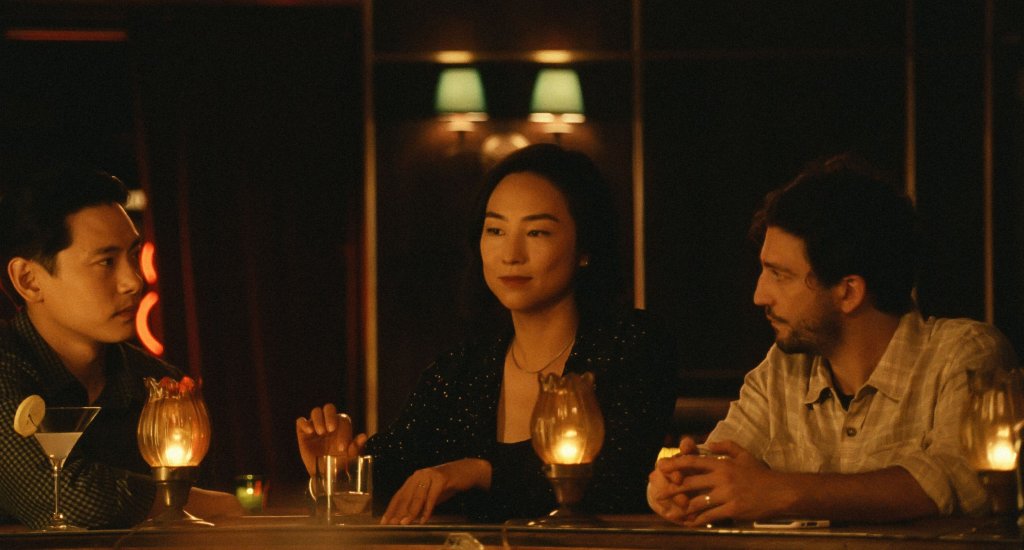
 

Anderson, Jami L. “A Life Not Worth Living.” 103-118. Breaking Bad: Critical Essays on the Contexts, Politics, Style, and Reception of the Television Series, edited by David P. Pierson, Lexington Books, 2014

The Layman’s Guide to the Best Picture Nominees (Part 2/2)

Part two of my look at the ten best picture nominees, giving you insight into each film and predicting its award chances.

Belfast

Belfast is based on director Kenneth Branaugh’s life as a child growing up during the Irish Troubles. Filmed beautifully in black and white, the film shows from nine-year-old Buddy’s eyes the confusing political turmoil around him, his struggling but loving family, and the hallmarks of growing up, from first crushes to peer pressure and school troubles. In many ways, it reminded me of Jojo Rabbit. While not nearly as funny or satirical (or devastating) as Jojo Rabbit, Belfast has an overall hopeful tone and messages of resilience and family. 

The best part of the movie is its performances, which are all lovely, from Jude Hill as Buddy, to Ciaran Hinds and Judi Dench (both nominated for best supporting!) as his grandparents, to Caitriona Balfe as his mother (I think she deserved to have been nominated) and Jamie Dornan as his father. 

When I saw the film, I walked away thinking it was a very sweet, well-made movie, if not one I could call the best of the year. While it’s valuable to see the Troubles being explored on screen, and the family drama feels universal yet deeply personal, I don’t know if Belfast really encompasses 2021 in filmmaking or breaks any new ground. 

But it was later that I came to reconsider Belfast in a new light. In early February, Dua Lipa asked Stephen Colbert on his talk show about how his comedy and Christian faith overlap. In his answer–which you absolutely should watch, it’s a fascinating response– he brought up Belfast and how he liked how the movie “is funny, and it’s sad, and it’s funny about being sad. In that same way sadness is a little bit like an emotional death, but not a defeat, if you can find a way to laugh about it, because that laughter helps keep you from having fear of it.” 

With that in mind, Belfast becomes a little more profound. It’s a tricky balance, to give sadness its full weight and still have humor and joy. Jojo Rabbit dilutes its sadness through snark and satire– to great effect. But Belfast is incredibly sincere, and in that way, pulls off a trickier feat. 

Belfast seems to be in the top running for best picture, alongside Power of the Dog and CODA. Besides that, its best award chances may be either best supporting for Hines, or original screenplay for Branaugh. 

Drive My Car

Also nominated for best international feature, adapted screenplay, and best director for ​​Ryusuke Hamaguchi, Drive My Car snuck up on many as a heavy-hitter this year. The Japanese film will inevitably draw comparisons to 2019’s South Korean Oscar juggernaut Parasite, which won best picture, international feature, and best director for Bong Joon-Ho, along with original screenplay, editing, and production design. But beyond their nominations, the two films have little in common, and because of that, Drive My Car’s winning chances are much slimmer. 

At three hours, Drive My Car is a meditative character drama about a widowed actor (Hidetoshi Nishijima) who goes to Hiroshima to direct a play, and as part of his residency, he is given a chauffeur, which ends up being a young woman (Tōko Miura). The two slowly begin to become friends and through this friendship and the play they process their past. The movie reflects on the value of art, language barriers, intergenerational friendships, and the regret and burdens that block us from connection with one another. 

Like many of the nominees this year, it has a beautiful and cathartic ending that makes the whole movie better in retrospect, and there is much to admire and appreciate in the film. However, I couldn’t help but find it a bit tedious, never quite feeling like my patience was fully rewarded. But part of that may have been going in without any sense of what the movie was, so I think it might be the kind of film where it is better to go in having read some reviews or analysis of the film to better be able to appreciate what is carefully being built in the story and what literary references and allusions to be on the lookout for. 

While there are things the Academy usually likes to reward in Drive My Car (it’s a story about actors making art, after all!), there is still a big barrier to the Oscars awarding international films in non-international feature categories. Parasite was an anomaly that it was able to break through, not only because it is a truly outstanding, deserving film, but it was also mainstream enough, with a semi-recognizable director, to appeal to an American audience. 

Drive My Car then is a near lock for international feature, but probably nothing else, with maybe a sliver of a chance for adapted screenplay. But its inclusion shows progress in the academy recognizing and rewarding international films, which is an exciting step for Hollywood at large. 

Dune

Dune is this year’s Mad Max: Fury Road. Like Mad Max, Dune was a genre hit with both audiences and critics that was nominated for a slew of technical awards along with best picture (10 nominations in all!). And it has a fighting chance in many of those categories, especially Han Zimmer’s score, sound, and special effects. But unlike, say, Return of the King, which swept its ceremony and got best picture, Dune is a part one of two, and feels very incomplete, so its best picture chances are very slim (and we’ll see about part 2). 

Helmed by Denis Villeneuve (Blade Runner 2049, Arrival) and featuring an all-star cast (Timothee Chalamet! Zendaya! Oscar Issac! Jason Mamoa! Javier Bardem!) the film admirably translates its dense source material into a sprawling epic that really does feel like it can both satisfy fans and general audiences alike. Along with West Side Story, it may be the best feat of adaptation and remake this year, and deserves to be nominated. The story of a young man discovering his destiny on a new planet is full of classic science fiction and literary tropes, so we’ll see if this timelessness appeals to academy voters, or if it’s ultimately snubbed. 

Don’t Look Up

Maybe the most broadly polarizing film on this list, Don’t Look Up is a Netflix release directed by Adam McKay (The Big Short, Vice, Anchorman) and featuring an ensemble with the likes of Leonardo DiCaprio, Jennifer Lawrence, Meryl Streep, Jonah Hill, Cate Blanchett, Timothee Chalamet, and Ariana Grande. Don’t Look Up follows DiCaprio and Lawrence as an astronomy professor and his grad student, who discover a comet is on the fast-track to collide with Earth. In their efforts to warn the public they face opposition from everyone from the self-serving president (Meryl Streep) and her obstinate administration, to the media that refuses to alarm the public, to pop stars, activists, and tech billionaires who all want to co-op the comet to advance their own agenda. The comet serves as a clear metaphor for climate change, and the film satirizes the modern indifference to this threat. While I thought the movie fairly critiqued all sides of the political aisle, I have talked to many people who didn’t think the film was nearly as fair. 

If there’s a common theme with these best picture nominees, I think I would say that it’s sincerity.  Belfast and Licorice Pizza were both inspired by the director’s childhoods and fondly recreate their adolescent years. King Richard and CODA are both classic heartwarming stories about underdog families. Nightmare Alley, Dune, Drive My Car, West Side Story, and The Power of the Dog are all remakes or adaptations that lovingly breathe fresh air into their source material with clear respect for the originals, and tell stories of complex protagonists with clear empathy. But Don’t Look Up, is, to be frank, a mean movie about horrible people. And I say that as someone who actually liked it! But there’s no denying that Adam McKay, whose most recent work shows a general disdain for general audiences and no problem skewering everyone from the everyman to the most powerful politicians in the world, has made a movie that to many comes across as overly preachy and spiteful. 

Besides best picture, Don’t Look Up is nominated for original screenplay, film editing, and Nicholas Britell’s score. It may have a fighting chance at original screenplay. But for a movie that touted its all-star cast as its greatest strength, the lack of acting noms is an indicator of how little the academy voters may actually care about this film. There’s always a chance for a surprise, but I think all signs point to this, once again, not being Adam McKay’s big year. 

The Power of the Dog

Netflix’s Power of the Dog, directed by Jane Campion, has been a critical darling, but treated with ambivalence by audiences, following a trend of the Oscars showing favor to small movies that few have seen (or will remember). I have mixed feelings about this. On the one hand, smaller films are often the most groundbreaking and move filmmaking forward, and shouldn’t those be recognized in a ceremony that aims to celebrate the art of filmmaking? But on the other hand, I think the Oscars should strike a balance to also recognize movies that have defined and shaped the year, and will be remembered in public memory, which I don’t really think Power of the Dog will be.

Okay, but is Power of the Dog good? And to that I say…. yes. It’s a movie I have a lot of respect for. It’s a slow-burn, acting tour-de-force about Phil (Benedict Cumberbatch) a spiteful cowboy who terrorizes his brother (Jesse Plemons) and his new wife and stepson (Kirsten Dunst and Kodi Smit-McPhee). But as the film progresses, you begin to realize the power dynamics in play are not quite what they seem, and Phil’s aggression is what ends up blinding him to even more sinister forces.

Power of the Dog is an anti-western, a movie that turns the historically macho and violent western genre conventions on their head to instead be a quiet, psychological movie about sexual repression, grief, resentment, and familial strife. A main undercurrent of the film is that Phil is suggested to be gay, and is mourning the loss of his mentor/partner, and his cruelty is a symptom of his grief and repression. The four main characters are carefully drawn to be fascinating foils of each other, and Campion’s directing shows clear precision and restraint. 

My biggest problem with the film is that it’s sometimes so subtle you don’t know what’s going on or where the movie is going, and the twist at the end is so quiet that many people I know completely missed it (and I would have too if I hadn’t been spoiled beforehand). The ramifications of the ending cast the rest of the movie in a fascinating light when you really think about it, but I wish the film had found a way to build up to a more cathartic end, instead of tapering off like a whisper. 

While it was considered the frontrunner for much of the race, CODA and possibly Belfast have gained enough momentum to catch up to Power of the Dog, meaning the race might be way more surprising than expected. Interestingly enough, we may also have a situation where voters don’t vote for Power of the Dog because they assume it’s the frontrunner anyways, so they vote for another film, and no majority ends up voting for it in the end. If Power of the Dog won, it would be a huge win for streaming services.

I think besides best picture, out of its 11 other nominations, its other best chance for a win is Jane Campion as director (she deserves it). And while not the frontrunner, I think Kirsten Dunst could be a dark horse for the best-supporting actress. And while he definitely won’t win, I’m rooting for Jesse Plemons, who I genuinely think should have been nominated for best supporting in 2019’s El Camino. He’s good in this movie and deserves the nomination, but he’s building a fascinating career and I definitely don’t think this will be the last time we see him nominated. As for Benedict Cumberbatch, I don’t think he’ll win, but I think this too will set him up nicely for a future win one day. And maybe, if it doesn’t win best picture, that will be Power of the Dog’s biggest lasting legacy: setting up its actors and director for even greater future success, and a new opportunity for the Western genre to reinvent itself. 

Happy Oscars everyone!

– Madeleine D. 

The Layman’s Guide to the Best Picture Nominees (Part 1/2)

Hollywood’s biggest night is only a few days away, and with that, it’s time for all of us to place our bets and pick our favorites. But with 10 nominees for best picture, and the weird release schedules that COVID and streaming have created, it’s easy to have missed some of them. Never fear! I’m here to give you a little background on each movie and a look at its award chances, with a bit of my personal commentary, so you can win your Oscar ballot. 
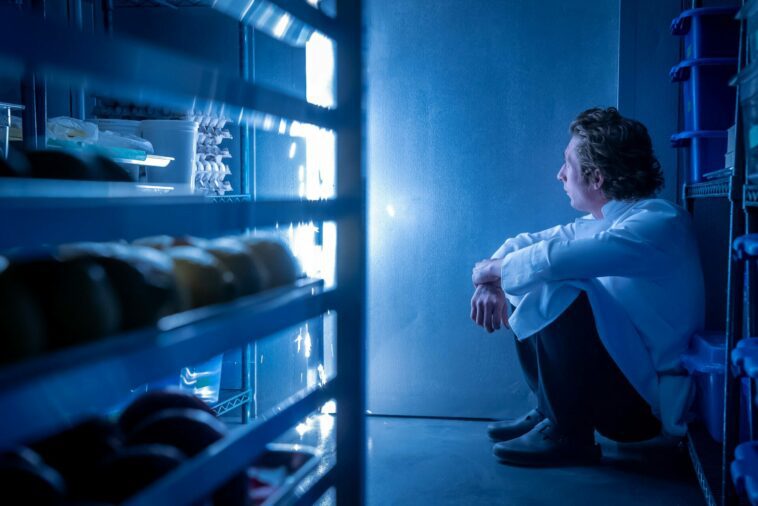
King Richard

King Richard is probably the most “commercial” film on this list, in that it’s a feel-good sports movie with broad appeal with a big star. But being “commercial” is not a bad thing– in fact, I think it’s actually a positive thing when it comes to the Oscars because so few of the movies nominated have broad appeal and have actually been seen by a wide audience. King Richard stars Will Smith as Richard Williams, the father behind one of the greatest female tennis players of all time and two of the best athletes in the world- Venus and Serena Williams. King Richard is a role seemingly tailor-made for Will Smith. It makes perfect use of his charisma, his dramatic and comedic chops, and provides some interesting meta-commentary on his own personal family life and the kind of dad he’s been to his celebrity kids. But while I think he is deserving of best actor, the whole ensemble is excellent, from Saniyya Sidney and Demi Singleton who play Venus and Serena respectively to Jon Bernthal as Rick Macci. Aunjanue Ellis, who plays their mother Brandi, is nominated in the best supporting actress category. While Ellis has a very slim chance of winning, she was a standout and I’m so glad her work was recognized with a nomination.

The movie is a classic sports movie, but its focus on black athletes and a strong black family unit (and centering dad/daughter relationships), the focus on having integrity over winning, along with an eye towards the business savvy athletes must have, make it special. However, its chances of winning best picture look slim, although Will Smith looks like the best actor frontrunner (although it’s a competitive category!). While it may end up walking away with nothing, like the movie itself says, it’s not necessarily about winning, but how you play the game, and King Richard puts it all on the line. 

Licorice Pizza

Paul Thomas Anderson’s Licorice Pizza, starring Alana Haim (who I wish had been nominated for best actress) and Cooper Hoffman, is nominated for best director and original screenplay along with best picture. With Jane Campion looking like the frontrunner for director, Licorice Pizza’s best shot is probably screenplay. PTA is a famed auteur who has made a film with a lot to like, especially to Academy voters. Licorice Pizza is a nostalgic look at Los Angeles and Hollywood past, with a quirky love story (the ten-year age gap between the leads has led to some controversy, but not enough, I think, to dampen the film), and great performances. It is the quintessential “hang out” movie, with three hours of episodic storytelling, evoking the feeling of an anthology of shorts rather than a plot-driven movie (Bradley Cooper’s “episode,” where he plays real-life Jon Peters, a boyfriend of Barbara Streisand, is the best part of the film). It might remind voters of the similarly Hollywood-themed Once Upon a Time in Hollywood, Quentin Tarantino’s last film (although Licorice Pizza does not contain any gory shoot-outs). 

I enjoyed Licorice Pizza while I watched it, and I think it’s a must-see for fans of PTA and Hollywood history. I think a breezily-paced, episodic structure to a film is not necessarily a bad thing, but there were certainly times when I wished the movie had an editor who would curb PTA’s more self-indulgent moments. Overall, I think Licorice Pizza is certainly deserving of the nomination but won’t win. It doesn’t break any kind of filmmaking barriers, it doesn’t have any timely or important messages, and its award campaign has seemed a little weak. However, PTA has been nominated for an Oscar eight times before and never won, so perhaps that will make the Academy more favorable in giving him a win. 

Nightmare Alley

Nightmare Alley is a remake of a 1947 film, based on the 1946 novel. The film, directed and co-written by Guerillmo Del Toro, stars Bradley Cooper as Stanton Carlisle, a mysterious down-on-his-luck man who begins working as a mentalist at a carny, and quickly spirals down into his own deceit. It co-stars Toni Collette, Cate Blanchett, and Rooney Mara. 

To be honest, I started watching Nightmare Alley on HBO Max, got through thirty minutes, then turned it off. Then it got nominated for Best Picture, so I begrudgingly went back and finished it after two more tries. At first, I didn’t find myself gripped by the achingly slow-paced noir. I didn’t know where the film was going or if it had any substance under all the style (and to be fair, it’s a gorgeous production). But, unfamiliar with the source material, I was completely caught off guard in the last act, and specifically, the very last scene. The last moments of the film are so perfectly executed, with such a wonderful marriage of Cooper’s performance and Del Toro’s directing, that I got literal chills. It’s the kind of gut punch of an ending that makes you reconsider the whole film. 

But, even with that scene, in retrospect the film is still weak as a whole, looking the part of a psychological thriller without delivering one. Critics and audience reception were all over the place, making its nomination a real surprise. Besides best picture, it is also nominated for cinematography, production design, and costuming, which seems to be evidence it won’t win anything (best picture winners usually also have nominations in other major categories like actor/actress, writing, and directing). I think if the movie had to have been nominated for anything, I would have nominated Bradley Cooper. But as it is, I’m not personally rooting for it to win anything. Del Toro won best picture and best director for 2017’s Shape of Water, so there’s no rush for the academy to reward him again anytime soon. 

CODA

CODA, on Apple TV+, is a coming-of-age story about Ruby (Emilia Jones), a high schooler who is caught between her desire to go off to college to pursue singing, and her family’s need for her to work for their fishing business. Why is that a problem? The rest of Ruby’s family is deaf, and need her to translate for their business, and can’t appreciate her singing. 

My roommate, who considers herself to be a “voice for the people” when it comes to movies (i.e, not a critical snob), said of CODA: “It’s the perfect balance of being chill and having something to say.” And I agree! CODA is progressive in that it is depicting a community not usually seen on screen, which is a great thing, and it’s also a broadly appealing, heartfelt family drama that is subversive and smart about its tropes to tell a new story (with excellent writing and performances to boot). While its status as a streaming movie made it an unlikely contender, in the past few weeks CODA seems to have become a dark horse that might just pull off a win for best picture, and I’ll certainly be rooting for it. 

Besides best picture, it’s also up for best supporting actor for Troy Kotsur and best adapted screenplay. While I don’t think it has a shot at either of these (Dune should win for best adapted screenplay, although The Lost Daughter will probably win), Kotsur is certainly deserving of the recognition. 

West Side Story

This Steven Spielberg-directed remake of the 1961 musical (an Oscar heavy-hitter itself), is up for seven nominations, including best picture, best director, and best supporting actress for Ariana DeBose as Anita (the role which won Rita Moreno her Oscar). The remake has been praised for the way it infuses modern sensibilities (including the casting of actual Puerto-Rican actors as the Sharks) with the emotionality and old-school feel of the original.

I was skeptical of this project when it was announced and was prepared to dislike it, having grown up with a great fondness for the 1961 film. However, having seen it, I now agree that it is an example of a great remake. I think Spielberg chooses the right things to change and lean into (like more attention paid to the class dynamics; not subtitling the Spanish) while retaining elements of the original. While not as colorful or theatrical as the 1961 version, I think the musical numbers retain their energy and are well-done. It’s a remake that hopefully will appeal to modern audiences while encouraging them to also check out the original. 

Despite all the ways I enjoyed the film, it didn’t personally grab me or register as one of the best films of the year, and I actually expect it’s not most Academy members’ best film either. But because of the ranked-choice voting system the Oscars use, the movies that win are usually everyone’s second or third choice. And that’s where West Side Story could win a lot of awards, if everyone thinks, “hmmm, I want Jane Campion or Paul Thomas Anderson to win for director this year, but I’ll put Steven Spielberg next because, well, he’s Steven Spielberg!”

West Side Story was a commercial flop, but it’s definitely one of the most audience-friendly films being nominated. While I don’t think it’s the best film of the year, I would like the best picture award to start going to movies people have actually heard of and seen, so I’m not opposed to a win. Out of its nominations though, I am rooting for the film to win for Ariana DeBose, and she’s currently the favorite. 

Coming soon: Part 2 of the nominees!