
A guest review by Kevin McGuire
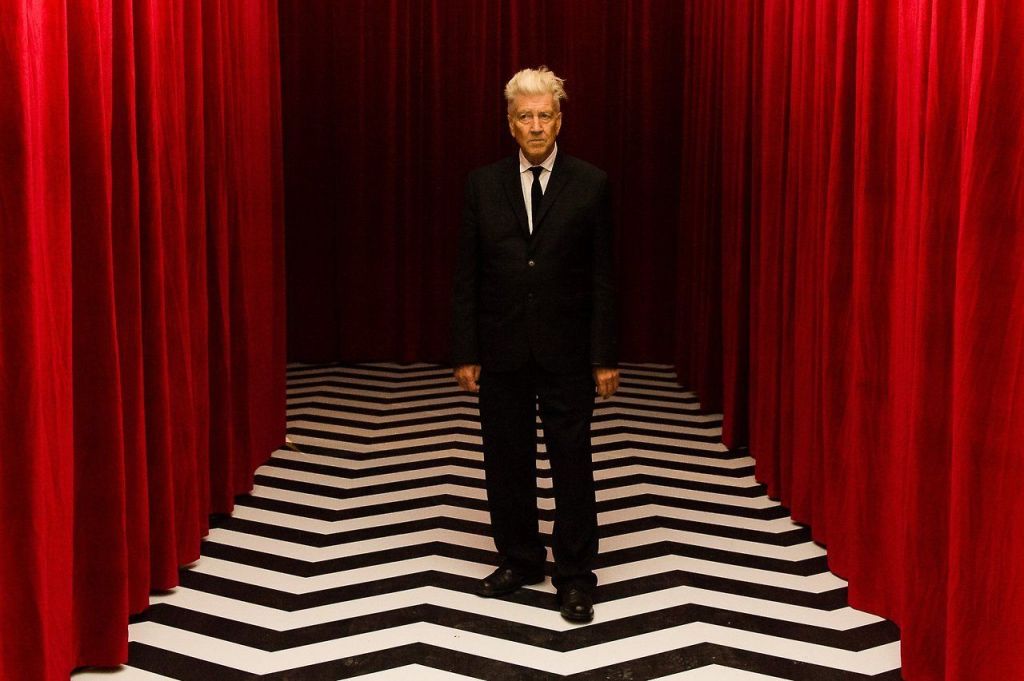
David Lynch must be fun at parties. There seem to be few other explanations for how the director has cemented himself as a modern Hollywood legend. It’s not financial, his one voyage into blockbusters (the original Dune) was a disaster on all fronts. It’s not a result of playing popularity games (see this ad for Lost Highway gleefully touting “two thumbs down” from critics Siskel and Ebert). And it’s definitely not from making self-congratulatory celebrations of the industry, as his most acclaimed feature, Mulholland Drive, explicitly skewers the Hollywood mythos. Yet he’s routinely cited as one of the most influential and iconic modern directors by both critics and peers, most recently being invited for a cameo in Steven Spielberg’s semi-autobiographical ode to filmmaking The Fablemans.
Dive into any entry in Lynch’s catalog, and this status becomes even more bewildering. The vast majority of Lynch’s works inhabit an oddly distorted surrealism, one rooted in real-world locations and contemporary concerns, yet powered by a supernatural “dream logic”, impossibly lingering on a tightrope that refuses to offer viewers either rational explanations or an invitation to fully suspend their disbelief and enter into an escapist fantasy. This sense of ambiguity between imagination and reality provides the artistic engine to capture an audience’s attention. Parallel to the conspiracies and detective stories permeating and orbiting nearly every entry in Lynch’s filmography, this atmosphere of ambiguity amplifies each narrative and character. And yet, for as wonderful as the textures and feel of this incorporeal surrealism are, Lynch hardly stands alone in his ability to conjure them to the screen. Some other ingredient must also be present to not only captivate audiences while watching, but also fix the productions in memories long after viewing.
This “secret ingredient” is thematic in nature. Specifically, what elevates Lynch’s filmography to such singular recognition is in the way it engages and invites viewers to explore existential topics of meaning and morality in the face of the modern world. Simply asking questions or positing answers to these topics alone isn’t enough to stand out. There are numerous critically lauded filmmakers who explore similar visual and emotional spaces at the boundaries of fantasy and reality, whose careers either predate or parallel Lynch, such as Luis Bruñuel, Ingmar Bergman, Andrei Tarkovsky, William Peter Blatty, Lars von Trier, to name only a few. And yet, there’s a reason that the adjective “Lynchian” has been coined to refer to a particular cinematic language in a way that hasn’t been done for any of these other acclaimed filmmakers who by most measuring sticks seem equally deserving. Although Lynch’s catalog contains a fair degree of diversity, a number of repeated motifs and themes form the core of his thematic exploration.
This is what we will seek to explore here: a few of the key themes and ideas that distinguish his work as “Lynchian” through the lens of Twin Peaks, which is to date the most monolithic of Lynch’s works, and the one which best captures and develops the themes he has been chasing his whole career. Spoilers for Twin Peaks throughout.
I. Pilgrim’s Peaks
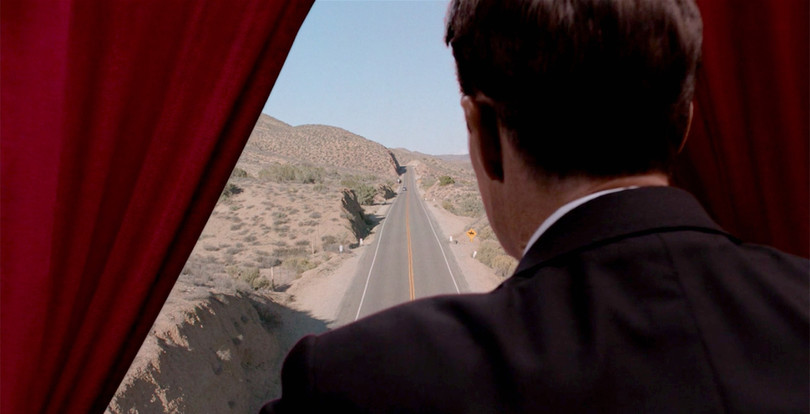
“It is important that we learn to distinguish between mysteries and secrets. Mysteries precede humankind, envelop us and draw us forward into exploration and wonder. Secrets are the work of humankind, a covert and often insidious way to gather, withhold or impose power. Do not confuse the pursuit of one with the manipulation of the other”–The Archivist, The Secret History of Twin Peaks
The narrative of Twin Peaks is deeply personal to Lynch, acting as a pilgrimage through both personal life events and existential ponderings on the universe and what it means to live life in the modern age. So what exactly is Twin Peaks? The original 1990-91 primetime ABC run was ostensibly about the mystery of “who killed Laura Palmer”, and set entirely in the rural town of Twin Peaks, Washington. By the conclusion of season two, the mystery is unwound by FBI agent Dale Cooper, if not entirely resolved. Despite eventually involving supernatural forces and multiple criminal conspiracies, the series to this point plays like a relatively straightforward forerunner of the prestige mystery genre (think True Detective or Broadchurch) mixed with darkly comic soap operatic drama. As the initial mystery would eventually spiral to consume much of the apparently peaceful town, the universe of Twin Peaks would likewise grow far beyond these initial two seasons to include the feature film Twin Peaks: Fire Walk With Me, a third “season” in 2017 (Twin Peaks: The Return, produced and set twenty-five years after the original series), and then two additional companion pieces, The Secret History of Twin Peaks and The Final Dossier.
Across all its incarnations, Twin Peaks functions as a pilgrimage both through the entirety of Lynch’s work–specifically the thematic issues that repeatedly appear–and also seemingly through his personal creative life. Lynch has emphatically stated that his films are not autobiographical, at least not in the formal sense. Certainly, elements from experience are incorporated as details to give a more authentic feel to his worlds, such as the intricate importance of logging in Twin Peaks (his father worked for the US Forest Service during Lynch’s childhood) or the industrial design of Eraserhead (a style conceived largely while living among the factories of Philadelphia), but their narratives are not meant to directly reflect the occurrences in his own life. Instead, the approach mirrors that of Pilgrim’s Progress (or even more similarly C.S. Lewis’ personal update in Pilgrim’s Regress). The events captured on film may be fictitious and self-contained to each story, but the struggles of the characters reflect the philosophical conflicts within their creators in the form of metaphorical monsters and the externalization of internal struggles.
The entirety of Twin Peaks–and the further artistic universe of Lynch–is built upon secrets and mysteries. Mysteries represent the extraordinary that cannot be explained, from the supernatural and paranormal, all the way to the beauty of everyday life. At the largest scale, these are the questions Lynch is exploring in his works, both for himself and for his audience. In interviews and writings, Lynch frequently cites The Art Spirit by American painter Robert Henri as a core text in his life. This collection of notes from lectures and journals by Henri attempts to give guidance to artists about how to find and capture meaning in life in their art. Lynch calls the pursuit of this “the art life”, which he has been striving to achieve throughout his career. While on the surface “the art life” looks simply like the attempt to live a life dedicated to creativity and production of beautiful things, the way in which all else–comfort, relationships, wealth–is sacrificed to this pursuit points towards something more. It’s about understanding and making sense of the world and one’s place in it through capturing, dissecting, and recreating the mysteries of the universe.
While mysteries may ultimately be revelatory, secrets are the exact opposite. Secrets cloud and conceal, often intentionally, the truth of situations from the smallest well-intentioned lie to obscuring the very purpose of life. In addition to chasing mysteries themselves as beacons calling onward to knowledge, the search for truth and meaning requires tearing down and exposing the secrets that hide it. A recurring theme in Lynch’s work is the depravity of environments that we normally idealize as facades for unpleasant realities. Blue Velvet skewers suburbia, revealing the hidden lusts and violence that are hidden or go unnoticed in seemingly picturesque communities. The trio of Lost Highway, Mulholland Drive, and Inland Empire each uncover messy and destructive forces hidden by the allure of Hollywood glamor. Twin Peaks deconstructs the mythology of small-town Americana alongside the hidden troubles present in even “healthy” family life.
The questions of the search for truth and meaning in Twin Peaks are complexly explored, often with characters who face disastrous consequences, even when trying to make things right. In one of the more challenging subplots of the second season, a formerly corrupt businessman decides he must come clean about all his wrongdoings, both for his own conscience and those he has harmed along his rise. Among those is a past affair with another town resident through which he fathered a child. Despite possessing largely admirable intentions, rather than valorizing him, his attempts to atone lead to the implosion of the precarious peace both families previously enjoyed. Continued silence is presented as personally impossible and morally flagrant, but the lingering effects of the past indiscretions set a relational bomb that cannot be avoided or diffused.
What sets Lynch’s interrogations and exposés apart from his directorial peers with similar aims and focuses, is that even in these moments when the consequences of such sins are inescapable, these subjects are not entirely rotted or beyond some paradoxical redemption. Lynch is not a nihilist. He has a deep affection for the targets of his films, from growing up in small towns in the Pacific Northwest much like Twin Peaks (which he frequently describes as a very happy childhood) to his time as a filmmaker in Los Angeles. But even in this nostalgic reminiscence is the acknowledgment that something was wrong, expressed in moments like this excerpt from the book Lynch on Lynch:
Chris Rodley: Looking at your work, one might surmise that you were frightened by many things as a child. Were you?
David Lynch: Many things. But troubled, more than living in fear. Really troubled. I would think, ‘This is not the way it is supposed to be’, and it would trouble me. It was a suspicion on my part, but almost a knowing.
The early understanding that “this is not the way it is supposed to be” is the engine that both drives the narrative direction of the majority of Lynch’s films, and establishes the basis for the response to suffering and sin within the works. There is a righteousness to fighting against evil systems and forces, either through direct confrontation or through refusal to conform to them and living a life of quiet rebellion.
II. Evil
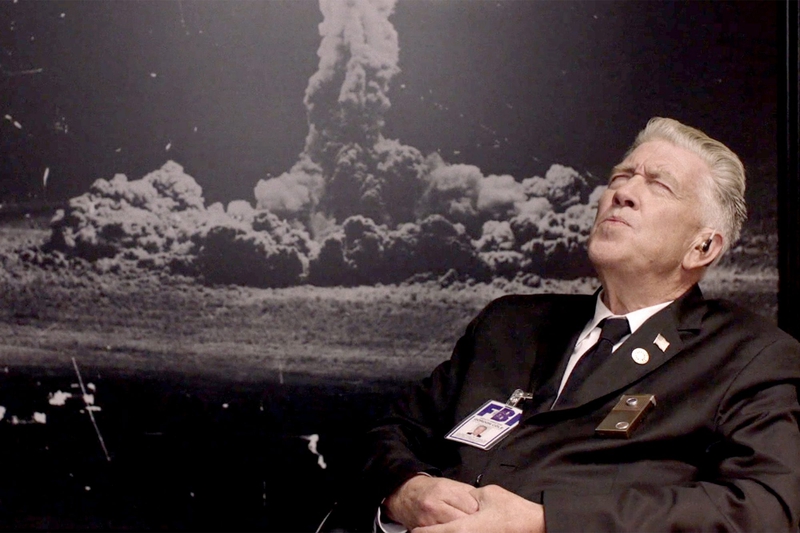
A unique feature throughout Lynch’s work is the revulsion towards evil that he frequently creates. In The Return, it cannot be more clear that the evil we witness should not be happening. Not only is it wrong, but it is unnatural, a corruption suffered by a weary world. The fight against evil in Twin Peaks isn’t just about vanquishing some monster, it’s about resisting and overcoming the pain and trauma that has been inflicted in big and small ways, for years and years. Lynch is realistic on this point. It doesn’t always happen, and it is never easy or neat. It’s also worth it.
A simple vignette early in The Return (E6) captures the culmination of Lynch’s portrayals of evil. Peaceful shots of a young boy walking to school with his mother intersperse frantic frames of a petty criminal speeding through town in a maniacal rage. The juxtaposition of carefree innocence and unbound chaos makes it apparent what will happen, but the horror of the collision still comes as the driver ignores caution signs in his outburst and fails to see the boy stepping into the crosswalk. Although the camera is averted from the moment of impact, the senselessness of the violence cuts through with shocking devastation. There’s a coldness and cruel brutality that seems designed to disperse any remaining feelings of warm nostalgia towards the franchise, and refocus viewers on the depravity rotting at the core of Twin Peaks. As we watch the aftermath from the perspective of shocked and horrified bystanders, the weight of the tragedy sets in, another piece to the pattern of senseless loss and suffering that has always plagued the town. But the scene refuses to fully give in to pessimism either. As curmudgeonly but caring local trailer park manager Carl (resurrecting a delightful portrayal by Harry Dean Stanton from a bit role in Fire Walk With Me) shuffles dazedly over to see if anything can be done, he watches in wonder as the boy’s soul seems to ascend into the sky. Carl continues over and kneels quietly with the wailing mother, not trying to comfort her with what he just witnessed, appearing to recognize that for now the best thing to do is sit with her in her grief, that the time for words will come later.
Despite being a fairly minor scene from the perspective of the show’s narrative, it serves to both summarize and respond to the thematic questions raised about death, evil, and grief that are raised throughout the first two seasons. The tension of how to respond to the presence of evil and death is a present and defining element from the show’s earliest scenes. As the sheriff’s department responds to the discovery of Laura Palmer’s body in the opening episode, deputy Andy Brennan sobs at the crime scene. This emotional display, highly unusual to either contemporary or modern crime procedurals, isn’t played for laughs or to establish Andy as an emotionally weak character. Rather, his apparent simplicity and innocence presage an innate understanding of the world in a way that surpasses that of his colleagues and friends. For the rest of the residents of Twin Peaks, the death of Laura Palmer creates a crisis challenging their perceptions, which comes to a head at her funeral. At the graveside, the town’s pastor closes Laura’s eulogy with a message of faith and resurrection, after which Laura’s boyfriend Bobby outbursts at the gathered town for their indifference towards her while she was alive.
Pastor: I am the resurrection and the life. He that believeth in me, though he were dead, yet shall he live. And whosoever liveth and believeth in me shall never die. For none of us liveth to himself, and no man dieth to himself. For if we live, we live until the Lord, and if we die, we die unto the Lord. Whether we live, therefore, or we die, we are the Lord’s. Blessed be the dead who died in the Lord. Even so saith the Spirit, for they rest from their labors. The Lord be with thee. Let us pray. O God, entrust this child Laura to thy never failing care and love, and bring us all to thy heavenly kingdom through the same thy son Jesus Christ our Lord, who liveth and reigneth with thee and the Holy Spirit, One God, now and forever. Amen.
Bobby: What are you looking at? What are you waiting for? You make me sick. You damn hypocrites make me sick! Everybody knew she was in trouble, but we didn’t do anything. All you “good” people. You want to know who killed Laura? You did! We all did. Pretty words won’t bring her back man, so save your prayers. She would have laughed at them anyway! –S1E4
This struggle between a comfort that the grieving cannot yet embrace and an ineffectual rage carries on throughout the first two seasons, reemerging with every subsequent death. Even as the inability of either to bring peace is repeatedly underscored, neither is condemned. The irrationality of evil and unnaturalness of death means that there isn’t any response that can solve or explain away grief.
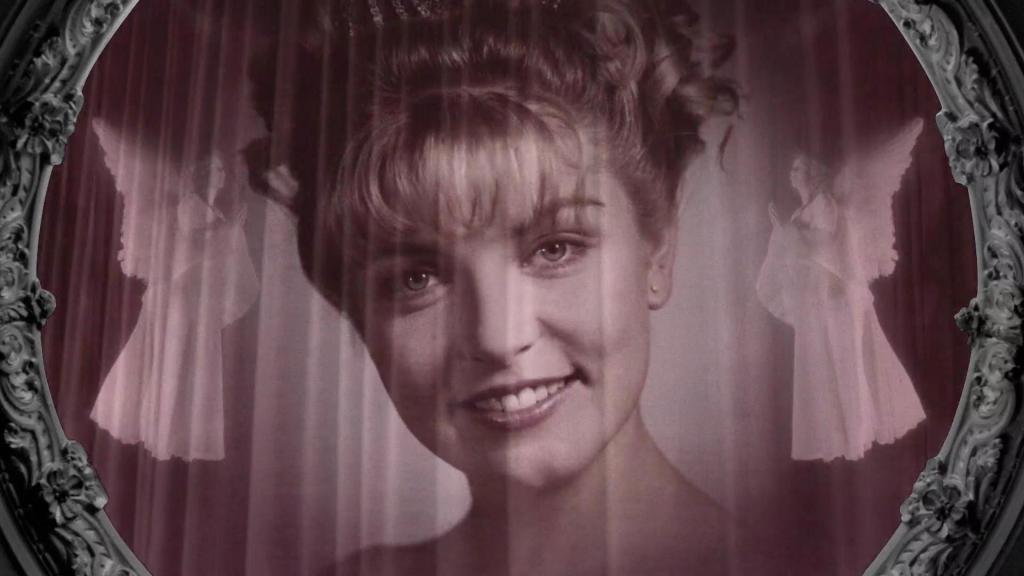
Fire Walk With Me begins the process of unraveling this truth as it jumps backward in time to walk through Laura’s final days. As her death nears, a reality that she begins to realize, the macabre march toward the end underscores the truth of Bobby’s words at the funeral. Those around her are largely unable or unwilling to intervene, the scenes constructed by Lynch among the darkest in his catalog as her isolation and abandonment become complete. Even a depiction of an angel in a painting on her wall strangely disappears, leaving her totally alone without even the image of comfort. But in the moment of her death, something perhaps even stranger occurs. The painted angel appears in the flesh to comfort Laura and protect another character from suffering the same fate. As the film ends, Laura appears in the Red Room, flanked by more angels and looking up in ecstasy at a pulsating white light we only see reflected on her face in a rare glimpse of transcendence. Both rage and hope are appropriate responses for the living which each capture a fraction of the truth, but cannot fully satisfy as the fullness of reality for the dead lies somewhere beyond human understanding.
III. Simple Lives
In The Art Life, an extended documentary-style filmed interview, Lynch describes how in the ninth grade it seemed to him that his mother’s favorite phrase was “I’m disappointed in you”. He explains that this was frankly a correct take, as he was hanging out with a “bad crowd” and not really doing anything productive. But what he recognizes in his mother’s disappointment isn’t total disdain, rather it’s the recognition that he had the potential for so much more, both in the artistic ways she had always encouraged him, and even more so in the moral sense. This serves as a launching point for what seems to be the biggest conflict in Lynch’s life: the battle between wholesale commitment to his artistic endeavors and his family’s need for him to be present, active, and attentive in their lives. Lynch has repeatedly emphasized that he unreservedly chose the former, and while maintaining it was the only choice he could make, readily admits the strain and damage it has inflicted on those around him.
Where this thread starts to become interesting is that Lynch never seems to make any attempt to justify this choice in his art. If anything, he does the opposite. Themes of family and self repeatedly appear in his catalog, oftentimes paralleling occurrences in his own life as a form of personal reflection, from early in his career processing his own fear of fatherhood via Eraserhead, to the chaos and instability enveloping every youthful character in Twin Peaks and Wild at Heart, to finally reflecting back on the growth and responsibility discovered by many of those characters through The Return. Just as with the philosophical and existential themes discussed earlier, Lynch’s progression in the portrayal of family and personal life is more abstract than autobiographical. Characters are rarely confronted with a distinct choice between their passions and their relationships, but the centrality of family and laying all else aside for it returns again and again. This first begins to move into focus at the beginning of season two of Twin Peaks, as Major Briggs has a conversation with his son, Bobby, at the Double R Diner.
“Bobby, may I share something with you? A vision I had in my sleep last night, as distinguished from a dream which is mere sorting and cataloging of the day’s events by the subconscious. This was a vision, fresh and clear as a mountain stream, the mind revealing itself to itself. In my vision, I was on the veranda of a vast estate, a palazzo of some fantastic proportion. There seemed to emanate from it a light from within this gleaming, radiant marble. I’d known this place. I’d in fact been born and raised there. This was my first return, a reunion with the deepest wellsprings of my being. Wandering about, I noticed happily that the house had been immaculately maintained. There’d been added a number of additional rooms, but in a way that blended so seamlessly with the original construction, one would never detect any difference. Returning to the house’s grand foyer, there came a knock at the door. My son was standing there. He was happy and carefree, clearly living a life of deep harmony and joy. We embraced, a warm and loving embrace, nothing withheld. We were, in this moment, one. My vision ended, and I awoke with a tremendous feeling of optimism and confidence in you and your future. That was my vision of you.” – Major Briggs, S2E1
Until this point, Bobby has primarily featured as the source of much minor mischief around town. He had been cheating on Laura prior to her death, but spends much of the first season trying to get revenge on her other apparent lover, involved in dealing drugs at school, or trying to frame various characters he has conflict with for Laura’s murder. While he may not be involved in any of the most serious crimes, he’s hardly an upstanding citizen or sympathetic character. But that’s hardly the end of his story, and perhaps no character in the franchise undergoes more development than Bobby Briggs. Season two still showcases much selfishness and immaturity, but there’s a fledgling sense of purpose and direction that struggles against his worst instincts, pushing him towards personal and relational developments as the season progresses. By The Return, Bobby has matured greatly, now serving as one of the most dependable deputies at the sheriff’s department with great humility and sacrifice. In Part 9, Bobby returns to his childhood home along with Deputy Hawk and Sheriff Truman as they reinvestigate Cooper’s disappearance. His mother instantly recognizes that the whole cycle has been completed, as her husband had foreseen this reunion the day before his death. The faith that Major Briggs had in his son’s future has finally come true. While this serves as an early hint towards the recognition of the importance of relationships, it merely sets the stage for the boldest exploration of this theme that plays out throughout The Return.
Through the original two seasons and Fire Walk With Me, Kyle McLaughlin stars as Dale Cooper, an FBI agent committed wholeheartedly to the pursuit of justice, even if his methods are at times unorthodox (throwing rocks at a glass bottle to determine suspects) or unsanctioned (pursuing the investigation into Canada when his friends are in danger there). Cooper’s love for the community of Twin Peaks quickly deepens beyond simply solving the murders that originally bring him to town. Many of the town’s inhabitants become close friends of his, as Cooper shows a gentle understanding and willingness to listen or help in the smallest matters to even the most eccentric residents. These friendships eventually lead Cooper to pursue other mysteries and conspiracies throughout the region not out of professional obligation, but for the safety and comfort of his new friends.
As a frequent core participant in Lynch projects, McLaughlin is sometimes described as something of a self-insert for the director, allowing Lynch to feel even closer to the action by looking through the eyes of McLaughlin’s characters. Through the original run, this premise has little impact beyond understanding the filmmaking process. That all begins to change with the final scenes of season 2, as BOB, an interdimensional evil entity, is revealed to be inhabiting Agent Cooper’s physical body, while Cooper’s soul remains trapped in the red room where he was lured by Windham Earl. This cliffhanger sets the stage for The Return, where McLaughlin portrays multiple different versions of the character, and seems to provoke an internal investigation of personalities and identity.
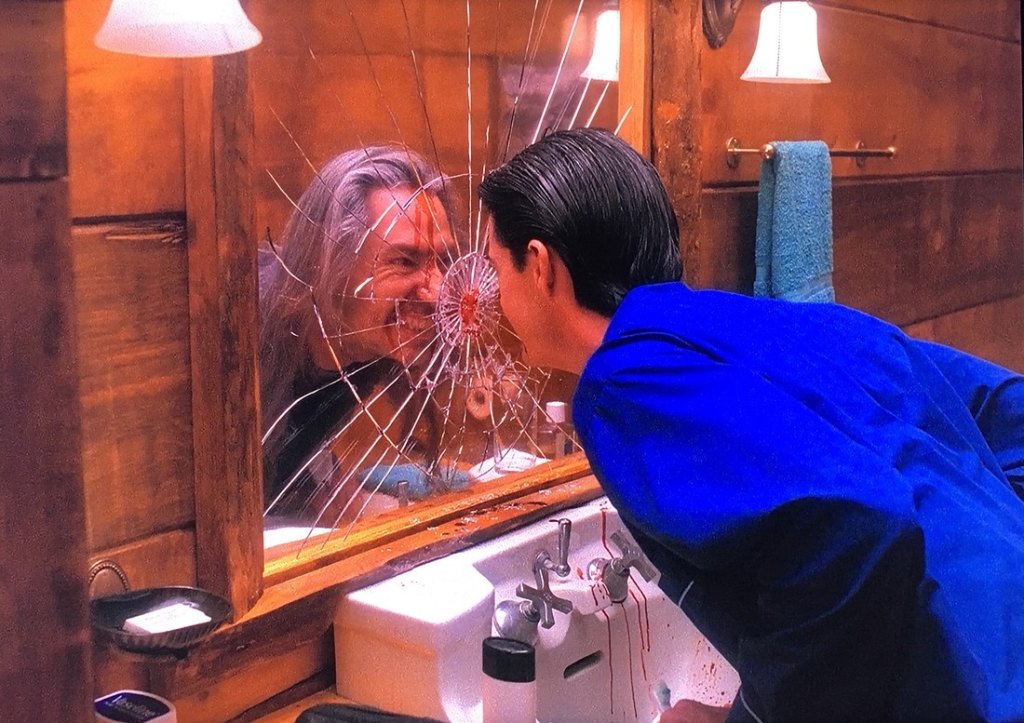
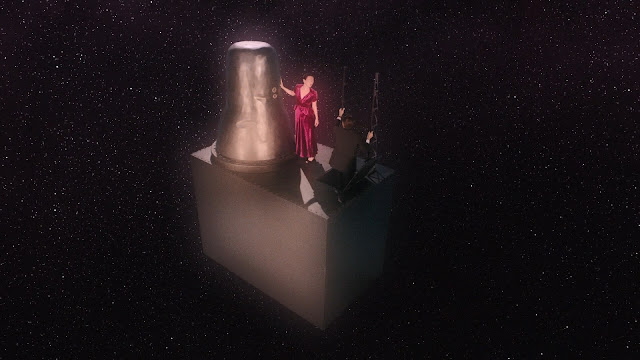
The Return opens with the true Cooper, still trapped in some supernatural realm attached to the red room where BOB had left him stranded. The first several episodes track his Odyssey-esque journey back to the land of the living through several strange extradimensional locations. Once he returns to Earth, the true Cooper fades into the background for the middle portion of the show, reemerging for the final confrontation with BOB. Once BOB is defeated, we glimpse the first crack in Cooper’s seemingly perfect shell. The professionalism that defined his character for so long and the unyielding search for justice which endeared him to so many each contribute to an inability to cease his fight against the evil forces. Over the course of The Return, as the peripheral presence of a second evil in the form of Judy becomes apparent, Cooper convinces himself that he must pursue this new fight into an alternate dimension in the final two episodes. This quest proves fruitless, as the finale ends with a confused Cooper attempting to puzzle out what could he have missed in the attempt to put all the pieces together. In the hands of other directors or in more normal production circumstances, it would form the perfect framing for a cliffhanger for a follow-up season. This seems to not have been the intent, instead emphasizing the costly sacrifices Cooper has made for something that may not be worth it.
After BOB’s demise, Cooper is presented with the choice to rest and pursue a quiet life among those who love him, but his singular commitment to what he views as his calling prevents him from taking this path. It’s a painful goodbye to many of his friends as he chooses to leave so shortly after returning. In many ways, it seems to intentionally echo many of the sacrifices and even mistakes that Lynch has made over his career in the pursuit of the Art Life over all. Agent Cooper’s final choices to reject the simple life offered to him ultimately present as a form of selfishness or pride. While the desire for justice is of course a worthwhile impulse, Cooper comes to see himself as the only instrument capable of delivering that justice, even as he has just been only one piece in the defeat of BOB. The greatest victories that Cooper ever brought to Twin Peaks were through love and compassion for those around him, not single-handedly defeating cosmic evil.
IV. Forgiveness
While the most existential spiritual questions remain just that–questions–throughout Twin Peaks, the personal, immanent relationships and actions of Lynch’s characters emerge much more concretely as one final piece to the thematic puzzle. The journeys and trajectories of most fictional characters tend to follow insular paths. In the monomythic “hero’s journey”, the protagonist’s path is charted in terms of encountering challenges, failures, atoning for mistakes, and achieving redemption that leads to the completion of the quest. The characters of Twin Peaks conspicuously depart from this pattern with near unanimity. It starts off simple enough, as Agent Cooper, along with many Lynchian protagonists can be seen as failing in their intended quests as flawed heroes who cannot overcome all the challenges placed before them. But dig just a bit more, and the deviations from the monomyth become much more fascinating and varied particularly around redemption and atonement. Unlike so many other fictional figures, no major character in Twin Peaks overcomes their trials and challenges by redeeming or atoning for themselves.
The futility and even destruction that can be wrought by attempts to single-handedly bring order or peace reaches a pinnacle in the thirteenth episode of season two. Up until this point, the Canadian Renault brothers have operated a number of criminal conspiracies on the narrative periphery. Two of the brothers have died in the course of these crimes as Agent Cooper and Sheriff Truman investigate Laura’s murder. Although both deaths directly came at the hands of other criminals, the final brother blames Cooper for their deaths as he disrupted the prior balance of underworld power.
“My two brothers died. I hold you responsible. Before you came here, Twin Peaks was a simple place. My brothers deal dope to the teenagers and truck drivers, One-Eyed Jack welcomed the businessmen and the tourists. Quiet people lived a quiet life. Then a pretty girl dies, and you arrive, and everything change. My brother Bernardo shot and left to die in the woods. A grieving father smother my remaining brother with a pillow. Kidnapping. Death. Suddenly the quiet people, they’re quiet no more. Suddenly the simple dream become the nightmare. So, if you die, maybe you will be the last to die. Maybe you brought the nightmare with you, and maybe the nightmare will die with you.” –S2E13 Jean Renault
As he holds Cooper hostage following a drug bust gone wrong, Jean Renault views killing Cooper as an animistic sacrifice that may finally restore the false veneer of order that existed previously. While most of the individual attempts by characters to create their own self-attendance aren’t so destructive, they follow a parallel self-orientation and ineffectual conclusion. The Return finds Ben Horne, the formerly corrupt businessman, continuing to live an honest life almost monastically, still unable to rewrite all of his former wrongs. Once Cooper crosses over time and space in the penultimate episode, he makes an attempt to literally change the past to prevent all of the pain and suffering visited on the town. It doesn’t work, as the series closes on a baffled and disappointed Cooper unable to make the past fit his expectation for how justice should be served.
But where personal or even vicarious human atonement fails to effect any meaningful change, forgiveness remains a powerful force. One example of this is forgiveness Leland Palmer finds. Leland is revealed midway through season two as the apparent perpetrator of the murders that brought Agent Cooper to Twin Peaks, including that of his own daughter, Laura, whose body was discovered in the series’ opening scene. Under the guise of investigating another suspect for the murder, Leland is tricked into coming to the sheriff’s station, where Cooper and Sheriff Truman force him into a holding room. BOB takes possession of Leland’s body, tauntingly admitting to forcing Leland to commit the crimes, before promising to kill again. Inexplicably, the fire sprinklers rain down, prompting BOB to flee Leland’s body after ramming it headfirst into the wall repeatedly. After racing to reenter the interrogation room, Cooper and Truman find Leland dying, now able to remember everything that BOB led him to do while possessed. Sobbing, Leland begs for forgiveness from those present, Laura, and God. As he succumbs to his injuries, Leland has a vision of Laura welcoming him to the afterlife, his sins seemingly washed away under the sprinklers. Leland Palmer’s deathbed forgiveness by Laura brings him a deep peace, unmatched by even those with far lighter stains.
None of this is to say that Twin Peaks is a consciously Christian text. In A God Torn To Pieces–an exploration of Nietzsche’s religious beliefs–Giuseppe Fornari comments that many European philosophers (Nietzsche included) attempt to turn East for answers to the paradoxes of modern life. Both Lynch and Twin Peaks fall into this box as well: Lynch is one of the most prominent advocates of Transcendental Meditation, and Agent Cooper’s repeated invocations of Tibet and the Dali Lama make implicit references to both Hindu and Buddhist metaphysics. And yet, just as Fornari observes of the philosophers, the conclusions of Twin Peaks echo the doctrines of Christianity far more loudly than anything from the East. Whether this is merely ghostly reflections of a culturally Christian upbringing, hints of some publically unacknowledged belief, or evidence of universal divine truth that cannot be hidden, is beyond my place to speculate.
~~~
The final verdict on what sets Lynch’s works apart is impossible to definitively state. Certainly, the thematic and artistic care with which Twin Peaks and other works are constructed plays a major role. But even this creative focus only reflects part of the equation, and seems to indicate an underlying love for those involved from the beginning of production to the final viewer. Almost every interview with actors following their work with Lynch from the smallest single-scene role to starring in multiple features highlights the joy and personal appreciation he seems to have for those around, and the desire to not only entertain but provide thoughtful material for self-reflection and personal growth that is intended for both audiences and even himself. The conclusion of The Final Dossier, representing the FBI’s internal closing notes on the entire string of investigations in Twin Peaks provides a fitting epilogue to the franchise, reflecting both the themes within the universe and their projection into the real world:
Is the evil in us real? Is it an intrinsic part of us, a force outside us, or nothing more than a reflection of the void? How do we hold both fear and wonder in the mind at once? Does staring into this darkness offer up an answer, or resolution? What does it give us to hold on to? Does it reveal anything at all?
Or can the simple, impossible act of persisting to look at what’s in front of us finally pierce the blackness and reward us with a glimpse of something eternal beyond? Is that ‘heaven’? How do we manage it? The only answer I can console myself with is this: What if the truth lies just beyond the limits of our fear, and the only way to reach it is to never look away? What if that’s why we must keep going, why we can never quit trying to overcome it in every moment we’re alive?
Look at all that’s happened here. One town. The commonplace, familiar, and ordinary–everything we think we know, until you sense the deep, unsettling strangeness informing all of it. How easy it is to quit, give up, lower our eyes. Look at what happens to anyone here who lost the fight, many of whose stories we both now know so well. How recklessly, stupidly we toss away this one chance we have, simply squander it, money down the drain, a thousand different ways. We’re holding the coin of the realm in our hands the whole time and we can’t even see it. –Agent Preston, The Final Dossier
Kevin McGuire is currently a PhD candidate in the Price College of Business at the University of Oklahoma. In his free time, he enjoys both watching and playing basketball, spending too much time on Twitter, and continuing his quest to find the strangest music on the planet. You can read another essay of his here.


2 thoughts on “The Hopeful Worlds of David Lynch”