Hobbs and Shaw ft. Clifton Raphael

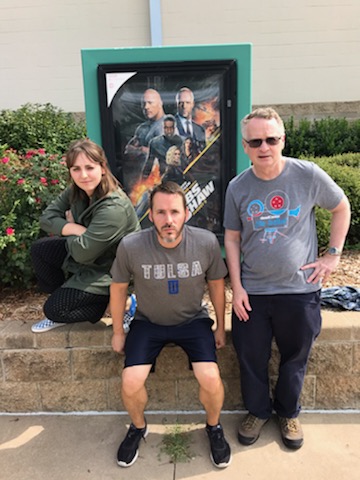
IMG_4353.jpegFrom left to right: Hobbs, Idris Elba’s White Doppelgänger, and Shaw

I am excited to be joined for this review by my former six-time teacher, Clifton Raphael. Mr. Raphael teaches screenwriting and filmmaking and film studies at Jenks High School. He has 24 years of experience in TV broadcasting and an MFA in screenwriting and film studies from Hollins University. His students have won two $5,000 grand prizes in the C-Span StudentCam documentary competition (the only school to have repeat grand prize winners), a regional Emmy, and thousands of dollars in other C-SPAN, YoungArts and Scholastic Arts awards. His class also has the first high-school produced program on OETA (Oklahoma’s PBS affiliate). Mr. Raphael has been a judge for numerous film festivals and competitions, has been interviewed on C-SPAN, and sits on the Board of Directors at Circle Cinema. You can watch his students’ films here.

He has been a great influence in my life and has always championed my work with his brand of tough-love, sacrificial dedication, earnest support, and occasional mockery. It’s about time he got to be featured here. 

Full disclosure: Neither of us have seen any of The Fast and the Furious films, but we believe this makes us uniquely suited to reviewing its spinoff, Hobbs and Shaw. He, as a film connoisseur, and me, as someone who likes things that go vroom vroom. 

Our conversation has been edited for length and clarity. 

Madeleine: Can you describe the events of this film in two sentences or less?

Clifton Raphael: Two guys learn to love each other in order to save the world. 

Perfect. But that’s only one sentence. 

Okay, so there’s a virus that could kill supposedly all the weakest people in the world, and there’s some benevolent force that wants this done. So Hobbs (Dwayne Johnson) and Shaw (Jason Statham) have to get together to find this woman, Shaw’s sister (played by Vanessa Kirby), and they have to get this virus that is implanted in her out and save her and save the world. 

Beautiful. 

It’s my understanding that you took a screenwriting class in high school. [He is referring to the class that Madeleine took with him.]

Why yes I did. 

And I understand there’s a thing called a character arc, where a character changes throughout the course of the story. How did these characters change? What character arcs did they go through in this movie?

Okay so first they didn’t like each other, right? ‘Cause Hobbs and Shaw have clashing egos and insecurities. 

Right. 

And then in the middle they don’t like each other, because they’re working together but they just… still, don’t, because of the previously mentioned issues. And then at the end, they still don’t really like each other and then in the last five minutes they realize that if they work together they can punch the living daylights out of the villain, and then the movie will end, so then they like each other. 

But then they sort of… don’t like each other. 

Right, they still don’t like each other. They like to neg one another. It’s their love language. 

What else did this movie do really well screenwriting wise?

You know it sets up a very clear “want” and “need.” The characters want to not need each other. 

But then they need to need each other!

Exactly! The film and screenplay also makes great use of character motivations that tie into the theme. Cause the theme is that tech- no, actually the first theme is family, because everyone needs a family. Second, the theme is that humans always beat technology. 

Yes, and actually I’m going to quote the movie. I wrote it down because [pulls out phone] it was such an amazing line [he says with the utmost sarcasm]. 

You were on your phone during the movie?!

Whoops, please don’t tell anyone.

That line is the thesis of the film. 

It’s delivered by the Rock. This is up there with Dorothy’s “I don’t think we’re in Kansas anymore,” and “Here’s looking at you, kid.” This will go into the immortal words of great lines.

And his Oscar reel. 

So he says, “You may believe in machines, but we believe in people.”

Boom!

Boom.

Idris Elba’s villain character lets go of his humanity for the pursuit of human evolution through technology, and Hobbs and Shaw use technology throughout the film but the thing is, underneath all of that technology, they’re still just guys who want to get down to their roots and just, [slams hands together] beat the living crap out of each other with their fists. 

That’s right. 

They don’t like the guns, they just use the guns, so that’s why they can say that.

 Let’s talk about Vanessa Kirby’s character. 

Right. What has she been in?

Mission Impossible franchise. And The Crown TV show. 

I was encouraged to see- and I think we’re seeing more and more of this in movies-  that she could hold her own with the men, in terms of the absolutely ridiculous things she was capable of doing. And it’s interesting to me, there’s this whole new trend of women in movies being in these positions of pulling off what would normally be considered “tough guy” roles or missions. So that’s pretty encouraging.

I agree that it is nice that she gets fight sequences and gets the same “cool” treatment as the guys. But what I really want to get to is the agency of her character. It looks like, from the surface, she has a big role. She’s in it a lot, and she has the main plot-

I see where you’re going with this, it’s that the guys still need to take care of her and save her because the woman has the virus injected into her.

Yes, but it’s more than that if you look at what she contributes to the film. Okay so first, she’s a Mcguffin. She literally has the MacGuffin virus in her. But there are only two scenes- I was keeping track- where she does something that advances the plot and changes the events of the film. In all of the other scenes, she either puts up a fight but the result is still the same as if she was, like, a lamp, or she contributes but they would have gotten to that place without her. Or, she’s literally picked up and carried to the next plot point. 

She doesn’t have the same level of narrative agency as the other leads, which is still a huge flaw if you’re really breaking the film down. I think that is something to consider because on the surface it looks like the movie is all, [does jazz hands] Oh yeah! Women! It’s important to interrogate these films that are so self-congratulatory about their “progress.”  I’m concerned that if we don’t, movies will keep barreling forward towards this faux-empowerment direction without any real substance, not changing the basic ingredients of these films in this genre. 

Yeah…baby steps? I don’t know. 

The fact that she’s in it is positive because she has cool fight sequences and she’s pulling her weight, but there’s a way to go, and I don’t want the film to pat itself on the back for, you know,  advancing that feminist agenda. 

[Contemplative silence is briefly kept]

You know, one of the criticisms of the latest Tarantino movie (Once Upon a Time in Hollywood), and a criticism in his other movies too, is that some of his violence is so exaggerated that you end up laughing at it. So are you then diminishing the impact of violence by doing that? Now this film isn’t as explicitly violent. People get hit a lot but you don’t see them necessarily die.

That’s the thing. We know they die. In real life, they would die, so it sure does undercut the idea of “you believe in technology but we believe in people,” when from the first scene, which is to establish how cool they are, to the last scene, Hobbs and Shaw are absolutely brutalizing people. Everyone who’s not a main character is completely dehumanized, they are props. And you’re supposed to laugh and enjoy these guys completely destroying people and yet at the very end, switcheroo because Dwayne Johnson has a daughter and Jason Statham has a sister, which kinda dehumanizes them as props too. They use the shorthand of, “he has a daughter, he’s human,” so they have to put no effort into anything.

You’re right. But you know, this is a trope of these kinds of movies. I remember this very well from Steven Spielberg’s War of the Worlds, that the movie established very early on that Tom Cruise is divorced and he’s got a daughter he has to take care of. Movies always have something that is trying to humanize them-

To make these protagonists relatable to the audience.

Even though you don’t have to do that to me for a movie like this, because I already relate to the idea of running cars off bridges and pulling helicopters out of the sky with my bare hands, these are the things I do on a daily basis [both laugh]. But I can understand for most people you would need to have a humanizing moment. Yet it makes it so that it’s not the pulling helicopter out of the sky moments that are hard to believe; it’s the human moments that are hard to believe. 

I don’t like to think that blockbuster filmmaking is useless, or it doesn’t mean anything, because I think it taps into the cultural zeitgeist, and what people expect of themselves and media more than any other genre. I want there to be a redeeming quality to Hobbs and Shaw that reflects our society, or humanity, or Hollywood. Do you think there’s any of that there? A redeeming quality for why people should go see it?

I suppose redeeming quality is that whole, “I have stresses and problems in my life, but they aren’t the problems of having to face ten guys with really, really tough weapons and 18 cars coming at me, and ‘look out, the bridge is out!’”

Wait, you’re saying this is an exercise in gratitude? 

[Laughs] Gratitude? Well, that’s not what I meant, but that whole escapism thing and wanting to go to something mindless. But seriously, we’re Americans, do we really put our minds to things that much? Are we really overstressing ourselves with the intelligence needed for our regular lives? But still, I can understand the desire to see something mindless. I’m the first person to go see any new monster movie that comes out- and I’m not talking about horror, I’m talking about like Godzilla or like Kong: Skull Island– because I grew up fascinated by those monsters. And then I’m one of the first people disappointed, wondering why I went to go see it, yet I will see the very next one. 

Is there anything you would want to tell the makers of Fast and Furious that they should do differently?

Well, I would definitely go if Godzilla is in the next one. 

The most ambitious crossover event of all time! Is there another movie that you would recommend that is less taxing on the brain but smarter than this one that’s out right now?

I liked Booksmart, and Long Shot, that’s a bit of a guilty pleasure. Probably just those two. You?

I can’t just give that information away, people have to read my review to find out! So we’re giving Hobbs and Shaw a free pass?

I’m giving it a free pass.

Nooo, we’re just giving it a free pass. 

It’s true.

The low expectations have gotten to us.

But seriously what they could do differently? Just, cleverer stuff? But I think they’re wearing out on that.

There’s only so far a car can go. 

I don’t know if we can improve the franchise in this discussion. I guess we’ll have to do that after we see the next one!

The next one? There’s going to be a sequel to this review? 

There’s always a sequel. 

-Madeleine D. 

The Circle of Remakes: The Lion King (2019)

Image result for the lion king 2019

I’ve been pretty generous to the recent live-action remakes as of late. I enjoyed Beauty and the Beast and thought Aladdin was overwhelming but cute. The Jungle Book, Alice in Wonderland, and Maleficent were fine. Pete’s Dragon was tragic. I thoroughly disliked Cinderella

But I have not been against these remakes on principle because for each of these films I see arguments to be made for updating them, whether that be to widen the scope, deepen the themes, or adjust to modern sensibilities. Besides, all of these films were basically fairy tales, and fairy tales are designed to explore different cultural anxieties and adapt with age. They are supposed to be reinvented, so a good adaptation will reinvent them in some way. While none of the films wowed me, I thought there was still an artistic reasoning Disney could give for making them, outside the obvious one of money. 

The Lion King though? I honestly cannot find a single thing in this remake that improves upon the original.

That’s the sentiment of many critics, but if there has been one redeeming factor for The Lion King, it is that people are wowed by the technology. And so was I, for about ten minutes. The character design is beautiful, the scenery is stunning, and the voice actors are very good (special shoutout to the constantly unappreciated Chiwetel Ejiofor, who here plays Scar but never tries to replicate Jeremy Irons, and elevates even the weakest of material with his Bond-villain approach).

But after the initial “whoa” wore off, I found the technology to be more like showing off than doing anything to service the story. What does making this live-action look do to service the story? No child is under the impression lions really act like this. The Lion King is a story about Simba, a fictional lion in a Hamlet-esque drama. It’s not a Nat Geo documentary. We’re supposed to relate to Simba, and the original movie did that through anthropomorphized animals and exaggerated facial expressions to communicate emotions. Real-life animals are simply not as expressive as humans, and so no matter how well the voice actors do, without the facial acting to back up the voices, the characters fall flat. There is nothing added to the story; it is almost a shot-by-shot, line-by-line remake. Even with the “live action” and hyper-realistic approach, there are no elements of actual real-world lion pride dynamics added, because if so, Sarabi and Nala would be the main characters instead of Simba and Mufasa and Simba would die trying to convert to being vegetarian. The “realistic” treatment here calls for cutting out the fun of the original without substituting it for anything else. So what argument can there be made for “we need to make it live-action” outside of, “wouldn’t it be cool?” and I don’t think that is a compelling enough case.

A trend of the other live-action remakes has been to “fix” the problems of the original source material. These problems in many cases are not actual problems with the original films but instead are poor criticism that asks edgy questions such as, “does Belle have Stockholm syndrome? Cinderella isn’t a good role model for girls. In the real world dragons can’t sing!”

The desire from some audiences to have these live-action remakes over-explain every fantastic element from the original source seems to be a result of the rise of anti-intellectualism film criticism. This form of film criticism views films in an extremely literal lense and tends to ignore metaphorical readings. Plot holes become reasons a movie is objectively bad, rather than flawed, and these readings prioritize logic above all other aspects of the film. While I love watching things like Cinemasins for comedy, this is not good faith criticism because it does not seek to understand the vast potential of filmmaking nor does it show interest in discovering what the filmmaker may have been going for. For more on this subject, I recommend this video by Dan Olson, which looks at this phenomenon through my favorite movie of last year, Annihilation. 

All of that to say, this Lion King remake doesn’t actually fix any potential issues of the source material (and I personally can’t think of any issues), unless you consider “lions don’t actually look like cartoons” as a problem. And this itself isn’t a problem because 1) Hand-drawn animation is not an inferior genre. 2) Films do not need to strive for realism. As critic Roger Ebert put it, “I’ve always felt that movies are an emotional medium.” This movie misses that wholely. 

I think that history will remember this new live-action Lion King more like Avatar than the original 1994 Lion King. Avatar has just been passed by Avengers: Endgame as the highest-grossing film of all time, but consider that for ten years, it was the highest-grossing film of all time ($2.7897 billion) in part because of what a technological marvel it was and how it made use of the height of the 3D craze.

But Avatar’s cultural footprint is really only its reign as the highest-grossing film (well, until a few days ago) and as a joke. There is no strong fandom for Avatar, only probably 30% of the population can even remember the main character’s name or any substantial facts about the film. We’ll see if that changes with James Cameron’s 17 upcoming sequels, but Avatar was quickly outpaced and forgotten. And I believe it will be the same here. Technology doesn’t stick with people as much as stories do.

Look, Disney already has my money. And it will have a lot of other people’s money, too. And if you’re desperate, I won’t blame you for seeing something you know will be fine and is a safe choice for the whole family. That familiarity is why Disney is so successful. But trust me, rewatching the original Lion King will be a much better use of your time, and there are better movies in theaters right now to see. Or save your money for the upcoming Maleficent: Mistress of Evil. Or Star Wars: The Rise of Skywalker. Or Frozen 2. Or Jungle Cruise with the Rock. Or Mulan. Or Little Mermaid. Or- well, you get it. It’s Disney’s world and we’re just living in it. 

-Madeleine D.

P.S,

You know who the only good, realistic but still emotive CGI animal is? Aslan, from The Chronicles of Narnia movies. Yes, those films were Not As Good As The Books®, but look at the range of expressions! Or even Richard Parker from Life of Pi! So it’s not that this approach couldn’t have worked, but the “cool technology and animal logic at all costs!” approach fails the story. Nothing but respect for my favorite furry Christ figure. 

Image result for aslan narnia

Related imageRelated image

Image result for richard parker tigerRelated image

Next week: A very fast and furious review with a special guest

Go Big Or Go (Spider-Man: Far From) Home

Related imageSpoilers for this film and Avengers: Endgame!

Spider-Man: Far From Home picks up shortly after Avengers: Endgame. Tony Stark is dead and the world is mourning his loss and is trying to move on after Thanos’s snap and then the reverse snap, which is being called “The Blip.” Eager to escape the mounting responsibilities being put on him by Nick Fury (Samuel L. Jackson), Peter Parker (Tom Holland) joins his class for a summer trip to Europe, where his only concerns are enjoying himself and trying to tell MJ (Zendaya) that he likes her. 

Unsurprisingly, he is soon caught up again into superhero antics when a set of new threats called Elementals appear, but it seems Peter is not alone in fighting them this time. He meets a new hero named Quentin Beck, aka Mysterio (Jake Gyllenhaal), who may not be everything he seems. 

Far From Home is a mixed bag, but it is undeniably entertaining. The Spider-Man corner of the MCU continues to be at its best when it focuses on normalcy. The humor that comes from the class and vacation situations are by far the best parts of Far From Home. Martin Starr and J.B Smoove are particularly delightful as Peter’s teachers, and Marisa Tomei, Zendaya, and Jacob Batalon continue to be great as Peter’s inner circle who keep up the push-and-pull between Peter’s civilian identity and his role as Spider-Man. 

Beyond the humor, though, are some truly affecting dramatic moments. Similar to the tear-jerking part in Homecoming when Peter gets trapped under the rubble, or when Peter gets dusted in Infinity War, the scene where Mysterio first uses his illusions on Peter is startling because it emphasizes Peter’s youth, and it is truly disturbing to see him being manipulated and beaten down in such a brutal fashion. Holland has some solid dramatic chops, and he gets to use them again here. I applaud the film for not pulling any punches and letting this young hero get a true “dark night of the soul” moment. 

The film also lets Peter makes some terrible mistakes that make him look foolish at best and unworthy of being Spider-man at worst. It’s a touch of sophistication that is missing from many other MCU films that typically rely on the hero’s darkest hours coming from external forces and not from their own mistakes. In this regard, this second Marvel-Sony Spider-Man entry is quite ambitious. 

Far From Home falters, however, in part because of this ambition. It goes bigger, and it doesn’t hit the mark on everything. The multiple bombastic action sequences are bland because most of them are Peter against faceless entities of water or fire or drones, which result in no emotional connection to the audience and a CGI mess on the screen.

This ambition extends to the movie’s themes. The story seems relevant with its inclusion of fake news, drones, technological warfare, illusions, not being sure what is real and not, and an undercurrent of what I can only describe as Gen-Z Anxiety™. All of those things are relevant, but the movie never quite gets around to saying anything meaningful about those things. Peter defeats them through his superpowers, so what does that mean for those of us who don’t have superpowers? Ultimately, just because the movie has timely elements doesn’t make it so, because it fails to understand what makes these things timely in the first place. 

This brings us back to Mysterio, who, like Michael Keaton’s villain Vulture in Homecoming, is a regular man who feels like he was cast low by Tony Stark and decides to retaliate by becoming evil. But while the film, and the MCU at large, seems to want to give some commentary on Tony’s problematic aspects, by making his critics evil maniacs, the wind is taken out of any serious arguments against Tony and instead just affirms him. His critics are all evil, and he saved the world, so in the end, he must have been in the right. 

Happy Hogan (Jon Favreau) does say late in the movie that Tony was a “mess” and “always doubted himself,” which is true and is in line with the character’s development in losing his self-assuredness and gaining humility. But then moments later Happy makes an explicit connection between Tony and Peter, and since Peter is our heroic protagonist, any legitimate criticism of Tony is once again undercut in favor of the MCU’s RDJ-worship. All of this renders Mysterio a promising character played well by an underused Gyllenhaal, who never quite gets to shine as he should.

In the end, Far From Home confirms what some other recent MCU films have been showing, which is that Marvel is getting bolder and riskier, but still doesn’t quite have it in them to either go all the way or have the proper execution. I’m glad they’re trying, but they’re still far from a home run.

-Madeleine D.

The Gospel of Place: The Last Black Man in San Francisco

Image result for the last black man in san francisco

“In the Christian imagination, where you live gets equal billing with what you believe. Geography and theology are biblical bedfellows…Biblical religion has a low tolerance for ‘great ideas’ or ‘sublime truths’ or ‘inspirational thoughts’ apart from the places in which they occur. God’s great love and purposes for us are worked out in the messes in our kitchens and backyards, in storms and sins, blue skies, daily work, working with us…where we are…and not where we would like to be.” 

-Eugene Peterson, in the forward to Sidewalks in the Kingdom by Eric O. Jacobsen 

“If we learn to see and even love these urban features, we will begin to cheer when our cities and neighborhoods are preserved, and we will begin to weep when they are destroyed” 

      -Jacobsen, 73 

The Last Black Man in San Francisco, despite its provocative and apocalyptic title, is a meandering and tender eulogy about a number of things. The film follows a man named Jimmie Fails (played by the man of the same name, on whose life story the film is based on) as he squats in the home he lived in as a kid and tries to find a way to buy it back for himself. Jimmie’s love for the house (and San Francisco at large) is of the purest form and is possibly only rivaled by the love of his friend Monty (Jonathan Majors), an aspiring playwright who supports Jimmie until he discovers the truth about the house. The film watches the characters navigate this increasingly strange and hostile city that they love but are being priced out of. The Last Black Man in San Francisco is a movie unlike any other movie that has come out this year, and I’d like to look at a few more reasons why.

In American filmmaking, time is treated like it is in our society- something to be hastened and exploited and used to its very last drop. Time efficiency is considered great storytelling, and sometimes it is. But sometimes it isn’t, and there becomes a point where efficiency in storytelling means the filmmaker may use her characters more as tools than as reflections of humans. In TLBMISF, the camera gazes upon human faces and human bodies in a way that aims to cut straight to the character’s humanity, and it does not hasten to do this or have an agenda. At one point Monty, after being berated by some men on the street, says to Jimmie, “I shouldn’t get to appreciate them because they’re mean to me? That’s silly.” This is the attitude the film takes. Some characters that seem to have no narrative function turn out to be of great importance. Some characters really do not have any greater plot function, but all are treated with care and dignity by the camera. I’ve talked a few times before about having an empathetic camera, but TLBMISF exemplifies the concept more fully than any other film I’ve seen. This is true visual storytelling and a better form of storytelling efficiency.  

An unexpected consequence of this narrative empathy was that this became a stressful viewing experience for me because there was no one to really root against, so there was no sense of, “Of course this bad guy will be defeated, good conquers evil!” I was constantly in suspense about what was going to happen, and the film continued to go in unexpected directions. I felt this anxiety early on because Jimmie and Monty are so dang likable, even when they’re not doing likable things. It’s impossible not to want them to succeed, and panic at all of the clear obstacles in their ways. 

Speaking of Monty and Jimmie, in films with friendship in the middle, one character often takes an extreme comedic relief role and the other plays the straight man. They have to be extremes to keep things interesting, and their quippy rapport is a shorthand to express their closeness. Monty and Jimmie don’t fit into these categories in any fashion. They have their differences, but the performances are so lived-in and organic, the chemistry between the leads so effortless, and the physical closeness they often share is so comfortable that there is no need to have any kind of shorthand or tropes to establish the relationship. And refreshingly, the film feels no need to “no homo” the character’s bond at any point, further exuding the confidence the film feels about its own presence. 

~

The quotes at the beginning of this review are from Sidewalks in the Kingdom, a book about Christianity and new urbanism. In it, author Eric O. Jacobsen argues what the Bible argues- that Christianity is not solely the realm of the head and heart, but has to be enacted on the streets of where we live, and increasingly, that place is a city. The Bible begins in the Garden of Eden but ends in the Kingdom of God, pointedly shown to be a city. 

TLBMISF sees the city, in this case, San Francisco, as the Bible sees cities. And as already discussed, it also sees people in the same way. As Jimmie tells some newcomers who already dislike San Francisco, “You can’t hate it unless you love it.” As Christians, we cannot recognize the problems in the world and in our cities until we at first truly, truly love it. 

I am writing this review and including these quotes because I encourage you to watch this film, and I think watching it in this framework will be helpful, thought-provoking, and hopefully, rewarding. It was impossible for me not to consider these things when I saw it. TLBMISF is not pointedly a spiritual film, but like all good movies, it illuminates truth. Christians are called to love the earth we are on, and work for its benefit and glory. If only we all saw the spaces we occupy and the communities we are a part of in the way Jimmie and Monty see San Francisco. If only we advocated for the restoration of the historical homes of our cities, called for walkable streets and sidewalks, for justice in our legal systems and in our economic policies, and for thoughtfulness and care put into the urban renewal that is not only gentrifying San Francisco but all of the United States. 

In other words, we can and should get to a point where we will begin to cheer when our cities and neighborhoods are preserved, and we will begin to weep when they are destroyed.

Brie Larson Trifecta: Short Term 12, Room, and Unicorn Store

Recently, I found myself with a to-watch list that contained three Brie Larson films. So, in a very late celebration of her film Captain Marvel reaching the billion dollar mark at the box office and Avengers: Endgame taking all the rest of the world’s money, let’s take a look at some of the highlights of Larson’s filmography. 

Short Term 12Image result for short term 12

Short Term 12 is about Grace (Brie Larson), a young counselor at a care unit for at-risk teens. Grace herself was once one of those teens, but now is a model for the kids as she cares for them in a calm, firm, and compassionate manner. The slice-of-life drama follows Grace and her boyfriend/ fellow counselor Mason (John Gallagher Jr.) as they face new challenges at the center and in their relationship. 

There’s not a single weak performer in the cast. While Larson got deserved praise for her performance, John Gallagher Jr. is equally perfect. He does most of the comedic lifting, but he has a number of small dramatic moments that make the film work so well, and he and Larson have perfect chemistry. The supporting cast, including rising stars Rami Malek and Lakeith Stanfield (go see Sorry to Bother You!), are equally great in their roles. 

The film is so authentic and realistic it feels like a documentary, but it never once lost my attention. It is, simply put, riveting. Short Term 12 never shies away from the flaws of its characters, but it also never forgets their dignity and beauty either. It is the kind of film that pulls you completely into the story, and makes you feel the pain of each character, yet also makes you feel stronger and more ready to take on life when you leave the theater. I believe it is a must-see. 

RoomImage result for room movie

Like Short Term 12, this is another realistic, serious film that is almost documentary-like in parts as it tells the story of Joy (Brie Larson) and her son Jack (Jacob Tremblay) as they escape their kidnapper and restart life in the real world.

I resisted seeing Room for a while, knowing it was going to be a hard watch. Thankfully, it’s not a shocking or gratuitous film, but it is still emotionally heavy. This story is about a crime but that’s not its focus; the focus is on the human soul. 

Every time Room could fall into a cliche about the inspiring strength of the human spirit or the resilience of kids, it sidesteps the cliche gracefully and tells a fuller story. It is a reminder of the strength of the human spirit and the resilience of kids, but the movie doesn’t end on a victorious or inspirational note. Instead, it embodies an honest view of the evils of the world but with a persistent attitude of hope. Another must-see, if only for Larson and Tremblay’s incredible work.

Unicorn StoreImage result for unicorn store

A lighthearted departure from her other films, Unicorn Store is Larson’s directorial debut. She stars as Kit, a young adult who refuses to grow up. She meets a man called The Salesman (Samuel L. Jackson), who promises to give her her heart’s desire- a unicorn- if she prepares a home for it. Kit accepts the challenge and must learn how to take care of the creature, and maybe along the way learn to care for herself. 

Kit as a character is very uneven, like the film, but I did like that she offers up a fresh breath of air as a heroine. A lot of female characters are getting the “strong” treatment, in which the description of “strong” ceases to have any actual meaning and instead becomes code for, “just like the ideal male hero,” which means completely competent and physically tough with a lack of or at least a comfortably low count of any feminine qualities. (Obviously, there is a discussion to be had if being “strong” should be thought of as a firstly masculine trope and narrative at all, but that’s a different discussion). Anyway, here Kit is not strong in any of the ways the word is used. She’s not physically strong, she’s not particularly mentally strong or tough, and is not someone to look up to. She is *gasp* flawed and must grow. 

Kit is silly and immature and unsure of herself, and yet that is never equated with her femininity, which itself is never taken from her, even as she matures. The problem with Kit is never presented that she likes glitter and unicorns and pink- an over-the-top feminine aesthetic- the problem is that she is resistant to change and unprepared for adult life. I found that refreshing and know the character of Kit will resonate with a lot of women. 

Unfortunately, Unicorn Store really wants to be quirky and unique, which is usually the mindset that makes a film fail to be either quirky or unique or good. The forced whimsy of the film, combined with an all-too-obvious metaphor, keeps it from being much of a meditation on the difference between being childish and being like a child. This is furthered by the uneven tone that fluctuates between child-like wonder and childishness, which might have been an interesting way to reflect Kit’s character but is clearly out of bad filmmaking instead. 

As for her directing, Larson is fine but is bettered by the cinematography by Brett Pawlak and is weakened by Samantha Montgomery McIntyre’s script. There’s still potential here for Larson’s next directorial effort- and I do hope she does another film- but I think it would be better for her to focus on a more minimalistic story.

Is there a common thread between these projects? I would say so. Both Room and Short Term 12 are about people in crisis that are trying to regain an identity outside of being in crisis. Unicorn Store is also about identity, but the crisis has much lower stakes and comes more from personal failure and dissatisfaction than the outward influences that plague the characters of Short Term 12 and Room

Unicorn Store relies on Larson to play a bold, quirky, and altogether more performative character, while her other work has her do the opposite in extremely subdued, naturalistic characterizations. Her performance in Unicorn Store is not bad, but it doesn’t play to her strengths, which makes it comparable to her work as Captain Marvel. Her uniqueness as an actress lies in how she makes each character feel lived in, to such a degree that I feel, watching them, that I could sit down with Joy of Room or Grace of Short Term 12 and ask them about their pasts and they could tell me all sorts of things. Both Carol Danvers aka Captain Marvel and Kit from Unicorn Store are big personalities that make it seems like Larson is impersonating other actors who would fit those roles better (although I truly think Larson will come more into her own as Captain Marvel by her next appearance and under better directors).

Watching a selection of films from an actor’s filmography is a helpful way to not only understand the actor better but the craft of acting. And I think this experiment not only gave me two excellent films to enjoy but also should serve as a reminder that Brie Larson does not deserve all the online trolling and hate she is getting. So, if you’re a Marvel fan harassing Brie Larson online- quit it! I would say I will find you myself, but after seeing how ripped Larson got to play Captain Marvel, I think she can take care of herself. 

-Madeleine D. 

Toy Story 4 Video Review ft. Mark Branson Thurston

In honor of Toy Story 4, I wanted to do something special, so I recruited my friend Mark Branson Thurston, a filmmaker and fellow film-lover, to make madeleinelovesmovies.com’s first video review. Mark and I discuss various themes of the film, Woody’s character arc, and whether or not you will cry (I didn’t find it as emotional as the other Toy Story films, but Mark disagreed). I went into Toy Story 4 with low expectations, not believing the movie could live up to the ending of Toy Story 3. What I should have remembered is to never underestimate Pixar. 

Mark Branson Thurston currently resides in Tulsa, Oklahoma. He loves spending time with family and friends, staying connected with the local churches in the Tulsa Area and is working on scripts as well as treatments for the films as we speak. He is the creator of Notebook Chronicles Studio, where he has made four short films along with a multi-part youtube series, and make one-minute movie reviews.

Notebook Chronicles Website

Youtube

Thurston’s personal quote for film-making is: “Films making us think, cry, laugh, or strive are enjoyable. Creating a film that possesses all of those qualities is what makes it stand out from the rest.”

-Madeleine D.

The 10 Best Things of 2019 (So Far)

Around this time, people start making “best of” lists for the first half of 2019. Unfortunately, I have not seen 10 movies that have come out this year that are worth being on such a list. But if we expand past movies, I do have a few “best of” things I would recommend you check out.

Movies

How to Train Your Dragon 3

The best animated movie of the year so far (until maybe Toy Story 4), this gorgeous and mature final entry into the groundbreaking franchise finds Hiccup (Jay Baruchel) making difficult choices as the leader of his clan and transitioning from a boy to a man. The film is both laugh-out-loud funny and sensitive, truly a treat for all ages.

Everyone Knows

Iranian director Asghar Farhadi specializes in stories where a crisis quickly unravels to reveal long-kept secrets held by the characters, and nothing is solved until the truth is brought into the light. Everybody Knows beautifully executes this framework, telling the story of a woman whose daughter is kidnapped at a wedding, and the entire family becomes suspect. Despite the sensational stakes, the drama is highest in the intense, fiercely personal interactions between characters. Don’t let the subtitles scare you- it’s one of the best dramas of the year.

Music

“Old Town Road” [Remix] by Little Nas X ft. Billie Ray Cyrus

Yeehaw. I can’t wait for the emerging hick-hop genre to bring this divided country together.

Wasteland, Baby! album by Hozier

Hozier, best known for his runaway single “Take Me To Church,” follows up his self-titled debut album five years later with a moody, sometimes sultry, and always tortured reflection about wrestling between his desire for the pleasures of earth and the cautious hope of a spiritual dimension. He goes back and forth on the album between “the world is ending, nothing matters, but I love you so let’s just go with that,” and “things do matter and we have a responsibility to fight for them.” This tug-a-war, no matter how much you may agree or disagree with Hozier at any point in the album, never fails to be interesting and honest. He takes up Mumford and Son’s mantle of obscure and somewhat confusing mixes of biblical and literary references that make me miss Mumford and Sons, but alas, they died in 2013, and Hozier is a suitable heir.

I also had the fortune of seeing Hozier live in concert, and he was just as good there. He’s not a one-hit wonder, but hopefully here to stay. My favorite songs from the album are Dinner and Diatribes, Nina Cried Power, and Sunlight.

Podcasts

Cape Up with Jonathan Capehart, Voices of the Movement

Jonathan Capehart is a journalist and contributor to The Washington Post. A series within the podcast, “Voices of the Movement”, began earlier this year and tells the story of the Civil Rights movement. As of this writing, there are nine episodes, each about 20 to 30 minutes long. Each one focuses on different aspects of the movement, such as women of the movement, children in the movement, how Rev. Martin Luther King Jr.’s “The Letter From Birmingham Jail” was snuck out of jail, and so on. It’s not only well-done but gets below the surface facts and stories you’ve already heard to bring out unsung heroes. Finally, Capehart ties it into today, asking listeners how the strategies used during the Civil Rights era can be applied today in other areas of injustice.

My favorite episodes are Episode 6, “How segregationist George Wallace became a model for racial reconciliation” and Episode 7, “How music propelled the civil rights movement.” You can download it wherever you get your podcasts.

The Anthropocene Reviewed

John Green is best known as the author of The Fault in Our Stars and some other young adult novels, along with running a youtube channel and making educational content with his brother Hank Green. While I don’t love his books, I find him fascinating as a person and like a lot of his other content (thank you Crash Course for helping me in school!) His monthly podcast, The Anthropocene Reviewed, is a fairly straightforward concept, despite the title. In each episode, Green picks two things from the world and reviews them on a five-star scale. The items don’t have any clear correlation. He’s done things from Hawaiian pizza to Super Mario Kart, CNN to Viral Meningitis, and Diet Dr. Pepper to Canadian Geese.

What is not so straightforward is how he presents each topic. Green ties in deeply personal anecdotes from his life, with acute observations and quandaries about what the items in questions mean in relation to their spot in human history and to the current culture. The podcast, like Green himself, can be quite melancholy, but in a way that never ceases to express genuine wonder at the natural- and unnatural- world. If approached right, The Anthropocene Reviewed is not only a peaceful listen, but an exercise in gratefulness. I give it five out of five stars.

I recommend Episode 8, “Whispering and the Weather,” and Episode 10, “Tetris and the Seed Potatoes of Leningrad” (these are both episodes from 2018, which isn’t to say the ones from 2019 are lesser, these are just my favorites.) You can download it wherever you get your podcasts.

Youtube

Can You Judge Art Objectively?” from Just Write

Sage Hyden, a wonderful youtube essayist aimed at media criticism with an emphasis on application for writers, breaks down the theories of criticism by 18th-century thinkers David Hume and Immanuel Kant to argue why conversations about art and all art criticism is subjective, why we shouldn’t be afraid of looking at art through multiple lenses, and why “there are plotholes” is not a reason to give for disliking a movie. As someone who writes reviews, understanding the history of criticism and the role of critics and picking and choosing which schools of thought I subscribe to and how they inform my approach is important, but I also think it is important for everyone, whether you write your thoughts about art down or not. The way we, as people, discuss art not only can make a difference in what kind of art gets produced, but it affects (and reflects) our relationships with other people, ourselves, and how we perceive the world.

Sexual Assault of Men Played for Laugh” from Pop Culture Detective

Pop Culture Detective has done many thoughtful analyses of the intersection of masculinity and pop culture, but this extensive look at the way media portrays male sexual assault, from “don’t drop the soap” jokes in children’s media to the racist and homophobic undertones in prison rape narratives may be Jonathan McIntosh’s best work. It’s a difficult watch, and I would skip it altogether if you have experience with sexual assault or harassment. But if not, I strongly recommend everyone, particularly men, watch it to have your eyes open to the prevalence and seriousness of this topic.

Television

Season 3 of A Series of Unfortunate Events on Netflix

I’ve talked extensively about my love of this series, and the final season did not disappoint. “The Penultimate Peril: Part 2” and “The End” are the best episodes.

Articles

Avengers: Endgame is a Secular Meditation on Death, Resurrection, and a Cathartic Afterlife, by Leah Schnelbach

The Tor blog gives a lot of thoughtful writers a platform, and this essay by Leah Schnelback is one of her and the website’s best as she tackles a complicated topic and gives the reader a clearer insight into why both Endgame and Infinity War caught people’s attention so much, how the films speak to our cultural anxieties and questions and gives more evidence to why superhero movies can’t be dismissed as irrelevant or mindless.

-Madeleine D.

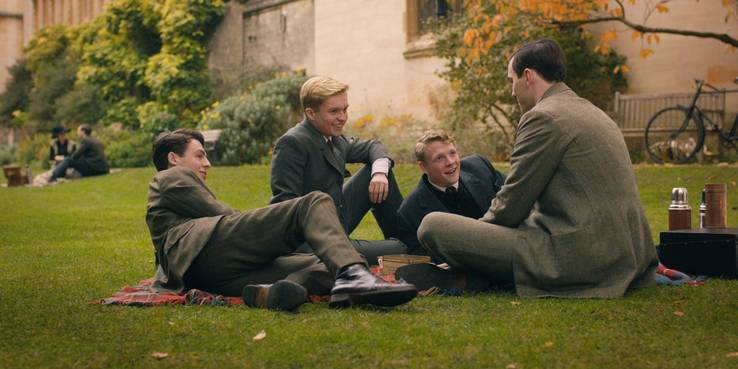
Not All Those Who Wander Are Lost, But This Movie Is: Tolkien

Image result for tolkien movie

Tolkien is a new biopic about the life of J.R.R. Tolkien, best known as the author of The Lord of the Rings trilogy and The Hobbit. Biopics are hard to do because they usually go one of two ways. The first is where they become about the lead actor trying to imitate a famous figure and thus they simplify and whitewash history so that the story can be inspirational. The second way is where the biopic is a reinvention of a personality that tries to imply certain things about the person, which also whitewashes and simplifies history, and makes the person an icon of a specific cause or identity. It is very hard to tell the story of a person that doesn’t play only into what people want that person to mean to them.

So, what about Tolkien? Tolkien the man (played here by Nicholas Hoult) isn’t a particularly well-known individual. His work lives on but, outside of academic circles, his life doesn’t have much influence on the common perception of his work. What is the purpose of telling his story?

During the film, one of Tolkien’s professors tells him, “People take a certain comfort in the past.” This is, unfortunately, the unintentional thesis of this biopic (and to be fair, of most biopics). Between all of the scenes of twentieth-century British boyhood, from dead mothers to boarding schools to uptight fathers to drinking tea with the chaps, gallivanting around the pastures, and reading old books under the guidance of professors, the antiquated anglophilia of the movie fails to do much beside remind me of better movies, particularly Dead Poet’s Society and The Imitation Game. The stories of men like Tolkien have been told many times before. That doesn’t mean Tolkien’s life is irrelevant by any means- he was a real person- but it means the film has to work harder to tell his story in a creative fashion, which it does not do. Therefore I feel like I’m watching a remix of other films, rather than a story personal to one man.

To its credit, Tolkien isn’t concerned with making everything in Tolkien’s life have a direct 1-1 correspondence to something from his books (unlike, say, 2017’s The Man Who Invented Christmas). While there are some brief direct allusions to his work (“it shouldn’t take six hours to tell a story about a magic ring”), overall the film is more interested in creating an atmosphere where Tolkien could find his stories.

The problem with building this atmosphere, however, is that the movie wants to focus on Tolkien’s fellowship with his friends, yet the movie spans half of his life. This means there are long portions without his friends, and since the movie is much less interested in showing how those parts of his life influenced his work, those scenes feel like filler and lack any interest or urgency that the friendship scenes have. This is worsened by the fact that each section of his life is shown as utterly independent from the other. Take, for example, his relationship with his wife Edith (Lily Collins). Except for one scene where she meets his friends, the groups are kept completely separate. The “fellowship” part of his life, which ends up being the heart and theme of the movie, is established with these mates and is never connected to Edith, who from her first appearance is framed not as a friend but solely as a love interest.

And that’s fine, but it means the film, which is more interested in how fellowship influenced Tolkien’s works than how romance did, could have omitted all of Edith’s part and very little harm would have been done. This is not only poor storytelling but is a truly missed opportunity to explore how Edith became the inspiration for all of Tolkien’s iconic female characters.

This is only part of Tolkien’s focus problem. The movie has a framing device where Tolkien is in WWI going to the front lines to find his friend. He passes out and has rapid-fire flashbacks through his childhood, mother’s death, boarding school years, and courtship with Edith. The pace slows down significantly to show his college years, before jumping back to the war scenes and the framing device. He finishes out his mission, and suddenly the movie is back in chronological order with no flashbacks as we finish out on him as a family man, which means we miss out on other things about Tolkien, like his Catholicism, friendship with C.S Lewis, and his other group of artistic friends, The Inklings. If the movie was truly going to be about friendship, then wouldn’t it make more sense to have the timeframe of the film start with Tolkien’s school friends, their war experiences, and then Tolkien recovering from the trauma of war and losing some of his friends by creating The Inklings? I guess that would make too much thematic sense.

The focus problems come with a pacing problem, which is a result of a screenplay that makes confounding choices on which scenes should be brief and which ones should be long. Most of Tolkien’s childhood flashback scenes are annoyingly brief, which means none of the relationships get to marinate and build. Meanwhile, there are several very long scenes, but these scenes are mostly of Tolkien talking about other people, which confuses us on who this movie is about. Hoult’s (and his eyebrows’) performance is competent, but he is so easily overshadowed by the other actors that it is disappointing to remember that he is the lead. I’ve seen good movies about quiet introverts (2017’s Paterson) and mediocre/boring ones (2016’s Loving). It’s possible to have charisma and still be a soft-spoken, introspective type, but Hoult and this movie just simply aren’t up to the task.

If you want to make a theatrical release, especially now in the age of streaming, there is a degree to which you have to justify your movie being in a theater. People only have so much time and money to spend at the movies, and so it has to be a movie worth seeing on a big screen. Tolkien never justifies itself in being a big-screen movie. Frankly, I don’t think it justifies itself being a movie. It simply doesn’t have enough insight into Tolkien and what makes his work still so beloved and relevant.

So what is the purpose of telling Tolkien’s story? I think it is to make me wish I had spent my time rewatching The Fellowship of the Rings instead.

-Madeleine D.

Movie Minute: Alita, Isn’t It Romantic, and How To Train Your Dragon 3

College is hard, but not as hard as finding good movies to watch between January and April! Here are some that I’ve seen during the beginning-of-the-year movie desert.

Alita: Battle Angel

Related image      Wow, I didn’t know Christoph Waltz was making a second Big Eyes movie!

If anyone was excited for Alita: Battle Angel, it was me. Sure, I’ve never read the comic, and I’m not into anime or manga. But as far as general audiences go, I was ready to love it, because I’m a sucker for a bunch of things promised in this film. A teenage heroine in a dystopian future? Check. Oscar-winning actors in crazy costumes saying hilarious sci-fi jargon? I admit it. Trope of a scientist who goes too far in playing God? Sign me up.

But now I’ve seen it, and now I’m grumpy.

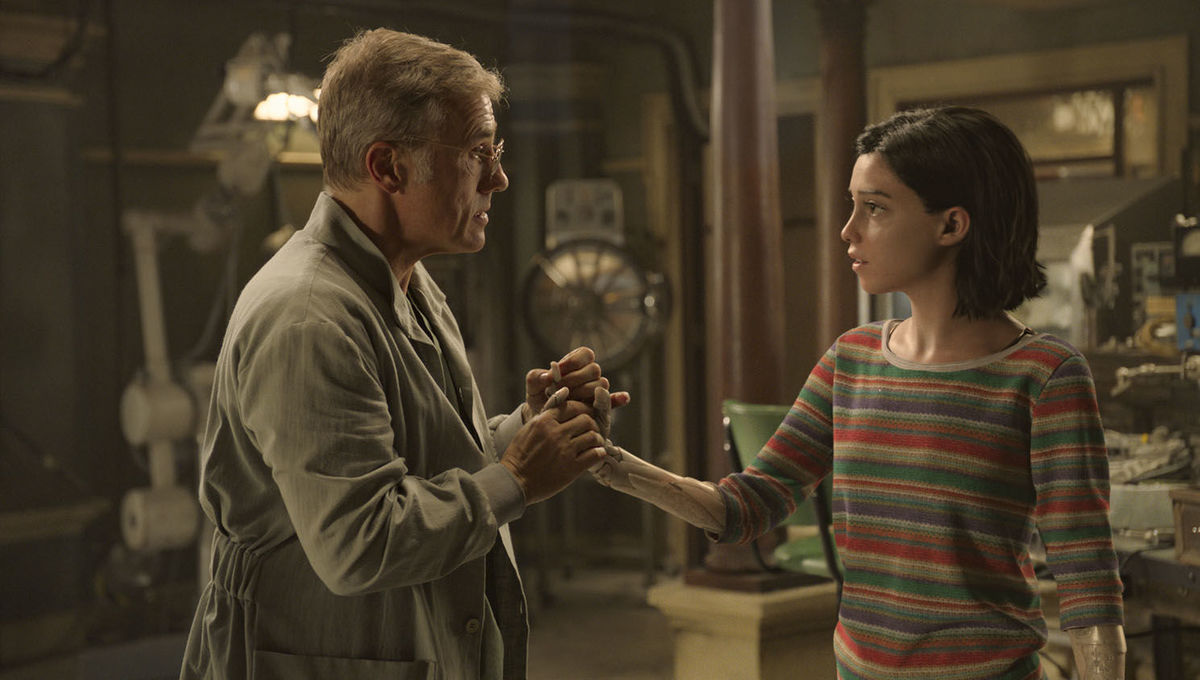
Alita: Battle Angel takes place in a dystopian future where Dr. “father figure at the ready” Ido (Christoph Waltz), a doctor/scientist/scavenger/”hunter-warrior”/Sad Man with a Sad Past™ finds the still-alive brain of a cyborg girl. He puts that brain into the conveniently pre-made cyber body he has, and when the girl, Alita (Rosa Salazar), comes to, she has no memory of her previous life and goes on a series of adventures to discover who she is.

To put it delicately: the script is bad. Real bad. There are too many characters whose arcs go nowhere, the plot is mangled and disjointed, and there is no sense of time in this film. In the first twenty minutes, we know a day has passed, and then after that, there is no sense of a timeline. How long as Alita been with Ido? How long did it take her to become a Hunter-Warrior? Has she really been with romantic interest Hugo for only two days by the time she’s literally ripping out her heart for him? It’s the halfway point of the movie, and I still have no clue the direction of the film or what it is going to be focused on. We’ve been introduced to father/daughter drama, boyfriend drama, big bad guy in the sky drama, hunter-warrior bully drama, gotta find my new sexier body drama, and motorball drama. Which direction are we going in? Oh wait, all six? All six storylines are going to be treated with equal focus so that the main storyline is super unclear and without any sense of urgency?

Well okay then.

If I was to try and find a theme or coherent storyline in this mess, I would say that the film is about all of the characters trying to force identities upon Alita. Ido wants Alita to be his replacement daughter. Hugo wants her to be his girlfriend who he may eventually scrap for parts. Gina Rodriguez wants her to be a soldier. Mahershala Ali wants her to be dead. Jennifer Conelly wants her to be dead. Edward Norton wants her to be dead (seriously, this cast is insane.) 21st Century Fox wants her to be a massive box office hit. But Alita decides to become none of those things.

Yet while all of that is in the movie, it’s not presented as I just presented it, because I don’t think writer/producer James Cameron and director Robert Rodriguez actually see anything wrong with the way the other characters treat Alita. I see the empowerment coming from her asserting her own identity and redefining her relationships with people on her own terms. They see the “empowerment” angle as coming from her beating people up. 

But hey, maybe this whole movie was worth it for the sheer spectacle of watching a scene where, and I’m not kidding, Christoph Waltz is cradling the decapitated, talking head of Alita, and walks past his character’s ex-wife, played Jennifer Connelly, who smirks and says, “you can’t bring our daughter back.” End of scene. I can never unsee it.

Isn’t It Romantic

Image result for isn't it romantic

Aspiring to be the Deadpool of romcoms, Isn’t It Romantic suffers from being very ill-timed. A film about a cynical, modern woman trapped in a romantic comedy, it delivers a meta-commentary of the genre as it was twenty-five years ago. The film’s loving critique comes only from films that were made between the 1990s and early 2000s. That would have been fine a few years ago, but we’re currently in a new, more diverse and inclusive romcom renaissance with the likes of The Big Sick, To All the Boys I’ve Loved Before, and Crazy Rich Asians. So while the throwbacks are fun, they don’t feel relevant, putting the entire movie’s premise on a bit of an outdated and uninspired note.

But for what this movie is, it is unabashedly fun. The musical numbers are delightful, the message is easy but sweet, and Rebel Wilson is a capable leading lady with this perfect supporting cast. It’s a rental, but I’d be lying if I didn’t say it put a smile on my face… and made me want to go watch my favorite romcom.*

How To Train Your Dragon: The Hidden World

Related image

The How To Train Your Dragon movies weren’t a pivot part of my childhood like some fans of the series. I saw the first one in theaters and liked it, but didn’t like the second one as much. I’ve always had great respect for the franchise and how revolutionary it was in the animation world, but never truly got why it is so beloved. 

But when I went to go see this film on a whim, with zero expectations, I suddenly understood why people were such hardcore fans of these films. Because they’re awesome.

The animation, score, action sequences, and the characters? Breathtaking, detailed, and compelling. This movie is able to have an epic scale but an intimate narrative. I was particularly surprised that the message of HTTYD3 basically boils down to: part of becoming a man means committing to your loved ones and settling down. I know the audience for this franchise has grown up alongside it, but there is a lot of nuanced (and funny) conversations about responsibility, marriage, and family here that are not only rare for a movie aimed at families but especially for a movie starring a male lead. Hiccup has always been a wonderful role model, but I was reminded just how revolutionary and inspiring his brand of compassionate and empathetic heroism is. He’s a true leader in a way that I think is still rare to find in blockbusters.

Even if you haven’t seen these movies in a while, or only saw the first one, I think you can still go into this movie cold and enjoy it, and I highly recommend you do.


*13 Going on 30. And if you disagree with me, a friendly reminder that this film stars Elektra, the Hulk, Captain Marvel, Ulysses Klaw, Ant-Man’s ex-wife Maggie, and Silver Fox from X-Men. It’s an MCU movie, confirmed.

It’s Just Okay! Captain Marvel

Capt Marvel

To the tune of “God Bless the U.S.A” by Lee Greenwood, starting at the second verse:

Brie Larson won an Oscar, and one of the directors is a girl

So all of the problematic lady stuff, from Marvel will become unfurled

From Natasha to Wanda, and Okoye and Shuri

There’s pride in every fangirl’s heart, and it’s time we stand and say

That I’m proud to be a woman, for at least I know I’m free

To punch a man in the face, Carol gave that right to me

And I’d gladly stand up next to her, to defend our right to say

Don’t tell me to smile, she paved the way

It’s International Women’s Day!

If you were singing something along those lines going into Captain Marvel this weekend, then you were exactly where Kevin Feige and Marvel studios wanted you to be. Promoted as the response to Wonder Woman and a form of self-flagellation for the fact that Marvel has made 21 movies, 11 of which star white guys named Chris, it’s still sad that the studio is only now is getting around to making one with a woman. However, it hasn’t been easy. Captain Marvel has been plagued by online trolls, misinterpreted statements by its outspoken lead actress, and a boycott, not to mention ridiculous expectations put on it by critics and fans alike.

So after all of this build up, how is Captain Marvel? Is it our new modern third-wave feminist The Feminine Mystique? Does it give me any clues to which superheroes will and won’t stay dead during Avengers: Endgame so I may finally find peace? Will seeing Carol Danvers fly finally inspire me to live my life to the fullest and/or hit the gym?

Well, I am here to report that Captain Marvel is: fine. Hooray!

Ok, let’s break this down. To begin with, the epidemic that I’ve been growing weary of for a while now is that all Marvel heroes have the same personality. They’re all cool, calm, collected, and witty. If you watch the first Avengers film, sure, all the characters could be funny, but they were funny in different ways. And their personalities and values were different. Now, if I read the script of Avengers: Infinity War with the character names missing, there would be too many times I would guess a line was said by a different character because everyone’s dialogue sounds the same.

Captain Marvel aka Carol Danvers (Brie Larson) here is witty, cool, collected, and calm. She is hyper-competent, which is now a requirement for all heroines, and her personality is so limited to what the plot requires of it that it’s hard to imagine what she would do on a free Saturday night. There are quiet moments in the film that give Larson something to play with, but they are too small and infrequent to make me feel that I’m not watching Captain America with a side of Tony Stark snark.

Counterbalancing this, though, is an excellent and vibrant supporting cast. Samuel L. Jackson and Brie Larson have excellent chemistry (this is their third film together), and I particularly liked Lashana Lynch as Maria Rambeau, Carol’s best friend. Their friendship was sweet on screen, and at one point in the movie, as Carol is having a moment of personal doubt, Maria reminds her who she is, affirms her, and then they hug. And I realized that this is the first time I’d seen this kind of female friendship in an action superhero movie before. Hugging my girlfriends and affirming them is something I, and many women do, every day, but I finally got to see it on screen. And it was just as awesome as seeing Carol burst into flames and save the world, which was also pretty cool.

On a more technical side, while I don’t usually point out editing, I have to talk about it here. Marvel movies, at least ones not directed by the Russos, generally have quick and choppy editing in the fight scenes. But here, it feels extra insulting, not just because the action scenes are poorly cut to the point where it feels like the directors just didn’t want to think of more action for the character to do, but because Brie Larson trained nine months for this role, is ripped, and did most of her own stunts, and you can barely tell here. #GiveUsGratituousShotsOfBrie’sRippedArms.

The plot is convoluted, which causes the movie to have whiplash pacing and become distracted from being a character study. For example, one of the darkest aspects of the film is the fact that Carol was, basically, abducted, gaslit, and brainwashed to be formed in her captor’s image. While addressed in the film, what could have been an intensely emotional moment and a defining trauma for Carol, her Uncle Ben if you will, is handled with such stoicism and almost casualness that the revelation barely qualifies as a turning point for Carol, and is a completely missed opportunity because instead we gotta spend time setting up alien characters for future movies.

Ultimately, the most disorienting thing about Captain Marvel is that it tries to go two different directions, and ultimately does neither. The first is that it wants to be a very obvious “girl-power” movie, but it contains very little of the female experience. It tries to have some, like Carol being asked by a random man to smile, (a ridiculously perfect foreshadowing of  what was to come) and her being told she’s too emotional. But these things feel much more like Womanhood 101, and not very deep. The second is that it is a very standard Marvel movie that doesn’t drift from formula. If it had committed to being a Marvel movie that could, in theory, have been played by a man and been exactly the same, then that could have been an interesting statement on why we put emphasis on female superheroes at all. It would have answered the immortal question of, “Hey, why shouldn’t women have a mediocre superhero movie to call their own?”

In the end, we have a movie that is neither an interesting examination on how being a woman would make one a different kind of a superhero from a male one, nor do we get a superhero movie that could be led by any of, say, the Marvel Chrises. We get something that’s pretty mediocre. So to be honest, I’m disappointed. There were plenty of scenes and things I liked, but it adds up to a movie I probably won’t remember the majority of in a few weeks. But despite that, I still think it’s worth seeing if you keep up with the Marvel movies, or even if you have already decided you want to see it. It stands alone well enough that you can enjoy it without needing to have any previous Marvel backstory. I want it to do well at the box office, mostly just to spite trolls.

Near the end of the film, Carol says to an antagonist, “I have nothing to prove to you,” which may ultimately be the best way to think of the movie. It doesn’t need to be a roaring success to justify its existence. Carol Danvers has nothing to prove, and neither do female-led superhero movies. So let’s raise the bar for everyone, without using it to keep others down.

-Madeleine D