Everything You Need to Know About Marvel’s Phase 4 (Part 2)

May 2021- May 2022

Image result for marvel phase 4 slate

In October of 2016 I broke down the future of Marvel movies and my predictions for what then was Phase 3. I was right about some things, wrong about others. But now at Comic-Con 2019, Marvel Studios announced their Phase 4 slate of films and Disney+ shows (Disney’s new streaming service, coming November 12th). Unlike the Netflix-Marvel shows like Daredevil and Jessica Jones, the Disney+ shows will tie into the movie universe, making all of our wallets bemoan. 

If you want to know all you have to look forward to for the next few years (Phase 4 will cover 2020 to 2022 with ten projects in all), then I’ve done the research so you don’t have to. This is part two of two, covering the two films and three Disney+ show that will take us from spring 2021 though to the fall, and then presumably Phase 5 will start in spring 2022. 

Doctor Strange in the Multiverse of MadnessImage result for phase 4 marvel logos

  • May 7, 2021
  • Directed by Scott Derrickson
  • Starring Benedict Cumberbatch as Doctor Strange and Elizabeth Olson as Scarlet Witch

Doctor Strange and the Multiverse of Madness will come right off the heels of the Disney+ show WandaVision. Marvel Studios president Kevin Fiege has stated before that Wanda Maximoff/Scarlet Witch practices the same magic as Doctor Strange, it’s just raw and untrained. With Elizabeth Olson set to co-star here, it’s presumable that Wanda may be Doctor Strange’s protege in his sequel- and maybe his villain, too.  

There is certainly precedent for this in the comics. Depending on the events of WandaVision, this movie could adapt Wanda’s two biggest comic book storylines. In the first storyline, Wanda has been driven mad from the loss of Vision (who you remember was recently killed by Thanos in Infinity War. Could all of WandaVision then just be an illusion, and in the movie Wanda is “woken up” from her dream and realizes Vision is truly gone?). Wanda is further driven mad by the loss of the two children she had created out of her magic. In her madness, she kills Scott Lang/Ant-Man, and Doctor Strange has to defeat her. The Avengers plan to get rid of Wanda for good, so her brother Pietro (played in the movies by Aaron Taylor-Johnson, who died in Avengers: Age of Ultron) convinces her to create an alternative reality she can live in instead, where her family and other mutants are rulers. 

This became the comic book storyline House of M, which ends with Wanda, thinking that being a mutant has caused all of the pain in her life, whispers her infamous phrase, “No more mutants,” and turns all of the world’s mutants into regular humans. This storyline is now possible with Disney’s acquisition of Fox, which has up to this point had ownership of Marvel’s mutant characters (Wolverine, Jean Grey, Storm, etc.). This could be the entry point for mutants into the MCU. 

It’s been promised that this will be Marvel’s first “horror film,” so hopefully they will keep their word and go for as creepy and horror-y as a PG-13 MCU movie can get. Director Scott Derickson is a horror director after all (The Exorcism of Emily Rose, Sinister), and I trust if he is allowed to, he can truly elevate the material. 

There have been hints of a multiverse in the MCU before, but the title sure indicates that this could be our first full-fledged multiverse movie. A multiverse would allow for other Avengers to show up, including dead ones, so if RDJ or Chris Evans are wanting to come back, this could be their chance. Suddenly this feels a lot less like a Doctor Strange film and more like Avengers 4.5. 

Loki Show

Image result for phase 4 marvel logos

  • Spring 2021
  • Reportedly 6 episodes, each an hour long
  • Rick and Morty writer Michael Waldron will be showrunner. 
  • Starring Tom Hiddleston as Loki, and hopefully some other people

The show will pick up at the point in Endgame when Loki steals the tesseract. It will follow his time-hopping adventures as he faces various foes. The show will premiere ten years after Tom Hiddleson debuted as the character in 2011’s Thor, so I hope the show will give the actor new ways to keep the charismatic trickster fresh. 

WHAT IF …? Show

Image result for phase 4 marvel logos

  • Summer 2021
  • A giant roster of actors will reprise their roles from the movies in the show through voicework
  • Number of episodes unknown, although I’ve heard rumors of ten. 

Based on the comic book series of the same name, What If…? will show pivotal moments in the MCU and present hypothetical outcomes for if things had gone a bit differently, a How it Should Have Ended in a way. The animated series will have voice work done by all of the same actors from the movies. The only episode confirmed so far is one exploring what would have happened if Peggy Carter had become Captain American instead of Steve Rogers. Two other rumored episodes will cover what would have happened if Loki had gotten Mjolnir instead of Thor, and what if Killmonger had killed T’Challa and become the permanent king. The series will be narrated by Watcher Uatu, played by Jeffrey Wright. Watcher Uatu has not been introduced into the MCU before. 

Hawkeye Show

Image result for phase 4 marvel logos

-Fall 2021

-Jeremy Renner as Hawkeye, presumably others 

In characteristic fashion, Hawkeye is last, here as the last Disney+ show of Phase 4. 

This series will be based on the acclaimed and fan-favorite comic book run by Matt Fraction and David Aja of the same name. This run focused on the relationship between Clint and his mentee, Kate Bishop, who takes up the Hawkeye mantle. In the comics Kate is a member of the Young Avengers team, so expect for Marvel to use her to introduce this team into the movies (or do it in a show, Defenders style). This show will probably show Clint handing over the bow and arrow over to Kate, and thus finally releasing Jeremy Renner from this franchise and into that sweet, sweet void

Thor: Love and Thunder

Image result for phase 4 marvel logos

  • November 5, 2021
  • Directed and written by Taika Waititi
  • Starring Chris Hemsworth as Thor, Tessa Thompson as Valkyrie, and returning after a two-movie absence, Natalie Portman as Jane Foster/The Mighty Thor

Taika Waititi will return after directing Thor: Ragnarok to write and direct Thor’s fourth solo film. Thor will become the first of the original Avengers to get a fourth film, with the others being regulated to, at most, a trilogy. But despite the title, Thor: Love and Thunder looks to be a lot more about its supporting characters than just Thor. 

For starters, Natalie Portman will return after a long absence as Dr. Jane Foster. Jane was Thor’s love interest in the first two films, then unceremoniously dumped offscreen before the third. Portman tried to negotiate changes to Jane’s role for the second film, Thor: The Dark World, and wasn’t given any, and her lackluster enthusiasm for the series by that film was obvious. However, she’s now being given a much juicier role as she gets to help adapt the comic storyline of Mighty Thor. 

Jane Foster’s Mighty Thor storyline is this: Jane Foster has a terminal diagnosis of breast cancer. Thor has become unworthy, so he’s stripped of the Thor title (his actual name is Odinson, and Thor is a mantle, like Captain America or Black Widow, which can be given and taken on by others. Hopefully his unworthiness in the movie is not connected with his weight gain from Endgame). Anyways, Jane Foster takes up the mantle, saying that “there must always be a Thor.” She is deemed worthy enough to pick up Mjolnir. Whenever Jane uses Mjolnir though, it heightens her cancer, literally killing her as she saves others. Talk about sacrifice. As for Thor/Odinson himself, he’ll be rediscovering himself and learning how to be worthy again and finding his identity outside of being king of Asgard. 

I’m excited to see this storyline adapted, and Natalie Portman is a fantastic actress who will be able to handle the dramatic parts (and physical parts, easy to see if you saw her performance in Annihilation) but my main concern is Taika Waititi. I love his other work, but he spent most of Thor: Ragnarok erasing all the previous Thor movies and streamlining the character to be like all the other Marvel heroes, which I did not love. How are we supposed to root for Jane Foster when she’s been out of the movies for a while now, and her absence has been mined for a few jokes? 

There’s some great potential here to explore what it is like for a human to take the role previously held by a god, the difference between a man and a woman in the same role, and how Thor and Jane interact in their new roles, especially since they are no longer a couple (in the comics they don’t get back together). But will any of that be explored? I’m worried it won’t be.

The Thors aren’t the only characters in the movie, though. Tessa Thompson’s newly-appointed king of Asgard Valkyrie will return. Thompson said in the comic-con panel that since Valkyrie is the new king of Asgard, she’ll need a queen, confirming that she’ll finally be able to make Valkyrie bisexual as Thompson has been campaigning for since day 1. There is no confirmation on who this love interest will be. And since Waititi is scripting this time, expect Korg, his character, to have a larger role. 

Beyond Phase 4

Feige also confirmed at the San Diego Comic Con panel that the Fantastic Four and the X-Men, now back at Marvel because of the Disney acquisition of Fox, will be coming after Phase 4, although in what capacity is still unknown. The mic drop of the announcement though has to go to Mahershala Ali being announced as the star of a new Blade movie. No further information about that property is known yet. At the D-23 Expo last weekend it was also announced that Moon Knight, Miss Marvel, and She-Hulk (finally!) Disney+ shows are in development, Black Panther 2 will come out May 6, 2022 with Ryan Coogler returning to direct, and Kit Harrington has joined the cast of The Eternals. 

Much of my research for both of these articles came from Grace Randolph from Beyond The Trailer.

Everything You Need to Know About Marvel’s Phase 4 (Part 1)

May 2020- May 2021

Image result for marvel phase 4 slate

In October of 2016 I broke down the future of Marvel movies and my predictions for what then was Phase 3. I was right about some things, wrong about others. But now at Comic-Con 2019, Marvel Studios announced their Phase 4 slate of films and Disney+ shows (Disney’s new streaming service, coming November 12th). Unlike the Netflix-Marvel shows like Daredevil and Jessica Jones, the Disney+ shows will tie into the movie universe, making all of our wallets bemoan. 

If you want to know all you have to look forward to for the next few years in the Marvel Cinematic Universe, aka MCU (Phase 4 will cover 2020 to 2022 with ten projects in all), then I’ve done the research so you don’t have to. This is part one of two, covering the three films and two Disney+ show that will take us from May 2020 to early spring 2021. 

Black Widow

Image result for marvel phase 4 logos

  • May 1, 2020
  • Directed by Cate Shortland 
  • Starring Scarlett Johansson as Natasha Romanoff/Black Widow, Rachel Weisz as Melina, Florence Pugh as Yelena, David Harbour as Alexei Shostakov aka The Red Guardian, and O-T Fagbenle as Mason/The Taskmaster.

Black Widow’s first solo movie and the MCU’s second female solo film will be a prequel, one of the MCU’s only. It will cover Natasha’s past, including what happened in Budapest, and the Red Room/ Black Widow Program, which we got glimpses of in Avengers: Age of Ultron

It looks like Natasha will be facing off against several villains. O-T Fagbenle’s Taskmaster has the power to completely replicate anything he sees, so if he’s fighting Natasha, he would be able to do every move she does, like she’s looking in a mirror. This leaves plenty of room for exciting action sequences. It was also confirmed that there will be a romance between the two of them, which…. whatever. 

Rachel Weisz’s role is Melina, and in the comics, Melina is also known as “The Iron Maiden,” a fellow graduate of the red room program who never is able to match Natasha and is overcome with jealousy. Weisz said in the panel that Melina goes through scientific experimentation in this film, giving her advanced powers that will make her a formidable foe to Nat. 

David Harbor is playing The Red Guardian, who is best known for being the Soviet Union’s counterpart to Captain America. Since Nat has such a good relationship with Steve Rodgers Captain America, there could be a lot of potential here to see her play with a similar dynamic with someone who represents her home country. 

Florence Pugh rounds out the cast as Yelena, who in the comics was a fellow Black Widow. Some fans think Yelena might take over the Black Widow mantle and take Natasha’s place. She’s a prime antihero candidate, and could possibly take a surrogate daughter kind of role for Natasha. 

While I want to be supportive of this film, it feels like too little too late. Johansson has waited patiently for ten years in the MCU, and she certainly deserves this, but the character has been so maligned for the past few films, and frankly, nothing here screams “unique!” I think going back to her roots will take us to femme-fatale Black Widow, like we saw in Iron Man 2, and I think that’s the worse version of the character. I don’t want to go back to that Black Widow, and despite the much more female-centric lense this one will be framing her in with a female director and Johansson in a much more powerful creative control, I’m sick of hot Russian spy action (I saw a good chunk of Red Sparrow through other passenger’s TVs on an airplane). Natasha has, despite her malignment, become a much more interesting character as of late, and this just feels like a regression. But I’ll try to stay optimistic. Having a prequel set the stage for Phase 4 seems like an odd choice, but it does fit in with the overall pulpier and riskier tone this slate of movies promises.

The Falcon and the Winter Soldier Show

Image result for marvel phase 4 logos

  • Fall 2020 (unspecified date). Filming begins this October.
  • 6 hour-long episodes
  • Malcolm Spellman (Empire) is the showrunner and all episodes are directed by Karl Skolang (Vikings). 
  • Starring Anthony Mackie as Sam Wilson/The Falcon, Sebastian Stan as Bucky Barns/ The Winter Soldier, Daniel Brühl as Baron Zemo, and Emily VanCamp as Sharon Carter. 

The show picks up soon after the events of Endgame, and presumably will follow Sam Wilson taking up the mantle of Captain America, and Bucky, just, I don’t know, nagging him? I’m not a Bucky fan. Mackie is incredibly charismatic and he and Stan have good chemistry. It should be a fun romp and maybe be reminiscent of Captain America: The Winter Soldier. It doesn’t seem to, like the other shows, tie directly into any upcoming movies. If it doesn’t feel necessary to watch in order to understand the movies, then this might not be compelling enough to get Marvel fans to subscribe to Disney+, in which case it seems like a poor choice to be the first Marvel show on the streaming service. 

The Eternals

Image result for marvel phase 4 logos

  • November 6, 2020
  • Directed by Chloe Zhao
  • Starring Angelina Jolie, Salma Hayek, Richard Madden, Kumail Nanjiani, Brian Tyree Henry, Lia Mchugh, Lauren Ridloff, and Don Lee. 

The Eternals is a relatively unknown property, but that hasn’t stopped Marvel from making bank before! This film’s biggest hurdle will be convincing moviegoers to be interested in something they’ve probably never heard about. Let me help Marvel out a bit then by giving you some backstory.

In the comics, the Celestials created the immortal race known as the Eternals. The celestials were briefly introduced into the MCU in Guardians of the Galaxy 2, where Ego (Kurt Russel), aka Peter Quill/Starlord’s father, was one of them. Think of them as similar to the Titans in Greek mythology, with the Eternals then being the pantheon of gods. 

In this film, the Eternals have been on Earth for thousands of years already, masquerading as humans. The movie will probably focus on the Eternals’ family-like dynamic and show them acting throughout history. 

All of the Eternals are immortal, have super strength, teleportation, telepathy, can fly, can shoot lasers from hands and eyes, and can make force fields. They’re powered by celestial energy, and if they run out of celestial energy, they become weakened. 

Salma Hayek will play Ajak, leader of the Eternals, and in the comics, Ajak is a man, making this a gender-bent role. Angelina Jolie will play Thena, who has ties to ancient Greece (get it, Thena, Athena?). Richard Madden will play Ikaris. Kumail Nanjiani is Kingo, a samurai swordsman turned Japanese superstar. Expect this to change, as Nanjiani is Pakistani. Brian Tyree Henry will play Phastos, an engineer and tech expert. Don Lee is playing Gilgamesh. Gilgamesh is known for meddling in human affairs and could be an anti-hero or villain. 12-year-old Lia Mchugh is Sprite, another gender-bent character. As an eternal child, Sprite is a prankster inspired by Puck from A Midsummer Night’s Dream. Finally, Lauren Ridloff rounds out the cast as McCary, another gender-bent character. Ridloff is deaf and the character will become so too, making McCary the MCU’s first deaf superhero (Hawkeye is deaf in the comics but not in the MCU). 

I’m unsure as to how these immortal gods will change up the MCU as we’ve known up to this point, but at least we know Marvel’s penchant for star-studded casts won’t change!

Shang-Chi and the Legend of the Ten Rings

Image result for marvel phase 4 logos

  • February 12, 2021
  • Directed by Destin Daniel Cretton (Short Term 12– such a great film!!!!)
  • Starring Simu Liu as Shang-Chi, Tony Leung as the Mandarin, and Awkwafina in an unknown role. 

China is a huge box-office market, the second biggest in the world behind the U.S. Shang-Chi is not only Marvel’s first Asian superhero, but also the studio’s first real effort to please Asian audiences. So far, though, it looks like there may be some problems. 

Shang-Chi is the hero son of villain Fu Manchu, who in the comics was a horribly racist stereotype and has a rough history. So the rumor is that in the film Shang-Chi will be the son of Tony Leung’s Mandarin instead (the real Mandarin, not the one from Iron Man 3). This already sets up a great dynamic- a superhero son breaking away from his supervillain dad. But here’s the catch: Tony Leung is a Chinese legend and incredibly respected action hero, and he’s the villain. Meanwhile, his hero son moves to America, making him Chinese-American (and Simu Liu, the actor, is Chinese-Canadian, his family having moved from China to Canada). In other words, the Chinese person that moves to the west is the hero, while the one who stays in China is the villain. As there are already sensitivities in China about Chinese people moving to America for better lives and education, this casting would seem to further this divide. Along with Awkwafina, who is American, and the director, who is American, all of the major players in this movie except the actor playing the villain are from the West. 

It’s a strange decision to cast Simu Liu, an unknown, as the hero when Marvel could have cast an actor from China’s film industry, who might still be an unknown to American audiences but would help bridge this divide. However, Liu is a great choice in other respects. He used to be a stuntman, ensuring some great action sequences, and has a great underdog story. He began campaigning for the role in 2014, tweeting Marvel multiple times since then asking for more Asian representation and offering himself up for a role. Shang Chi is a master martial artist and is in-tuned with his chi and his body, and doesn’t have a ton of other definable powers. I’m looking forward to seeing what Liu will bring to the role and how he does with the dramatic parts. 

Also cast is Awkwafina, who is on a major hot streak right now following her roles in Ocean’s 8 and Crazy Rich Asians with The Farewell. She could be playing Shang-Chi’s half-sister, Fah Lo Suee, or perhaps a love interest. 

The Ten Rings in the title refers to the terrorist group that kidnapped Tony Stark in the first Iron Man film, and have been alluded to in a few movies since. However, I expect this movie to move away from the terrorist angle and more into the “villainy” angle. The Ten Rings also refer to ten rings that the Mandarin wears, made out of alien tech and each having a different power. Sounds a little familiar… Infinity Stones, anyone? Despite some familiar tropes, I hope Shang-Chi and the Legend of the Ten Rings will break new ground for Marvel, not only in representation but also in storytelling and filmmaking. 

WandaVision Show

Related image

  • Spring 2021
  • 6-8 episodes, the whole series will be 6 hours long. 
  • Jac Schaeffer will be showrunner. Schaeffer is the screenwriter for the Black Widow movie and will write the pilot for WandaVision
  • Starring Elizabeth Olson as Scarlet Witch/Wanda Maximoff, Paul Bettany as Vision, and Teyonah Parris as Monica Rambeau

WandaVision will focus on the relationship between Wanda and Vision, which has been growing slowly throughout several movies but has a deep comic book history. In the comics, Wanda and Vision are a married couple, and Wanda creates for them out of her magic two children, Wiccan and Speed. Wiccan and Speed eventually join the Young Avengers team and are joined by Cassie Lang (Antman’s daughter, already introduced into the MCU) and Kate Bishop, who will be introduced in the Hawkeye miniseries. If the show introduces the two, we could be gearing up for a Young Avengers show or movie.

The biggest mystery in the show is the role of Monica Rambeau in all of it. Monica was introduced in Captain Marvel as the adorable daughter of Maria Rambeau (Carol’s best friend). Teyonah Parris will play her as an adult, who in the comics takes up the mantle of Captain Marvel. I can’t imagine she will be the same here though, so maybe she’s working for SHIELD? Or is doing some other kind of work that has her learning about/teaming up with Wanda and Vision? Or she could be her own fully-fledged hero, like she becomes in the comics under the name Photon.  

This show will take us straight to Doctor Strange and the Multiverse of Madness in May of 2021 and to the final part of the Phase 4 slate, which I’ll be covering next week.

Double Feature: Dora and the Lost City of Gold + Blinded By the Light

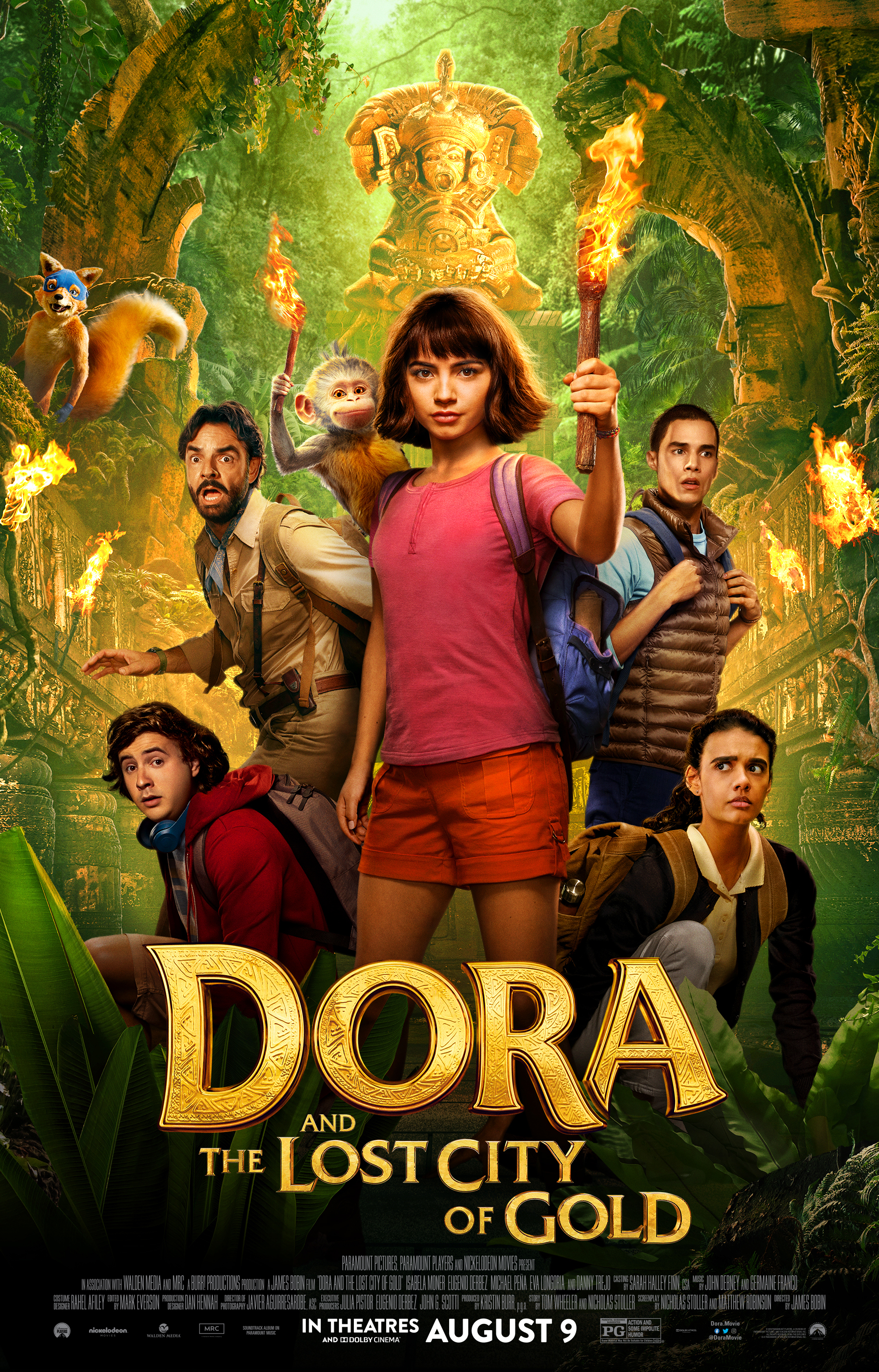
Dora and the Lost City of Gold

Image result for Dora and the Lost City of Gold

The main issue with the new live-action Dora film is that it has an identity crisis: is it a movie version of the show, or is it a meta-commentary of the show, updated for an older audience? 

The film chooses to do both, to its detriment. There will be scenes where characters say something like, “Silly Dora, maps don’t talk,” or will make fun of Dora for speaking to the audience. But in the next scene, Boots the Monkey will talk, or something else magical will happen. Making fun of the central concept of the show is disrespectful because it not only insults its audience but also because the show is very good at what it does and is quality children’s entertainment. The movie ends up aiming young, so the meta-commentary isn’t even clever enough for fourteen-year-old edgelords. So if it’s not for older audiences, and it’s disrespectful to the young kids who watch the show, who is it for? The film never answers this question. 

But on the positive side, Isabela Moner is charming as Dora, taking the role seriously but with a twinkle in her eye, and is able to sell most of the antics and jokes. Michael Pena and Eva Longoria are lovely as her parents, and I found it refreshing to have two (living) parents who are shown to be deeply loving and respected, and even when they need to be saved by Dora, they are never made the butt of the joke. 

The entire Latinx cast is game and most are good, although sometimes they struggle with nailing the inconsistent tone. Jeff Wahlberg as Diego is the weakest link, and because there are too many characters, his traits are made nearly interchangeable with the other classmates on Dora’s trip, and a bafflingly unnecessary and dull “romance” doesn’t do him any favors. 

There were times I was a little bored, which made the hour and a half feel like two, but the young girl next to me was loving it. When Dora asks the audience in a fourth-wall break, “can you say neurotoxicity?” the girl very solemnly said out loud, “I can’t say that.” That was enough to charm me, and this movie is almost as charming. 


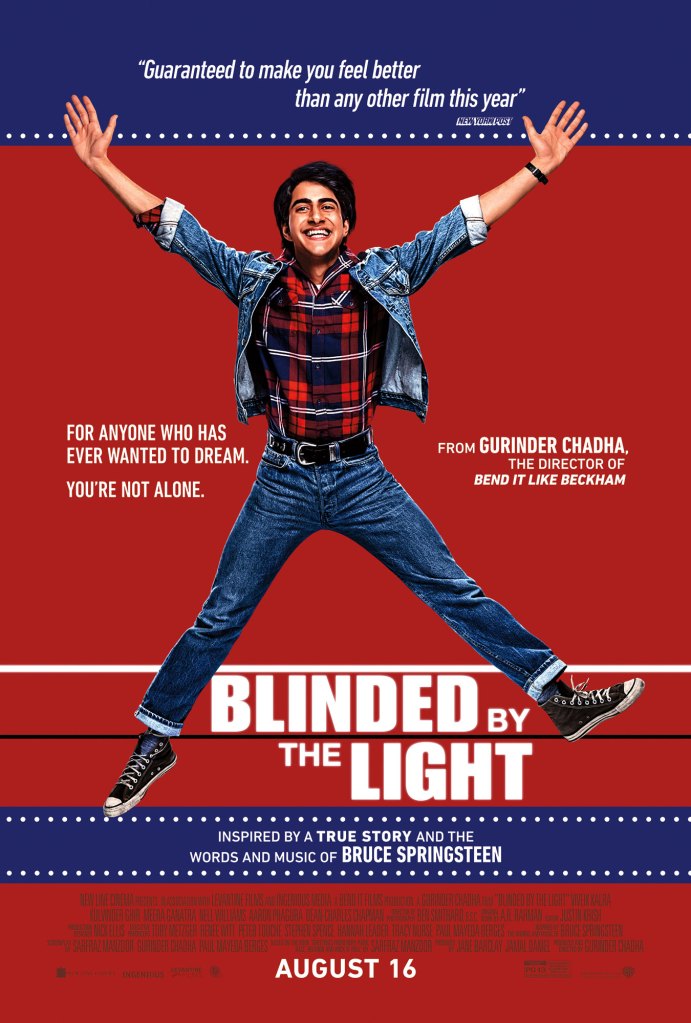
Blinded By the Light

Image result for blinded by the light

Blinded By the Light’s trailers do this film a great disservice. Whether you’ve seen the trailer a couple dozen times like my family has, or just once, the impression you’re likely given is, “It’s a feel good movie.” And while that isn’t bad within itself, the feel-good genre is predictable and can be a little stale, and a Pakistani boy from Thatcher’s Britain realizing his artistic dreams because of Bruce Springsteen had plenty of opportunities to be that. 

But Blinded By the Light, directed by Bend It Like Beckham’s Gurinder Chadha and based on the book by Sarfraz Manzoor, is not that. Yes, it may make you feel good, but it’s got some other things to say. For one thing, while it’s certainly in-love with Bruce Springsteen, it’s much more of a love letter to any pop culture that we use to communicate to others. We’ve all been in a place where we are able to relate to someone simply through our shared interests. When we aren’t able to say something straight, we may say it in the language of our favorite movie or musician or book, and usually we do that because that piece of media spoke deeply to us first. 

The film also has something more thoughtful to say about following your dreams them, “screw your family and do it.” It, like The Farewell, wrestles with the complications that come with being at the crossroads of collective vs individualist cultures, and reveals truths about both. Then it interprets Springsteen’s work into something universal and complex enough to speak to both cultures. 

Something not touched upon in the trailers that is present in the movie is the racism faced by the Pakistani characters. This racism was true of the time period but also looks a lot like racism around the world today. Further, Blinded By the Light, albeit very loosely, questions what it is like to be a person in an oppressed minority group who uses pop culture to escape the daily pressures of such oppression, yet that exact pop culture is made by someone from the dominant group that oppresses you. However, despite all of the difficulties endured by the characters in this film, it also has moments of uplifting hope and humor and whimsy that reminds us of the holistic lives of the characters.

I walked away from Blinded By the Light with an appreciation for The Boss, a Springsteen in my step, and something to think about.

Family and Falsehoods: The Farewell

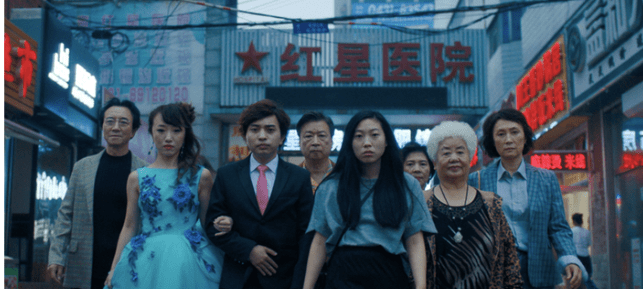
Screen Shot 2019-08-09 at 2.44.35 PM.png

In Lulu Wang’s film The Farewell, Billi (Awkwafina), a woman whose family moved to America from China when she was young, learns that her grandmother Nai-Nai (Zhao Shuzhen) has terminal cancer, and the whole family is going to China to say goodbye. The catch? The family is reuniting under the guise of a fake wedding, and Nai-Nai doesn’t know she has cancer. The family has decided not to tell her, per Chinese tradition. Billi goes and wrestles with returning to her home country and the grief that she must repress. 

The Farewell is a slow, contemplative film that is occasionally funny but mostly content with simply watching its characters. There is very little story, very little change within the characters, and no clear judgments on the central ethical question of whether it is wrong to lie to Nai-Nai about her condition.

Initially, this bothered me. My American sensibilities were frustrated with Billi’s lack of a character arc, the way the central problem isn’t “solved,” and how the film seems to emphasize all the wrong points. But the more I thought about it, the more I came to appreciate the film for what it is, which is two things: First, it is a film about grief, and grief is not something that is convenient, timely, concise, or narratively satisfying. Second, The Farewell is a movie less about its characters and more about its environment and sense of place. 

The first point. Billi is our protagonist in the loosest sense. We follow her around and she makes choices that change the course of the story, which makes her the main character. But she also doesn’t feel much like a protagonist because we don’t know much about her outside of her grief, and she doesn’t change (at least externally) over the course of the film. She is our point of view character, but less so as an individual and more so as a representative of her family. This, in and of itself, explores the theme of the American Individual vs. the Chinese Collective cultural mindset and, with that in mind, it is a less frustrating choice. 

Awkwafina does nice work here, but she doesn’t have a lot to do and doesn’t quite get across any indication that Billi has a rich inner life that we simply aren’t privy to. Because we know so little about Billi outside of her grief, it is hard to get a sense of her character or relate to her. But isn’t that the thing about grief? It can be so consuming that the grief feels like our whole identity and the only thing people can see in us. It is so overwhelming that our natural selves feel lost within it. Again, with that in mind, Billi’s character, and the film’s tone overall, is a less frustrating choice. 

What may have helped the film have higher stakes and have a more dynamic protagonist would have been to make Billi the one being coerced into the fake marriage. We would still have the outsider status and the central set-up, but there would have been more of a plot and more for Billi to proactively do than wander around the film and talk to various characters. 

But maybe that would have been too much like Crazy Rich Asians and too easy of a set-up. It would have also weakened the film’s focus on grief. And, after all, The Farewell is invested in its sense of place, and having wedding hijinks would distract from that. 

This sense of place, the atmosphere, is not only investigated in the physical environment of China, but also in the domestic settings. This film captures, scarily so, what it feels like to be at a family reunion. Maybe not for every family, but I had a family reunion about a month ago, and throughout the film I kept being reminded of it. The joy of the grandmother to have everyone under the same roof. The sitting around the table for hours. Various family members sneaking off to seek privacy and talk in hushed whispers. Taking pictures. Reading through old letters and visiting graves and collectively remembering those we’ve lost along the way. Looking around and wondering what it means that these people are tied into your DNA, yet you may know little to nothing about them. 

Ultimately, The Farewell is not interested in debating the ethics of such a lie. This is not a movie about mind-games and philosophical puzzles. It’s about presence, and it’s a clear reminder that every family, no matter cultural differences, is a family, and I think anyone will be able to see themselves in Billi’s family. So despite some small complaints, I think The Farewell is a beautiful film that is the perfect alternative to, say, Hobbs and Shaw, for your summer movie-watching.

Hobbs and Shaw ft. Clifton Raphael

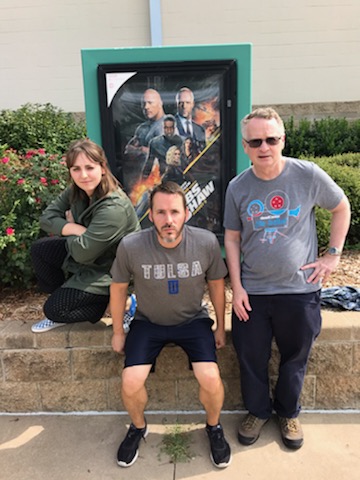
IMG_4353.jpegFrom left to right: Hobbs, Idris Elba’s White Doppelgänger, and Shaw

I am excited to be joined for this review by my former six-time teacher, Clifton Raphael. Mr. Raphael teaches screenwriting and filmmaking and film studies at Jenks High School. He has 24 years of experience in TV broadcasting and an MFA in screenwriting and film studies from Hollins University. His students have won two $5,000 grand prizes in the C-Span StudentCam documentary competition (the only school to have repeat grand prize winners), a regional Emmy, and thousands of dollars in other C-SPAN, YoungArts and Scholastic Arts awards. His class also has the first high-school produced program on OETA (Oklahoma’s PBS affiliate). Mr. Raphael has been a judge for numerous film festivals and competitions, has been interviewed on C-SPAN, and sits on the Board of Directors at Circle Cinema. You can watch his students’ films here.

He has been a great influence in my life and has always championed my work with his brand of tough-love, sacrificial dedication, earnest support, and occasional mockery. It’s about time he got to be featured here. 

Full disclosure: Neither of us have seen any of The Fast and the Furious films, but we believe this makes us uniquely suited to reviewing its spinoff, Hobbs and Shaw. He, as a film connoisseur, and me, as someone who likes things that go vroom vroom. 

Our conversation has been edited for length and clarity. 

Madeleine: Can you describe the events of this film in two sentences or less?

Clifton Raphael: Two guys learn to love each other in order to save the world. 

Perfect. But that’s only one sentence. 

Okay, so there’s a virus that could kill supposedly all the weakest people in the world, and there’s some benevolent force that wants this done. So Hobbs (Dwayne Johnson) and Shaw (Jason Statham) have to get together to find this woman, Shaw’s sister (played by Vanessa Kirby), and they have to get this virus that is implanted in her out and save her and save the world. 

Beautiful. 

It’s my understanding that you took a screenwriting class in high school. [He is referring to the class that Madeleine took with him.]

Why yes I did. 

And I understand there’s a thing called a character arc, where a character changes throughout the course of the story. How did these characters change? What character arcs did they go through in this movie?

Okay so first they didn’t like each other, right? ‘Cause Hobbs and Shaw have clashing egos and insecurities. 

Right. 

And then in the middle they don’t like each other, because they’re working together but they just… still, don’t, because of the previously mentioned issues. And then at the end, they still don’t really like each other and then in the last five minutes they realize that if they work together they can punch the living daylights out of the villain, and then the movie will end, so then they like each other. 

But then they sort of… don’t like each other. 

Right, they still don’t like each other. They like to neg one another. It’s their love language. 

What else did this movie do really well screenwriting wise?

You know it sets up a very clear “want” and “need.” The characters want to not need each other. 

But then they need to need each other!

Exactly! The film and screenplay also makes great use of character motivations that tie into the theme. Cause the theme is that tech- no, actually the first theme is family, because everyone needs a family. Second, the theme is that humans always beat technology. 

Yes, and actually I’m going to quote the movie. I wrote it down because [pulls out phone] it was such an amazing line [he says with the utmost sarcasm]. 

You were on your phone during the movie?!

Whoops, please don’t tell anyone.

That line is the thesis of the film. 

It’s delivered by the Rock. This is up there with Dorothy’s “I don’t think we’re in Kansas anymore,” and “Here’s looking at you, kid.” This will go into the immortal words of great lines.

And his Oscar reel. 

So he says, “You may believe in machines, but we believe in people.”

Boom!

Boom.

Idris Elba’s villain character lets go of his humanity for the pursuit of human evolution through technology, and Hobbs and Shaw use technology throughout the film but the thing is, underneath all of that technology, they’re still just guys who want to get down to their roots and just, [slams hands together] beat the living crap out of each other with their fists. 

That’s right. 

They don’t like the guns, they just use the guns, so that’s why they can say that.

 Let’s talk about Vanessa Kirby’s character. 

Right. What has she been in?

Mission Impossible franchise. And The Crown TV show. 

I was encouraged to see- and I think we’re seeing more and more of this in movies-  that she could hold her own with the men, in terms of the absolutely ridiculous things she was capable of doing. And it’s interesting to me, there’s this whole new trend of women in movies being in these positions of pulling off what would normally be considered “tough guy” roles or missions. So that’s pretty encouraging.

I agree that it is nice that she gets fight sequences and gets the same “cool” treatment as the guys. But what I really want to get to is the agency of her character. It looks like, from the surface, she has a big role. She’s in it a lot, and she has the main plot-

I see where you’re going with this, it’s that the guys still need to take care of her and save her because the woman has the virus injected into her.

Yes, but it’s more than that if you look at what she contributes to the film. Okay so first, she’s a Mcguffin. She literally has the MacGuffin virus in her. But there are only two scenes- I was keeping track- where she does something that advances the plot and changes the events of the film. In all of the other scenes, she either puts up a fight but the result is still the same as if she was, like, a lamp, or she contributes but they would have gotten to that place without her. Or, she’s literally picked up and carried to the next plot point. 

She doesn’t have the same level of narrative agency as the other leads, which is still a huge flaw if you’re really breaking the film down. I think that is something to consider because on the surface it looks like the movie is all, [does jazz hands] Oh yeah! Women! It’s important to interrogate these films that are so self-congratulatory about their “progress.”  I’m concerned that if we don’t, movies will keep barreling forward towards this faux-empowerment direction without any real substance, not changing the basic ingredients of these films in this genre. 

Yeah…baby steps? I don’t know. 

The fact that she’s in it is positive because she has cool fight sequences and she’s pulling her weight, but there’s a way to go, and I don’t want the film to pat itself on the back for, you know,  advancing that feminist agenda. 

[Contemplative silence is briefly kept]

You know, one of the criticisms of the latest Tarantino movie (Once Upon a Time in Hollywood), and a criticism in his other movies too, is that some of his violence is so exaggerated that you end up laughing at it. So are you then diminishing the impact of violence by doing that? Now this film isn’t as explicitly violent. People get hit a lot but you don’t see them necessarily die.

That’s the thing. We know they die. In real life, they would die, so it sure does undercut the idea of “you believe in technology but we believe in people,” when from the first scene, which is to establish how cool they are, to the last scene, Hobbs and Shaw are absolutely brutalizing people. Everyone who’s not a main character is completely dehumanized, they are props. And you’re supposed to laugh and enjoy these guys completely destroying people and yet at the very end, switcheroo because Dwayne Johnson has a daughter and Jason Statham has a sister, which kinda dehumanizes them as props too. They use the shorthand of, “he has a daughter, he’s human,” so they have to put no effort into anything.

You’re right. But you know, this is a trope of these kinds of movies. I remember this very well from Steven Spielberg’s War of the Worlds, that the movie established very early on that Tom Cruise is divorced and he’s got a daughter he has to take care of. Movies always have something that is trying to humanize them-

To make these protagonists relatable to the audience.

Even though you don’t have to do that to me for a movie like this, because I already relate to the idea of running cars off bridges and pulling helicopters out of the sky with my bare hands, these are the things I do on a daily basis [both laugh]. But I can understand for most people you would need to have a humanizing moment. Yet it makes it so that it’s not the pulling helicopter out of the sky moments that are hard to believe; it’s the human moments that are hard to believe. 

I don’t like to think that blockbuster filmmaking is useless, or it doesn’t mean anything, because I think it taps into the cultural zeitgeist, and what people expect of themselves and media more than any other genre. I want there to be a redeeming quality to Hobbs and Shaw that reflects our society, or humanity, or Hollywood. Do you think there’s any of that there? A redeeming quality for why people should go see it?

I suppose redeeming quality is that whole, “I have stresses and problems in my life, but they aren’t the problems of having to face ten guys with really, really tough weapons and 18 cars coming at me, and ‘look out, the bridge is out!’”

Wait, you’re saying this is an exercise in gratitude? 

[Laughs] Gratitude? Well, that’s not what I meant, but that whole escapism thing and wanting to go to something mindless. But seriously, we’re Americans, do we really put our minds to things that much? Are we really overstressing ourselves with the intelligence needed for our regular lives? But still, I can understand the desire to see something mindless. I’m the first person to go see any new monster movie that comes out- and I’m not talking about horror, I’m talking about like Godzilla or like Kong: Skull Island– because I grew up fascinated by those monsters. And then I’m one of the first people disappointed, wondering why I went to go see it, yet I will see the very next one. 

Is there anything you would want to tell the makers of Fast and Furious that they should do differently?

Well, I would definitely go if Godzilla is in the next one. 

The most ambitious crossover event of all time! Is there another movie that you would recommend that is less taxing on the brain but smarter than this one that’s out right now?

I liked Booksmart, and Long Shot, that’s a bit of a guilty pleasure. Probably just those two. You?

I can’t just give that information away, people have to read my review to find out! So we’re giving Hobbs and Shaw a free pass?

I’m giving it a free pass.

Nooo, we’re just giving it a free pass. 

It’s true.

The low expectations have gotten to us.

But seriously what they could do differently? Just, cleverer stuff? But I think they’re wearing out on that.

There’s only so far a car can go. 

I don’t know if we can improve the franchise in this discussion. I guess we’ll have to do that after we see the next one!

The next one? There’s going to be a sequel to this review? 

There’s always a sequel. 

-Madeleine D. 

The Circle of Remakes: The Lion King (2019)

Image result for the lion king 2019

I’ve been pretty generous to the recent live-action remakes as of late. I enjoyed Beauty and the Beast and thought Aladdin was overwhelming but cute. The Jungle Book, Alice in Wonderland, and Maleficent were fine. Pete’s Dragon was tragic. I thoroughly disliked Cinderella

But I have not been against these remakes on principle because for each of these films I see arguments to be made for updating them, whether that be to widen the scope, deepen the themes, or adjust to modern sensibilities. Besides, all of these films were basically fairy tales, and fairy tales are designed to explore different cultural anxieties and adapt with age. They are supposed to be reinvented, so a good adaptation will reinvent them in some way. While none of the films wowed me, I thought there was still an artistic reasoning Disney could give for making them, outside the obvious one of money. 

The Lion King though? I honestly cannot find a single thing in this remake that improves upon the original.

That’s the sentiment of many critics, but if there has been one redeeming factor for The Lion King, it is that people are wowed by the technology. And so was I, for about ten minutes. The character design is beautiful, the scenery is stunning, and the voice actors are very good (special shoutout to the constantly unappreciated Chiwetel Ejiofor, who here plays Scar but never tries to replicate Jeremy Irons, and elevates even the weakest of material with his Bond-villain approach).

But after the initial “whoa” wore off, I found the technology to be more like showing off than doing anything to service the story. What does making this live-action look do to service the story? No child is under the impression lions really act like this. The Lion King is a story about Simba, a fictional lion in a Hamlet-esque drama. It’s not a Nat Geo documentary. We’re supposed to relate to Simba, and the original movie did that through anthropomorphized animals and exaggerated facial expressions to communicate emotions. Real-life animals are simply not as expressive as humans, and so no matter how well the voice actors do, without the facial acting to back up the voices, the characters fall flat. There is nothing added to the story; it is almost a shot-by-shot, line-by-line remake. Even with the “live action” and hyper-realistic approach, there are no elements of actual real-world lion pride dynamics added, because if so, Sarabi and Nala would be the main characters instead of Simba and Mufasa and Simba would die trying to convert to being vegetarian. The “realistic” treatment here calls for cutting out the fun of the original without substituting it for anything else. So what argument can there be made for “we need to make it live-action” outside of, “wouldn’t it be cool?” and I don’t think that is a compelling enough case.

A trend of the other live-action remakes has been to “fix” the problems of the original source material. These problems in many cases are not actual problems with the original films but instead are poor criticism that asks edgy questions such as, “does Belle have Stockholm syndrome? Cinderella isn’t a good role model for girls. In the real world dragons can’t sing!”

The desire from some audiences to have these live-action remakes over-explain every fantastic element from the original source seems to be a result of the rise of anti-intellectualism film criticism. This form of film criticism views films in an extremely literal lense and tends to ignore metaphorical readings. Plot holes become reasons a movie is objectively bad, rather than flawed, and these readings prioritize logic above all other aspects of the film. While I love watching things like Cinemasins for comedy, this is not good faith criticism because it does not seek to understand the vast potential of filmmaking nor does it show interest in discovering what the filmmaker may have been going for. For more on this subject, I recommend this video by Dan Olson, which looks at this phenomenon through my favorite movie of last year, Annihilation. 

All of that to say, this Lion King remake doesn’t actually fix any potential issues of the source material (and I personally can’t think of any issues), unless you consider “lions don’t actually look like cartoons” as a problem. And this itself isn’t a problem because 1) Hand-drawn animation is not an inferior genre. 2) Films do not need to strive for realism. As critic Roger Ebert put it, “I’ve always felt that movies are an emotional medium.” This movie misses that wholely. 

I think that history will remember this new live-action Lion King more like Avatar than the original 1994 Lion King. Avatar has just been passed by Avengers: Endgame as the highest-grossing film of all time, but consider that for ten years, it was the highest-grossing film of all time ($2.7897 billion) in part because of what a technological marvel it was and how it made use of the height of the 3D craze.

But Avatar’s cultural footprint is really only its reign as the highest-grossing film (well, until a few days ago) and as a joke. There is no strong fandom for Avatar, only probably 30% of the population can even remember the main character’s name or any substantial facts about the film. We’ll see if that changes with James Cameron’s 17 upcoming sequels, but Avatar was quickly outpaced and forgotten. And I believe it will be the same here. Technology doesn’t stick with people as much as stories do.

Look, Disney already has my money. And it will have a lot of other people’s money, too. And if you’re desperate, I won’t blame you for seeing something you know will be fine and is a safe choice for the whole family. That familiarity is why Disney is so successful. But trust me, rewatching the original Lion King will be a much better use of your time, and there are better movies in theaters right now to see. Or save your money for the upcoming Maleficent: Mistress of Evil. Or Star Wars: The Rise of Skywalker. Or Frozen 2. Or Jungle Cruise with the Rock. Or Mulan. Or Little Mermaid. Or- well, you get it. It’s Disney’s world and we’re just living in it. 

-Madeleine D.

P.S,

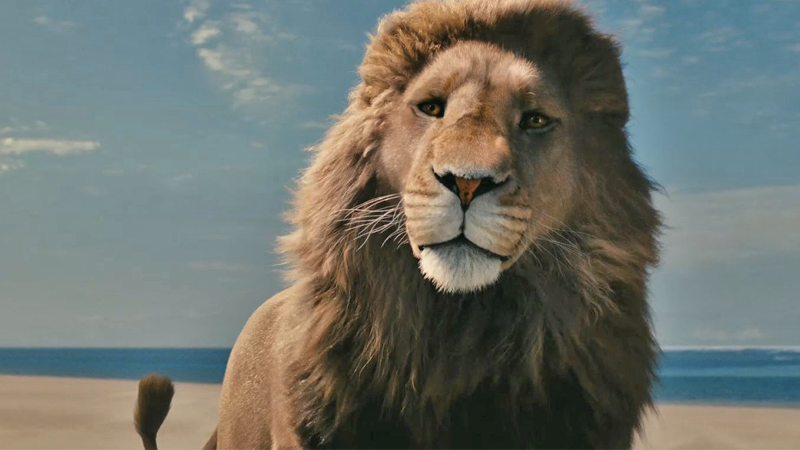
You know who the only good, realistic but still emotive CGI animal is? Aslan, from The Chronicles of Narnia movies. Yes, those films were Not As Good As The Books®, but look at the range of expressions! Or even Richard Parker from Life of Pi! So it’s not that this approach couldn’t have worked, but the “cool technology and animal logic at all costs!” approach fails the story. Nothing but respect for my favorite furry Christ figure. 

Image result for aslan narnia

Related imageRelated image

Image result for richard parker tigerRelated image

Next week: A very fast and furious review with a special guest

Go Big Or Go (Spider-Man: Far From) Home

Related imageSpoilers for this film and Avengers: Endgame!

Spider-Man: Far From Home picks up shortly after Avengers: Endgame. Tony Stark is dead and the world is mourning his loss and is trying to move on after Thanos’s snap and then the reverse snap, which is being called “The Blip.” Eager to escape the mounting responsibilities being put on him by Nick Fury (Samuel L. Jackson), Peter Parker (Tom Holland) joins his class for a summer trip to Europe, where his only concerns are enjoying himself and trying to tell MJ (Zendaya) that he likes her. 

Unsurprisingly, he is soon caught up again into superhero antics when a set of new threats called Elementals appear, but it seems Peter is not alone in fighting them this time. He meets a new hero named Quentin Beck, aka Mysterio (Jake Gyllenhaal), who may not be everything he seems. 

Far From Home is a mixed bag, but it is undeniably entertaining. The Spider-Man corner of the MCU continues to be at its best when it focuses on normalcy. The humor that comes from the class and vacation situations are by far the best parts of Far From Home. Martin Starr and J.B Smoove are particularly delightful as Peter’s teachers, and Marisa Tomei, Zendaya, and Jacob Batalon continue to be great as Peter’s inner circle who keep up the push-and-pull between Peter’s civilian identity and his role as Spider-Man. 

Beyond the humor, though, are some truly affecting dramatic moments. Similar to the tear-jerking part in Homecoming when Peter gets trapped under the rubble, or when Peter gets dusted in Infinity War, the scene where Mysterio first uses his illusions on Peter is startling because it emphasizes Peter’s youth, and it is truly disturbing to see him being manipulated and beaten down in such a brutal fashion. Holland has some solid dramatic chops, and he gets to use them again here. I applaud the film for not pulling any punches and letting this young hero get a true “dark night of the soul” moment. 

The film also lets Peter makes some terrible mistakes that make him look foolish at best and unworthy of being Spider-man at worst. It’s a touch of sophistication that is missing from many other MCU films that typically rely on the hero’s darkest hours coming from external forces and not from their own mistakes. In this regard, this second Marvel-Sony Spider-Man entry is quite ambitious. 

Far From Home falters, however, in part because of this ambition. It goes bigger, and it doesn’t hit the mark on everything. The multiple bombastic action sequences are bland because most of them are Peter against faceless entities of water or fire or drones, which result in no emotional connection to the audience and a CGI mess on the screen.

This ambition extends to the movie’s themes. The story seems relevant with its inclusion of fake news, drones, technological warfare, illusions, not being sure what is real and not, and an undercurrent of what I can only describe as Gen-Z Anxiety™. All of those things are relevant, but the movie never quite gets around to saying anything meaningful about those things. Peter defeats them through his superpowers, so what does that mean for those of us who don’t have superpowers? Ultimately, just because the movie has timely elements doesn’t make it so, because it fails to understand what makes these things timely in the first place. 

This brings us back to Mysterio, who, like Michael Keaton’s villain Vulture in Homecoming, is a regular man who feels like he was cast low by Tony Stark and decides to retaliate by becoming evil. But while the film, and the MCU at large, seems to want to give some commentary on Tony’s problematic aspects, by making his critics evil maniacs, the wind is taken out of any serious arguments against Tony and instead just affirms him. His critics are all evil, and he saved the world, so in the end, he must have been in the right. 

Happy Hogan (Jon Favreau) does say late in the movie that Tony was a “mess” and “always doubted himself,” which is true and is in line with the character’s development in losing his self-assuredness and gaining humility. But then moments later Happy makes an explicit connection between Tony and Peter, and since Peter is our heroic protagonist, any legitimate criticism of Tony is once again undercut in favor of the MCU’s RDJ-worship. All of this renders Mysterio a promising character played well by an underused Gyllenhaal, who never quite gets to shine as he should.

In the end, Far From Home confirms what some other recent MCU films have been showing, which is that Marvel is getting bolder and riskier, but still doesn’t quite have it in them to either go all the way or have the proper execution. I’m glad they’re trying, but they’re still far from a home run.

-Madeleine D.

The Gospel of Place: The Last Black Man in San Francisco

Image result for the last black man in san francisco

“In the Christian imagination, where you live gets equal billing with what you believe. Geography and theology are biblical bedfellows…Biblical religion has a low tolerance for ‘great ideas’ or ‘sublime truths’ or ‘inspirational thoughts’ apart from the places in which they occur. God’s great love and purposes for us are worked out in the messes in our kitchens and backyards, in storms and sins, blue skies, daily work, working with us…where we are…and not where we would like to be.” 

-Eugene Peterson, in the forward to Sidewalks in the Kingdom by Eric O. Jacobsen 

“If we learn to see and even love these urban features, we will begin to cheer when our cities and neighborhoods are preserved, and we will begin to weep when they are destroyed” 

      -Jacobsen, 73 

The Last Black Man in San Francisco, despite its provocative and apocalyptic title, is a meandering and tender eulogy about a number of things. The film follows a man named Jimmie Fails (played by the man of the same name, on whose life story the film is based on) as he squats in the home he lived in as a kid and tries to find a way to buy it back for himself. Jimmie’s love for the house (and San Francisco at large) is of the purest form and is possibly only rivaled by the love of his friend Monty (Jonathan Majors), an aspiring playwright who supports Jimmie until he discovers the truth about the house. The film watches the characters navigate this increasingly strange and hostile city that they love but are being priced out of. The Last Black Man in San Francisco is a movie unlike any other movie that has come out this year, and I’d like to look at a few more reasons why.

In American filmmaking, time is treated like it is in our society- something to be hastened and exploited and used to its very last drop. Time efficiency is considered great storytelling, and sometimes it is. But sometimes it isn’t, and there becomes a point where efficiency in storytelling means the filmmaker may use her characters more as tools than as reflections of humans. In TLBMISF, the camera gazes upon human faces and human bodies in a way that aims to cut straight to the character’s humanity, and it does not hasten to do this or have an agenda. At one point Monty, after being berated by some men on the street, says to Jimmie, “I shouldn’t get to appreciate them because they’re mean to me? That’s silly.” This is the attitude the film takes. Some characters that seem to have no narrative function turn out to be of great importance. Some characters really do not have any greater plot function, but all are treated with care and dignity by the camera. I’ve talked a few times before about having an empathetic camera, but TLBMISF exemplifies the concept more fully than any other film I’ve seen. This is true visual storytelling and a better form of storytelling efficiency.  

An unexpected consequence of this narrative empathy was that this became a stressful viewing experience for me because there was no one to really root against, so there was no sense of, “Of course this bad guy will be defeated, good conquers evil!” I was constantly in suspense about what was going to happen, and the film continued to go in unexpected directions. I felt this anxiety early on because Jimmie and Monty are so dang likable, even when they’re not doing likable things. It’s impossible not to want them to succeed, and panic at all of the clear obstacles in their ways. 

Speaking of Monty and Jimmie, in films with friendship in the middle, one character often takes an extreme comedic relief role and the other plays the straight man. They have to be extremes to keep things interesting, and their quippy rapport is a shorthand to express their closeness. Monty and Jimmie don’t fit into these categories in any fashion. They have their differences, but the performances are so lived-in and organic, the chemistry between the leads so effortless, and the physical closeness they often share is so comfortable that there is no need to have any kind of shorthand or tropes to establish the relationship. And refreshingly, the film feels no need to “no homo” the character’s bond at any point, further exuding the confidence the film feels about its own presence. 

~

The quotes at the beginning of this review are from Sidewalks in the Kingdom, a book about Christianity and new urbanism. In it, author Eric O. Jacobsen argues what the Bible argues- that Christianity is not solely the realm of the head and heart, but has to be enacted on the streets of where we live, and increasingly, that place is a city. The Bible begins in the Garden of Eden but ends in the Kingdom of God, pointedly shown to be a city. 

TLBMISF sees the city, in this case, San Francisco, as the Bible sees cities. And as already discussed, it also sees people in the same way. As Jimmie tells some newcomers who already dislike San Francisco, “You can’t hate it unless you love it.” As Christians, we cannot recognize the problems in the world and in our cities until we at first truly, truly love it. 

I am writing this review and including these quotes because I encourage you to watch this film, and I think watching it in this framework will be helpful, thought-provoking, and hopefully, rewarding. It was impossible for me not to consider these things when I saw it. TLBMISF is not pointedly a spiritual film, but like all good movies, it illuminates truth. Christians are called to love the earth we are on, and work for its benefit and glory. If only we all saw the spaces we occupy and the communities we are a part of in the way Jimmie and Monty see San Francisco. If only we advocated for the restoration of the historical homes of our cities, called for walkable streets and sidewalks, for justice in our legal systems and in our economic policies, and for thoughtfulness and care put into the urban renewal that is not only gentrifying San Francisco but all of the United States. 

In other words, we can and should get to a point where we will begin to cheer when our cities and neighborhoods are preserved, and we will begin to weep when they are destroyed.

Brie Larson Trifecta: Short Term 12, Room, and Unicorn Store

Recently, I found myself with a to-watch list that contained three Brie Larson films. So, in a very late celebration of her film Captain Marvel reaching the billion dollar mark at the box office and Avengers: Endgame taking all the rest of the world’s money, let’s take a look at some of the highlights of Larson’s filmography. 

Short Term 12Image result for short term 12

Short Term 12 is about Grace (Brie Larson), a young counselor at a care unit for at-risk teens. Grace herself was once one of those teens, but now is a model for the kids as she cares for them in a calm, firm, and compassionate manner. The slice-of-life drama follows Grace and her boyfriend/ fellow counselor Mason (John Gallagher Jr.) as they face new challenges at the center and in their relationship. 

There’s not a single weak performer in the cast. While Larson got deserved praise for her performance, John Gallagher Jr. is equally perfect. He does most of the comedic lifting, but he has a number of small dramatic moments that make the film work so well, and he and Larson have perfect chemistry. The supporting cast, including rising stars Rami Malek and Lakeith Stanfield (go see Sorry to Bother You!), are equally great in their roles. 

The film is so authentic and realistic it feels like a documentary, but it never once lost my attention. It is, simply put, riveting. Short Term 12 never shies away from the flaws of its characters, but it also never forgets their dignity and beauty either. It is the kind of film that pulls you completely into the story, and makes you feel the pain of each character, yet also makes you feel stronger and more ready to take on life when you leave the theater. I believe it is a must-see. 

RoomImage result for room movie

Like Short Term 12, this is another realistic, serious film that is almost documentary-like in parts as it tells the story of Joy (Brie Larson) and her son Jack (Jacob Tremblay) as they escape their kidnapper and restart life in the real world.

I resisted seeing Room for a while, knowing it was going to be a hard watch. Thankfully, it’s not a shocking or gratuitous film, but it is still emotionally heavy. This story is about a crime but that’s not its focus; the focus is on the human soul. 

Every time Room could fall into a cliche about the inspiring strength of the human spirit or the resilience of kids, it sidesteps the cliche gracefully and tells a fuller story. It is a reminder of the strength of the human spirit and the resilience of kids, but the movie doesn’t end on a victorious or inspirational note. Instead, it embodies an honest view of the evils of the world but with a persistent attitude of hope. Another must-see, if only for Larson and Tremblay’s incredible work.

Unicorn StoreImage result for unicorn store

A lighthearted departure from her other films, Unicorn Store is Larson’s directorial debut. She stars as Kit, a young adult who refuses to grow up. She meets a man called The Salesman (Samuel L. Jackson), who promises to give her her heart’s desire- a unicorn- if she prepares a home for it. Kit accepts the challenge and must learn how to take care of the creature, and maybe along the way learn to care for herself. 

Kit as a character is very uneven, like the film, but I did like that she offers up a fresh breath of air as a heroine. A lot of female characters are getting the “strong” treatment, in which the description of “strong” ceases to have any actual meaning and instead becomes code for, “just like the ideal male hero,” which means completely competent and physically tough with a lack of or at least a comfortably low count of any feminine qualities. (Obviously, there is a discussion to be had if being “strong” should be thought of as a firstly masculine trope and narrative at all, but that’s a different discussion). Anyway, here Kit is not strong in any of the ways the word is used. She’s not physically strong, she’s not particularly mentally strong or tough, and is not someone to look up to. She is *gasp* flawed and must grow. 

Kit is silly and immature and unsure of herself, and yet that is never equated with her femininity, which itself is never taken from her, even as she matures. The problem with Kit is never presented that she likes glitter and unicorns and pink- an over-the-top feminine aesthetic- the problem is that she is resistant to change and unprepared for adult life. I found that refreshing and know the character of Kit will resonate with a lot of women. 

Unfortunately, Unicorn Store really wants to be quirky and unique, which is usually the mindset that makes a film fail to be either quirky or unique or good. The forced whimsy of the film, combined with an all-too-obvious metaphor, keeps it from being much of a meditation on the difference between being childish and being like a child. This is furthered by the uneven tone that fluctuates between child-like wonder and childishness, which might have been an interesting way to reflect Kit’s character but is clearly out of bad filmmaking instead. 

As for her directing, Larson is fine but is bettered by the cinematography by Brett Pawlak and is weakened by Samantha Montgomery McIntyre’s script. There’s still potential here for Larson’s next directorial effort- and I do hope she does another film- but I think it would be better for her to focus on a more minimalistic story.

Is there a common thread between these projects? I would say so. Both Room and Short Term 12 are about people in crisis that are trying to regain an identity outside of being in crisis. Unicorn Store is also about identity, but the crisis has much lower stakes and comes more from personal failure and dissatisfaction than the outward influences that plague the characters of Short Term 12 and Room

Unicorn Store relies on Larson to play a bold, quirky, and altogether more performative character, while her other work has her do the opposite in extremely subdued, naturalistic characterizations. Her performance in Unicorn Store is not bad, but it doesn’t play to her strengths, which makes it comparable to her work as Captain Marvel. Her uniqueness as an actress lies in how she makes each character feel lived in, to such a degree that I feel, watching them, that I could sit down with Joy of Room or Grace of Short Term 12 and ask them about their pasts and they could tell me all sorts of things. Both Carol Danvers aka Captain Marvel and Kit from Unicorn Store are big personalities that make it seems like Larson is impersonating other actors who would fit those roles better (although I truly think Larson will come more into her own as Captain Marvel by her next appearance and under better directors).

Watching a selection of films from an actor’s filmography is a helpful way to not only understand the actor better but the craft of acting. And I think this experiment not only gave me two excellent films to enjoy but also should serve as a reminder that Brie Larson does not deserve all the online trolling and hate she is getting. So, if you’re a Marvel fan harassing Brie Larson online- quit it! I would say I will find you myself, but after seeing how ripped Larson got to play Captain Marvel, I think she can take care of herself. 

-Madeleine D. 

Toy Story 4 Video Review ft. Mark Branson Thurston

In honor of Toy Story 4, I wanted to do something special, so I recruited my friend Mark Branson Thurston, a filmmaker and fellow film-lover, to make madeleinelovesmovies.com’s first video review. Mark and I discuss various themes of the film, Woody’s character arc, and whether or not you will cry (I didn’t find it as emotional as the other Toy Story films, but Mark disagreed). I went into Toy Story 4 with low expectations, not believing the movie could live up to the ending of Toy Story 3. What I should have remembered is to never underestimate Pixar. 

Mark Branson Thurston currently resides in Tulsa, Oklahoma. He loves spending time with family and friends, staying connected with the local churches in the Tulsa Area and is working on scripts as well as treatments for the films as we speak. He is the creator of Notebook Chronicles Studio, where he has made four short films along with a multi-part youtube series, and make one-minute movie reviews.

Notebook Chronicles Website

Youtube

Thurston’s personal quote for film-making is: “Films making us think, cry, laugh, or strive are enjoyable. Creating a film that possesses all of those qualities is what makes it stand out from the rest.”

-Madeleine D.