Ambiguity Does Not Equal Compelling : The Circle

the circle

The Circle, with its constant surveillance, data storage, and knowledge of your every move and secret, is not about the technology of the future. It’s about the technology of now.

Oversharing, the need to tell everyone of your every action, the ability to find anyone if you have the right resources, a camera with you at all times- that’s how technology works for many people now. If not now, maybe in a few years.

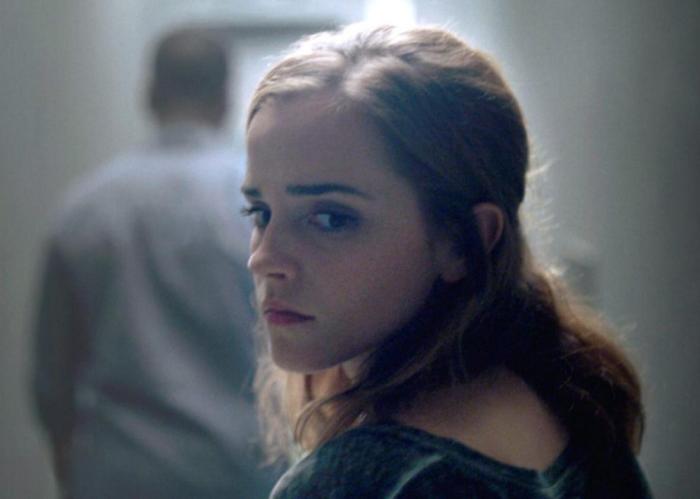
Mae Holland (Emma Watson) plunges into the world of that technology when she lands a job at The Circle, a Google-meets-Facebook mega company led by Steve Jobs-y Eamon Bailey (Tom Hanks). When a series of events makes Mae decide to go “transparent” (wearing a camera on her at all times) she learns firsthand the consequences of being watched and analyzed with every move.

60% of The Circle is either Tom Hanks or Emma Watson giving Ted Talks about the future of technology. They stand on stage and talk about what The Circle will be doing next. If that sounds like fun to you, this may be your movie. If this sounds a little less like the exciting, thought-provoking drama you were hoping for, then you’re right. While both of these actors have the charisma to pull it off, getting long-winded explanations of exposition can be tedious, and sometimes they can’t even overcome the thesis-like script.

Now speaking of the actors, Emma Watson is the foundation of this film. She leads and keeps it, and for the most part, does an excellent job. She is very natural and is able to hold our attention. If you’re here for any other actor, though, you’ll be disappointed. John Boyega, Tom Hanks, Patton Oswalt, and Karen Gillian are all very, very supporting. Which is a shame, because they all do a great job. One small thing though- let John Boyega speak in his natural British accent. Please. He’s been forced to do an American one, and it sounds like Benedict Cumberbatch’s accent in Doctor Strange. And I don’t mean it in a good way. He sounds like he has a cold. Give him a tissue. And more lines.

On the technical side, we are used to studio movies being competently filmed and edited. It’s just a given that the cinematography, score, technical aspects of the film will be good. And for the most part, The Circle is a slick film. But the editing here is really odd in parts. The camera breaks the 180 degree camera rule. There is a scene where two characters, side by side in separate bathroom stalls, are filmed at the exact same angle, so when it switches back and forth, it just looks like the actresses are teleporting and/or the editor is making extreme jump cuts. It takes you out of the film, and makes it look amateurish.

Emma Watson’s Mae seems to represent the biggest failing of the script. She is a very reactive protagonist, one that simply reacts to the incidents around her, and then goes back to her natural disposition. That makes her turn to “the dark side,” not a surprising one, and not one that seems earned. If at the beginning of the film, she had been presented the opportunity to turn, considering her lack of development, I would assume she would have. Therefore, there is no conflict. There is no real antagonist, or resistance by anyone or anything. This film just presents the spiral into complacency as a natural one. While it shows the horrors of a future like the one presented here, if our likeable protagonist can get behind it, and nobody else seems to have a problem with it, then is it really bad? The film doesn’t have a stance on it.

So are we, the audience members, supposed to be the protagonist? Are we supposed to see this cautionary tale and the characters within it and decide whether it is right or wrong? Maybe. The pros and cons of each side are listed out, in essay fashion. But with no strong emotions in play here, the story, despite its relevance, feels unimportant. Lackluster. Not something to worry about dwelling on. It is almost like director and co-screenwriter James Ponsoldt (The Spectacular Now) thought, hmm, maybe if I make the end ambiguous and all the characters flat, and I don’t make a compelling case for or against either side, they’ll assume I’m really smart!

So, there is where it ultimately fails. I can forgive it for its odd editing, poor use of Tom Hanks and John Boyega, and sloppy character development and exposition. But I cannot forgive it for being dull about its interesting premise. How did you mess this up? Everything was in your favor!

-Madeleine D

Everyday Poetry: Paterson

PATERSON_D26_0049.ARW

(spoilers ahead)

Every morning, Paterson (Adam Driver), who lives in the town of Paterson, NJ, gets up. He goes to work (he’s a bus driver). He writes poetry. He comes home to his wife, Laura (Golshifteh Farahani), who always has a new project to show him. He takes the dog out for a walk. He goes to the bar, gets one beer, and talks to the owner, Doc. Rinse, wash, repeat.

In Paterson, one week in the life of Paterson is shown. How could this possibly be any more interesting than watching paint dry? I go to the movies for escape, not to watch some dude’s daily routine. How could watching seven days in a fictional character’s life be worthwhile?

Paterson reminded me of another low-key, almost drama-less indie that came out last year: Loving. I said in my review of that film about the famous Loving vs Virginia case, “(Loving) reminds me why not a lot of movies are made about introverts. It doesn’t matter how powerful those closeups of intense expressions are. It doesn’t matter how wonderful they are as role models… Quiet people simply do not have the onscreen charisma we are used to to entertain us. And I say this all as an introvert. A movie about me would not be entertaining in the least.”

Paterson is very Loving-like on the surface, minus the historical importance. It’s about Paterson, a quiet, kind, dutiful man, and his slightly more eccentric but equally as kind and lovable wife. They lead an unremarkable life, and are content. They’re even inter-racial like the Lovings, although this film does not treat that as anything but normal.

Loving doesn’t succeed as a movie because it takes what people see on the surface when it comes to quiet, calm, introverted people: silence and boredom. And that becomes the movie. (Not to say Loving doesn’t have good elements, it’s just underwhelming)

However, Paterson succeeds because it takes what goes on below the surface of quiet, calm, introverted people: observation, introspect, and a rich inner life. And that becomes the movie instead.

The cinematography of Paterson, richly done by Frederick Elmes, is Paterson’s inner monologue and observations. The shots of the shoes of people on the bus. The details of people’s knees touching. The layers of waterfalls and beers and faces and notebooks, are all  visual representations of Paterson’s brain. The brain of an artist works like that, and the film is able to capture a rich inner life visually with both simplicity and bravo.

The other thing that compels the character of Paterson to be beyond what is on the surface is Adam Driver’s performance. None of his moves seem calculated. He is simply inhabiting the body of Paterson, and exploring the world around him. It is beautiful to behold. He and Farahani are so lovable in the roles, that at the slightest bit of tension I was afraid something bigger would happen and I didn’t want them to get hurt.

Luckily for me, nothing did happen to them. Well, it seems like nothing bad happens to them. The climax of the film involves (spoiler) Paterson’s notebook of poetry being torn up by a dog. Nobody except his wife even knows about his poetry. Is that really climax-worthy?

While watching the scene, my mind rushed to the other writer’s-notebook-gets-destroyed scene from one of my favorite films, Little Women (1994). Little sister Amy rips up Jo’s notebook, and Jo (understandably, from a fellow writer’s perspective) viciously attacks her.

I held my breath as Paterson and Laura walked in to see the notebook. I waited for Paterson to explode into anger, or cry, or chase after the dog. Or at least Laura to do something.

But instead they just react. Paterson doesn’t get visibly upset, because it’s nobody’s fault. Laura tries to make him feel better, but there is nothing she can do.

So I let out my breath and relaxed. Nothing bad happened to them. It’s all okay. Until you start thinking about the whole movie, and realize that it’s not okay. This really is a climax. This really is a dramatic moment for the film. Just because it’s quiet and not overblown or even truly expressed, I just spent an hour and a half watching a week in Paterson’s life, just to to feel the pain of this moment, which in any other movie would not be felt at all.

Paterson is an ode to our own beautiful lives. No matter how ordinary, or routine, or small, what we do and how we act and how we interact with people around us matter. The more you observe it, the more poetic- whether sad or hopeful- it becomes. Our lives fuel our art and passions, so that itself gives it worth.

Paterson, like its lead, has more going on under the surface, and it’s dazzling in its own peculiar way.

-Madeleine D

Let’s Not Make This Complicated: Gifted

Gifted

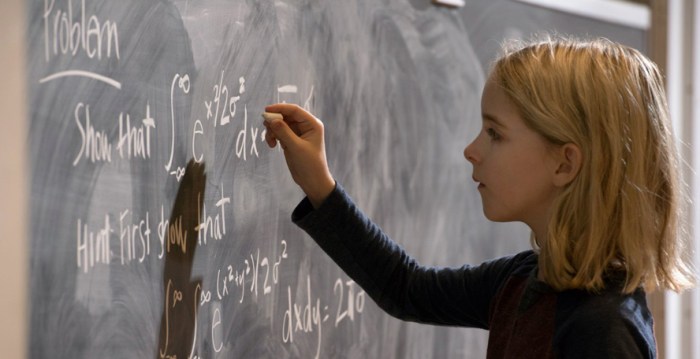
First-grader Mary is gifted. Now, aren’t we all gifted in something? Some of us are great athletes. Some of us win every spelling bee. Some of us are natural artists. And some of us are really good at getting participation awards.

But Mary (Mckenna Grace) is a different kind of gifted. She’s Stephen Hawking, Albert Einstein, Katherine Johnson level genius. She’s far beyond what any elementary school could teach her, and who would want such a gifted child to be stuck with kids still learning basic addition?

Her Uncle Frank (Chris Evans), that’s who. He wants to raise his niece right, after her mother took her own life. And right means normal and happy and not-weird. Too bad Frank’s mother Evelyn (Lindsay Duncan) doesn’t see it that way.

Director Marc Webb is back from directing the two totally not controversial or hated Amazing Spider-Man films, and is ready to go back to telling small, stand alone stories. He made a name for himself with 500 Days of Summer, and now, armed with a script from the Blacklist and star power, he’s ready to go.

Speaking of star power, the real tragedy of this film, beside suicide, neglect, abandonment, and disabled cats, is Octavia Spencer getting another underused role. She gets maybe fifteen minutes of screen time. Give her the deep acting role! I know she was busy getting Oscar nominations and literally playing God, but come on! You had Octavia Spencer!

Meanwhile, Chris Evans gives this movie his all. He’s going for gold. When he’s in the courtroom, you can see Jack Nicholson from A Few Good Men playing behind his eyes. When he’s staring off into the sunset, you can tell he watched at least two Daniel Day-Lewis movies. He portrays Frank’s insecurities about his abilities, and his devoted love, with sincerity, charm, and ease. He does his darndest, and for the most part, it works.

It’s screenwriter Tom Flynn (Watch It (1993)) that is the biggest problem. Just like Frank in this movie, I think Flynn has some self-doubt to work through. His script is good. There are quite a few moments, particularly in the familial drama department, that got me. As things were revealed throughout the film, I was excited about how it would impact the rest of the story.

Then, Flynn loses his nerve. He seems to get worried the nuances of his script and the threads he had laid won’t be enough. So he adds things. Sure, a child being ripped away from her guardian is tough, but you know what is tougher? A one-eyed cat about to be put down. Sure, Frank is shown to be a good guardian throughout all the scenes, but you know what will really make him a hero? If he storms into a shelter, rescues/steals three cats, then trespasses to take back his niece with some questionable legal skills. Sure, the teacher and Frank have a connection, and Frank wants a life and fellow adult connections, but you know what will really show that? Besides a drinking scene where they literally tell each other their greatest fears? An unnecessary bedroom scene, then a basic disregard of the teacher later.

Stories about gifted kids aren’t particularly new. There have been numerous other films that have explored the idea of adults trying to make the right decisions for children, especially gifted ones. The ethical problems presented in the film are interesting though. It’s not that this sort of story shouldn’t be told again. It’s that this kind of story has more depth to explore, and I don’t think Gifted quite takes the leap from by-the-books family drama to a more thoughtful exploration of its topic.

For example, it could take a chance and make the audience feel more uncomfortable with both options. What if Frank wasn’t a lovable guy, but just a solid guardian? What if Evelyn was more likeable? What if Mary was more troubled than just being precocious? Instead, Gifted, for all of its twists, still puts people in boxes.

At one point in the film, Frank reveals to Evelyn something along the lines of somebody wanted her to die. People in my audience cheered. Yeah! Take that Evelyn! You deserve it, you monster!

Really? What if the audience couldn’t react with a cheer when the “Bad Guy” is beaten? What if it was more difficult to see who was right? What if it was more like real life, where there are no clear heroes and villains in cases like these?

So, Gifted doesn’t take the plunge. It plays it safe. While Gifted is a film with promise and talent, and is disappointing when it doesn’t go the extra mile to be better, all that doesn’t make the film bad. If you don’t go in with high expectations, it will be very enjoyable. I was engaged the entire time, and so was the rest of the audience.

Maybe, if anything, it’ll remind you of how important good role models are. Go thank your teachers and parents and anyone else in your life who has made a big impact on you. Even the people who were in a grey zone, most of them tried their best. That is one message of Gifted that is okay with exploring complexity.

-Madeleine D

Something There That Wasn’t There Before: Beauty and the Beast

Beauty and the Beast

Come on. You know the story of Beauty and the Beast.

The story of Belle, a beautiful young maiden, ahead of her time and anxious to have more than just a provincial life, who, in exchange for saving her father, is held prisoner by a beast. The beast used to be a prince, but after he was cursed by an enchantress who saw the beastliness in his heart, became the beast and his servants became household objects. Belle and the beast fall in love, and the spell is broken.

Why this story has endured as a classic for so many years, despite criticisms about bestiality and Stockholm Syndrome, is probably because of this: we love stories about nerdy guys and hot chicks. Look to Back to the Future, Spider-Man, most of Woody Allen, Adam Sandler, and Seth Rogen’s entire film careers. Not that it hasn’t happened the other way around, but it’s a common trope that works. When you add that and a beloved 1991 Disney animated film with one of the best soundtracks of all time, that went on to be a musical, it makes it a pop-culture staple.

Fast forward to 2017, when Disney, down on its luck after only making seven billion dollars at the box office last year, decided to release a new live-action Beauty and the Beast, a film that nobody knew they wanted, but now enough people are pumped for to give it a $170 million domestic opening. That’s superhero movie level numbers we’re talking about! Turns out if you stall making a female superhero movie long enough, girls will turn the next available role model into one.

So does this new Beauty and the Beast do the original justice? Is it even necessary? And is Emma Watson (Harry Potter franchise), as Belle, a super-character?

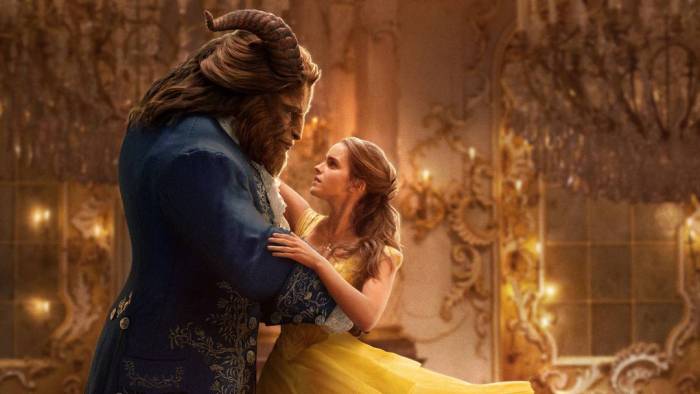
This Beauty and the Beast follows all the same beats of the original. You’ve got everything from Belle’s singing on the mountain, to Maurice being locked up, to the Beast and Belle having dinner, to the iconic ball, to Gaston taking the mob to the castle. There are even shots that are direct replicas of the animated film. The primary appeal of this remake (besides the cast) are the details added. We get to learn about Belle’s mother and why Belle and Maurice moved to the village. Gaston and LeFou get more scheming time. The Prince’s curse is reenacted.

If that isn’t intriguing enough, then there’s the cast. Dan Stevens (Downton Abbey) as the Beast, Luke Evans (The Hobbit Trilogy) as Gaston, Josh Gad (Frozen) as LeFou, Ewan McGregor as Lumiere, Ian McKellan as Cogsworth, and Emma Thompson as Mrs. Potts. Those are some pretty stellar actors, and most of them bring their A-game.

However, the real heart of the film is Emma Watson. Her version of Belle wouldn’t be here without Paige O’Hara’s animated Belle, but Watson makes the role her own. The character isn’t reinvented at all, but instead, small details build upon the character’s foundation. For example, Belle loves to read. But reading is a bit of a passive activity. Does she do anything besides read? This script builds upon that, giving Belle another hobby- inventing. She invents a washing machine that allows her to teach a girl of the village to read. It makes perfect sense within the story, and it pays the utmost respect to the original.

Besides Belle, another staple of the original is the music numbers, and they don’t disappoint here. Almost every song had me wanting to get up from my seat. While leaving the theater and coming home, I attempted to dance with every friend I was with. They were not as enthusiastic about dancing in front of the theater as I was, so I sang to them instead, which I’m sure they appreciated.

An infectious feeling of joy flooded through the movie. It was an immersive experience. During a tense moment, I looked back at the rest of my crowded theater. The stranger beside me was tearing up, behind me a couple were gripping hands and sitting on the edge of their seats, and in front of me a little kid was slapping his father’s knee whispering, “I told you so, I told you it would happen!” Simply put- I felt the story. Any logical fallacies from the original (wait, why is Gaston so beloved in this town?) are solved (ahh, war hero!) so I can enjoy the themes a little more. The film explores how Gaston is able to manipulate the fears of the villagers. Maurice points out to Belle, “Small town can mean small minds, but it also means safe.” The love between Belle and the Beast has more ground than, “you saved my life, I saved yours, so we’re even-steven.” They have things in common, similar worldviews and backgrounds and outlook. The original makes it clear the characters get together in the end because it’s a fairy tale. This movie makes it clear it’s a fairy tale because the characters get together in the end. The story feels less predestined, a little less certain, and therefore, takes you on a journey.

But let’s get to the real questions, shall we? Because it is one thing for a teenager to like this film. Will you, hypothetical adult reader of this review who probably has memories of seeing this film as a kid or at least is really cynical, like this film?

Is Beauty and the Beast a cash grab?

Yes. To be fair though, everything made by major studios is.

Is Beauty and the Beast an unnecessary remake?

Depends. It’s unnecessary in that we have a fantastic animated film already, plus a French 1946 version for the brave of heart (I watched it in preparation for this film. It is stunning aesthetically, and ahead of its time, but is unintentionally hilarious if you watch it in the right, or maybe wrong, mood).

Here is how I see it: This new Beauty and the Beast is a companion piece to the original animated film. It’s the extended director’s cut. It fills in any holes from the original, gives it some updates, and offers some more nuanced performances that only live-action can really do. I don’t think it is here to smash your childhood between its fingers and light Howard Ashman’s legacy on fire. It’s here to expand and deepen the messages the story provides. It allows you to embrace this tale as old as time in a new way.

-Madeleine D

Superhero Suffering: Logan


Logan is the second R-rated comic book film from Fox, studio of the X-Men, following up on the success of Deadpool last year. Logan is also said to be Hugh Jackman’s last outing as Wolverine after doing eight films as the character, to which Robert Downey Jr flexes his muscles and says, You gotta be kidding! Whimp. I’m just getting started.

Full disclaimer, I have not seen any of the other X-men movies (I know, crazy!). However, I knew enough solid facts about Wolverine going into Logan to not be lost. I would suggest anyone who wants to see the film and hasn’t seen the others, do at least a quick scroll through Wikipedia before diving in.

Logan starts in the year 2029. The mutants are almost extinct. Logan is working as a chauffeur and is caring for an elderly Charles Xavier, who is suffering from a brain disease. After a deal goes wrong, he learns about an underground human experimentation group called Transigen that has created a group of child mutants, including a young girl named Laura with the same powers as him. He, Laura, and Charles Xavier go on the run to take Laura to a place called “Eden,” where she swears she and the other mutant children will be safe. Logan is reluctant, but right now he’s only living for Charles, who insists Laura and the other mutants are the future.

This was my first rated R film in theatres, and I saw it with my dad. Near the very end, as a character’s chest gets driven into a wooden spike for the second time, my dad turned to me and asked,

“Are you okay?”

“Yeah,” I said, as I adjusted my hands over my eyes. “I can handle it.”

“I don’t know if I can.”

So it’s not a kid’s movie. If you’re the parent who took their kid to see Sausage Party because it was animated and Deadpool because it had a guy in a red costume, please take my warning and at least look at why something is rated as it is. Unless you’re training your child to be a doctor and want to expose them early to brain matter and gaping wounds, in which case I have some questions, please wait, no matter how great this film is.

And why is Logan great? Because it introduces new elements to the superhero genre that haven’t been done before.

Logan has some uncanny similarities to last month’s release, The Lego Batman Movie. While I won’t be reviewing it because its window has passed, I really enjoyed it. Both films are about tough, individualistic, rugged macho men learning to care about other people and let them in. They both find themselves in a parental role, and become great mentors and teachers in their own rights. While one has a climax that ends with a problem being solved by the power of abs and friendships, and the other is a more depressing look at age, alcoholism, immigration, and inner demons, both represent a new turn in franchise filmmaking.

In both Logan and 2015’s Mad Mad: Fury Road, the hero who has been the center of a film series for years gives their mantle to someone who represents the future. In Fury Road, it’s Furiosa and the Wives. In Logan, it’s Laura and the other mutants. This idea of passing the mantle to the future generation, which in both of these films are represented by female/minority/immigrants, is a striking commentary. Logan and Fury Road have also been critical hits, which might mean that more highbrow blockbuster films will follow the same path.

Logan is able to balance action and character, all within its Western feel. The film revels in being able to use Wolverine’s claws to their full effect. It doesn’t just stop with slashes, though. It innovatively incorporates the settings and locations to make unique action sequences.

But it is the quiet moments in the film that pull it into great territory. Watching Logan have to carry Charles Xavier to bed, hearing Charles rage at him in his senile moments about how much of a disappointment he is, bonded me to the characters, even though this is the only film I’ve seen them in. This film is a gift to Hugh Jackman and Patrick Stewart, giving them an opportunity to strip down their characters, build them up, and then set them in stone.

Now, most of us know that Patrick Stewart and Hugh Jackman can act. It’s Dafne Keen as Laura/X-23 that stuns and amazes. She not only performs her action sequences to a professional degree, but she is able to build up her own character’s legacy in a short amount of time. I can’t wait to see more from her.

Ultimately, what Logan does that is revolutionary is this: It has consequences, stakes, and follows through with them. That is something no major franchise is doing right now. Maybe it’s because of Logan’s finality, or the creative forces of director James Mangold and Hugh Jackman, but Logan’s greatest accomplishment is that it is okay with ending.

Except I enjoyed the film so much, I didn’t want it to.

-Madeleine D

The Sanctity of Martian Life: The Space Between Us

space-between-us

It’s hard to be a teenager. Gardner and Tulsa would know best. Tulsa’s a foster kid, about to age out of the system. She’s counting down the days until she can be free. The only person who makes her feel less isolated is her email pen-pal Gardner.

Gardner feels the same way. Nobody understands him. He’s stuck in his room all the time. He doesn’t have any friends his age. The only confidant he has is a scientist and a robot. He’s completely isolated. It’s like he lives on Mars.

Wait-

he does… live…. on Mars.

The Space Between Us tells the story of Gardner, who, after his astronaut mother gives birth to him on Mars, is sent back to earth when he’s old enough. When he gets down to Earth, he finds out his body can’t survive on Earth for long. He’s told by the founder of the program that sent his mother into space in the first place, Dr. Shepard (Gary Oldman and his long, luscious locks, possibly the greatest strength of the whole movie), that he has to go back.

So Gardner escapes. He breaks out of the NASA facility and finds Tulsa (who for some unforgivable reason does not, in fact, live in Tulsa), who at first doesn’t believe him. But when she gets pulled along onto his fugitive adventure to find his father and experience Earth for the first time, they both discover what is so magical about our world.

The most glaring flaw in The Space Between Us is its identity crisis. The film is torn between being an interesting blockbuster, a genre-twisting space movie, and a Nickelodeon teen romance with a big budget. One minute, Dr. Shepard is talking about the importance of space and exploration. The next minute, Tulsa and Gardner are making out. Then, in the next scene, Gardner is reflecting on the importance of living life to the fullest and about the beauty around us. Then, the film steals from the Me Before You playbook with an on-the-nose song about mutual pining.

You could say this is brilliant screenwriting. Gardner is torn between what he is. Is he a marvel of modern science, or a boy who just wants to be normal? Maybe there is a bigger, deeper meaning to this flip-flopping picture!

Or, you know, it could just be bad screenwriting.

The film, to its credit, does a pretty good job with both of its identities. The Mars setting, despite shots seemingly ripped straight from The Martian, is nicely realized. The discussion about Gardner and the ethics of his situation are clearly explained. I can understand both sides. It may be a little talky, but creating a dilemma where I can empathize with everyone involved is sophisticated.

The film takes place in a distant future. It’s the optimistic future portrayed in The Martian, and after a few too many Hunger Games and Divergences, I’m happy to say I’d be content if that is where our future is headed.

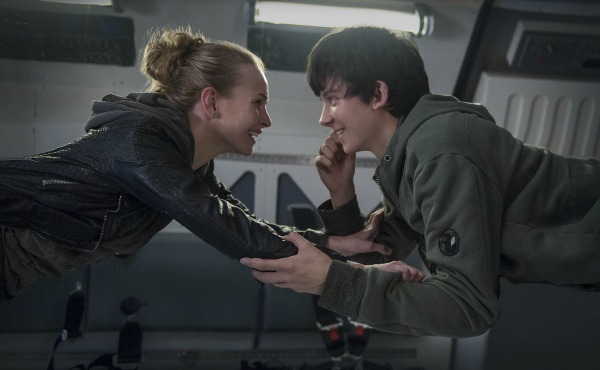
As for the teen romance/ road-trip-for-freedom movie embedded in here, it’s impossible to dislike, unless you don’t have a heart. Or, you are are a NASA scientist. This is where Asa Butterfield and Britt Robertson shine. They take two-day romances and make them feel real. I felt the chemistry even in the stalest of lines. Britt Robertson, in particular, is able to take a role that could have easily rolled into Mary Sue and unlikable territory and keeps it real. It’s what she did in 2015’s Tomorrowland, and she does it again here, and I’m continually impressed.

One of the best aspects of the film is its messages. The tagline of the film- “What is your favorite thing about earth?”- gets repeated several times by the characters. It’s got all the nuance of that pesky feather from Forrest Gump. Except, maybe during a time when a lot of people are feeling anxious and scared, remembering the wonderful things in life isn’t a bad thing.

The other message besides the obvious one is something I think is maybe even more powerful. The Space Between Us has a very compelling pro-life message. It starts right from the get-go. Gardner’s mother knows having her baby is a risk. Yet she chooses to have him, at the cost of her own life. Then the NASA scientists have a choice: risk the boy’s life in order to bring him to earth to do some PR, or leave him up there. Then throughout the whole movie, every single character’s mission is the same thing: Save Gardner.

As Gardner embarks on his road trip, he impacts every person he meets, because he  has a love of life that he spreads. His life is valuable, and so is theirs. I would go so far as to say that Gardner could be seen as a metaphor for special needs children. Life is precious, and it should always be protected. Often people like that are the ones that show it best.

That is a message we need. The film isn’t on the nose, or obvious about it. It may not have even had the intention of it. But a message that is more timely than, remember what is good in your life, is, remember who is worthy of life. Everyone. And we have to band together, like the characters in this movie, to make sure that we protect this right, for every single person around us.

For me, this message, and me being an absolute sucker for so many things in this film (the actors,  finding your father storylines, road trips) make it a lovely movie. Yes, it is flawed. Yes, it has an identity crisis. And yes, it is not the next Citizen Kane. But it falls in the same category as last year’s Now You See Me 2. It made me happy. It made me smile, and I would watch it again in a heartbeat.

So grab your moon shoes and enjoy this space-movie renaissance! See you at Guardians of the Galaxy 2, Alien: Covenant, Life, Star Wars: The Last Jedi, Intelligent Life, and many more to come.

-Madeleine D

City Of Stars: La La Land

For this review, I’m going to use the IO9 format for reviews, a Q&A Style.

la-la-land

Oohh! La La Land! That movie I’ve been hearing a lot about!

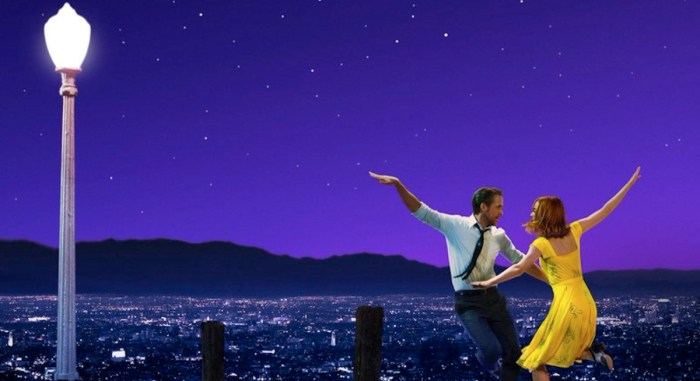
Yep. The musical-romance starring Ryan Gosling and Emma Stone as a down-on-his-luck jazz musician and wannabe actress in L.A. Directed by Damien Chazelle of Whiplash. It just won a ton of Golden Globes.

Do you think it was a masterpiece? Truly the best film of the year?

Maybe. It certainly is one of the best films of the year.

You’re not just going to praise it?

No, I think we should discuss it and explore the nuances of it. I don’t believe in blindly accepting a critic’s every word.

That’s what I do with your reviews.

I’m the exception. You can trust me.

Okay, so first off, how is the music? Can Emma Stone and Ryan Gosling really sing?

They both do nice jobs with their singing! It’s obvious they are not professionals, but at least they are doing their own singing. After the film I went home and listened to the soundtrack again. I’m sure an original song nomination will come during the Oscars.

For someone who likes musicals too, it was hard after the movie to not want to get up and sing.  Maybe I left the theater humming. Maybe I did a little dance with my sister in the lobby of the theater. You don’t know. You weren’t there.

(There’s your shout-out, Eliza, I hope you’re happy)

Is the acting good?

Absolutely- the hype is valid. Emma Stone in particular is able to show her entire range, and everyone does a good job. It truly is an actor’s film, and I’m sure the academy will reward it for that, along with other things it sets bait for.

Sets bait for… wait, are you saying this is an Oscar-bait movie?

Well, to be fair, most movies that come out around this time are looking for an Oscar, and it’s no secret that everybody in Hollywood wants one. Why not try for one? But in La La Land’s case, there are two trains of thoughts on this.

First, director Damien Chazelle wrote the script for La La Land in 2010, before he thought he would have a chance in the business and before Whiplash fame. He wrote it out of love for old movies. Therefore the use of Cinemascope, allusions to films like Singin’ in the Rain, Top Hat, Rebel Without a Cause, and The Umbrellas of Cherbourg, the soft lighting, dusk-hour shots, and the underlying theme of sacrificing for your art, came from his heart. Those things came from his desire to make a film that is a modern masterpiece. And if he wrote and made the film because he truly loves it, then great!

But here is what bugged me as I watched it: First off, the Academy Awards love movies about movies and about working actors. The Academy loves to justify their own careers and flaunt their own success. And La La Land does that. Using the techniques that La La Land uses- obviously with the intention of replicating the masterpieces it is referring to- made me feel like I was being goaded at the whole time. The film seemed to keep on asking, Do you like me? Do you like me now? How about this? This is pretty cool. Look at this! Remember that old classic? We’re alluding to it here. Is it good? Do you like it?, knowing that the critical audience for this film- people who love old movies and musicals- couldn’t resist it.

So you don’t like that it tries to be a good movie? What’s wrong with you? Plus, it’s not just a celebration of old movies. It’s a romance between Emma Stone and Ryan Gosling, and that appeals to the public.

Thinking back to other movies that I have liked this year, like Fences, Hidden Figures, Sing Street, Zootopia, and others, I think that all the stories of those films have an urgency and importance to them. They are fresh, have something to say, and have a message that can resonate on some level with everyone. La La Land lacks that. A story of two dreamers who are insecure about their dreams is something I’ve seen before. Ryan Gosling and Emma Stone have been in two other movies together before, although this problem has nothing to do with the characters- both Mia and Sebastian are flawed with full character arcs. But I’ve seen the crazy, tortured soul artist before, and a lot of movies take place in L.A. and romanticize it.

Now I should add, to be fair, maybe I didn’t “get” La La Land to its full extent because it’s a movie made to replicate the emotion of being in love, and to my parents’ enthusiasm, I’m young and have never been in love before. But the story seemed to service the technique and medium, instead of the other way around.

So, because you don’t love the ordinariness of the story, does that mean you didn’t like the movie?

Absolutely not! I said it was one of the best films of the year, and it makes my top ten list. With all that I’ve said critically, La La Land makes some of the best uses of the film medium I have ever seen. I would say the film almost shines more than its actors.

Something striking about the movie is how it uses the musical format to emphasize the main characters. Maybe it’s just me (although I sure hope not) but I sometimes have moments where I imagine there is a movie playing out around me, starring me. The spotlight goes on. Everything in the background fades out. There is a sweeping pan of my surroundings. La La Land replicates this feeling by actually doing it to the characters. It takes “being the hero of your own story” to a whole new level, in only a way a film can. By combining song, dance, acting, dialogue, camera angles, long takes, lighting, locations, and score, La La Land is an achievement in every meaning of the word.

Should I see it?

Absolutely. It’s a beautiful mix of many genres, so even if you aren’t a musical person, I think you would still enjoy it. The film is for the romantics, the cynics, and artists, the realists, and everyone in between.

It may not be the most thought-provoking or important of the films offered up this year. But its influence on film, particularly movie musicals, might be one of the most lasting, and the joy it conveys onscreen, along with the nuggets of truth and honesty, are too tempting to resist.

-Madeleine D

Dumbfounded White Faces: Hidden Figures

hidden-figures

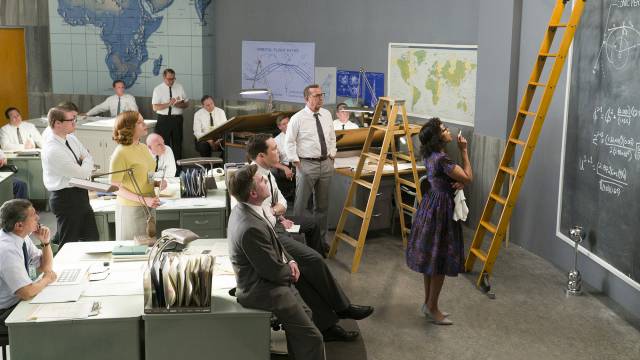
Don’t you know that we’re able? Pharrell Williams sings in the soundtrack of Hidden Figures, based on the true story of the black women who worked at NASA leading up to John Glenn’s historic 1962 launch into orbit. Katherine Johnson, Mary Jackson, and Dorothy Vaughan all want to see their country win the space race as much as any other American, and they are prepared to use their skills to do it, no matter what roadblocks are put in their way.

Katherine (Taraji P. Henson) is a genius mathematician, allowed to work with the core group of engineers and scientists leading the mission. Mary (Janelle Monáe) is working to become the first female engineer, and is attempting to cross the color barrier at a white university to do so. Dorothy Vaughan (Octavia Spencer) is empowering fellow black female computers (mathematicians), while trying to achieve the title of supervisor that she deserves.

Don’t you know that we’re able? Yes, but how long will it take for that to translate into respect? For these women, it looks further away than landing on the moon.

Hidden Figures is a woven tapestry of the experiences of these women, from their work, to their personal lives, to their cultural and social experiences at the height of the Civil Rights movement, demonstrating the balance these women had to achieve, and presenting the challenges they faced, without ever making it seem so hopeless that it wasn’t worth it. The realness of the main women (powered even further by the strong performances from all the main actresses), from their mannerisms, to their relationships, and their simple desire to do good work, is striking. Watching multiple scenes with three women- women of color no less- laughing with each other, going to church together, raising their children and going to work side by side is something I have rarely seen in movies, or entertainment in general. It reminds me that the normalities of my life are the same ones the women who have and will shape the world have.

With the recent explosion of experimental and powerfully subtle biographies and historical dramas (Selma, Lincoln, Jackie, The Theory of Everything, Suffragette, The Imitation Game, etc) Hidden Figure’s on-the-nose-iness and guileless inspiration sometimes is jarringly amateurish. Moments like Mary Jackson telling a judge, “Sometimes you just have to be the first. I want to be the first so others can come after me,” make the film seem more like a TV movie- one that has a message and is afraid you might not understand it unless it says it out loud.

But then there are moments that encapsulate abundances of truth that shock you by their authenticity. Kirsten Dunst’s Mrs. Michaels telling Dorothy Vaughn, “Despite what you might think, I really don’t have anything against you people,” and Dorothy responding with, “I know. I know you believe you don’t.” Moments like Katherine walking into a white man’s room and the quiet that settles over it, as people look at each other, trying to navigate their social norms into this seemingly earth-shattering moment. Moments like a police officer pulling up to the three women when their car is broken down, and they immediately start having to question their own innocence, and then having to prove it.

These moments prove that Hidden Figures isn’t ashamed of being a heartwarming, honest, earnest, and truly inspirational film. It isn’t here for bravo or self-congratulations. It isn’t here to woo the critics (not to say it isn’t award-worthy, it just isn’t showy). It is audience friendly because it’s here to speak to the Black girl sitting in the theater; the White, Latina, Indian, Native American, Asian, any girl, sitting in the theater. It’s here to reach the boys and the men and the women and everyone who has ever felt unappreciated, or who has ever been discouraged from pursuing his or her talents and dreams. It is for the people who love America and want to make it better, and aren’t afraid to examine its past for the good and the bad.

That is what makes Hidden Figures a fantastic movie. It restores history to a disenfranchised group, confronts the reasons why that group has been disenfranchised, and sets the story straight. It does that all while being incredibly timely to now, without sacrificing its warmth, humor, toe-tapping soundtrack, and flawless performances.

Hidden Figures is for everyone, and celebrates the achievements of everyone who has worked hard and fought for what was right. That’s an achievement, and if the movie tells us anything, it should be recognized as such.

-Madeleine D

“I’ve Been Standing With You”: Fences

fences

Troy Maxson can’t accept who he is and where he is in life.

After overcoming a troubled childhood and young adulthood and a stint in prison, he’s a settled family man in Pittsburgh. It’s the 1950s, and he’s a black man, but he’s doing his best. He gets a promotion at his sanitation job. He has his wonderful wife, Rose (Viola Davis), of eighteen years.

But he can’t be satisfied.

His 17 year old son is wanting to go into sports, something he could never pursue himself because he was black. Sports will let his son down like they let him down, Troy rationalizes. So he puts a stop to it. Like a good father would.

His wife isn’t giving him everything that he wants, either. You can’t fault a man for wanting to feel full, Troy rationalizes. So he finds another woman. Rose should be able to understand.

Life hasn’t given Troy what he wants, and it keeps giving him things he can’t accept. Things that remind him of his past failures. Things that leave him bitter.

So what do you do with things you can’t accept? You lock them out. You lock the things you want in. Maybe you build a fence around them.

Accepting circumstances and people is one of the many themes reflected on in Fences, directed by and starring Denzel Washington, based on the Pulitzer Prize winning play by August Wilson. Going into the film, I only knew that Fences was a famous play, and both Viola Davis and Denzel Washington had played the parts on Broadway. I didn’t know the story, and that made the experience much better. I wasn’t focused on how the play translates to screen. I was completely engaged in the tumultuous story playing out before me.

Fences is one of the deepest character studies I have ever seen. Troy and Rose Maxson became as real to me as my family beside me. The slow reveal of Troy’s conflicted personality and motivations made me jump from sympathy to rage to sadness- sometimes all in the same scene. Rose’s sentiments were real and her journey was one that is universal for so many, yet equally as complex and conflicting. Confronting her husband and his selfishness- “I’ve been standing with you. I gave eighteen years of my life to stand in the same spot as you!… What about my life?” will stay with me more than any line I’ve heard from a film all year. All the side characters feel lived in and dynamic. That’s purely from the writing, not to mention the acting (which we’ll get to later).

Simply put, there is a reason this play won a Pulitzer. Don’t just take my word for it. See it yourself.

Denzel’s directing here is never flashy. The film, honestly, doesn’t take full advantage of its cinematic medium. This was a story made for the stage, and the film simply cannot shake that. Yes, the close-ups on the actors do make the story more intimate. But the film still takes place in no more than four locations, and if you aren’t prepared to basically watch a play when you sit down in the theater, it might surprise you how theatrical the film plays. So while there might not be a real justification for putting this story to screen, it does mean the story is being exposed to more people, which makes it worth it. I, for one, am grateful.

Saying Denzel Washington and Viola Davis are fine actors is kind of like saying the sun will rise today, but great work should be recognized, and they do great work here. They have both had the advantage of playing these characters before on the stage, so I’ll let the Academy decide if that is grounds for denying them Oscar nominations. If you only consider their performances, though, Oscars for both.

Watching their performances, each time a new revelation was made (and trust me, there are plenty), I waited in tense anticipation for what the character’s reactions would be. Each time, they were realistic, one I could imagine myself having, and yet astonishing to me at the same time. The sheer volume of their emotions carried me to the finale that is a poignant reflection on legacy.

I can’t say enough good things about Fences. I can’t stop thinking about it either. I urge everyone to see it. It is a tour de force on numerous levels, and one of the most human stories put to screen this year.

-Madeleine D

Let’s Put on a Show: Sing

sing-movie

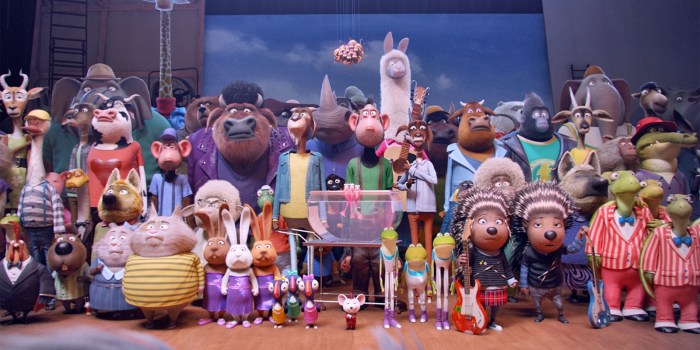
Buster Moon. Showman. Owner of the grandest theater in town. Suave businessman. Charmer. Koala Bear, in this land of anthropomorphic animals.

Also, broke.

After a string of misfires and bad shows, Buster Moon (voiced by an admirably passionate Matthew McConaughey) only has one more chance to save his theater. He’ll do anything necessary to pull off his wild, crazy, totally unique idea.

A singing competition! You aren’t sick of those yet, are you? I didn’t think I would be when I sat down to watch Sing. Okay, maybe a little. I stopped watching “American Idol” and “The Voice” long ago. But I’m a fan of Illumination Entertainment, the studio behind Despicable Me and this year’s earlier The Secret Life of Pets. The trailers looked cute, the cast looked promising, and I was sure a good studio like this one could elevate the concept.

Sing, in its defense, is heartfelt. As heartfelt as a movie that pushes every successful, money-making kids movie button it could press can be. The cast (a lot of them unrecognizable in their voice roles) especially put a lot of effort into it, and I have no doubt director Garth Jennings poured his heart into the film. It simply cannot escape one thing: it always stoops to the lowest common denominator.

When discussing pop music on the radio once, my mom told me that most songs talk about love and sex and romance because they are the things everyone has in common. Mass appeal.  A good artist can elevate those concepts. Bad artists just talk about them in unoriginal, common ways.

Sing is like its unoriginal soundtrack, full of the most over-used and basic songs you could possibly choose for its audience. It always chooses the least original way out. Need a gag for not really any reason? Fart joke. Need to make it obvious who is a girl and who is a boy in these animal animated movies? Sexualization of cartoon animals, check. Need to pack as many songs in for promotional appeal? Skim through that playlist like you’re David Ayer editing Suicide Squad. Need rational explanation for events? Don’t bother! It never reaches for anything higher, and never pushes itself to be funnier or nicer or more well animated or better in anything.

Sing is not the first movie to do this, of course. Some of my favorite animated movies have some of these problems. But this one especially disappoints, because I hoped this film would be better, and it includes all of these elements without much to redeem it.

That said, it isn’t devoid of funny moments. It has nice messages about working hard and enjoying being a performer because you love it, not for the glory or fame. If you take little kids to see it (and that’s about the only audience who will really love it, unless you’re raising young movie reviewers, in which case, congratulations! And they’ll probably be unimpressed too), they could learn some good things. Having a conversation afterwards about talent and doing things that scare you would be a good use of time.

“You know the great thing about hitting rock bottom?” Buster Moon asks his assistant, Miss Crawley (director Garth Jennings), during the film. He stands on a stage prop- a big crescent moon- and it ascends upwards. “The only place to go… is up!”

Sing however, never lifts off the ground

-Madeleine D