Top 50 Favorite Movies: (Part 1 of 2)

This is part one of a list of my top 50 favorite movies of all time (part two will come next week). The films are NOT in any numerical order because each film means something different to me, and their significance has changed as I have changed. This is under no pretense a “best movies of all time” list.

I judge these films on three criteria. 

  1. Quality of the filmmaking
  2. Relevance and message (social perspective, if it accomplishes what it sets out to do, and what I believe it adds to the world.)
  3. How much I like it (enjoyability factor, my viewing experience, personal significance, etc.)

These are all, of course, my opinion, and will change over time and as I see more great films. I hope you will share your favorite movies, and maybe want to check out a few of mine!

Harry Potter and the Order of the Phoenix

This is my favorite of the Harry Potter films because it turns the series from being about a boy at magic school to a story about a boy and his friends fighting fascism and systematic suppression of information! It explores Harry’s relationships with the various adult figures in his life as he is caught between their various ideologies and becomes more aware of the way they are each trying to use him for their personal agendas. 

Children of Men

Alfonso Cuaron’s best film stays with you, feeling both relevant and timeless, with evocative imagery and a call for empathy. 

Now You See Me 2: The Second Act

I’m not gonna lie- this is a terrible movie from just about every standpoint except the acting. But it is so ridiculous, over-the-top, and shameless that I can’t help but love it. 

Memento

An incredible screenplay, brilliant framework and a masterclass in detailed-oriented storytelling. Memento is one of Christopher Nolan’s best works. 

The Space Between Us

Three things keep this movie afloat:

  1. Absolute sincerity in the central young-adult romance
  2. A truly puzzling ethical dilemma the characters wrestle with
  3. Gary Oldman and his luscious locks hamming it up

The Emporer’s New Groove

The Emporer’s New Groove never fails to make me laugh. This animated, 100 jokes a minute comedy is perfected by delightful voiceover work from Patrick Warburton and Eartha Kitt as Kronk and Ezma.

A Christmas Story

A favorite of my family, A Christmas Story contains classic scene after classic scene that satirizes the American celebration of Christmas while also ultimately being a sweet ode to every family’s holiday eccentricities. 

The Three Amigos

This movie is about the importance of coming together as a community to fight injustice. It’s about living your life not as if it’s a dress rehearsal, but the real deal. It’s about facing your personal demons, which just may be, in the case of this movie, a big scary man named El Guapo. 

Eighth Grade

This may be the best modern film about pre-teens out there. Comedian Bo Burnham uses his characteristic wit and sharp observations to make something bittersweet and ultimately hopeful. The kids struggle, but they’ll be alright. 

The Florida Project

When it comes to films about poverty- particularly when they involve children- they are usually accused of either being too upbeat or being “poverty porn.” The first accusation can stem from a failure to recognize the humanity of people who are usually only acknowledged as political talking points. The second accusation can often be correct, especially if the filmmaker has no personal experience with poverty, but the accusation can also be made out of disgust and fear. Sean Baker’s The Florida Project, in my mind, is neither of these things. The story of a girl growing up in a budget hotel outside of Disney World is not precious, but also gives its characters moments of joy and beauty. It also showcases William Dafoe playing a real-life superhero.  

Despicable Me

I’m sorry Megamind fans, but this is the better of the animated villain-turns-good-guy movies. Steve Carrell charms as Gru, a lower-level supervillain who ends up adopting three little girls and becomes the super dad he never knew he could be. Yes, it’s hard to revisit this movie if you have minion-PTSD, but trust me, it holds up. 

Jonah: A Veggie Tales Movie

This was the first movie I remember seeing in theaters. The soundtrack is true art, the animation and voicework excellent, and, fun fact, because of this movie I begged my parents to name my younger sister Jonah. They didn’t.

Elf

Modern Christmas classic. You’d have to be a cotton-headed ninny muggins to dislike Elf

The Incredibles

Brad Bird’s film explores complicated family dynamics and the ethics of being extraordinary, all while being smart, hilarious, and exciting. 

The Hate U Give

Don’t despise this film for its youth. The Hate U Give, based on the young-adult novel by Angie Thomas is a nuanced and unflinching look at police violence, how it affects the family and friends of its victims and the discourse around such incidents. Amandla Stenberg here is a revelation. 

Joe vs The Volcano

This absurdist satire with Tom Hanks and Meg Ryan is criminally underrated. The two stars have great chemistry and plenty of ridiculous scenarios to act against in this subversive rom-com. 

The Tree of Life

You have to watch Tree of Life knowing two things. One: it’s not going to make much sense the first watch. Two: it’s a lyrical retelling of the biblical story of Job. Be patient and openminded, and let the beauty of Terrance Malik’s magnum opus sink in. 

It also has dinosaurs in it. 

AND Roger Ebert.com just named it the #1 film of the decade! 

West Side Story

When you’re a jet you’re a jet all the way!!!!!

The Muppet Christmas Carol

This is- objectively- the best A Christmas Carol adaptation. This is not up for debate. 

College Road Trip

This woefully overlooked comedy starring Raven-Symone and Martin Lawrence still makes me laugh no matter how many times I see it, mining comedic gold out of an overprotective father’s efforts to keep his college-bound daughter close to home. It also features Danny Osmond in a singing, John Candy in Planes, Trains, and Automobiles– esque role. 

The Godfather

I don’t think I need to explain why this film is great. It lives up to its hype. 

The Goonies

You can’t get more classic-adventure-movie than Goonies!

Night of the Hunter

L O V E  / H A T E on the knuckles. “Leaning on the Everlasting Arms.” This sinister film is a stylistic masterpiece and highly memorable. 

Dead Poet’s Society

“O Captain my Captain!” TEARS. 

The Dark Knight

The Dark Knight changed superhero movies forever, ushering in a dark age (both literally and metaphorically) with its more grounded aesthetic and political undertones. The movie is nonstop action and intrigue, driven by the iconic Joker performance by Heath Ledger. 
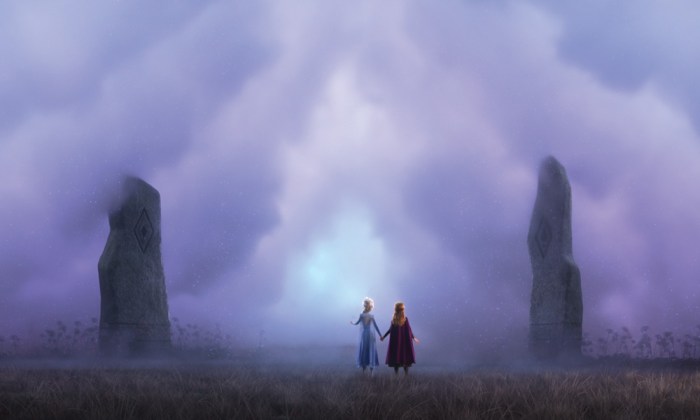
Taking It To Eleven: Frozen 2

frozen-2-9.jpg

*Major spoilers!

The biggest complaint I’ve heard about Frozen 2 is something along the lines of “Frozen didn’t need a sequel.” To which I say, does anything ever need a sequel? How do you even justify a fictional story continuing? No fictional story actually needs to be continued. Sure, we know why Frozen 2 actually exists: to make money. So do all sequels. The question is really, is the sequel a good film? 

I would also argue that, of all the animated movies out there that could benefit from a sequel, Frozen is one of the top. Frozen was a rush job from Disney- reworked at the last minute and plagued with production troubles from the beginning. The film is oddly paced, tonally inconsistent, and hints at darker themes but is stubbornly shallow in many regards, including its half-hearted jabs at Disney’s past that acts as meta-commentary. But, despite the chaos, there was enough gold there, enough sparks of inspiration, that it became a worldwide phenomenon (and one of the most financially successful films of all time). 

So Frozen 2 is a test: can Disney understand what parts of Frozen made it so popular, trim the fat, and get to the core? Can Frozen 2 build upon the first, or will it be a retread, with all the warts of the first? 

In my opinion, Frozen 2 is an excellent sequel. It builds perfectly upon the first. 

Frozen 2 figures out what people love about Frozen: the sister bond between Anna and Elsa, the music, the timeless-yet-progressive-but-not-too-daring script, the dark undertones of Elsa’s powers and how she is a mirror for whatever “differentness” you feel, and the primal urge to scream-sing as you pretend to blast ice from your hands. Frozen 2 takes all those things to an eleven. It has an epic quality that many animated films aren’t able to capture. It takes elements from horror and superhero and fantasy films and weaves them together through exciting visual and narrative choices that present a truly moving spiritual coming-of-age story of Anna and Elsa. 

The animation is stunning. Comparing this film to the first, it’s astonishing how sharp and clear the animation is after just six years. The music is also as compelling as the first, although because the whole soundtrack is more elevated and heightened, there is no one standout “Let it Go,” despite Disney marketing “Into the Unknown” as such (personally it’s “Show Yourself” that sends shivers down my spine each time I listen to it).

The shaky foundations laid for each character in the first film get expanded upon. Anna is given more substantive character traits than quirky and clumsy and is transformed into a believable leader. She makes several tough decisions and sacrifices in the film and multiple emotional moments. 

Kristoff is relegated to the sidelines, but he does get a great musical number. His storyline is primarily a comedic b-storyline about trying to propose to Anna, but under that is a rather touching lesson in learning how to be a more mature partner. He also says the two most romantic lines of the movie (and possible any Disney movie ever): “I’m here. What do you need?” and “My love is not fragile.” His storyline is a continuation of a theme from the first film: that true love isn’t instant; relationships, both the romantic and familial kind, take work. 

As for Elsa, she continues to represent all the weird and repressed older sisters out there. She gets all the grandiose moments, but those are balanced with exploration of her shy and reserved personality, traits which aren’t framed as something to get rid of. She is loved and accepted by the more spunky and extroverted Anna, and as long as Elsa continues growing and loving people, then it’s okay. 

Like its predecessor, Frozen 2 hints at much deeper themes and ideas but hesitates to commit to them. For example, after much fanfare, Elsa is not confirmed to be LGBTQ+. Also, this movie stresses that Anna and Elsa’s parents were kind and loving, and not the abusive ones Frozen sort of suggested they were. But overall, Frozen 2 follows through much more than Frozen, and in the words of Anna’s song, sometimes it’s enough for someone (or a studio) to just do the “Next Right Thing.”

The biggest example of this is that Frozen 2 is kinda about reparations. In this case, it’s about honoring a treaty made with the Northuldra people (an indigenous people group based on the real-life Sámi people in primarily Norway and Sweden). In the film, Anna and Elsa’s grandfather (king of Arendelle) made a deal with the Northuldra people, but then killed their leader and started a battle that ended up imprisoning the Northuldra and some Arendelle people in a forest. To make amends to the tribe and end their imprisonment, Anna has to break a dam, which will unleash enough water to destroy Arendelle. All of the people of Arendelle have been evacuated, but Anna still makes the decision to sacrifice the kingdom to make things right. While I am not familiar enough with the Sámi people to know how they have been treated historically, it’s hard to not draw similarities in this story with the current conversation in America about reparations and making amends for the centuries of genocide and disenfranchisement of Native Americans, African Americans, and other people groups. However, because Disney is a major corporation and not in the business of revolution, Elsa swoops in at the last minute and uses her powers to redirect the water, saving Arendelle. So, yay! We fixed colonialism and we didn’t have to sacrifice anything in order to implement reparations!

Despite the lack of consequences in this film, compared to Disney’s other film about Native Americans and white settlers, 1995’s Pocohantas, this is a big improvement. Frozen 2’s colonialism commentary doesn’t both-sides the argument like Pocohantas, which showed the settlers and the Native Americans as equally responsible for the destruction of the Native Americans. And Disney signed an actual treaty, promising respectful representation, with the Sami people for Frozen 2 and hired Sami people ascultural consultants. Yet, Frozen 2 does, like Pocohantas, frame one man as the instigator of violence and the embodiment of racism and hatred. If that one guy hadn’t been so fearful of the people he didn’t understand, then everything would have worked out! Luckily, though, two people can fix this one guy’s actions years later. 

But while those are all things to consider, I still appreciate the effort and zeal of the film, even if it only goes halfway. It’s a positive movement for the Disney company and gives families plenty to talk about, and can even be integrated into conversations about Thanksgiving and the holiday’s origins. 

Frozen 2 exceeded all of my expectations and I think it sets a new standard, not just for sequels, but for Disney animation. Now the question is: is the world ready for a Frozen 3?

Seven Great Thanksgiving Movies (That Aren’t Specifically About Thanksgiving)

Screen Shot 2019-11-21 at 3.43.35 PM.png

Many of us this Thanksgiving will be spending time with family and friends, and with that often comes a time where you need to pop in a movie. So, I’ve curated a list of Thanksgiving movies that could do the trick!

But there’s a catch: none of these movies are about Thanksgiving, take place at Thanksgiving, or are in any way related to the holiday. Instead, I think they embody the themes of Thanksgiving, including thankfulness, family, rest in the midst of busyness, cross-cultural communication and restoration. These seven films are listed in no particular order. 

(P.S: as always, before gathering the family around any of these movies, be sure to check the rating and content of these films to determine if they are appropriate for your audience) 

1. Horton Hears a Who! (2008)

This animated adaptation of Dr. Seuss’s beloved work is driven by the combined super-sonic energy of Jim Carey as the voice of Horton and Steve Carell as the mayor of Who-ville, along with clever visual gags and storytelling. The film is all about Horton caring and advocating for the dignity and protection of the Whos, and a sweet subplot about the Mayor coming to understand his son for who he is- and not who he wants him to be- makes the film a lesson in parental love, community, and tolerance, with the ever-important message that a person’s a person, no matter how small. 

2. The Space Between Us (2017)

This earnest teen romance is about Gardner (Asa Butterfield), the son of an astronaut, who is born on Mars and comes down to earth to meet his long-time penpal Tulsa (Britt Robertson). Tulsa and Gardner go on the run from NASA, pursued by Dr. Shepherd (a delightfully hammy Gary Oldman). Along the way, Gardner experiences life on Earth and shows a jaded Tulsa the beauty around her. 

On Earth, Gardner asks everyone he meets, “What is your favorite thing about Earth?” He helps people be grateful and realize how being alive is a gift unto itself. It’s an expression and exercise in thankfulness. Another driving storyline is Gardner trying to find his father, with the help of Tulsa, who is in the foster system herself and has never had a real family of her own. The revelation of Gardner’s father’s identity is, well, predictable, but like all of this movie, it’s so charming and sincere that it might make you hug your family members a little tighter this Thanksgiving.

3. Cloudy with a Chance of Meatballs (2009)

Another animated film based on a beloved children’s book, Cloudy with a Chance of Meatball tells the story of Flint Lockwood (Bill Hader) an oddball inventor/scientist who builds the machine that turns water into food, making food rain over the town. 

Most obviously, the food on display here is as scrumptious as your Thanksgiving spread, (although the film does take a dark turn into a warning against overconsumption), but there are other connections to Thanksgiving beyond the turkey. This film also focuses on the relationship between a father and son, and the importance of looking beyond each other’s eccentricities. It also shows the importance of taking responsibility for your actions and getting help from others, and that everyone has something to offer. 

4. Christopher Robin (2018)

Ewan McGregor stars as a grown-up Christopher Robin, now a jaded, workaholic father who finds himself playing again with his childhood friends like Winnie the Pooh, Tigger, and Piglet. The “dad you work too hard” narrative isn’t a new one by any means, but Christopher Robin is one of the best of the genre. Bringing Winnie the Pooh and company to life could easily veer into uncanny-valley territory, but Christopher Robin doesn’t, through marvelous special effects and some very game actors. Here are lessons about the importance of resting, not putting your identity in your work, and the value of childlike wonder. 

5. Little Miss Sunshine* (2006)

No movie quite puts the fun in dysfunction like Little Miss Sunshine! The family dramedy is a classic road trip film that pulls great performances out of its ensemble cast, including Steve Carrell, Abigail Breslin, and Paul Dano. Whether you identify with the Hoover clan or not, you can probably relate to the ups and downs of being with family, and the ultimate joy of strong family bonds. 

6. Coco** (2017)

Pixar’s film about a young boy traveling through the Land of the Dead during Dia de los Muertos is a gorgeous animated treat. While Dia de los Muertos isn’t the Mexican version of Halloween or Thanksgiving, it does touch on some of the same ideas as these holidays do. 

I said in my review of Coco that the film “acknowledges death, believes that there is an afterlife, teaches children that death isn’t something to be afraid of, and celebrates family.” Thanksgiving is a time often spent with family, and as such, it will be, for many of us, the first time without a certain family member, those who have passed away. Or maybe we are spending it alone, or are spending it with unsafe/toxic family members. Coco explores all of these dynamics and can be a comfort as you navigate this holiday and the rest of the holiday season. 

7. The Unknown Girl (2017)

This is one of my all-time favorite movies so I kinda just wanted to put it on the list so that more people will be aware of it, but it really does have Thanksgiving themes! After she refuses to open the door to a woman one night, Dr. Jenny Davins (a mesmerizing Adèle Haenel) learns the woman was murdered soon after. Dr. Davins, feeling guilty over not helping the woman, goes on a quest to learn the woman’s name and what happened to her, becoming unrelenting in the face of those who want to keep her silent. 

The movie is all about the question of our responsibility to strangers. How much of the suffering of others do we really need to care about? When tragedy hits a community, what should be the community’s response? How much should we put ourselves on the line to cross cultural boundaries and thresholds? What does it mean, practically, to believe in the sanctity of life and give someone dignity posthumously? I believe Thanksgiving is a time to survey our communities and their culture, and ask these kinds of questions. 

*Thanks to Scott Morris for the suggestion!
**Thanks to Kaitlin Glasgow for the suggestion!

One Day I Hope To Pay For This Movie With a $20 Bill With Her Face On It: Harriet

191103-harriet-cs-1059a_68d3f51e565202078330dcac50d9cb4c.fit-760w.jpg

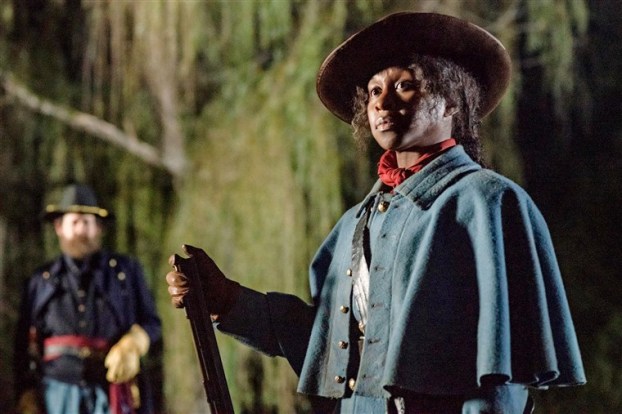
Harriet is the first film about the famous underground railroad conductor, Harriet Tubman. Directed by Kasi Lemmons, Harriet will finally break ground on an overdue story. While this would usually give the film an edge, it has been plagued with various criticisms since its announcement, which has hampered public excitement. I think several of the critiques are understandable and worth considering, and I would recommend reading responses by black critics for more insight. However, for this review, there wasn’t any criticism that I agreed with that pertains to the film directly. 

Harriet is, in many ways, a by-the-numbers biopic. Sometimes Oscar-bait speeches and historical reverence threaten to bring it down. However, those moments never bring down the film too much. There are a couple of reasons why I think Harriet is able to rise above being a subpar biopic into a great film.

  1. There simply aren’t a lot of biopics of black women.
  2. There is a strong emphasis on family, and it’s genuinely touching to see Harriet’s family play such a key role here. It helps humanize her and balance out the more superhero-esque feel the movie tries to go for. 
  3. Harriet’s Christian faith is leaned into. There are moments of this film that remind me of Luc Besson’s The Messenger: The Story of Joan of Arc. Harriet is not nearly as stylized or flat-out weird as that film (although explicit connects between Harriet and Joan of Arc are made) but it does take Harriet’s religion seriously. One of the reasons I love The Messenger is because when I saw it, I realized it was the first time I had seen a movie focus on, and take seriously, a woman’s religious faith. 
  4. There are several stylistic choices (including the depictions of her visions) that elevate the film and make it feel worthy of the big screen. 
  5. The whole cast is wonderful. Lesley Odom Jr. and Janelle Monae are excellent and charismatic, and director Kasi Lemmon’s son Henry Hunter Hall, in particular, is a surprise. He has a cool “look” and is a scene-stealer. Joe Alwyn is fine as the (mostly fictitious) son of Harriet’s owner. In all honesty, though, I spent most of his screen time thinking about how strange it is that he’s dating Taylor Swift, and that his southern accent is pretty good for a Brit
  6. And speaking of Brits, Cynthia Erivo is our titular hero, and she’s incredible. There are two aspects to her performance that stuck out in particular. First is Erivo’s acting in the scenes where Harriet arrives in Philadelphia and has to learn how to be free. I had never considered this- acting free after a lifetime of enslavement- as a difficulty freed African Americans had to face, but Erivo is able to wordlessly communicate Harriet navigating through this new world through observation and imitation of those around her. And second, Erivo conveys a deep inner life of Harriet that we aren’t privy to. I always felt like Harriet, no matter how quiet she was being, had an incredibly complex mind and a thousand thoughts going at any given moment. 

Harriet is American History, biopic, slavery, and feminist storytelling 101. It’s a primer that will hopefully be an access point for many people. I don’t mean this to be derogatory in the least; this means I want another movie about Harriet Tubman, and other movies about all sorts of black women and other heroes (or villains) of history. 

After all, Harriet Tubman’s last words were, “I go to prepare a place for you.” It seems in that spirit that Harriet will hopefully help prepare a place for even more stories like it, stories that can go even further, higher, and deeper. 

As Filling As A Twinkie: Zombieland: Double Tap

Screen Shot 2019-10-25 at 11.08.08 AM.png

Zombieland: Double Tap, the sequel to 2009’s Zombieland, takes place ten years after the events of the first movie. As a voiceover from Columbus tells us, the crew- Tallahassee (Woody Harrelson), Columbus (Jesse Eisenberg), Wichita (Emma Stone), and Little Rock (Abigail Breslin)- have become a close-knit family and expert zombie killers. But when Little Rock runs off and new, more dangerous zombie types emerge, Wichita, Tallahassee, and Columbus go on a road trip to rescue Little Rock and find a new safe haven. 

The most important thing to know about Double Tap is that it is remarkably similar to Zombieland, which is a feat for two movies that have a ten-year difference. Both are goofy, poorly paced, self-indulgent, charming in small doses, and have inconsistent characters. If you liked the first one, you’ll like this one, because it feels like such a natural extension of the first, from the atmosphere, internal logic, comedy style, and gross-out violence, to the resolute refusal to use the zombies and apocalyptic setting for any kind of social commentary. It’s a straightforward movie about killing zombies. That’s what you get. 

Propelling this straightforward story is the exceptional cast, which continues to be the most compelling part of these movies. The only thing that would help would be if their characters were written with any consistency, but the movie gets to cheat by relying on the actor’s personas and outside affiliations. For example, Harrelson and Eisenburg have great chemistry, but the relationship dynamic between Tallahassee and Columbus fluctuates wildly throughout the two movies. However, the actors have a similar, but more concrete, relationship dynamic between their characters in the Now You See Me movies, and so my love for those movies and my liking of their dynamic there just carries over. Similar things could be said about Emma Stone and Rosario Dawson’s characters, which both borrow heavily from their respective actor’s typecasts. 

Abigail Breslin is, unfortunately, the weakest link. The movie doesn’t know what to do with her, so she ends up being a plot device more than a person. This was disappointing, as she is a great actress and I have a personal fondness for her (I looked a lot like her when I was 9 or 10, and my film preferences and personal aspirations were heavily shaped by her roles in Nim’s Island and Kit Kittredge: An American Girl. Those movies rock). 

After I saw Double Tap, I asked the group I was with if this movie was for or against the second amendment, as it talks a lot about guns and much of the plot focused on when our heroes are armed or disarmed. While our heroes love guns, the climax cleverly removes them from the characters and forces them to defeat the zombie in another way (this makes the climax a lot better than that of the first Zombieland, and is also similar to the ending of The Three Amigos). After this philosophizing, my friends looked at me blankly, and then one, with insight I can only aspire too, said: “I think the zombies change things.” And she was right, and I realized the movie probably didn’t put that much thought into it. 

Double Tap doesn’t try to reinvent the wheel or build upon the first one. And while I generally prefer more ambition in movies and more effort, I saw this after a rough week and it was exactly what I needed. It truly is escapism with the flimsiest excuse for existing, and that, in moderation, is perfectly okay. Just like this film. 

-Madeleine D.

We Live in a Society: Joker

ca-times.brightspotcdn.jpg

*Spoilers below

Why is Joker so divisive?

The new origin movie about Batman’s greatest villain has been the center of numerous controversies, and most occurring before the film was even released. 

I think more than anything, Joker and several other recent flicks (Captain Marvel, Star Wars: The Last Jedi, Green Book, to name a few) prove that movies are still relevant in our culture because they are avenues for people to talk about deeper issues. Movies are mirrors, and people see different things in them. Joker sure seemed to want to be taken seriously as it marketed itself as a gritty, realistic, and edgy film.  

To help explain the wildly different reactions I’ve seen from people about Joker, I’ve come up with three main ways people are interpreting the film. These are generalizations, sure, but overall I think whichever interpretation you have of Joker will predict your reaction to it, and these may help you understand why someone else can see the exact same film and feel completely different than you. 

1. The world sucks. I hate my parents. The Man is out to get you. Life is suffering and pain. We need to take to the streets or something and get rid of all authority so we can all live free. People don’t care about you. Knock know, who’s there? Boom! Gunshot! You’re dead. 

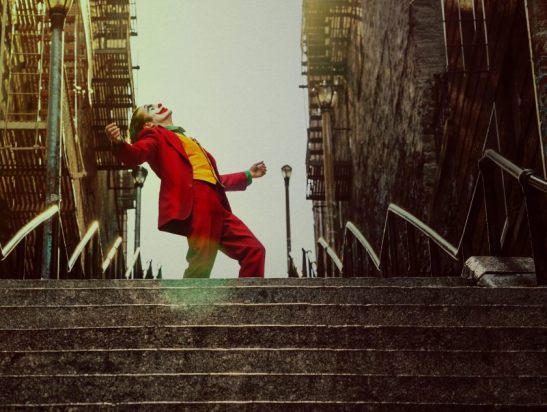
Joker plays like the graffitied poetry under the desk of a 13-year-old edgelord who has become aware enough of the world to know there is suffering but is not mature enough to know how to engage with it or others. The film is self-absorbed and pretentious, wanting to be serious but ending up hollow and derivative. It’s dark but not deep. Director Todd Phillips and star Joaquin Phoenix have stated disdain for comic book movies, but what they have made is completely dependent on comic book movies, both for artistic precedent and the film’s box office. It is not as shocking or interesting as many of its peers. Some people have feared that Joker would provide rationale for violence, but the film is so half-baked that I don’t think that is much of a concern. We shouldn’t be giving Joker this much attention- it is embarrassingly shameless in its desire to provoke without actually questioning or confronting anything.  

The film shouldn’t even exist on principle. Joker is a character whose menace comes from not having a clear background or motivation. By rationalizing everything about him through an origin story, this core component of the character is destroyed. Also, this is the third feature-film adaptation of the Joker we’ve had in ten years, and yet it’s still in question if women or people of color can get their own movies. It’s exhausting that we can’t share the spotlight with other characters and properties. 


2. Joker is a much-needed wake-up call about our country’s mental health crisis and the marginalized in our society. We need to take care of our unseen citizens and be kinder to everyone we meet, or we can only be held responsible when things devolve. 

Todd Phillips uses comic book tropes and the genre’s current popularity to tell a story many people wouldn’t otherwise see or care about. Despite working within the studio system, this film really does speak truth to power. 

The film is set in the 1980s, but it’s extremely relevant to today. With the likes of President Trump, Jeff Bezos, and Elon Musk, the top 1% have too much power and influence our day to day lives, and it’s clear they don’t care about us. This goes for everyone from billionaires like Thomas Wayne to the talk show hosts who make fun of regular people who accidentally become viral sensations, usually for humiliating purposes. 

Joker shines a light on how mental health resources are being taken from people, how social services are underfunded, and the current trash problem in New York Ci- I mean Gotham. The human condition is explored unflinchingly, and by the end of it, it’s easy to see how this world could make anyone go mad, especially someone who is as vulnerable as Arthur/Joker. 

The plotline about Arthur maybe being Thomas Wayne’s son and therefore Bruce/Batman’s half-brother adds so much to their dynamic and cements this idea of them being two sides of the same coin. The only difference between them is their environment. Bruce grew up wealthy and privileged. Arthur didn’t, and like he points out in the film, that’s the reason that if he was lying dead in the streets, people would just step over him. It’s only when you’re wealthy and powerful do people care. 

The soundtrack slaps, Joaquin Phoenix is truly phenomenal here, and it’s exciting to see the DCEU (DC Extended Universe) continue to make films with an emphasis on auteur directors and their visions. Joker delivers on all fronts and will surely bring new blood into the superhero- or should I say supervillain?- genre. 


3. The most troubling thing about Joker is that it makes its titular character out to be the hero of the 99%, which, dear viewer, is you. In the eyes of the film you are either someone who has been screwed by the system and is righteously angry against it, or you are someone who is so led by pure aggression and hatred that you commit acts of violence and find a clown-faced murderer to be the symbol of your cause. 

The final protest scene in Joker, which is directly instigated by Arthur’s actions,  borrows imagery from various real-world protests, from the current ones in Hong Kong to the Black Lives Matter movement. In fact, the scene where Joker is laid on the police car reminded me of Starr’s climactic speech on top of a car in last year’s criminally underrated The Hate U Give. But what does this mean?

Yes, as Joker insists, he’s not political. He’s not the reason people are angry. But his actions are the tipping point. When protestors lay him, crucifixion style, on the police car, he becomes the symbol of the protests. 

If the protests are justified because people have been mistreated, then does Joker becomes absolved of all personal responsibility because he too has been mistreated and is simply calling out his oppressors? Is he some sort of folk hero of the marginalized? Is there a point where society can push you and mistreat you so much that it is to blame for your actions? 

But if this Joker is the truly monstrous Joker from Batman lore, then how do you feel that Todd Phillips aligns you, the 99%, with the Joker? That your protests, what you think is righteous anger, is really made of the same base, primal, chaotic urges that Joker acts upon? You are so easily manipulated. You are sheep. 

Perhaps most troubling of all is that Joker shows all the ways society fails people without offering any solutions or hope. 

Video essayist Lindsay Ellis points out in her piece about the 2005 Rent movie adaptation that, “A light, user-friendly sort of anarchy does not work in a narrative about the AIDS crisis because there is nothing noble about extolling the virtues of quietly giving in to your disease when there is a system right there that can help… but you reject it because f*** the man, I’m not a part of your system!… It reinforces a worldview in which the only way to rebel against a system is to reject it…It gives you a sense of power, in a world that makes you feel powerless. But in reality, the only thing it fosters is actual powerlessness. Because in rejecting the system, you are not only failing to tear it down, but you are forfeiting any voice within it” (42:44 – 43:54). 

This is exactly what Arthur/Joker is doing. At the beginning of the film, Arthur is trying to be a good person, even when it is difficult. He takes his medicine for his various illnesses that aren’t named (this decision is questionable in itself but that’s another discussion). But because of the events of this film he gives up and embraces the villain the world has made him be (in light of everything else that is revealed about his past, the events of the film don’t seem dramatic enough on their own to spiral him further down, but oh well). 

He stops trying to change the system or hold it accountable and instead gives into his psychosis, and advocates anarchy. And while it may not make him more powerless, as he is a fictional villian, it makes an impressionable viewer powerless. 

For a film that tries to diagnose society and rage against it, it ends up looking a lot like the society it critiques- passive, wallowing, angry, violent, and without any solution. Nihilism may feel rebellious and exciting, but it isn’t compelling. 

-Madeleine D. 

*A special thank you to my friend Shea, who has been my movie-going-buddy for years. Her thoughts are present throughout this blog, but especially here. Thanks for taking an hour-long walk with me after seeing this film to let me talk it out!

I Kind of Believe In: Yesterday

yesterday-movie-700x500.jpg

Caution: spoilers

Yesterday is based on this intriguing premise: What if the whole world forgot about the Beatles, except for one guy? Like most movies with an intriguing premise, the challenge becomes making the premise stretch the length of a feature film and have something to say besides, “Isn’t this premise cool?” 

The final product is something that has, outside of its premise, three things going for it, and three major problems. 

The Good:

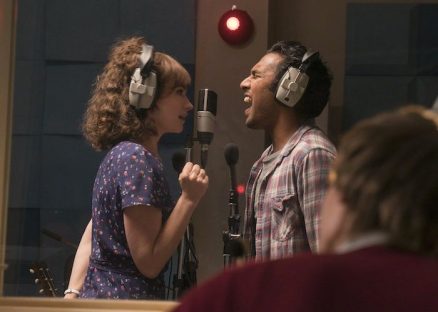
1. Winning performances. Himesh Patel as Jack and Lily James as Ellie are both charming in their roles and have the chemistry to sell their romance. The supporting cast is quirky and adds to the hyper-reality of the film. Even Ed Sheeran, I have decided after much thought, does a good job at portraying the worst version of Ed Sheeran. 

2. There is occasionally great directing from Danny Boyle. A few sequences have a perfect balance of humor and heart and creative cinematography. And this is more to the credit of the screenplay then the director, but the film goes out of its way to give Jack a well-rounded, fleshed out adult life that feels more substantial than most protagonists get. In other words, I believe that Jack has a real job he goes to and friends he has long histories with and neighbors he sees on the regular. It goes a great distance in making him likable and making the world of the story feel familiar, even when it strays into magical-realism. 

3. The Beatles’ music is great. It’s hard to mess that up. 

The Bad:

1. That said, the film kinda messes it up. Not the music itself, but everything else that was significant about the Beatles. By focusing solely on the music and not the context of how and when the music was made, or the lives of the men who made it, the film never comes to a clear consensus on why the Beatles are legendary. 

The Beatles made history because they interacted with history. They were controversial and activists and innovators. Some people argue that art isn’t inherently political, and good music should be timeless. Perhaps that is true for some musicians, but it’s not for the Beatles. So yes, while the movie is right in that music brings us together, the narrative surrounding that music does just as much work in bringing people together (or driving them apart). 

2. The commentary on the music business is broad and outdated. The comedy goes from witty satire to zany comedy in seconds, and the inconsistency doesn’t work, ultimately not saying anything of substance. Kate McKinnon gets a few good zingers in as a music producer, but even she can’t save the underbaked sell-out side plot. 

3. The love story is cute but weak. Ellie is a perfect example of a very real phenomenon where (typically) a woman becomes a guy’s girlfriend or wife in all the ways except the title, and he benefits from her love and affection (and service) without committing to her in return or giving anything up. She waits for him to define the relationship and move forward, but he never does because why should he? He can just keep her in perpetual relationship limbo. 

Ideally, Ellie is a character that women in a similar situation could watch and say, “wow, I’m in a relationship that is likewise very one-sided and I should treat myself with more respect and expect more from him.” But I don’t see this happening. Why? Because there aren’t any consequences for Jack for treating Ellie this way. After he realizes the errors of his way (which only comes after she goes through a lot of pain to finally confront him about it) he announces his love for her in a big, grand, public gesture that puts her on the spot (which you should never do without permission). She accepts it, and so he doesn’t have to do any work of rebuilding trust. In the end, he gets everything he wanted, including a relationship with her that is built off of years of her following him around, catering to his every need, being constantly-available emotional support, being his biggest fan, and waiting for him to make a move. Her character is not made for women to relate to, because she is framed solely through the male gaze. She’s the perfect girlfriend, a prize for Jack to finally accept after he’s done one good deed (tell the world he was lying about the Beatles). 

At one point in the film, Kate McKinnon’s music producer character says of a song: “I hated it but wasn’t interested enough to listen to it again to find out why.” That’s brutal. And it’s kinda true of this movie. I didn’t hate Yesterday, not by a long shot. But Yesterday loves the Beatles and romantic relationships without knowing why, and until it goes back and finds out, there’s not much there, and it’s not interesting enough for me to revisit. 


Documentary Films to Create Cinematic Universe

Screen Shot 2019-09-21 at 7.43.38 PM.png

New York City, NY- A press release by Focus Features announces that the film distribution company will be partnering with multiple acclaimed documentary filmmakers to create a new cinematic universe. 

“Between February of 2020 and June of 2024, we’ll be in Part One of our six-part cinematic universe roll-out,” the press release said. “Each of the twelve documentaries that will be released in this time will have a larger storyline that tells a sweeping, yet intimate, story about mankind.”

Won’t You Be My Neighbor? and 20 Feet From Stardom director Morgan Neville told reporters, “All future documentaries from Focus Features will take place in the same cinematic universe, with crossover from different characters in each film.” Neville is reportedly going to direct the first film that will kick off the cinematic universe. 

Scott Hamilton Kennedy, best known for his Oscar-nominated documentary feature The Garden told reporters, “Cinematic universes are the newest thing. They’ve been a gamechanger, and we want to get on board.” Kennedy is another one of the first directors to contribute to the cinematic universe. His documentary, Ramsey, about the life and career of TV personality and 16-Michelin Star chef and restauranteur Chef Gordon Ramsey, will be released in August 2020 as the third installment.

“Part of my role is not only to tell a story that can stand on its own, but also weave together the previous two films and then set up the next storyline,” he explained. “The film coming after mine [the fourth installment in the cinematic universe] is a documentary about Sojourner Truth. It’s going to be told using old letters from her and some animation, really cutting edge stuff. Since they are a part of the same cinematic universe, though, we want Sojourner to make an appearance in my Gordon Ramsey documentary, to tease the next film and to give the fans something they’ve always wanted.”

When asked if seeing a CGI replica of Sojourner Truth be a cameo as a customer in one of Ramsey’s restaurant was something audiences have, in fact, “always wanted,” Kennedy said yes. “There’s going to be an in-universe explanation for why these two characters are interacting,” he added. “I can’t give too much away, but there is an organization that is bringing all of these figures together.”

“What is the point of the documentary cinematic universe?” Focus Features chairman Peter Kujawski wrote in a statement. “The point is to get audiences, who traditionally have overlooked documentaries, to give the form another chance. Watching a documentary can be really exciting when you realize it’s telling a larger story.”

The first film of the cinematic universe, Mammoth: Discovered, about the history of woolly mammoths, directed by Luc Jacquet (March of the Penguins) will be released on February 7th, 2020. It is rumored that the woolly mammoths in the film will introduce a secret time-traveling organization into the cinematic universe, which will be apart of the overarching storyline. 

The cinematic universe has no official title yet, but has been running under the unofficial name the “DCEU” (documentary cinematic expanded universe). 


[Editorial Note: This post is satire, and is thus fake, and exists basically to make you laugh]

The Horror of Following up a Massive Sucess: IT Chapter Two

5d768e9a2e22af77035688f7-750-454.jpg

The first IT movie is the highest-grossing R-rated horror film with $700.4 million at the worldwide box office. Based on Stephen King’s 1986 novel, the movie became a critical and commercial success. The search for an adult cast to play the main characters- aka “the Losers”- was highly publicized and scrutinized. With a cast evenly divided between marquee stars and unknowns, IT Chapter Two has a lot riding on its shoulders. 

Did it succeed in bringing this grand epic to a satisfying conclusion? 

Yes and no. 

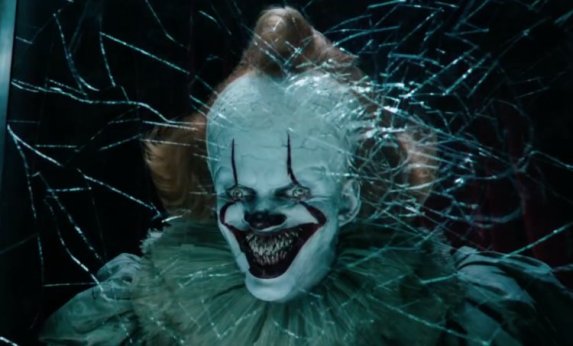
IT Chapter Two has more scares (in part because of its nearly three-hour running time) but they’re different than the first. For one, there is less Pennywise, and instead, IT takes different forms. The different forms are usually grotesque, vaguely-human forms that do gross things. The body horror element freaked me out, but some of the people I went with found it funny, so it just depends on your sense of humor. They’re creative, but not as psychologically disturbing as the first film. 

Besides the scares, there’s not much else that this second movie does that’s different than the first. When it comes to the character arcs, plot, and tone of the movie, everything is just about the same. In the first film, we meet the characters individually, then the team comes together, they split up for individual sequences where IT reveal more about their characters, and then they come together in the sewers to try to kill Pennywise. That’s exactly what happens in this film too. Add in all the flashbacks and callbacks to the first film, and this second feels like it’s just an expensive remake with an older cast. 

Readers of the book will no doubt be disappointed. The book spends time establishing the Losers in their adult lives, something the film doesn’t have time to do well. The book also develops the theme of the adult Losers losing their memories and having to re-learn about Derry and Pennywise (the film only tangentially explores this theme). By doing this, the reader understands how the Loser’s childhood traumas influenced their adult selves and how that changes their relationship to IT and to each other. To not have that in this second film creates a barrier between the audience and characters, and weakens the message the filmmakers are going for. 

Leah Schnelback writes in her excellent review of the film for Tor, “Your real life can turn into a horror story any time—the check didn’t clear, the doctor needs to speak with you in person… You remember again that your carefully constructed life is an illusion that can crack apart without warning. When we go to a horror movie we pay to have this experience…Part of the contract is that the nightmare moments might slip the bounds of reality—that we’ll become children again, in thrall to a fairy tale full of monsters and things that can’t possibly happen. This is what IT is about… The opening half-hour of the film is almost completely taken up with human monsters—psychotic homophobes, abusive husbands… This group of adults who have all experienced real-life horrors have to learn to be kids again so they can defeat a mythological monster.”

That opening half-hour is not enough time to explore these adult lives, and that blunder plagues the entire film. The “real-life horrors” feel inconsequential because we barely get to see them before we get to Pennywise.

It sure doesn’t help also that while the adult cast is incredibly well-matched with their teenage counterparts in terms of looks and mannerisms, they lack the same chemistry as the younger group. This is in part because they don’t spend that much time together in the movie. The plot keeps separating them, making the scenes when they are together and are talking about their close bond ring false. 

Also ringing false is the film’s explanations of Pennywise. Instead of letting him be terrifying because he’s mysterious and unknowable, the film tries to explain the mythology behind Pennywise and the demon-alien thing it comes from, the IT. It makes the plot more convoluted and the film fails to justify why we even need to understand his origins in the first place. In some cases it’s okay not to explain “the why”.  

~

IT Chapter Two starts out with a voiceover from Mike talking about how memory is selective and we are often just as much the things we make ourselves forget as we are the things we choose to remember. The whole film ruminates on the idea of memory, with the adult Losers spending the majority of the running time trying to reconnect and remember their childhood selves. 

There’s something interesting here about how it takes courage to confront the memories we’d rather forget, and how we aren’t fully ourselves until we can see all of ourselves. It’s only then when we can truly connect to other people. But because we don’t get a sense of how the Losers forgot their childhoods in the first place, or what they do with themselves after they kill Pennywise for good, and they spend little time connecting to each other in meaningful ways, this entire theme falls flat. Instead, we just get some new scares and scenes meant to remind us of the first movie. There’s very little substance. 

It seems like the knowledge that the first film was a success is what has kept this film from succeeding. The unassuming innocence of the first is lost, and this second entry feels like it’s trying too hard and won’t stray far enough to be unique. 

Yet, I have to admit, I had a great time watching it. It was the perfect escapist adrenaline kick for me with scares that were scary but not too scary, and not disturbing enough to stick with me late at night. But that also means nothing from the film is going to stick with me, and that’s a shame.

-Madeleine D.

Interview with Filmmaker Crystal Kayiza

Image result for crysta kayiza promotional photos


From July 11-15, the Circle Cinema, Tulsa’s independent theater and gallery, hosted its second annual film festival to celebrate 91 years. The festival featured a large variety of films, but the best (and admittedly only) one I saw was the film Edgecombe, with a Q&A afterward with director Crystal Kayiza.

Crystal screened Edgecombe at the Sundance Film Festival earlier this year and participated as a Sundance fellow. Crystal started her filmmaking journey as a student at Jenks High School. It was there she got her first award, a regional professional Heartland Emmy in 2012 for her short documentary All That Remains, which is about Boley, Oklahoma, one of the last all-black towns in America. Since then she has been interested in community portraits that focus on, in her words, “the numerous ways black folks overcome across generations.”

Edgecombe is the latest of her work in this trend. The fifteen-minute film follows Shaka Jackson, Doris Stith, and Deacon William Joyner, three residents of Tarboro, North Carolina, in Edgecombe County. Jackson is on probation and is working at an Applebee’s, and the story weaves his and Stith and Joyner’s individual stories together to show how Edgecombe and its people continue to navigate both systematic and personal struggle.

Crystal learned of Edgecombe while working at the American Civil Liberties Union where she focused on the criminalization of poverty. The ACLU helped her figure out exactly what stories she was drawn to. “It was like a two-year extension of my education,” Crystal says of the work. “So when I left to start filmmaking full time I felt a lot of confidence in my own voice as a filmmaker.”

Crystal was actually my camp liaison when I attended Oklahoma Summer Arts Institute at Quartz Mountain a few summers ago for film, and we both studied filmmaking under our teacher Clifton Raphael, who served as the moderator at the Q&A following Edgecombe‘s screening and guest reviewed on this blog a few weeks ago.

When she came to Tulsa to premiere her film Crystal generiously took time to be interviewed by me about the piece. This is a highly condensed version of our conversation, but I think even in this small snippet it is clear how thoughtful Crystal is about her films, the impact she makes both in front of the camera and behind it, and that she is an exciting new voice in filmmaking. If you’ve ever been curious about documentary filmmaking, Crystal has some unique insights.

You aren’t from North Carolina or Edgecombe. How did being an outsider affect your perspective as you made the film? 

I think one thing that’s important is being really, really aware and intentional about how you take up space and also being super-open to learning and not making assumptions about what your own work should look like. I was introduced to [Edgecombe County] through the issues I was working on at the ACLU. That was my entry point, but just because it was my entry point doesn’t mean it’s necessarily how I should be grounded in the space, right? Talking to Shaka, Ms. Stith, and Deacon Joyner and having their vision about their world inform the end product is part of what really interests me about nonfiction work.

What is it like to become close to the three main characters and then have to move on?

I think there’s this strange relationship built between filmmakers and people in projects. You build this relationship that is so fragile in the sense that it can be super-temporary or lead to really long-term communication.

When I was in the edit, I was very careful to be in communication with Shaka, Ms. Doris and Deacon Joyner and made sure to send them the film before it was screened. The language that is used around describing them is something I’m also very sensitive too and I’ve had situations where I’ve felt that their characters and identities weren’t being portrayed in a way that I think is inclusive or equitable to the story, so also protecting them. There’s a trust and respect that’s built, and part of maintaining that isn’t just during production.

Tell me about your choice to often use close-ups on your characters’ faces.

During the filming, there was a part where I was in a church where a lot of the women worshipping there looked back at the camera. I’m very interested in breaking the gaze between the audience and the people in the film… breaking the myth that there’s no power dynamic between myself as the director and the people that are in front of the camera. I think portraits can be a powerful way to acknowledge that there is a gaze, but it can be reciprocated.

What inspires you outside of filmmaking?

Music for sure. Reading… I think it’s really important to engage with other media, regardless of if it’s something you’re passionate about or pursuing yourself. I just find that most of my leisure time is spent thinking about film. Oh! And yeah, eating. I love food, I’m a huge foodie. When I was in Mississippi me and the Director of Photography would go to all the historic places and ask for [food] recommendations. It’s an important part of production. You can’t undervalue the importance of having a good meal and learning about a space based on what people eat.

What do you want Tulsans who see Edgecombe at the Circle Cinema Film Festival to take away?

The way communities operate are very intergenerational, and are reinventions of previous lives and spaces, and I think that very much exists in Tulsa. Examining the histories that we do and do not talk about is something that is really important to me and something I try to explore in the film. So take a moment to respect and acknowledge [Edgecombe], but then look home and see what histories and spaces we devalue and which ones we uphold.

I’m really excited to show it at Circle. The first time I ever watched indie film was at Circle Cinema, so it’s really exciting to come back home and screen it. Out of all the screenings I’ve done so far it’s probably going to be one of my favorite experiences because showing it in spaces that have really informed your own work is always a really cool experience.

-Madeleine D.


P.S,

For those living in Tulsa who are interested in the arts and culture scene, I highly recommend Time + Temp, a monthly email newsletter edited by Liz Blood, former editor of the Tulsa Voice and a Tulsa Arts Fellow. The newsletter typically includes an interview with local artists like Crystal, stories about new sightseeing attraction, two restaurant/food recommendations, and a couple other special surprises each month. I had the opportunity to work behind-the-scenes on the newsletter this summer and saw just how much attention and passion is put into it. You can expect it in your inbox at the beginning of each month, always free. I’ve really enjoyed reading it, and I think you might too. Subscribe below:

https://hi-in.facebook.com/RootTulsa/posts/523108884767090