When You’re Too in Love With Your Own Idea: Suicide Squad

Warning: Spoilers Below
suicide-squad

You had one job, Suicide Squad. One job.

After the catastrophe that was Batman v Superman, Warner Bros. and DC studios had one last hope for 2016: Suicide Squad, the movie with an all-star cast about a group of bad guys that save the world. This movie was supposed to have everything moviegoers like. Superheroes! Supervillains! Hot new stars! Style! Pizazz! A slick new album starring the biggest bands of today’s hits! The Joker!

The stage was set for the biggest potential hit of the summer. While film after film let people down, there was still an attitude of, “Well, at least we have Suicide Squad.”

If there’s one things we now know, it’s that high expectations =  disappointment.

Suicide Squad starts out with Amanda Waller (Viola Davis), evil granddaughter of Nick Fury, pitching an idea to some government heads. What if we had a group of supervillains that could do the stuff superheroes couldn’t do? Superheroes have moral codes. Let’s get some bad guys who can do the dirty work.

It’s an interesting idea, and that’s the kicker with this movie. It is full of interesting, out-of-the box ideas that have amazing creative potential. What if Harley’s gun says love and hate? What if El Diablo tells his backstory through flames? What if we have an awesome soundtrack? What if we make the Joker a mob-boss character to update and modernize him? What if Captain Boomerang has a… pink… unicorn fetish..??? (maybe not the best idea, whatever)

However, that is also the film’s biggest weakness. The small stylistic details of this film are fantastic. The overall movie is messy, chaotic, and boring. The only explanation I can make for this is that David Ayer, the director, got too caught up in his little spurts of genius that he forgot to make a coherent movie with a story.

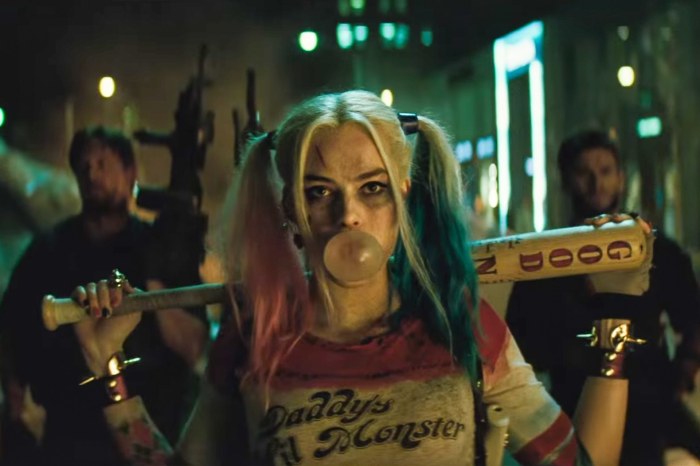
Why does the story fail? Here’s the rest of the plot. After Amanda Waller gives baseball-card origin story intros (i.e, a still frame giving quick intros to the characters and a flashback) to the two biggest stars, Deadshot (Will Smith) and Harley Quinn (Margot Robbie), and name drops the others, the government says yes. When you live in a world where Batman and Superman destroy cities and kill people in the name of justice, you can basically justify anything.

So Amanda Waller goes to the Belle Reve prison and introduces us to each of the characters with a theme song playing in the background. When you see Deadshot hitting a punching bag, you get a sample of “House of The Rising Sun” (can you guess where the prison is located, maybe “down in New Orleans”?). Then we see Harley Quinn doing gymnastics, and hear “You Don’t Own Me.” It’s perfect because she’s a strong independent woman. Get it? No? Here’s a shot of her butt to distract you. Yay girlpower!

So on and so forth. Once the team is assembled, with a cameo by Slipknot, a certified redshirt, and the only lines of dialogue you’ll hear from Killer Croc, Captain Boomerang, and Katana for a while, they are sent into the city. The city looks exactly like a normal DC city, one devoid of life, light, color, and hope.

Why must they go into the city? If you’ve seen The Avengers, Ghostbusters, etc, you know there’s a monster creating a portal in the city that creates a faceless, bloodless army. In this case, the monster is Enchantress (Cara Delevingne), an evil spirit that invades mild-mannered archeologist June Moone.

The first part of this movie is fast-paced and jumpy, but it works. It has a style, and I admire that. I was enjoying the film. Then comes the middle. The middle is all about getting to the portal in the city and destroying bad guys along the way, but the film makes no effort to make that interesting. We never understand what these faceless soldiers are or their strengths and weaknesses. We never understand why June Moone and Rick Flag are in love. We never understand why after an hour and a half of not talking to anyone, El Diablo calls the squad his family. We don’t understand why Joker and Harley are in love, except that they are both crazy. This middle section relies on what the director thinks audiences think is interesting, which is half-executed, lazily repetitive action sequences that don’t do anything except move the squad a little towards point B. The style of the first part of the film vanishes.

The whole film plays like a video game. Introduce the characters. Choose which character you want to be (Deadshot or Harley). Joker cameo! Curveball. Move towards portal. Fight. Take a break. Exchange one-liner. Fight. Get in elevator. Fight. Leave elevator. Joker cameo. One-liner. Get to portal. Power up. Each shot only lasts 5-10 seconds, each scene no longer than a minute.

The film sells its audiences on its bizarre trailers and the idea that bad guys get to have more fun. This begs the question: What makes a bad guy more fun? Is it the gun wielding, murder-fest? Because if so, this movie delivers in an untimely, tone-deft way. Is it because bad guys get the one-liners and tough talk? If you want that, head over to Stark Tower, because there are no memorable lines here. Do we like bad guys because they appeal to our own flawed character? If there is something to be said for the DC movies so far, it is that it makes its heroes more morally ambiguous. To foil those characters, these villains must be completely bad. In this film, though, they aren’t. They want to be normal, in a wet blanket sort of way, and they can’t commit to being completely evil. Will Smith never lets Deadshot be unlikable. Harley Quinn tells El Diablo to wear his tragic, murderous backstory on his sleeve, and yet her perfect ending is to be a housewife with curlers in her hair, taking care of a baby and the Joker. These “villains” are more heroic than bad, at least by this cinematic universe’s standards, so why should we think they’re more fun anyway?

If the film decided to go into depth on any topic, it would be a much better film. Explain to me the psychology of a villain. Show me how messed up people can bond. Tell me why even bad guys can be better than the good guys, and the frailty of those labels. Instead, the film just insults the audience’s intelligence over and over again, giving us no message and getting mad we don’t get its “high artistic vision.”

Now I know that there was studio meddling involved. David Ayer has confirmed there were 6-7 cuts of this film before this theatrical version. However, as the director, he has to take responsibility for what this film is, which is a film that had potential but poor execution. When the film was finished I was bored, exhausted, annoyed, and saddened all at the same time. I can’t imagine what it is like for DC comic books fans, who see their favorite characters made into racist and sexist stereotypes, lacking the depth and interest of their on-page counterparts. My message to the Suicide Squad team? Enjoy your ideas, but make sure they are good ones, and be sure you can actually deliver, or else you will have an empty gun-shell of a movie.

-Madeleine D

Kleenex Shortage Points to Dory

TULSA, OK- Since the release of Pixar’s Finding Dory, the tissue-paper company Kleenex has had a product shortage.

“They’re definitely related,” Parent company Kimberly-Clark CEO Thomas J. Falk said. “We had similar numbers when Inside Out, Toy Story 3, and Up came out.”

Finding Dory Kleenex

When we talked to Pixar’s Chief Creative Officer, John Lasseter, he just shrugged. “That’s what we hope will happen. In all our movies, we try to have a really emotional core. Like, super emotional. We have test audiences cry into buckets, and if they don’t fill the buckets, we scrap the scene and add a death or animal farm and holocaust imagery. If a voice actor doesn’t cry while recording, we also take note. Once, an animator got so emotional while animating, we had to send him home early because he got water in the computer. That was the main computer for Cars 2.”

Kleenex said they are not upset with Pixar. “We love the business,” Falk said. “We can’t complain. This has been the biggest surge in business this year save for the weird shortage on July 4th this year in Oklahoma.”

Pixar’s next movie will be Cars 3, much to Falk’s reported disappointment.

-Madeleine D


[Editorial Note: This post is satire, and is thus fake, and exists basically to make you laugh]

So That’s What My Hamster is Doing While I’m Away: The Secret Life of Pets

the-secret-life-of-pets

With the number of animated movies these days revealing the truth to us about the secret life of our household when we’re not around, it’s a wonder more people don’t quit their jobs so they can stay at home and catch their household possessions in action.

As we found out with Toy Story, Flushed Away, Bolt, and The Aristocats, our toys and pets have lives of their own. The Secret Life of Pets is here to bring us another story from that world.

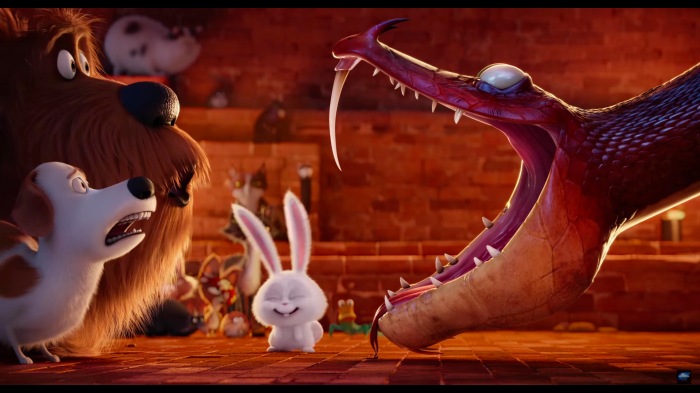
The film is about Max (voiced by Louis C.K), a spoiled yet lovable dog that has an unshakable bond with his owner Katie (Ellie Kemper). Max lives a comfy life, split between being with Katie, and when she is gone, being friends with the fellow pets next door. Everything is great until one day, when Katie brings home a big, unruly dog named Duke (Eric Stonestreet). Max tries to get rid of Duke, only to find himself and Duke lost in the city, and at the mercy of a vicious pet gang led by a savage bunny named Snowball (scene-stealer Kevin Hart).

The Secret Life of Pets’ plot is a tried and true staple of kids’ movies, but that in itself doesn’t create a winner. What creates a winner is the film itself, and The Secret Life of Pets does a great job of taking the elements that work in this sub-genre and making the whole movie about these things. For example, the best parts of the things-that-don’t-talk-now-talk stories are the secondary characters we meet along the way, the bonding that happens between the two main characters, and the adventure. The Secret Life of Pets hits all these marks.

The secondary characters in The Secret Life of Pets are the most fun and interesting I’ve seen in this type of movie since Toy Story. There are a lot of characters to be sure, making me wish for more screen time for some of them, but they all add something. None of them were annoying or useless. Whether they were there for visual gags, or witty dialogue, or animal jokes, each character had a place to shine. The bonding between Max and Duke worked. Duke’s backstory is heartbreaking, and the bonding seemed earned. Max learns a lesson, and so does Duke. That’s a solid message, even if it has been done before.

The adventure through New York City is enchanting. It can be chaotic, silly, and sometimes long, but it is always creative. Alleyways, sewers, cars, streets, building tops, and fire escapes all become exciting props for this cast to use.

The biggest flaws in the movie aren’t anything new for this type of film. The pacing can be wonky sometimes. There are some unnecessary butt jokes that are becoming a staple of Illumination Entertainment. The film doesn’t have any deeper meaning than “be nice to people that annoy you and don’t judge.” There is not one, not two, not three, but four scenes where an animal drives a car (and you thought Finding Dory was bad).

For its flaws though, I had a smile on my face the whole time. I laughed out loud. I want a sequel starring Kevin Hart’s crazy bunny. I would easily watch this movie again. This is a great choice for families. It will entertain kids, make parents smile, and maybe make you hug your pet one more time before walking out the door. It’s a celebration of fun, summer, and our loved ones (furry or not), and that’s not something to dismiss.

-Madeleine D

Ghostbusters (2016): It’s Not Bad For The Reasons You Think It’s Bad

For this review, I’m going to steal the IO9 format for reviews, a Q&A Style.

So you saw Ghostbusters

Yep.

First off, have you seen the original? Because that one is the best.

I watched it right before I saw the new one. And… well, to be honest, I didn’t love it.

*gasp*

I’m sorry. I know, blasphemy. I thought it was fine. Billy Murray was great. It was creative, and should be appreciated for being one of the first of its kind. But I wasn’t in love. The film uses tropes, silly effects, some lame jokes, and the world-building and setting up of the story is rushed or nonexistent. Maybe I can’t appreciate it as much because I don’t have the nostalgia factor, but it just didn’t grab my attention.

ghostbusters

Fine, it’s your opinion. I heard there was some craziness surrounding this movie before it was even released. My feed blew up with angry tweets, and didn’t Leslie Jones just make the news for something twitter-related?

You’re right, it was crazy. The minute Sony announced they were going to reboot the beloved franchise with an all-new female team, the internet went beserk. Suddenly, these well-liked actresses where the four horseman of the apocalypse, about to wipe every man off the face of the earth with their feminazi ideas and girl power. Suddenly the original was a modern Citizen Kane, and must be protected at all costs. This movie is a specific attack on everything America stands for! Women? They can’t be funny or keep our interest! They don’t need to be represented. They’re only 50 percent of the population and movie-going audience! Where’s my eighth Batman reboot?

You sound bitter.

I am. Here’s the thing. Women have had to put up with being the sexy secretary or girlfriend in movies for years. Rarely are they the main heroes. So Hollywood decided, hey, let’s see if doing the exact opposite, making only women the heroes and the men the sexy secretaries and boyfriend, will work. So now we’ve gone from 0-100. The ideal situation would be if there were male and female ghostbusters. But I’m not surprised Hollywood can’t do middle ground yet. I think if this movie worked, then it would be a step in the right direction to getting that balance.

So… did the movie work? Are we going to see more female-only franchises?

I don’t think we’ll see any more female-only franchise for a while, because the movie didn’t work and it isn’t making enough money.

So you didn’t like it. Is it preachy? Is it all about girl-power?

Not at all. The problem is that it is a really bland movie. It is not spectacularly funny, or even a good action film. It doesn’t make any real points about women, and while it caters to the female gaze for a change, it doesn’t make men feel uncomfortable. It doesn’t do much of anything.

Then why is everyone overreacting so much? A lot of people seemed threatened by the very existence of this film.

Any man with any amount of skin will be able to get over this movie. There’s maybe one or two jokes aimed at men, but none of them are malicious or preachy. The whole movie is so bad and nonthreatening, that it really does look silly in hindsight that anyone got upset about it. The 1984 original still exists. Go watch that if this one makes you sad.

So does the fact that the movie was bad mean that women really aren’t as funny as-

Stop right there. No.

But-

The truth is, because there are so few female-centric franchises and movies, it means every time one comes out it has to represent the whole female population, which is ridiculous. (And this doesn’t just go for lady-movies, but also any film centered around people of color.) No movie should have to bear that kind of weight. Yes, this movie wasn’t good. But most recent reboots aren’t, and that is where the problem lies, not in its on-screen talent.

Why does the movie suck then?

Before you reboot a franchise, you need to ask yourself (if you consider yourself an artist and not just a money-hungry Hollywood exec), Why am I rebooting this? What am I going to add to this brand? What will I change? What am I trying to achieve? Apparently, Sony and director Paul Feig (Spy, Bridesmaids) did not ask themselves these questions. I think the creative meeting went something like this:

Sony Exec #1- We want to jump on the 80’s reboot train. Let’s remake Ghostbusters.

Paul Feig: Okay. As an artist, I want to know how we’ll make it different.

Sony Exec #2- I heard Frozen and The Hunger Games are doing good. Those star girls.

Paul Feig- Ohh, I like it. I’ve directed several great female-led comedies. This could be a creative, unique choice! Now let’s discuss what else we’ll change-

Sony Exec #1- Eh, we’ll finish this meeting later.

(after Sony announces the reboot, and the internet presses the self-destruction button)

Sony Exec #1- (holding a bottle of wine) So…. that went badly. (chugs)

Paul Feig- We can solve this. We just need to make this a really good movie.

Sony Exec #2- No! We need to make a generic, almost scene-by-scene remake of the original and play it safe.

Paul Feig- But-

Sony Exec #1 and #2- (still drinking) NO!

That’s more or less what happened.

The movie is a scene-by-scene remake?

Basically. All the original plot points are there. The only big difference between the two films, besides the gender-swapping of all the characters, is the absence of a Sigourney Weaver/Dana character and instead the villain is just an angry little man who creates ghosts and possesses people.

So yes, it lacks in plot. The original wasn’t much more than an extended SNL skit to be fair. However, the first at least has some funny moments. The new one has a few jokes that made me grin, but most of the time I groaned. Considering the talent involved- Kristen Wiig, Melissa McCarthy, Kate McKinnon, Leslie Jones, and Chris Hemsworth (who really should be cast in more comedic roles) somehow aren’t able to elevate the material… or make better material. The film seems like a lot of the jokes were originally improvised, but were only funny on set and no one checked if they translated to the film well.

Is it true that Leslie Jones’s character was a racist stereotype?

I’m not the leading authority on that. I would suggest checking out other reviews by African-American film critics to really decide. However, I would say that Leslie Jones has branded herself with the “big, sassy, and loud black woman” type of humor. She’s been doing it on SNL for a while now, so it’s not surprising her role is written that way. It is a stereotype, and some people might think that is racist. However, it does not at all excuse the racist hate she was shown on Twitter. For what it’s worth, the group I went to see the movie with all enjoyed her performance, singling her out with Kate McKinnon as their favorite parts of the film. I thought she came off as very likeable, along with the rest of the cast.

Okay, the cast is likeable. Are there any other positives?

As a female viewer, there were little things here and there that really struck me as normal. Completely and utterly normal. There was very little “cool factor” here. These were real women doing real women stuff (in addition to, you know, busting ghosts). The fact that that stood out to me is a commentary itself on movies today. This film is also more family friendly (although it is still rated PG-13, so not for young kids). It doesn’t have all the sexual innuendo of the original. And like I said, there were some good jokes and ideas put forth. It just overall didn’t do anything for the Ghostbusters brand. Nothing was really added. No new developments were made.

Should I see it?

It’s not a must see, and I can’t really recommend it as good entertainment or even a fun movie. However, I think if you have young girls and you want them to see role models in movies, this could be a good choice. Even though the movie isn’t great, I hope I see some little kids dressed as ghostbusters for Halloween. That will make it worth it.

-Madeleine D

#OscarsSoWhite 2015, #HollywoodSoToken 2016? Concussion + Race

Concussion, a 2015 film, was made to be an Awards contender. Biopic? About a controversial subject? A mainstream actor being serious? That would win in most years, However, after mixed reviews, Concussion was overshadowed completely with the #OscarsSoWhite controversy, a social media riot that pointed out that there were no actors of color in the Oscar nominees for the second year in a row. Suddenly, Concussion was brought back into the conversation, as it was cited with other “black films” that should have had nominations. Was Concussion snubbed? Meanwhile this year, Race, a biopic about Jesse Owens that has a lot of the above Oscar checklists, has already been forgotten about. Yet with diversity reforms in the Academy, will Race get a chance? Does it deserve one?

concussion-movie

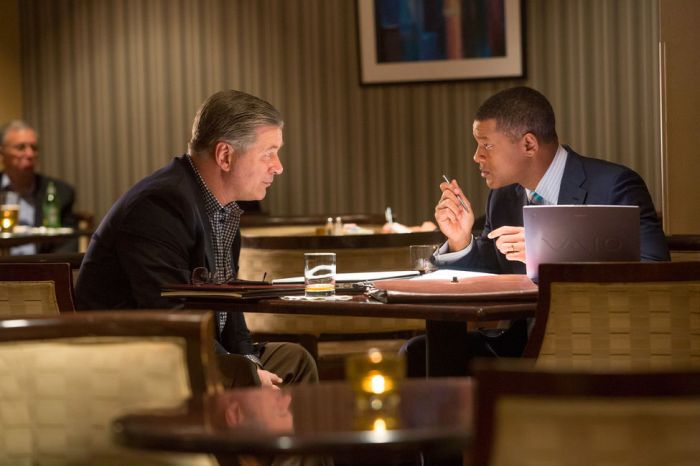
Concussion tells the story of Dr. Bennet Omalu, an immigrant doctor from Nigeria who was the first to discover the effects of CTE in the NFL. Dr. Omalu is played by Will Smith, who is phenomenal in the role, so much so that I forgot he was Will Smith. His accent was consistent, he was subtle when he had to be, dramatic when need-be. The only flaw in the character is from the writing. Dr. Omalu is portrayed as perfect, a more American hero than Captain America. He never gives up, he always tells the truth, and he deals with abuse graciously and with integrity. He is the definition of inspiring, and that’s what makes the movie just a tad underwhelming.

The information in this film is very important. It’s not fun, but I think everyone needs to know about the effects of CTE and its consequences. However, the movie lacks the grit it needs. It has moments, it has scenes of greatness. But overall, the film doesn’t quite “go there,” making it seem like the filmmakers themselves don’t believe this is mandatory viewing.

Concussion is still a compelling movie, though. The heart of the film is the love story between Dr. Omalu and his wife Prema Mutiso (Gugu Mbatha-Raw), and the doctor’s faith. Dr. Omalu’s faith in God is never ridiculed by the movie and is shown to be his main source of strength, which is a really nice thing to see in a film.

race-movie

Race is the story of Jesse Owen’s journey to the 1936 Olympics, held in Pre-WW2 Berlin. The film starts with Jesse Owens (Stephen James) in college, training under Coach Larry Snyder (Jason Sudeikis). In biopic fashion, Jesse finds a not-racist coach who becomes a mentor figure and guides him towards greatness. In biopic fashion, he overcomes all odds to become a great athlete and awes the world in the Olympics. In biopic fashion… well, everything kinda happens in biopic fashion.

Race is very by-the-books. It reminded me of the 2013  film 42, starring Chadwick Boseman as Jackie Robinson and Harrison Ford as Branch Rickey, manager of the Brooklyn Dodgers. 42 is a fantastic movie, and I think Race could learn a few things from that film.

42 never shies away from the fact that racism was a daily struggle for Jackie Robinson. Race shows racism, but in a way that makes you feel angry, but never uncomfortable, which is something 42 makes sure to make you feel. Race rarely gets into the head of Jesse Owens. When it does, it’s great, and it’s a shame because there was potential there. 42 gets into the head of Jackie Robinson and Branch Rickey.

What I do admire about Race, though, is that it helped me understand why the Olympics and sports are so important. I’m not a sports person. I like the Olympics, but I’ve never understood quite why an athlete would dedicate their entire lives to spending mere minutes on the field. Race showed me the drive in athletes, what it means to them, and the politics behind the Olympics. I’m very glad it did, so as we gear up for the 2016 Brazil Olympics, I can be more appreciative of the event.

Race is well meaning, earnest, and a solid movie. But that isn’t enough. Race needs more to make it feel less like a really good TV movie and more like an important film everyone should see.

Now I’d like to address my initial questions. Are these Oscar-y films worth the attention of the academy? Personally, I think that if Matt Damon is going to be nominated for being an astronaut potato farmer, I think Will Smith should be nominated, too. I don’t think either film deserves anything more, though, as awards go.

Here is an interesting observation, though, that I’ve heard other places. Oscar bait movies about black people are almost exclusively about slavery or racism. Even this year’s most talked-about (but way too early to forecast) awards contender, The Birth of A Nation, is about slavery. Should #OscarsSoWhite really be about just having more black talent on screen (and we won’t even get into the discussion of how there has been an exclusion of other races. The 2016 Oscars were only about black actors, even making jokes at the expense of Asians)? Or should this discussion really be about making films about people of color the way films are made about white people? Last year, white actors were nominated for everything from being a pioneer, to being a transgender woman, and white actresses for being a shopkeeping girl to being an immigrant, while the last time a black actor was nominated and won was for playing a slave.

In the light of new diversity reforms, will a mediocre film get chosen simply because it’s “diverse?” Will movies like Race have a chance now? Because I think we should start holding all movies, “diverse” or not, to a higher standard, and include all people in those better movies. Would it have changed The Martian to have a black lead? Would it have killed Mad Max to have a Latina woman as Furiosa?

My point is, make films with diverse talent that isn’t just about slavery. Don’t forget about other races too, or we’ll have a #OscarsSoZebra. Don’t stop making quality films, including biopics and slavery films, but don’t assume they’ll win, and don’t assume they are the only place to use minority talent. And if you are going to make diversity reforms, get to the heart of the problem, and not the shallow stuff. This topic is super complex, and I haven’t even scratched the surface. I’m not the most qualified person to do so. But when I see a person on screen that I relate to strongly and feel connected to, that makes a world of difference. And I’m a white teenage girl, an audience that is being catered to more and more every day. I can’t imagine what it would be like to only see a person like yourself portrayed as a trope or token exclusively.

I hope one day I’ll be able to review films with minority leads without mentioning race (except if it’s in the title), but right now I have to, and we have to address it. I applaud these movies for not shying away from it either in their respective subjects, and I applaud all the filmmakers, black, Asian, Hispanic, white, male, or female- anyone who is trying to reflect the real world on screen.

-Madeleine D

Christian Films Prepare to Do Big Crossover Movie

HOLLYWOOD, CA- After the recent successes of faith-based movies such as God’s Not Dead and God’s Not Dead 2, along with Heaven is for Real and War Room, Christian film leaders are joining together to create a joint franchise.

“We have to compete in the secular market,” Alex Kendrick, co-director of the 2015 juggernaut, War Room, said in a statement. “We are doing very well box-office wise, but we need to reach a younger audience. We’ve decided to follow the leads of big movie studios like Marvel, Warner Bros, Disney, and Fox to create a cinematic universe.”

evangelists

“We’re teaming up to create a big crossover event,” Harold Cronk, director of God’s Not Dead and its sequel, said. “It’s going to be called The Evangelists, starring all the main characters of all the Christian movies that have come out within the last decade. They will come together, brought together by Captain Rayford Steele (played again by Left Behind star Nicolas Cage), and take down Hollywood and the satanists who run it. They will burn the entire place to the ground, building a mega-church in its place. It’s more or less Avengers, but with the love of Christ added.”

Kendrick already has ideas for a sequel, too. “For the sequel, we’re thinking a new president, a democrat, or a gay rights activist, tries to take down the church with the U.S Military, but the Evangelists take them down with prayer.”

When asked, Cronk stated that there will continue to be the beloved cameos in The Evangelists. “We might bring back Carrie Underwood, like in Soul Surfer,” he said. “Maybe the Duck Dynasty folks. I’m counting on Trump to be honest.”

Kendrick also confirmed that the theme song will be from The Newsboys, as they are locked in to a contract for the next eight years.

-Madeleine D


[Editorial Note: This post is satire, and is thus fake, and exists basically to make you laugh]

Formulas Can Be Fun: Finding Dory

*Minor Spoilers Below

finding-dory

It’s sequel week here at madeleinelovesmovies.com! First Now You See Me 2, and now Finding Dory. Luckily, Finding Dory has a much more steady foundation than NYSM2. Finding Nemo is still one of the most successful animated movies of all time, critically and commercially, winning Best Animated Feature Oscar in 2004. Now it’s been 13 years, and director Andrew Stanton is back. No pressure, right?

If you haven’t seen Finding Nemo (in which case, I’m so sorry, here are my condolences, I’ll send you the DVD within 5-10 business days), don’t worry. Just take Finding Dory, switch Dory and Nemo, and the various animals they meet with other animals, and you have Finding Nemo. That doesn’t necessarily mean it’s bad, though. Finding Dory has a lot of charm and wit to offer. Just know going in that it isn’t going to live up the the insane expectation of Finding Nemo. And that’s okay, because it’s still the best sequel Pixar has made (save for the Toy Story films).

Finding Dory starts off a little shaky, retreading old ground and reminding us of old characters. Dory is with Marlin and Nemo, and it’s clear Marlin is getting a little tired of having her around. She is forgetting things seemingly faster than ever. She’s also having flashbacks to her childhood, remembering her parents, her home, and losing them. So she gets Marlin and Nemo to help her try and find her family. Within five minutes, they’ve crossed the entire ocean, making me wonder what took Marlin so long in the first movie (the characters even express this: “Isn’t crossing the ocean something you only do once!”).

I’m not saying these Finding Various Talking Fish stories are the epitome of realism in cinema, but at least Finding Nemo had challenges that seemed logical for a fish. I sat down and talked this out with the ghost of my betta fish, Wilson, and he assured me that yes, things like trying to get out of a whale, trying to escape a tank, and trying not to be eaten on a daily basis are reasonable struggles for a fish that could probably be overcome. Finding Dory’s challenges are not in this same realm of possibility. Marlin had to follow a boat, Dory has to help an octopus drive a truck. Marlin had to ride the EAC, Dory has be guided through pipes with the help of a beluga whale’s echolocation. Marlin had to raise a son, Dory has to ride in a stroller with the help of said octopus that can live out of water.

All that said, Finding Dory shines with dazzling animation (you only thought Pixar couldn’t outdo themselves), great voicework from everyone involved (especially Ellen DeGeneres and Idris Elba), and humor. The film has some great one-liners and really funny scenes. Finding Dory never loses its sincerity, though, and there were several eye-watering moments here. I don’t want to give anything away, but I really liked how the messages of family were addressed. It’s good to have a loving family (a strongly traditional one, I might add), but also that you can make your family, and the people around you are just as important and can love you just as much as your biological parents. This message in particular is quite important for adopted, fostered, and neglected children.

Speaking of children, another message that really stands out is the idea that what others perceive of weakness can be a special type of strength. In the film, characters say in times of trouble, “what would Dory do?” For a special needs child, or anybody that feels different and out of place, this message is extremely important. We all have gifts and talents. They just may be different from what we expected.

Finding Dory is not a masterpiece, but it is still a great film. I would highly recommend it for anyone, and I hope Pixar stays this solid on future sequels. However, let’s hope Finding Marlin is not in the works.

-Madeleine D

My Brain Says No, But My Heart Says Yes: Now You See Me: The Second Act

*Warning: major spoilers for both Now You See Me movies

Now-You-See-Me-2

For starters, let’s recap the first movie. Now You See Me, directed by Louis Leterrier, was a surprise hit of 2013, reminding us that magicians are kinda cool I guess, and hey, isn’t that the Hulk? The first film followed four individual magicians who are brought together by something called The Eye, a mysterious magician organization that directs them to do three big magic shows and act as robin-hood characters, giving rich people’s money to the poor. Trying to track them down is FBI agent Dylan Rhodes (Mark Ruffalo), who has enough time in his busy schedule of being a magician mastermind/FBI agent/The Eye correspondent/Avenger/sad little orphan to have an annoying little romance with another FBI agent (Melanie Laurent). Along for the ride is narrator extraordinaire Morgan Freeman playing himself and Michael Caine, who is there to make me think for eight seconds that this is a Christopher Nolan movie.

I despised this first movie. I hated all the “protagonists” and their gimmicks and general mean personas. I hated the plot, which relied on someone being able to plan every move the other characters were going to make- I haven’t seen that in a movie before (sarcasm alert)! I hated magic tricks that were obviously made with special effects- anyone can do card tricks with jump cuts! I wasn’t impressed with anything.

But my friend sure was, and she took me to see Now You See Me 2 (which really should have been called, Now You Don’t). Now You See Me 2 takes place a year after the first film. The Four Horseman are now a bonafide group, with a new lady magician, Lulu (Lizzy Caplan, a million times more interesting and funnier than Isla Fisher), and their own group dynamics. They have been waiting around in secret as fugitives, waiting for their ringleader Dylan Rhodes to give them instruction on their next move. He’s getting his plans from The Eye, who we still don’t know anything about.

Finally Dylan has their next mission. They are going to hijack a big company announcement and exploit the con CEO and tell the audience about how their privacy is being sold. All is going well until the lights suddenly switch off. A distorted face appears on screen, revealing Dylan’s true identity. The FBI start to chase the group down. The magicians jump into a chute that is supposed to get them to safety…

But they wake up instead to find themselves in Macau.

I made a handy little cheat sheet to understanding this movie. I’m pretty sure this cheat sheet was what the writer used to create every scene in the film.

What the…

How the…

Why the…

Go to…                                                hell

In that order, in every scene.

As I was watching the film, I started to feel confused. Wait, I was laughing? No! I’m against this movie! Hold on…I have to admit, that was pretty cool. And man, I love that actor. Lizzy Caplan is great! That joke was perfect. What’s happening?!

NYSM2 does the incredible feat of fixing everything I hated about the first movie, and still making a bad movie. This time around, there is no exhausting setup. The film assumes you remembered everything from the first movie. In this film, the characters are more interesting, but there are way too many of them. The first film had a boring finale, this film has a finale that makes no sense. The first film was slick and empty, this film tries way too hard to have an emotional core and dramatic backstory to give it umph. In this film, Mark Ruffalo and Jesse Eisenberg get worse lines but better hair.

Now You See Me 2 is sloppy. The plot revolves around a mumbo-jumbo plot MacGuffin and absurd tricks that are clearly CGI and movie-magic. There are some truly cringe-inducing lines. All the characters are given long, drafty monologues about what is going on and what is going to happen in future movies. And the film obviously caters to Chinese audiences, giving us a promising young Chinese character who doesn’t get to do anything in the movie except be available for the press tour.

But despite all this, I was enchanted. I liked the location change, even if I know it’s just for the box-office numbers. The tricks are cool, even though it’s not real magic. The actors have such good chemistry the dialogue is easy to ignore. Having all the characters be unified as a team creates a lot more on-screen interest and development. There are some fantastic jokes that had me in stitches. Once again, Daniel Radcliffe proves his best roles are magic ones.

Now You See Me 2 is not a great film. I cannot recommend you go see it if you didn’t have interest in it already. However, for what it’s worth, I had a smile on my face the entire time. The ensemble factor was wonderful. There were some incredible jokes that landed perfectly. I was in suspense. I wanted this little gang of magician vigilantes to be best friends and conquer the world. And for the movie that it is, I’ll take that.

-Madeleine D

ADVENTURES IN MISSING THE POINT: ME BEFORE YOU

When a movie advertises itself as a “tearjerker,” I quickly become cynical and determined not to cry. I rarely cry at the movies. I cried twice at Inside Out, and of course, like everyone, teared up at Avengers: Age of Ultron (curse you hulkbuster scene, playing with my emotions like that!).

I didn’t mean to go see Me Before You, but sometimes you just gotta go to the movies with a friend and see what the hubbub is about. So I saw it.  (Paging all studio execs reading this review- I’m a girl who goes to big blockbusters, too. There were men in the theater. Please stop it with the obsession about making a lady-movie genre and excluding us from everything else.)

Anyway, I did not cry. I did, however, smash my water cup between my fingers and get very, very angry.

Me Before You

(HUGE SPOILERS BELOW)

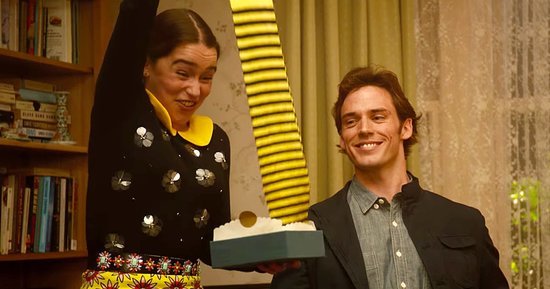
Me Before You stars your favorite quirky neighbor girlfriend Louisa “Lou” Clark (Emilia Clarke), who lives in the most Englishy-place to ever be English. After she loses her job, she and her eccentric wardrobe of character development tries to find a new job so she can support her family. Luckily, the family who owns the castle next door needs someone to be a companion for their very beautiful and very rich son, Will (Sam Claflin), who is a quadriplegic.

Luckily for Lou, she doesn’t have to do any of the “heavy lifting” when it comes to Will (which would make this romance less glamorous) and instead is supposed to be a ray of sunshine. This is difficult though, when your patient is prepared to have physician-assisted suicide in a few months.

So obviously, Lou decides she’s going to make Will change his mind through expensive vacations, which obviously will work because how else do you find the meaning in life besides going on short, frivolous vacations that your rich family can easily bankroll? Will decides, however, that he must go through with the plan. His identity is too tied up in who he “used to be,” and at the age of 29, and 2 ½ years into being a quadriplegic, he obviously has the perspective to understand his life has absolutely no meaning now and no potential. So he tells Lou that even though he led her on, he is still going to die. But it’s actually super noble, because now she won’t be tethered down to him and he’s going to give her money to travel.

Yea!

So after a cry, Louisa and his parents decide to be supportive of him, because it’s “his choice.” “His choice” to play God, “his choice” to throw away all the good things life has given him, “his choice” to give a big middle finger to caretakers who spend their lives nobly.

Now I’m going to defend the movie for one second. The film makes it clear that this character, Will, is making this decision because his whole rich, playboy lifestyle was based on his image. It was his idol, his everything. He couldn’t imagine a life without it. The movie does not condemn all people with disabilities as burdens.

But, a lot of people with disabilities feel the same way Will does, but they are braver than him and power on. They live their lives because they know their value. Will is portrayed as a tragic figure. Real life disabled people are not tragic figures, there to make you inspired to run that marathon. They are just real people.

When I go to the movies, I look for examples of hope. Will showed no hope. And as someone who believes life is valuable and should be protected, the fact that the movie just shrugged and said, “hey, if you’re in pain or have it rough, just forget moral fiber and do what you want,” made me angry.

But let’s forget that glaring problem for a second and focus on some positives. The film is incredibly well-acted. Emilia Clarke takes what could be an insufferable role and makes Louisa very likable. I liked the emphasis on parents, and what they do for their children with disabilities. Besides the CGI leaves representing time, haircuts representing change, and overbearing vocals of Ed Sheeran singing “loving can hurt” while characters look glumly out of windows, the film is pleasant to watch. Solid cinematography and production design contribute to a film that is very well directed technically by Thea Sharrock.

But I can’t get the ending of the film out of my mind. The film does not glorify Will’s decision. But it is okay with it. And that’s wrong. I find it fascinating that the twitter hashtag for this movie was #LiveBoldy. Maybe, taking the actual movie into account, the hashtag should be #LiveBoldyIfYoureAbleBodied. In fact the title, Me Before You, is the epiphany of the selfishness in this movie, which misses the point of romance and relationships completely.

-Madeleine D

Feminism in Film, 2015: Suffragette + The Intern

In 2015, two movies came out a month apart. Both were directed and written by women with strong feminist under (and over) tones. The first was The Intern, a comedy about a business woman and her new intern. The second was Suffragette, a British historical period drama, chronicling the early 20th century Suffragette movement. They are wildly different in tone and story, but both have significant correlating themes and messages.

Suffragette

suffragette

Directed by Sarah Gavron, Written by Abi Morgan

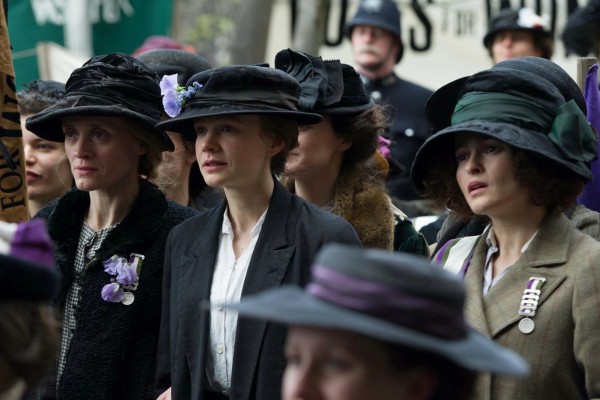
Suffragette is a story about a moral and political movement, told through the eyes of (fictional) Maud Watts (Carey Mulligan), a working class woman with a husband and son. Maud is slowly brought into the Suffragette movement, eventually giving up everything to be a footsoldier for the cause. Through the movie, she meets fictional (but inspired by real women) Edith Ellen (Helen Bonham Carter) and real-life figure Emmeline Pankhurst (Meryl Streep). Streep is only in the movie for two minutes, but her moral authority is significant; if Meryl Streep told me to go burn down a governor’s house, I would probably do it, too.

Suffragette is a beautifully crafted film. There is plenty of heart and earnestness in it. All the actors are wonderful. Carey Mulligan shines through as Maud. Her expressions say everything, and she has a powerful arc of fear to bravery. She never loses her humanity though, or her grip on the audience.

The only thing that is a drawback to this kind of approach of telling such a big movement through one person is that the scope is small. We don’t know anything about what other suffragettes are doing. We don’t know what causes Edith, or Emmeline Pankhurst, to join. We don’t see the beginnings or ends of the cause. It is also exclusive to working-class white women of the time, when in reality there were all sorts of women in England and all over the world fighting for the right to vote.

But as it worked in 2014’s Selma, having a narrow focus allows for more emotional connection. There were plenty of painful moments in the film, and seeing it through one person’s eyes made it even harder to watch.

I also want to appreciate how the movie didn’t villainize too many people. Yes, there were a couple of men in and out of the government who were actively against the women in the Suffragette movement. But those men made points that they were just following the law. They had been taught their whole lives that women were inferior. They didn’t know anything different. Many women felt that way too, that to be a suffragette meant not being a “good woman.” That just points to the greater enemy- systemic sexism and conditioning. Any film that is able to get to the heart of an issue, while still showing the complexities of the situation, is a fine one indeed. It’s more than just a good movie, it’s a painfully relevant one, and that makes it important.

The Intern

The-Intern

Written, Directed, and Co-Produced by Nancy Meyers

Ben Whittaker is a great guy. He’s well off. Competent. Loyal to a fault. Thoughtful and nurturing.

Jules Ostin is a bright young entrepreneur. She owns a fast-growing e-commerce clothing store. She’s creative and smart, and has enormous potential.

One day, Ben and Jules meet. They form a special bond, and soon realize they are just what the other needs.

Because Ben is a 70 year old retired widower who wants to intern for Jules, and Jules is struggling with her marriage and work and needs a confidant and friend. Oh, you thought this was a romantic comedy?

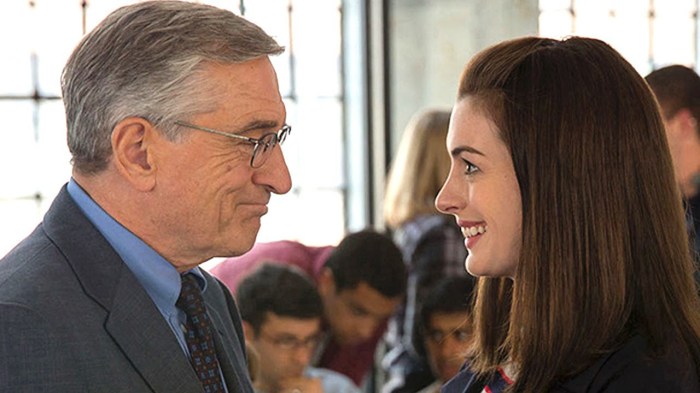
The Intern is a polished, sweet, aesthetically beautiful movie about life, business, and friendship. Anne Hathaway as Jules and Robert De Niro as Ben are both extremely likable and well-cast, with natural chemistry. The movie has nice messages about the importance of every generation, what they bring to the table and what they can learn. While there are some jokes about Ben’s technology skills, and the frivolity of youth, everyone ends up being well-respected by the end.

Nancy Meyers injects some interesting observations into the film. (Disclaimer: I haven’t seen any other Nancy Meyers movies, so I can’t compare the views shown in this movie to her other ones.) At one point in the film Jules observes that “girls have become women, and men have become boys,” pointing out the difference between Ben and her male colleagues. Long lost are the days of gentlemen.

This is an interesting view on how modern feminism has brought down men. Her husband is a stay-at-home dad, and (spoiler alert), is found to be having an affair. The movie never excuses this behavior, but it raises the question of, does this have anything to do with Jules’ absence and him not feeling like he’s living up to what it means to “be a man”?

I personally think that these are both worthwhile things to muse on, because modern feminism has gained a reputation for degrading men’s accomplishments in order to favor women’s, instead of simply shining an equal spotlight on both. Yet in the same movie, there are some contradictions. At one point, Ben tells a younger man to always carry a handkerchief for when women cry, (which at least two women do). Ben says, “I hate to be the feminist here,” which will rub some people the wrong way as a form of mansplaining. And the fact that Jules, while earnest, still totes a lot of the “overworked business woman” cliches is unnecessary.

It’s these, and a few other more spoilery things, that give me pause on The Intern. It has the right overall idea, but there are things here and there interjected into the movie that seem contradictory, or at least questionable. But on the other hand, our world is just as confused about feminism as this movie is, and if it’s supposed to be portraying real life, then I guess it is successful. But this has a whole lot of shine and convenience for a realistic movie.

Now I would like to draw some comparisons between these two 2015 Fall releases. Suffragette is about the beginning of feminism, and The Intern is about how we use it today. The Intern has some conflicting ideas about feminism, reflecting on the push and pull of the modern movement. Suffragette shows that at no point in time were these issues easy, or these rights achieved without compromise. Some women in the suffragette movement did some terrible things. Maybe for a good cause, but does that justify it?

For those who are uncomfortable with feminism, especially being labeled as a feminist, I am completely sympathetic. Modern feminism is associated with some unfortunate things (just like any broad movement), and is often most viewed through the voices of radical feminists. I understand not wanting to be associated with those things. But the idea that men and women are equal is what needs to be told through our media, even if it’s not under the umbrella of being called “feminist.”

That’s why it is important to evaluate these kinds of movies. Just because a movie has a “strong female character,” is about women, is directed by a woman, doesn’t mean it’s feminist. A movie that isn’t directed or “starring” a woman isn’t necessarily not feminist (i.e, Mad Max: Fury Road). We have to evaluate a movie on its art and message. It’s difficult to have these conversations. It’s tiring and frustrating, especially in this age of social media. But it is more important to have these conversations than to not. How else are we supposed to get anywhere? How are we supposed to get to a point where we don’t have to evaluate a movie based on its gender politics, Bechdel Test results, or the gender of the people behind the camera without starting the movement towards that? A place where movies don’t have to carry an agenda. But for now, we have to, and I applaud movies like these that take up the challenge of being conversation starters.

-Madeleine D