Feminism in Film, 2015: Suffragette + The Intern

In 2015, two movies came out a month apart. Both were directed and written by women with strong feminist under (and over) tones. The first was The Intern, a comedy about a business woman and her new intern. The second was Suffragette, a British historical period drama, chronicling the early 20th century Suffragette movement. They are wildly different in tone and story, but both have significant correlating themes and messages.

Suffragette
suffragette

Directed by Sarah Gavron, Written by Abi Morgan

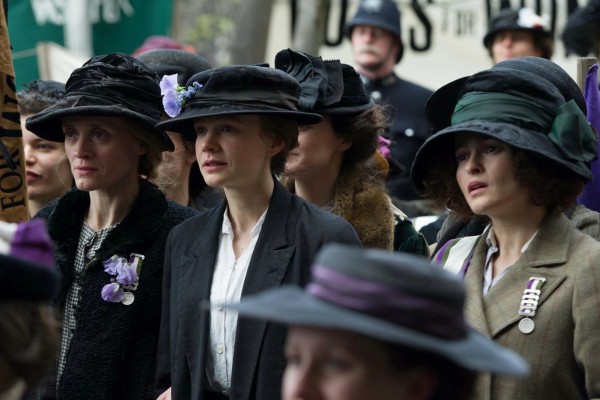
Suffragette is a story about a moral and political movement, told through the eyes of (fictional) Maud Watts (Carey Mulligan), a working class woman with a husband and son. Maud is slowly brought into the Suffragette movement, eventually giving up everything to be a footsoldier for the cause. Through the movie, she meets fictional (but inspired by real women) Edith Ellen (Helen Bonham Carter) and real-life figure Emmeline Pankhurst (Meryl Streep). Streep is only in the movie for two minutes, but her moral authority is significant; if Meryl Streep told me to go burn down a governor’s house, I would probably do it, too.

Suffragette is a beautifully crafted film. There is plenty of heart and earnestness in it. All the actors are wonderful. Carey Mulligan shines through as Maud. Her expressions say everything, and she has a powerful arc of fear to bravery. She never loses her humanity though, or her grip on the audience.

The only thing that is a drawback to this kind of approach of telling such a big movement through one person is that the scope is small. We don’t know anything about what other suffragettes are doing. We don’t know what causes Edith, or Emmeline Pankhurst, to join. We don’t see the beginnings or ends of the cause. It is also exclusive to working-class white women of the time, when in reality there were all sorts of women in England and all over the world fighting for the right to vote.

But as it worked in 2014’s Selma, having a narrow focus allows for more emotional connection. There were plenty of painful moments in the film, and seeing it through one person’s eyes made it even harder to watch.

I also want to appreciate how the movie didn’t villainize too many people. Yes, there were a couple of men in and out of the government who were actively against the women in the Suffragette movement. But those men made points that they were just following the law. They had been taught their whole lives that women were inferior. They didn’t know anything different. Many women felt that way too, that to be a suffragette meant not being a “good woman.” That just points to the greater enemy- systemic sexism and conditioning. Any film that is able to get to the heart of an issue, while still showing the complexities of the situation, is a fine one indeed. It’s more than just a good movie, it’s a painfully relevant one, and that makes it important.

The Intern
The-Intern

Written, Directed, and Co-Produced by Nancy Meyers

Ben Whittaker is a great guy. He’s well off. Competent. Loyal to a fault. Thoughtful and nurturing.

Jules Ostin is a bright young entrepreneur. She owns a fast-growing e-commerce clothing store. She’s creative and smart, and has enormous potential.

One day, Ben and Jules meet. They form a special bond, and soon realize they are just what the other needs.

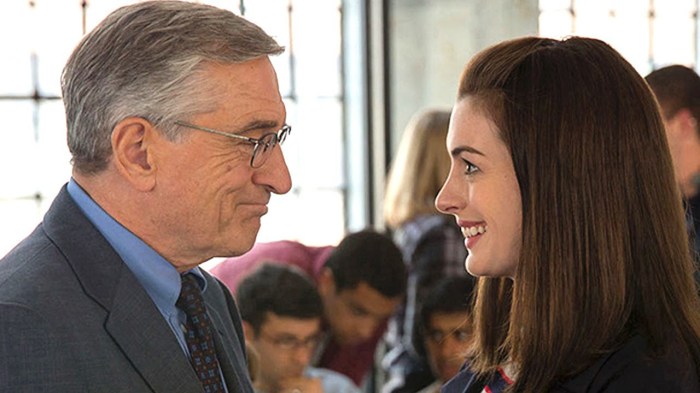
Because Ben is a 70 year old retired widower who wants to intern for Jules, and Jules is struggling with her marriage and work and needs a confidant and friend. Oh, you thought this was a romantic comedy?

The Intern is a polished, sweet, aesthetically beautiful movie about life, business, and friendship. Anne Hathaway as Jules and Robert De Niro as Ben are both extremely likable and well-cast, with natural chemistry. The movie has nice messages about the importance of every generation, what they bring to the table and what they can learn. While there are some jokes about Ben’s technology skills, and the frivolity of youth, everyone ends up being well-respected by the end.

Nancy Meyers injects some interesting observations into the film. (Disclaimer: I haven’t seen any other Nancy Meyers movies, so I can’t compare the views shown in this movie to her other ones.) At one point in the film Jules observes that “girls have become women, and men have become boys,” pointing out the difference between Ben and her male colleagues. Long lost are the days of gentlemen.

This is an interesting view on how modern feminism has brought down men. Her husband is a stay-at-home dad, and (spoiler alert), is found to be having an affair. The movie never excuses this behavior, but it raises the question of, does this have anything to do with Jules’ absence and him not feeling like he’s living up to what it means to “be a man”?

I personally think that these are both worthwhile things to muse on, because modern feminism has gained a reputation for degrading men’s accomplishments in order to favor women’s, instead of simply shining an equal spotlight on both. Yet in the same movie, there are some contradictions. At one point, Ben tells a younger man to always carry a handkerchief for when women cry, (which at least two women do). Ben says, “I hate to be the feminist here,” which will rub some people the wrong way as a form of mansplaining. And the fact that Jules, while earnest, still totes a lot of the “overworked business woman” cliches is unnecessary.

It’s these, and a few other more spoilery things, that give me pause on The Intern. It has the right overall idea, but there are things here and there interjected into the movie that seem contradictory, or at least questionable. But on the other hand, our world is just as confused about feminism as this movie is, and if it’s supposed to be portraying real life, then I guess it is successful. But this has a whole lot of shine and convenience for a realistic movie.

Now I would like to draw some comparisons between these two 2015 Fall releases. Suffragette is about the beginning of feminism, and The Intern is about how we use it today. The Intern has some conflicting ideas about feminism, reflecting on the push and pull of the modern movement. Suffragette shows that at no point in time were these issues easy, or these rights achieved without compromise. Some women in the suffragette movement did some terrible things. Maybe for a good cause, but does that justify it?

For those who are uncomfortable with feminism, especially being labeled as a feminist, I am completely sympathetic. Modern feminism is associated with some unfortunate things (just like any broad movement), and is often most viewed through the voices of radical feminists. I understand not wanting to be associated with those things. But the idea that men and women are equal is what needs to be told through our media, even if it’s not under the umbrella of being called “feminist.”

That’s why it is important to evaluate these kinds of movies. Just because a movie has a “strong female character,” is about women, is directed by a woman, doesn’t mean it’s feminist. A movie that isn’t directed or “starring” a woman isn’t necessarily not feminist (i.e, Mad Max: Fury Road). We have to evaluate a movie on its art and message. It’s difficult to have these conversations. It’s tiring and frustrating, especially in this age of social media. But it is more important to have these conversations than to not. How else are we supposed to get anywhere? How are we supposed to get to a point where we don’t have to evaluate a movie based on its gender politics, Bechdel Test results, or the gender of the people behind the camera without starting the movement towards that? A place where movies don’t have to carry an agenda. But for now, we have to, and I applaud movies like these that take up the challenge of being conversation starters.

-Madeleine D

CAPTAIN AMERICA: CIVIL WAR

*incoherent screaming*

Oh hello there. I didn’t notice you over the sound of my screaming. How are you? Oh good. I’m doing well too. I just saw Captain America: Civil War after counting down the days since June 29th, 2015. It was pretty good.

Just kidding. It was amazing. And we’re going to go in depth on why, because me screaming about the importance of protecting Tony Stark is not going to be of much help.

Full disclosure: I am a huge Marvel fan. But I am also an aspiring critic, and I will do my best to balance the two. Admittedly, I haven’t always done my best with that (Avengers: Age of Ultron is a movie I loved, but I recognize that I was a little monotone in the review because other critics were harsh). But I want to balance approaching this movie as a Marvel-nerd and as a normal moviegoer. Also, there are not really spoilers in this review, but if you haven’t seen it yet and you want to be surprised at character reveals, you should probably stop reading (and why haven’t you seen the movie yet?!?).

civil war 1

Captain America: Civil War is both a sequel to Avengers: Age Of Ultron and Captain America: The Winter Soldier. It deals with the consequences of the Avengers actions around the globe. Captain America/Steve Rogers thinks the Avengers do not need accountability, and Iron Man/Tony Stark believes they do. It is based off the famous 2006-2007 comic book title of the same name.

The film is directed by Joe and Anthony Russo, who helmed Winter Soldier. Age of Ultron was directed by Joss Whedon, who after having his spirit broken by the film, has quit Marvel for good, giving up directing Infinity War pt. 1 and 2, which is now going to the Russos.

Now why I bring this up is that as the Marvel movies increase, a bigger and bigger checklist appears. Age of Ultron included a checklist for Whedon that included introducing two new superheroes, foreshadowing Civil War, setting up the Infinity Stones for Infinity War, expanding the cinematic universe, and sticking to a comic book storyline, along with also being a worthy predecessor to one of the most successful movies of all time.

Now with Civil War, the Russos must restore the faith of the fans unhappy with Ultron, do more extending of the universe, foreshadow Infinity War, add two new characters, one who is almost hated and half-owned by another studio, and include another ten characters not usually in a Captain America movie, as well as convince everyone that Captain America is not gay, even though he literally starts a war for a guy.

So while I loved Age of Ultron, I understand not everything Joss Whedon was asked to do was handled well. It seems like he gave up in parts, the parts he didn’t care about. The Russos, on the other hand, do their darndest on everything, making it seem like everything they are given is exciting and new. There is an attitude difference towards the films from the filmmakers that really shows through, and is a big part of the success of the film overall.

But there are also some other factors that contribute to the success of the film.

  1. The motivations were clear and earned. Unlike with Batman v. Superman v. Rotten Tomatoes, the characters listen to each other and hear each other out. These problems and the breaking of spirits and psyches have been evolving for the past 12 movies. This is why a cinematic universe works when it’s well done. Each decision made in the movie is a deeply personal one for each character. If we hadn’t had those other movies, there would be no way we would be able to understand why each character is making the decisions they are making.
  2. Every character gets to shine. For a movie that is so crowded that not even all the main characters get their names on the poster, everyone gets a few moments. Yes, some of these characters are fan-service, Easter eggs, or serve as setting up future movies, but everyone gets a time to shine, and it is very well-balanced. It’s a huge movie, but it doesn’t feel over-stuffed or rushed.
  3. The new additions are amazing. Chadwick Boseman as Black Panther is incredible. He has a very thoughtful introduction, and is very different from all the other Avengers. He is the real righteous superhero, not Captain America. He goes from seeking revenge to wanting true justice. He saves people on a worldwide and personal level, which is the exact problem between Ironman and Captain America. Tony Stark has a bigger vision than Captain America, but Captain America cares very much about individual people. T’Challa (Black Panther) cares about both, and I loved seeing such a good role model. Tom Holland as Spiderman was also great. Those who have Spiderman fatigue, never fear. This Spiderman is different. He acted like a real high schooler, not a super-model pretending to be dorky high schooler. An actual high schooler who can’t fight a battle because he has homework. I can’t wait for his and Black Panther’s upcoming solo movies.
  4. They made the old characters fresh again. After a fifth or sixth time playing a character, it can be tiring for the audience to see the same thing. But this movie really took the arcs of the characters that have been developing for a while, and used them to evolve the characters. For example, one thing they did was change up Black Widow’s fighting style. Up until now, she has used a lot of agility, like wrapping herself around a person or flipping them over. It’s usually how women in film are portrayed with a fighting style- more about grace than brute force. But in this movie, she fights much more with brute strength. She uses her whole body to attack someone, which was a reflection of her character in the movie. She’s done, she’s tired. She helped build this little family after she lost everything, and now they’re tearing themselves apart. She wants it to end, she doesn’t want to fight anymore, and her aggression shows it. Little details like this really make me appreciate the Russo’s artistry.
  5. It’s just a really, really good movie. The pacing, character arcs, balance of humor and suspense, action, and just overall production values and acting are phenomenal.

Now if you are a casual movie-goer, I don’t think this movie is going to hit home for you as much as it does for for me and my fellow nerds. There are a lot of emotional punches that relate back to old MCU movies. There are ties that go back to the first Iron Man and Captain America movie from Phase 1. But, if you’ve seen most of the movies and kinda remember them, then it’s going to be a good experience, especially if you have a good grasp on The Winter Soldier and Age of Ultron.

But as someone who has committed to all 13 movies, I was over the moon. I was geeking out about the movie with the people I went with. The whole audience was alive. It really reminds you how movies, especially big blockbusters like this movie, can bring people together.

Because united we stand, divided we fall.

-Madeleine D will return in another review

SING STREET

John Carney has a style. Every director does, but for John Carney, you just need to know the storyline to know it’s his. Two people, one a struggling/aspiring musician, the other a producer type or musician, both hurting, come together to repair their lives through music. Then they go their separate ways and/or remain just friends. That’s the formula to Carney’s biggest hits, Once and Begin Again. Once was magic, the little indie that could, while Begin Again, despite being enjoyable, was criticized for being over-produced (and in a little bit of karma, a movie that criticized musicians for selling out, was criticized for selling out to Hollywood). So Carney has returned to his roots, back to Ireland, down to the very school he went to as a kid. Sing Street is out to reclaim what was lost. So Carney has a style. But can he take that style and apply it to a different story.

sing-street_23889

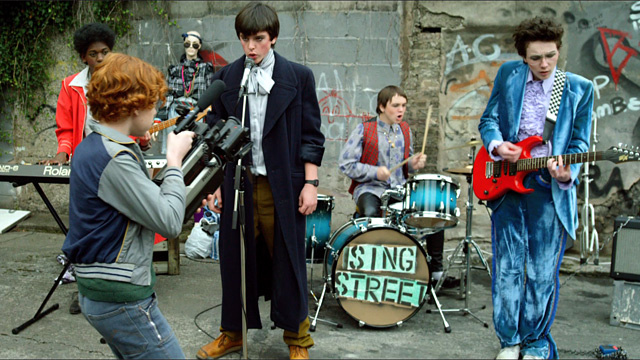
Sing Street begins in 1985’s Dublin with 14-year old Conor (Ferdia Walsh-Peelo). His parents are on the verge of splitting up, there are money problems, and he’s sent to Synge Street, a Christian Brothers school where Conor is tormented. But one day, after he spies a beautiful girl (Lucy Boynton) who says she’s a model across the street, he decides to start a band so he can woo her. Thus begins Sing Street, the band he forms with classmates. The girl, Raphina, agrees to be in their 80’s-tastic videos, and the two start working out the various problems in their lives.

Sing Street has a lot of different stories in it, making it a messy film. There isn’t a lot of distinction between what is a side plot and the actual plot. Is it a coming of age story? A story about Conor’s family problems? A story about him and his brother (Jack Reynor)? A love story between him and Raphina? A story about him overcoming trying circumstances? It’s all of these. But it works in a way, because life is messy, too.

One thing I appreciated was that the circumstances Conor, Raphina, and their families find themselves in are never romanticized. In Begin Again, the struggles of the two main characters seem nicely packaged in a way that were easily solved by the end of the movie. Once is better, showng that music and friendship helps, but life struggles are not something that can be resolved in two hours. With a movie like Sing Street, which could have easily fallen into an 80’s nostalgia trap, the character’s hardships could have come across as rosy. They never are. It is painful to watch Conor’s parents fall apart, and him be bullied at school. However, the movie is still very hopeful. It is, like Conor once describes his music, happy-sad. Things are hard, but we’re going to power through it. I think that is a very commendable message.

As for the constant peril of falling into an 80’s nostalgia trap, it never does. My dad explained to me after the movie that the movie made him appreciate in a fresh way the chord changes and creativity shown during that decade of music. Sure, there was weird hair and bad fashion and terrible music, but there were some good things, too. Carney, being so close to the source material, made the depiction of the era and setting very grounded. The city seemed lived in, the settings seemed familiar to the camera in a way that they didn’t in Begin Again, but did in Once.

Regarding similarities with Once, Sing Street has a lot of them. There are a few direct scenes almost ripped from the screenplay of Once. Those aren’t quite welcome. What is welcomed is the naturalistic performances, especially by the two leads, and good music. While not as memorable as Once, I still went and listened to the soundtrack on Spotify- “Drive it Like You Stole It,” being a stand-out. These movies are consistent, if for no other reason than an original song Oscar nomination.

Going back to your roots seemed to have done the trick for John Carney. Sing Street, while not perfect, is an improvement from Begin Again. It reaches high and tickles the ceiling. It is extremely enjoyable, and feels very personal. Carney, with a little more work, can take a good style and apply it to a new story.

One last thing to think about, as we possibly draw a close on this musical trilogy. Once was about how music can bring redemption. Begin Again was about how music can bring transformation. And Sing Street is about how music can bring empowerment. Which, if you think about it, these themes go in order.

But I’m calling it now- the next Carney movie is going to be about a rock star and the relationship with her tour manager, and how they start using music to give to charities. How music can bring about change. Let’s see if I’m right.

-Madeleine D

THE JUNGLE BOOK

I remember watching the original 1967 Jungle Book when I was a kid. I’m not sure how many times I watched it, but I have vague memories ingrained in my head of sitting on the couch, watching Mowgli’s adventures. I had a complicated relationship with the movie to say the least. I adored Baloo, was terrified of the monkeys, and loved the songs. On the other hand, I thought King Louie was weird, Shere Khan never struck me as a scary villain, but Kaa was terrifying. The vultures had funny accents, and the girl seducing Mowgli at the end was weird.

But I remember the movie vividly, so when I saw the commercials for the new Jungle Book (2016), I was not impressed. Where was the fun? Where was the color and singing and personality?

The-Jungle-Book-movie-poster

Then some of my favorite reviewers started raving about the film. It quickly became one of my top anticipated movies of the year. And that’s how I found myself sitting with my sister and friend in the theater the Friday it opened, waiting expectantly for an engrossing experience, as the critics had promised. Maybe I could replace my fuzzy childhood memories with a new, fresh one.

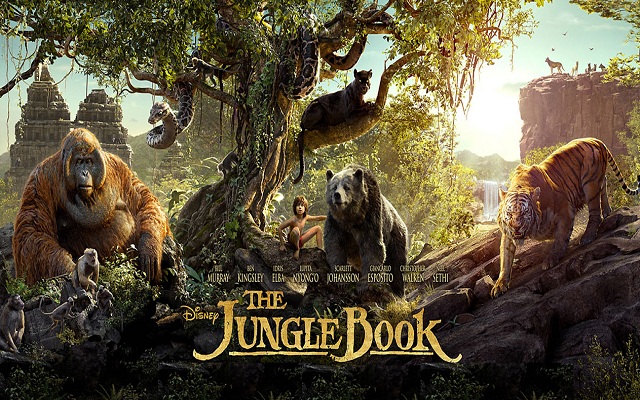
The plot of The Jungle Book is simple enough. Mowgli (Neel Sethi) is a human child who is found in an Indian jungle by the panther Bagheera (Ben Kingsley). Bagheera gives Mowgli to a pack of wolves to be raised. When Mowgli is older though, a tiger named Shere Khan (Idris Elba) swears to kill Mowgli, prompting Bagheera to take Mowgli to the man-village. However, their mission is interrupted by the cast of colorful characters they meet along the way.

When I started watching the film, it took me a while to get used to the hyper-realistic CGI used. It reminded me of Pixar’s The Good Dinosaur, which has photo-realistic scenery, and cartoony characters. That serviced the story well, and I liked it a lot. Here, I think the difference was because I knew in my head everything was fake, and that the one flesh and blood actor there was interacting with green screen. It messed with how I viewed the way the characters, scenery, and actor interacted.

But, after a few minutes, I got used to it. The visual effects truly are masterful, and I think worthy of some technical Oscar nominations. And the fact that Neel Sethi was able to act so well with nothing, just increases my respect for him.

In fact, the whole cast was wonderful. I especially enjoyed Bill Murray (hilarious as always) as Baloo and Ben Kingsley (I want Ben Kingsley to narrate my life). I also really liked Christopher Walken as King Louie and Scarlett Johansson as Kaa. Lupita Nyong’o and Idris Elba I also thought were really solid. In fact, the only cast I am more excited about than this cast is the one for Andy Serkis’ upcoming Jungle Book: Origins (2018) with Benedict Cumberbatch, Cate Blanchett, and Christian Bale.

THE JUNGLE BOOK
THE JUNGLE BOOK (Pictured) MOWGLI and BALOO. ©2016 Disney Enterprises, Inc. All Rights Reserved.

The Jungle Book is very respectful to its source material, and is a pretty straightforward retelling except for a few changes. These changes overall help make a more coherent plot, which I appreciated. The acting was wonderful, the story solid, and effects were great. I was engaged throughout the whole movie. I think it will appeal to both kids and adults, although there are some moments that are too intense for young children.

But as I left the theater, something was nagging at me. Finally I was able to put my finger on it.

This Jungle Book just isn’t as much fun. It had funny moments for sure. But there is a distinct lack of personality in comparison to the original. The original was stylish. It had energy and heart. This Jungle Book has heart, but instead of proclaiming it in a loud voice, it says it in a whisper. The obligatory, half-hearted performance of the two famous songs “Bare Necessities” and “I Wanna Be Like You” have none of the pizzaz of the original.

So The Jungle Book is a solid film, full of good things. But there is nothing great, nothing that will stick in your memory. I hope future Disney live action remakes will make sure to infuse more style and personality to their movies, because for now, I’m going to stick with my memories of seeing the original.

-Madeleine D

BATMAN V SUPERMAN: DAWN OF JUSTICE

This review contains spoilers.

Batman-v-Superman

From the very beginning, people had their doubts about Batman v Superman: Dawn of Justice.

    The title is too long!

    I don’t like Zac Snyder!

    I hated Man of Steel!

    Gal Gadot?

    Jesse Eisenberg??

    BEN AFFLECK??????

    Marvel is way better.

    They just want to make money!

After the trailers came out, very few people were comforted.

The Batman suit looks stupid.

    They showed too much!

    It looks confusing.

    BEN AFFLECK??????

And now the event of the century has come. Two of the biggest American icons fighting. But to add to the doubts, turns out Batman v Superman has its work cut out for it, seeing as it’s not the only superhero movie about a genius billionaire vigilante asking for accountability against the boy-scout of the people with superhuman abilities (Civil War, anyone?).

Batman v Superman is set up, at least in its first act, as an essay of sorts. The claim: Superman and Batman must fight to decide who is a true hero. Evidence is first about Superman. We see the controversial fight in Metropolis from Man of Steel from the perspective of Bruce Wayne. We see the people dying, orphaned, losing everything. Bruce watches this all. His anger is justified. Then we see the next set of evidence. Batman has his own reign of terror, so much so that the people he saves fear him. He brands villains, kills easily, and calls himself a criminal. Then we go back to Clark Kent, who is just a confused young man trying to decide whether he wants to keep his calling to be a god. Then we go back to Bruce Wayne. He’s lost the people he cares about. He’s tired. He just wants to leave behind a legacy. And he finds that in Superman. His legacy could not be just getting rid of criminals, whom, he argues, are like weeds: they keep coming back. But to take down Superman? The god? That is something permanent. As for Superman though, the Batman is a threat to justice, working outside the law. Not that Superman can say much to that. He himself has gone outside the law to save Lois Lane, even destroying a village in the process.

But Batman isn’t the only person out to kill Superman, and that’s where the second act begins. A wrench gets thrown in. Lex Luthor.

batman-vs-superman-lex

This is a complicated plot, with various other ones I haven’t even touched on thrown in. There is at least one side plot that could have been eliminated without hurting the story, world-building, or characters. Then, if you wanted to get rid of the DC Cinematic Universe building there goes another three side plots. And if you wanted to rid of the half-Man of Steel sequel, and the beginning Batman movie, you have only one story left- the actual fight.

I have a lot of respect for the movie for trying to fit that many stories into one film. Some of it works and fits together. I like that they took their mistakes from Man of Steel and confronted them, basically making a movie out of it. Later in the film they completely remake those same mistakes, but hey, effort.

As for the building of the DC cinematic universe, it doesn’t succeed in getting me excited. (Never mind the fact that this world-building is so comic-book based to the point that I had to look up what certain symbols meant and who certain characters were.) Warner Bros is rushing it, to replicate what Marvel took years to do. I think they should focus on hitting each beat. They don’t need to have a two part epic, they don’t need solo films for a dozen characters in between. That will come. If the DC movies don’t want to be compared to Marvel, they shouldn’t be following them so closely.

But since I can’t blame them for wanting to replicate a design that has made billions of dollars and fan love worldwide, we need to deal with the movie we have. One that is messy, brilliant at times, but overall very….

Empty. It’s a movie that has an elaborate, beautiful, seemingly intelligent cover. But when you dig down, it’s very empty. The world-building is there, but the world still feels dark and soulless. The cinematography is gorgeous but there is nothing on screen that hits me emotionally. The characters, while well-acted, don’t relate to me. I don’t understand Superman’s pain because it is so far removed. I don’t have Batman’s anger, because I didn’t know the people who died. The talk of gods and monsters are never resolved. We never get an answer if Superman is a god or not. And while that might spark debate, it seems more like lazy writing. Pseudo-intellectualism.

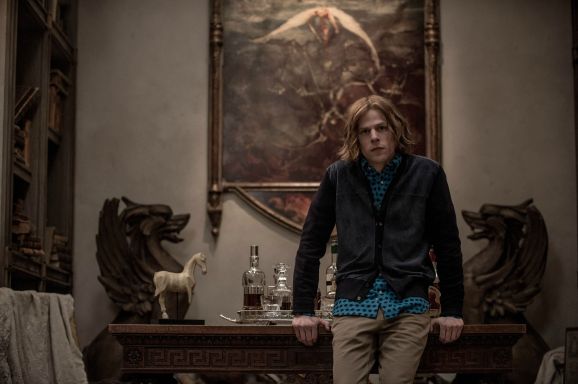
Much of that talk comes from Lex Luthor (Jesse Eisenberg.) He was a controversial pick from the start. People have criticized his performance for being too much like his performance as Mark Zuckerberg from The Social Network, or an imitation of Heath Ledger from The Dark Knight. This might have some truth in it. But I’d much rather see a film take a risk, try something new and reinterpret the character than just make another reincarnation of it. A reboot needs things to redo. So I enjoyed Jesse Eisenberg’s take on it. His eccentricity made sense. A man who is able to convince two superheroes to fight each other, orchestrate a bombing at a State Senate, and kidnap various people needs to be on the crazy side.

Ben Affleck is a very good Batman, and an even better Bruce Wayne. This Batman is more murderous than any incarnation before, but it doesn’t seem out of place in this universe. And his Bruce Wayne is more proactive and exciting than Christian Bale’s before him. Jeremy Irons as Alfred is good too, but has very little to do.

Henry Cavill as Superman has all the tools to be a great Superman and Clark Kent. This is an interesting Superman. Not a boy scout but a torn young man wrestling with his powers. His relationships with his mom, ghost of his dad, Lois, Perry White, and Batman are very defined. Once he comes back (he’s confirmed for Justice League) I hope to see even more development for him.

Amy Adams tries extremely hard to make Lois Lane a great character. She has more to do here than in Man of Steel. But, she is still being used as a plot device and grows very little as a character.

Wonder Woman was one of the biggest wild cards in the movie. While she doesn’t get a whole lot of screen time, she makes a very good impression. Gal Gadot makes Diana Prince relatable, (she checks her email! Just like us!) and Wonder Woman’s entrance is fantastic. Her theme song is an electric guitar solo for heaven’s sake! (the whole score by Hans Zimmer and Junkie XL is fantastic) I’m very excited for her upcoming movie. As long as they make it a point to sell the movies to men and women, not just making her “the female superhero,” it should be a great start to hopefully a new wave of more diverse superhero movies.

There are some other good things about the film. The actual fight between Batman and Superman is chillingly dark. Watching Batman completely brutalize Superman, the way he was brutalized by Bane in The Dark Knight Rises, had me cringing, sitting on the edge of my seat. Especially because, for the first and last time in the movie, I was emotionally invested. I cared that Martha Kent was saved.

batman_vs_superman_still

Now in a perfect world, the movie would have ended there. I really liked the connection between Martha Kent and Martha Wayne, I had never made that connection before. There is some really good writing. Holly Hunter takes a throwaway role and makes it great. The bombing of the Senate scene was breathtaking. But since it is not a perfect world and not a perfect movie, it keeps going.

Now I understand movies feel the need to get bigger and better. But when your bigger and better is a slug monster that looks like a cross between The Abomination and a Cave Troll, a fairly generic fight isn’t the ending we needed.

The true problem of Batman v Superman is that it is a wanna-be prestige picture that is the geekiest (and I mean that in the most endearing way, my fellow nerds) comic book movie that has ever been on screen. You have to know these storylines, characters, vague references, and symbolism from the comics to understand a lot of what is going on, because unlike other cinematic universes like Marvel, there is only one other movie to give you any background. At the same time, you have to have an appetite for a lot of often empty talk about gods, monsters, men, and the meaning of life. A lot of people can do both. This movie however, cannot. This leaves us with a movie that wants to be a lot of things, and while it succeeds at a lot, utilizing everything off its bucket list, it never fully resonates with the audience. At least, the audience who is still on the fringes of whether they want to get into this world at all.

-Madeleine D

MIDNIGHT SPECIAL

For this review, I’m going to steal the IO9 format for reviews, a Q&A Style.

What is Midnight Special?

It is the newest film by Jeff Nichols, who, as my dad said before the movie, was “3 for 3” in good movies. He didn’t say “4 for 4” after the movie.

midnight-special-poster1

Okay but doesn’t your dad like Terrence Malick and poetic films and foreign language films? This looks like a cool supernatural road-trip movie.

Yes, but that isn’t the problem. He loves all sorts of movies. If it was a cool supernatural road-trip movie he probably would have liked it a lot more actually, but it wasn’t.

So what is it?

A good idea that had no ending that someone greenlighted anyway.

So the ending is bad?

The ending is so bad it invalidates the whole film.

Okay. but back up. Is it good before the ending?

Ehhhhhh

???

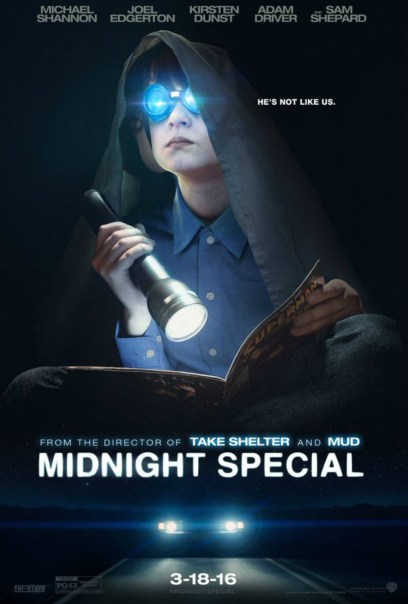
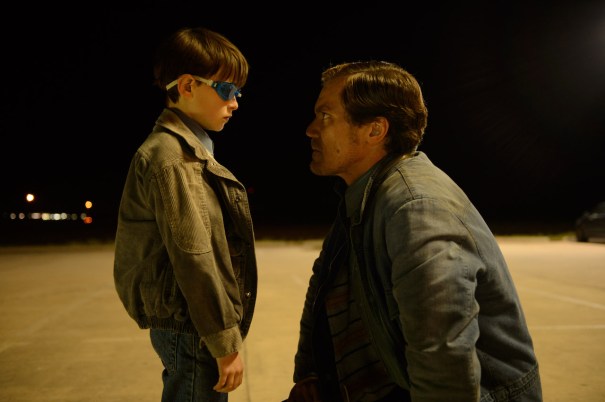
Let me start from the beginning. [Warning: Spoiler Alerts ahead!] So the story is about Alton, who is a little boy (super cute Jaeden Lieberher) with unusual abilities. He can shoot lasers out of his eyes, bring down satellites, create bomb-thingies, scream out government coordinate thingies, and a lot of other random thingies. And that’s all you’ll ever know about that. A cult living on a ranch is created after they hear him speaking random numbers, and somehow sermons are created from the numbers.

????

Exactly. So the government sends Kylo Ren to find Alton, who is on the run with his father, Roy (a good, but somewhat muted Michael Shannon), mother Sarah (Kirsten Dunst, who is reduced to looking mildly upset), and their friend Lukas (Joel Edgerton.) Their mission is to get Alton to a field, which they have been planning for for years, yet the day before they get there, Alton tells them what will actually happen when they get there.

That sounds cool, though.

Yeah, until the end when Alton and his mom finally get to their destination and all that happens is that Tomorrowland from Tomorrowland shows up, Alton goes off with some misty alien dudes (misty because the special effects budget ran out,) and Sarah looks mildly unhappy, cuts her hair to signify change, and Lukas and Roy go to jail.

The end.

So was Alton an alien the whole time?

WE NEVER KNOW. All he says is he is “from the future” and “a distant time” and he doesn’t belong here and his parents act like this seems reasonable, odd since they gave birth to him.

So Alton was a plot MacGuffin! I figured the movie out. It was an artistic statement.

No. Sorry, you didn’t figure it out. A plot MacGuffin works if in the end it doesn’t matter. The journey is what matters. EXCEPT THE JOURNEY HERE DOESN’T MATTER IF WE DON’T KNOW WHAT ALTON IS. The journey is fairly entertaining, and I am a huge sucker for road trip movies, but the motivation, the character’s sympathy, all rests on figuring out what Alton is. When it turns out it doesn’t matter, the journey is useless, the characters are as unreachable as ever, and why the heck did we even bother?

Maybe it was a political statement.

Don’t you dare use that line on me, that is my line and it does not apply here.

Okay, so the ending was bad, making the whole movie’s plot bad. Were there any redeeming things?

The acting was good. Even though the characters were hard to relate too, they were all well-acted. The style of the film was nice. The world-building, with the simple ways the deep south was represented, was subtle. And I really enjoyed a lot of the action. The car chase at the end and the kidnapping of Alton were really exciting and kept me on the edge of my seat. I also really liked Adam Driver’s performance (save for some of his plot conveniences, casually explained by the screenwriter as, “Look! He’s a nerd! He could obviously figure this out!”)

MIDNIGHT SPECIAL

Adam Driver plays a nerdy government worker that creates plot conveniences?

Yes.

Okay, so should I see it?

If you like Jeff Nichols, go see it. If you like road trip movies with random endings, go see it. If you like Close Encounters of the Third Kind, don’t see it. And if you’re like all the critics who are praising this movie for its vagueness, go see it.

What if I need to choose between seeing this movie and another movie?

Choose the other movie.

What if that other movie is God’s Not Dead 2?

Then, for the love of cinema, save your money for The Jungle Book.

-Madeleine D