

This year, Paul Schrader, best known for his collaborations with Martin Scorcese, particularly as the screenwriter of Taxi Driver, released the final film in his unofficial “Man in a Room” trilogy. The trilogy began with 2017’s First Reformed, starring Ethan Hawke as a troubled pastor with a dark past, and was followed by 2021’s Card Counter, starring Oscar Isaac as a troubled poker player with a dark past. Now he ends this evocative series with this film, starring Joel Edgerton as a troubled gardener… with a dark past. The trilogy is remarkably consistent in tone and themes, asking questions of guilt, shame, and redemption with an explicitly spiritual lens, often in a delightfully odd way (Schrader makes use of magical realism, and has a knack for putting together unusual ensembles that somehow work).
But, as the twenty people who actually saw Master Gardener will certainly attest to, I think this is one of the most confounding, maddening films in recent memory. Yet, after discussion with friends and some thought, I am here to propose an interpretation of the film. Is this what Paul Schrader was going for? I honestly can’t say. But here we go:
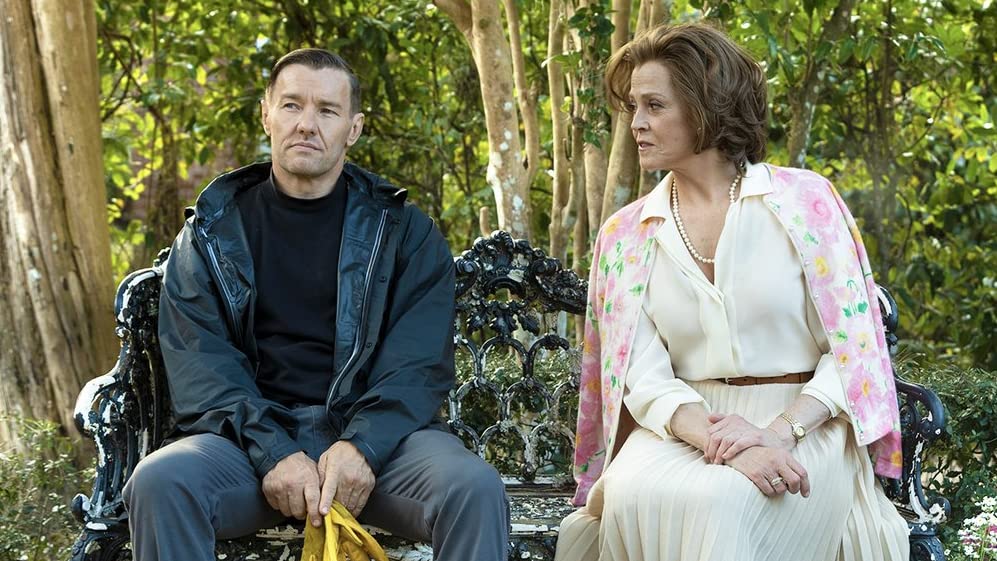
I think Master Gardener offers an allegorical take on the Gospel, where Narvel (Edgerton) represents mankind, Norma (Sigourney Weaver) represents the world/the devil, and Maya (Quintessa Swindell) represents Christ (or maybe more broadly, God’s mercy).
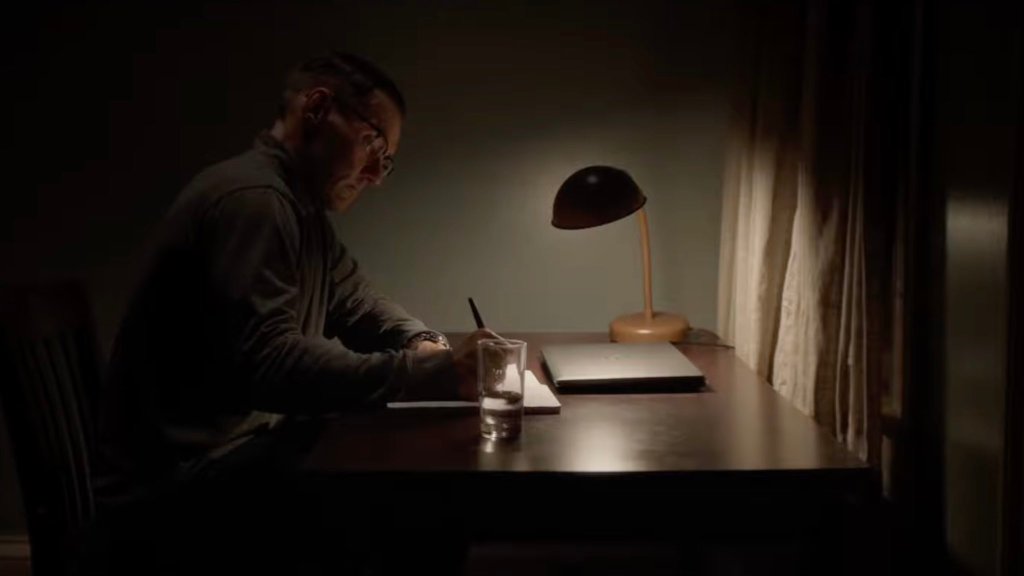
When the movie begins, Narvel is a lonely man with a secret: He was once a white nationalist and has white supremacist tattoos covering his body. He eventually reformed his ways and became an informant, entering witness protection and taking a job as a head gardener at an estate owned by a wealthy woman, Norma. Narvel spends his days toiling in the garden, and seeking redemption through creating life, instead of ending it.
We soon learn, quite surprisingly, that Norma and Narvel are in a special relationship, with Narvel basically being Norma’s kept man, which he seems stoically resigned to. After all, she did give him a job when he was at his lowest. But despite giving him this second chance, Norma never lets Narvel forget his past. She holds his past over him as a weapon. In a scene when Norma takes Narvel to bed, she makes him take off his shirt so she can see his tattoos, obviously relishing them. Narvel lives in an in-between state, where he is technically no longer tied to his past, but is still in every meaningful way still held captive by it.
The image of a garden is a deeply significant one in the Bible. Genesis recounts the story of creation, where God creates man and woman and places them in a garden, Eden. He instructs them to be stewards of the garden. But when Adam and Eve eat the forbidden fruit of the Tree of the Knowledge of Good and Evil, God casts them out of the garden. The whole rest of the Bible is, in essence, the story of God restoring his people back to the garden, back to the place where they are in perfect communion with him, and sin is no more.
In Master Gardener, Norma’s estate is beautiful, but as we see Narvel’s life, it is far from bucolic. Like how Satan is described as the ruler of this world (the “prince of the power of the air” in Ephesians 2:2), Norma rules over the broken garden and tortures Narvel by offering cheap imitations of grace and forgiveness while never really giving them to him, and keeping him locked in reminders of his deepest shame.
But then enters Maya, Norma’s newly orphaned grandniece, who is Black. Norma instructs Narvel to take Maya under his wing and teach her about the gardens. Soon, Narvel and Maya fall in love. Norma finds out, and in jealousy, casts them out of the garden.

Maya and Narvel hit the road together, and soon Maya discovers Narvel’s white supremacist tattoos. While she is at first angry and betrayed, within what seems to be only a day, she reconciles with Narvel, he agrees to get them removed, and they consummate their relationship. They then go and find some drug dealers who had assaulted Maya and vandalized Norma’s gardens, and Narvel breaks their kneecaps (this is a Paul Shrader film, after all).
After their revenge mission, they return to the estate, and Narvel confronts Norma, telling her that he and Maya are getting married and will be living on the estate. Norma doesn’t take this well and tries to shoot Narvel, but the gun doesn’t have any bullets. The movie ends with a long shot of Maya and Narvel dancing on the porch of their new home in the gardens.
This movie is so weird!!!
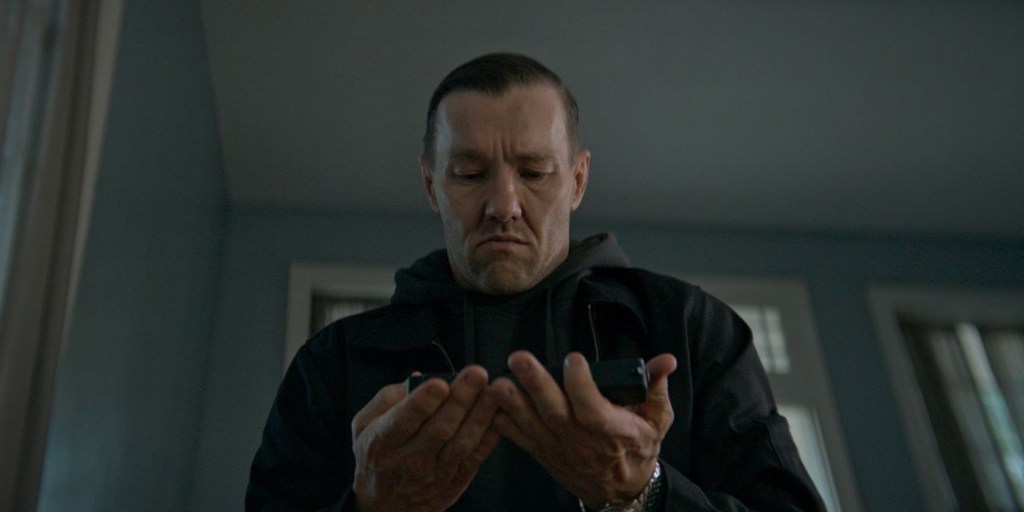
So, Maya is clearly a force for redemption in Narvel’s life. Her acceptance and forgiveness of Narvel’s racist past, her love for him and her belief in his ability to change are all what he has been seeking all along. This is truly the second chance he wanted, that Norma only provided a dim illusion of. This, the Bible teaches, is the kind of love Christ offers us. Paul writes that “You were dead in the trespasses and sins in which you once walked…But God, being rich in mercy, because of the great love with which he loved us…made us alive together with Christ—by grace you have been saved” (Ephesians 2:1-4). Maya wants Narvel to remove his tattoos to show that he is a new person and is no longer captive to the sinful, evil ideology he once held. Likewise, Christ loves us too much to let us stay captive in our sins. But he first loves us without condition, and only his love can lead to real change.
Paul Schrader is, famously, well-versed in a Christian worldview, and had a Calvinist upbringing. There are unmistakable religious themes explicit throughout his work, and Calvinist ones, particularly in this trilogy. A key component of Calvinist theology is the idea of “Unconditional Election” which means people do not choose God first; God first chooses to save them. It interprets Paul’s word as us being “dead in trespasses and sins,” as meaning that in our natural sinful state we would never choose God on our own. Instead, God chooses people to save and moves their hearts to accept him. It is absolutely unconditional on the part of the believer.
In the movie, we are to assume Narvel regrets his past (he became an informant and left it behind, after all). But he is not particularly repentant nor does he directly ask for Maya’s forgiveness. But Maya offers her mercy quickly, without his initiation. The way this plays in the movie feels rushed and sloppy. But if you read it through this spiritual lens, this feels in line with the Calvinist framework for viewing salvation.

At the end, Maya and Narvel, now married, return to the gardens. The Bible ends with a marriage as well. In Revelation, the final book of the Bible that contains a vision of the end times, ends on the Marriage Feast of the Lamb, the marriage of Christ and his Bride, which is the Church (Ephesians 5:25-27; Revelation 19:7-9, 21:1-2, and 21:9-10). In these final days, Christ, united with the church, will complete the full restoration of the world, vanquishing all evil, making all things new, bringing Heaven to Earth, and completing God’s great quest– to dwell with his people (21:3-4). So too do Narvel and Maya, through the fullness of their love, return to the gardens, now as agents of restoration, bringing life to the estate.
This presents a fascinating bookend to the environmental questions raised in First Reformed. In First Reformed, Pastor Ernst Toller spirals into an existential question regarding if God can forgive humankind for its destruction of the environment. His despair leads him to plan to suicide bomb his church while business leaders who run a polluting factory are in it. But his bombing attempt is stopped by a woman named Mary, who is pregnant. I interpret this as Mary being an embodiment of hope, with her clear connection to the Virgin Mary bearing Jesus. Toller is saved by a radical act of grace and is offered hope. It doesn’t necessarily quell all of his fears, but it protects him from the ultimate act of despair. The film ends on this note of ambiguity. Toller is saved, but for how long? And what of the rest of creation? In Master Gardener, Paul Schrader offers up a surprisingly optimistic suggestion: perhaps divine love is the solution.
Now, I will be the first to admit that this reading of the film as a hyper-allegory doesn’t fully work, nor do I have any confidence this is what Schrader intended. There are massive holes in this interpretation. For example, if Maya and Narvel are like Christ and the Church, it’s kinda strange that their journey includes busting the kneecaps of some drug dealers. But I guess you gotta fight for love? Likewise, Maya’s drug addiction doesn’t fit with a reading of her as a perfect embodiment of Christ and/or Mercy.

And none of this even touches on the offputting racial politics of the film, where a young Black woman forgives and somewhat “saves” a former white supremacist. The fact that it all just comes down to romantic love is… well it’s audacious.
But so is grace.
I certainly don’t think Master Gardener is the pinnacle of thoughtful movies about race, and I don’t think it is the only Christian response to questions about racial forgiveness and reconciliation. If this were truly a movie about moving on from white supremacy in an interracial relationship, I think it fails at any kind of nuance. But, Schrader, I believe, is intentionally using a situation that most audiences would find unforgivable–white supremacy– to make us squirm at the radical implications of the Christian doctrine of grace (and Schrader essentially admits that in this interview, saying the movie “isn’t about racism or gardening”). Norma calls Narvel and Maya’s relationship “obscene,” and it’s true- that level of grace is obscene. It’s offensive to us. That is why the Gospel is, at first, painful, because it assaults our pride and our understanding of conditional, earned love.
But this also points to some of the deep frustrations I have with the movie. Norma doesn’t just refer to the grace of the relationship as obscene, Norma also refers to the relationship as obscene because it is between a middle-aged man and a barely-20-year-old, one where he was in a position of authority over her. It’s a deeply weird relationship that feels uncomfortable to watch on screen (and it’s not simply about an age gap, it’s more about how everything in the film, from the performances to the framing, makes the relationship feel like that of a father/daughter or mentor/mentee relationship, but the text is telling us its a romance). Why did Paul Schrader make Maya so much younger than Narvel, so Norma’s complaint that he’s “playing Hubert Humphrey in his own production of Lolita” actually feels valid? The question of the appropriateness of their relationship distracts and unnecessarily complicates what the relationship is trying to depict thematically.
Likewise, other parts of the film feel disjointed, like Narvel and Maya’s little revenge plot. The plotting and pacing issues lead to a movie that is on the cusp of fascinating ideas, but never quite executes them, and has too many messy choices that I think hide the actually radical things Schrader might be saying. Because of all of this, I’m not sure what Paul Schrader was going for. But this film, and this trilogy especially, have made me think and feel, both ecstasy and irritation. And that’s what makes it special, and worth considering.
– Madeleine D.
 madeleinelovesmoviesdotcom
One thought on “Offering an Interpretation of Paul Schrader’s “Master Gardener””