Christian Vocation and “The Bear” Season 2

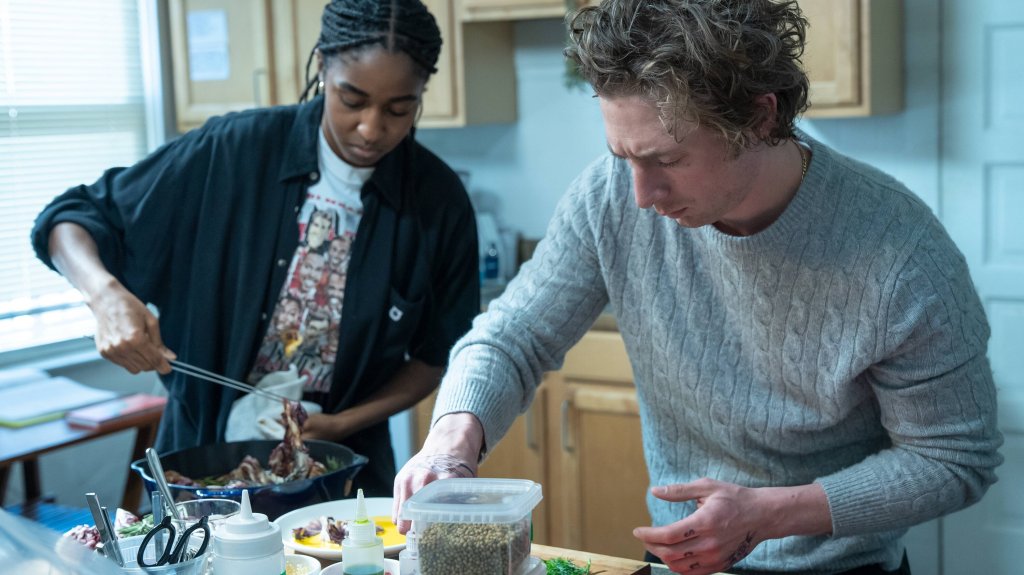
FX and Hulu’s The Bear recently dropped its second season. The show, which came out in relative obscurity last summer but then exploded in popularity, has become a phenomenon and is being hailed as one of the summer’s best shows. The first season followed Carmen “Carmy” Berzatto (Jeremy Allen White), a fine dining chef, as he returned to his hometown of Chicago to take over his deceased brother’s floundering sandwich shop. Season 2 finds Carmy and the staff shutting down the sandwich shop and opening a fine dining restaurant, The Bear, in its place. The real heart of the show is its ensemble of the rough-around-the-edges kitchen staff, and season two finds many of them embarking on journeys of professional and personal growth. The show has many themes- the ruthlessness of the culinary world and the toll it takes, family trauma, found family, the sacrifices it takes to become the best, and cooking as hospitality.

Woven in with all of those themes is a beautiful ode to vocation, and an honest one. And as I watched, I saw in some of the character’s stories illustrations of some of the core Christian doctrines around vocation. The Bear is not an explicitly religious show, but that doesn’t mean it can’t be deeply insightful, even biblical, about the nature of work. So that is what I want to explore here: how The Bear, particularly in this season, gives us insight into how a Christian can think about vocation.

In Tim Keller’s book, Every Good Endeavor, he starts off by analyzing a short story by J.R.R Tolkien, called Leaf by Niggle. In the story, a painter named Niggle tries to paint a gorgeous tree. He spends his life on this painting, yet due to circumstances and his perfectionism, he is only able to paint one really good leaf on the whole tree. Then Niggle dies, feeling like a failure. In the afterlife, Niggle is invited to a heavenly country, where he sees the tree he had always imagined in his mind and tried to paint. The tree is real. The tree is real and beautiful and will be enjoyed forever in this heavenly place. In retrospect, we see that Niggle’s life on earth was about reflecting and imitating and making known to others this real, beautiful thing- even though his efforts were small and clumsy. Because the tree is real, Niggle’s painting, no matter how incomplete, had meaning. 

In this, we see a vision for Christian vocation that is both realistic and beautiful. As Christians, we believe that God is in the business of restoration, and he is truly making all things new (Revelation 21:5). He has not abandoned Earth; he is restoring it and will bring it to perfection in the fullness of time. And in the meanwhile, he delights in using our human work to bring about that restoration. That restoration comes because we know and believe in a deeper truth, which is that of the work and love of Jesus. What the world sees as lost causes, the Christian can see as a yet-to-be-used canvas of God’s mercy. That is, in essence, Niggle’s Tree, the truth that a Christian can work from and find hope and inspiration in. Our efforts– artistic or otherwise– are best when they are reflections of God’s truth and his plan for the world. 

Yet at the same time, we live in a broken world, and are sinful, imperfect vessels. Therefore, none of the good work we do will be complete in this world. Like Niggle, circumstances, and our own selves, get in the way of good work. Most of the time, our work will not look fruitful at all; it will look like failure, or an incomplete mess. This is the result of the curse given to Adam and Eve in Genesis 3 after they sin. God tells them work will no longer be always pleasurable or easy. It is now cursed, characterized with “thorns and thistles”, and only “by the sweat of your face” (3:18-19). Both of these realities hold comfort. When our work is frustrating, we find comfort in the truth that it is that way because of sin, and we can’t expect our work to always be good. This protects us from the bitterness and resentment that comes with unrealistic expectations. But at the same time, our work is always inherently valuable when it is done to please God, because it is like the leaf- it is connected to something that is real and perfect, even if our efforts are not.

In The Bear, various characters get glimpses of “the tree.” They get a glimpse into what a beautiful, perfected version of their work is, and it is what pushes them to strive harder to better their own craft and, more importantly, value the human relationships their work gives them. This is best illustrated in episode 7, “Forks,” which follows Richie as he interns as a stage at a high-end restaurant. He arrives at the restaurant angry at the position and bitter about his life; he lacks purpose and fears he will soon be driven out of Carmy’s restaurant, a restaurant he’s not even sure he wants to work in but is the only place he’s ever fit in. 

But as his work goes along, he gains an appreciation for the staff who work there. He sees the pride the employees take in their work, and how they are able to link all of their work to the relational interactions they have with guests. The hospitality of the restaurant is not ultimately about the quality of the food, it’s about the way food and presentation can be used to make someone feel seen, and therefore cared about. When Richie serves a special deep-dish-pizza-inspired plate to some guests visiting Chicago, he is connecting with them through service, and the delight both he and the guests experience is transcendent. That is the tree, that is the vision of what fine dining can be that Richie takes back with him when he goes back to The Bear. And even though his time at The Bear won’t necessarily be made up of transcendent moments (the opposite, actually), the newfound respect for himself and his vocation fuels him and makes the way he does his work more beautiful and purposeful, no matter the actual impact of the work itself.

Meanwhile, Tina, Ebra, and Marcus are also all sent off to nurture their talent, with the first two going to culinary school and Marcus taking an apprenticeship in Copenhagen to study under a dessert chef. After butting heads with Sydney in the first season, Tina has now softened and become more open to change and focused on sharpening her craft. This openness earns her the rightful role as Sydney’s sous chef and this season she flourishes. Ebra is hesitant and intimidated by culinary school, but eventually finds the courage to continue. And Marcus is finally given the space for his interests to be nurtured, and is reminded of something important by the other chef, Luca, which is that there is freedom in realizing you can’t, or won’t be the very best, and that humility actually allows you the chance to learn. And, Luca adds, that you have to spend time out in the world to be any good in the kitchen. Which is to say, we can’t be solely defined by our work.

One of the best moments of the show happens in the penultimate episode, when Natalie admits to Sydney she hasn’t eaten that day, so Sydney makes her an omelet. Sydney later tells Carmy that that was the best thing she did that day. Sydney is being reminded of the tree– that this job is about serving and loving someone else with the gifts she’s been given. That is what the restaurant is ultimately for. 

Tina lays down her pride to become better than she ever thought she could be. Marcus and Ebra take the leap to invest in their gifts and embrace the humility it takes to get better. Richie learns how to work with a purpose that is outside of himself. Sydney is reminded of the true heart of her work.

But Carmy, tragically, is the one who doesn’t learn any of this. During the opening night of the restaurant, Carmy gets locked into the walk-in fridge. Despite his setback, the staff is able to handle the rest of the night without him, successfully finishing the night. But Carmy can’t handle it. Instead of being proud of the fact that his staff was strong enough to handle things without him, he spirals, even ending up (accidentally) telling his girlfriend Claire that their relationship was a waste of time and focus. 
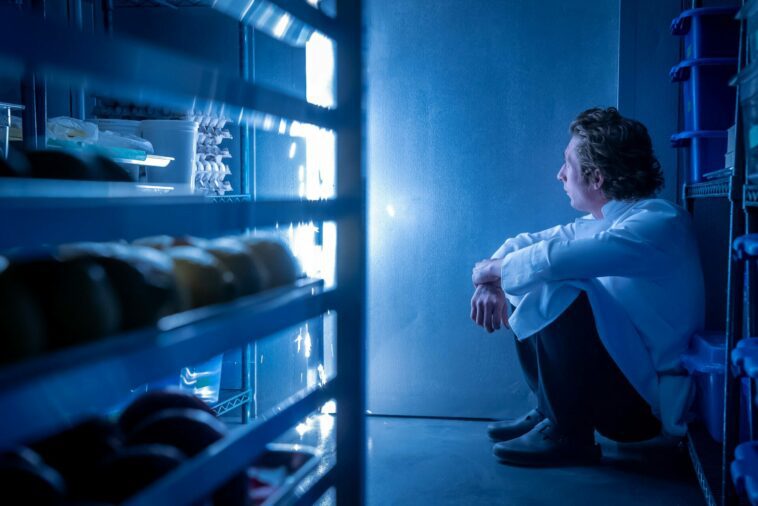
Richie then calls him out, comparing Carmy to his mother Donna (played by Jamie Lee Curtis), who we are introduced to in a flashback episode. In that episode, Donna, on the brink of a meltdown, makes the family an extravagant holiday meal, but no one can enjoy it because she’s martyring herself over it. She complains that she’s overwhelmed, then won’t take any help offered to her, and when the meal is done, she won’t accept or believe any amount of compliments about it. She desires to cook for her family as an act of love and sacrifice, but she is so consumed with herself that it isn’t anything but a narcissistic act of attention.

Carmy might not be so far gone, but in that moment, that’s what he’s doing. He is not enjoying the restaurant for what it is and for the satisfaction of using his gifts and blessing others with it; or seeing his staff step up and do their jobs beautifully. Instead, he’s mourning that, by being stuck in the fridge, he is not being able to prove himself and justify all he’s sacrificed. And that is what makes it impossible for him to believe in the chance at a romantic relationship, or any life outside of the kitchen. As long as he finds all his worth in his job, he can never imagine a life outside of it. A Christian view of vocation counteracts this, because Christians don’t find their worth and identity in themselves or their skills, they find it outside of themselves in Christ. Carmy has chased his dreams and given it everything he has, but it hasn’t made him happy, because the perfect “tree” will always be beyond himself and his own abilities.

The season ends with uncertainty: the staff has experienced some triumphs, and the restaurant’s first night was a success, but various relationships are in a precarious place, and Carmy is once again his own worst enemy. Most of the characters, through their experiences this season, have seen the tree. They have seen the deeper reality underneath their work, and it has resulted in more humility, teamwork, and respect for one another. But will they be able to hold on to that vision and mindset against hardship?

I can only imagine what will be cooking (sorry not sorry!) for season three.

– Madeleine D.

Offering an Interpretation of Paul Schrader’s “Master Gardener”

This year, Paul Schrader, best known for his collaborations with Martin Scorcese, particularly as the screenwriter of Taxi Driver, released the final film in his unofficial “Man in a Room” trilogy. The trilogy began with 2017’s First Reformed, starring Ethan Hawke as a troubled pastor with a dark past, and was followed by 2021’s Card Counter, starring Oscar Isaac as a troubled poker player with a dark past. Now he ends this evocative series with this film, starring Joel Edgerton as a troubled gardener… with a dark past. The trilogy is remarkably consistent in tone and themes, asking questions of guilt, shame, and redemption with an explicitly spiritual lens, often in a delightfully odd way (Schrader makes use of magical realism, and has a knack for putting together unusual ensembles that somehow work).

But, as the twenty people who actually saw Master Gardener will certainly attest to, I think this is one of the most confounding, maddening films in recent memory. Yet, after discussion with friends and some thought, I am here to propose an interpretation of the film. Is this what Paul Schrader was going for? I honestly can’t say. But here we go:

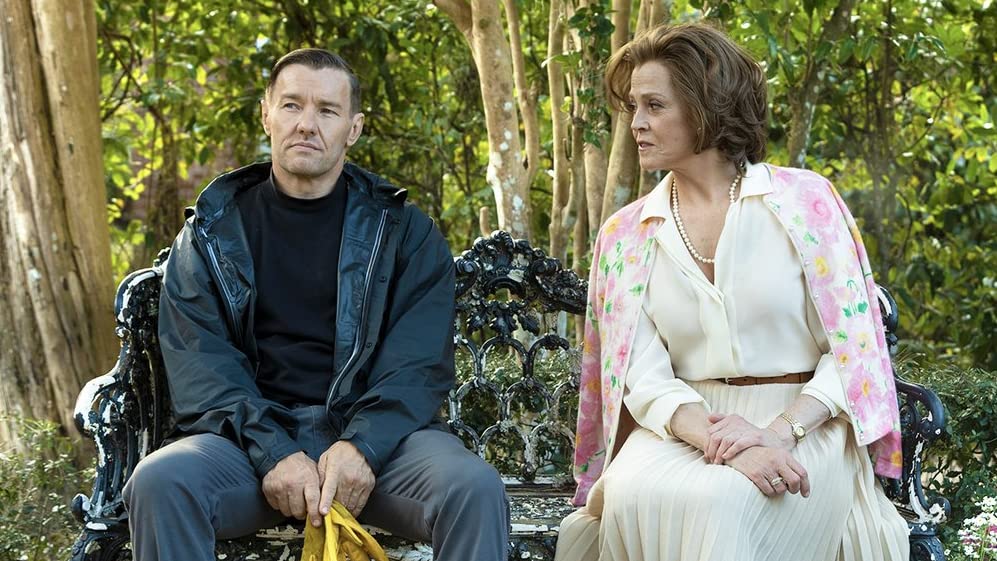
I think Master Gardener offers an allegorical take on the Gospel, where Narvel (Edgerton) represents mankind, Norma (Sigourney Weaver) represents the world/the devil, and Maya (Quintessa Swindell) represents Christ (or maybe more broadly, God’s mercy).

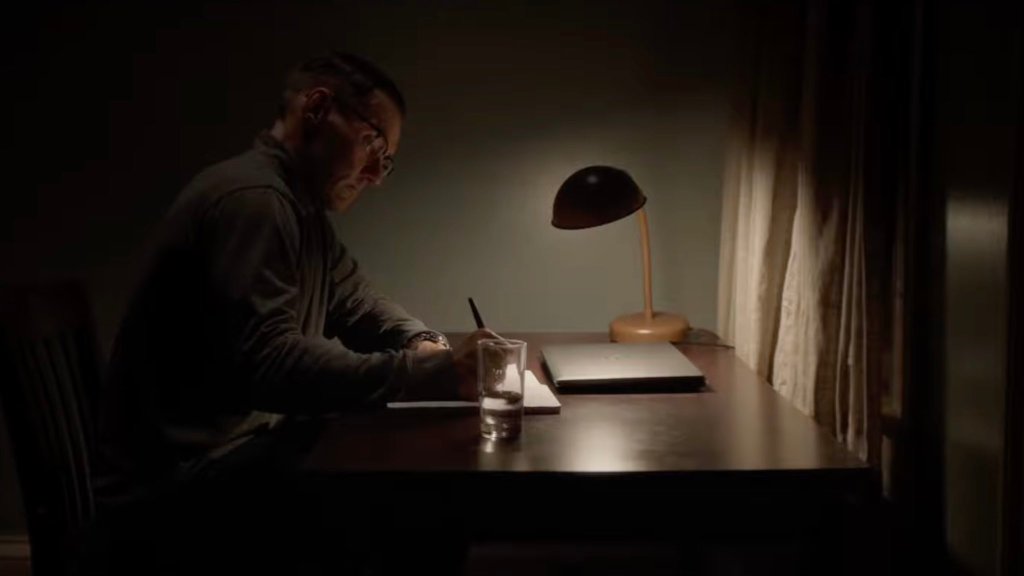
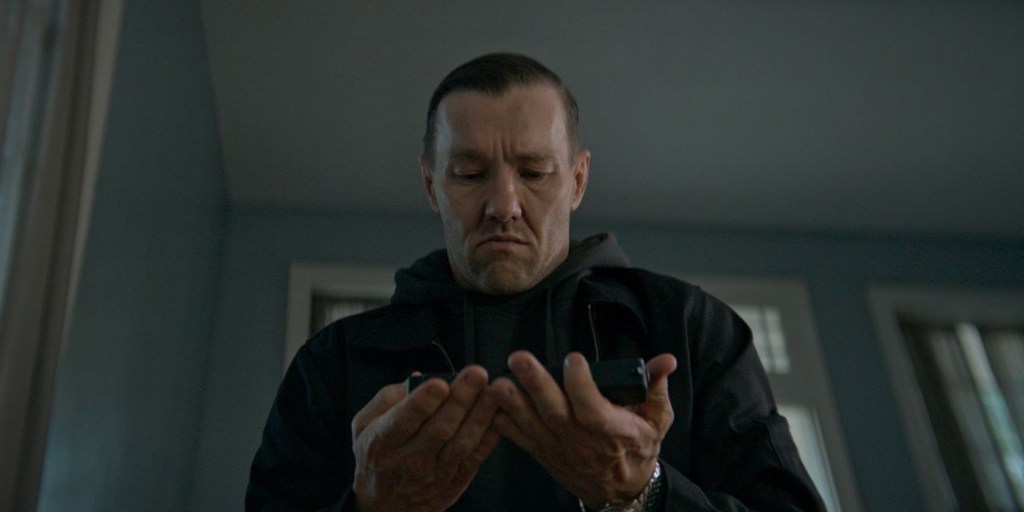
When the movie begins, Narvel is a lonely man with a secret: He was once a white nationalist and has white supremacist tattoos covering his body. He eventually reformed his ways and became an informant, entering witness protection and taking a job as a head gardener at an estate owned by a wealthy woman, Norma. Narvel spends his days toiling in the garden, and seeking redemption through creating life, instead of ending it.

We soon learn, quite surprisingly, that Norma and Narvel are in a special relationship, with Narvel basically being Norma’s kept man, which he seems stoically resigned to. After all, she did give him a job when he was at his lowest. But despite giving him this second chance, Norma never lets Narvel forget his past. She holds his past over him as a weapon. In a scene when Norma takes Narvel to bed, she makes him take off his shirt so she can see his tattoos, obviously relishing them. Narvel lives in an in-between state, where he is technically no longer tied to his past, but is still in every meaningful way still held captive by it.

The image of a garden is a deeply significant one in the Bible. Genesis recounts the story of creation, where God creates man and woman and places them in a garden, Eden. He instructs them to be stewards of the garden. But when Adam and Eve eat the forbidden fruit of the Tree of the Knowledge of Good and Evil, God casts them out of the garden. The whole rest of the Bible is, in essence, the story of God restoring his people back to the garden, back to the place where they are in perfect communion with him, and sin is no more. 

In Master Gardener, Norma’s estate is beautiful, but as we see Narvel’s life, it is far from bucolic. Like how Satan is described as the ruler of this world (the “prince of the power of the air” in Ephesians 2:2), Norma rules over the broken garden and tortures Narvel by offering cheap imitations of grace and forgiveness while never really giving them to him, and keeping him locked in reminders of his deepest shame. 

But then enters Maya, Norma’s newly orphaned grandniece, who is Black. Norma instructs Narvel to take Maya under his wing and teach her about the gardens. Soon, Narvel and Maya fall in love. Norma finds out, and in jealousy, casts them out of the garden.

Maya and Narvel hit the road together, and soon Maya discovers Narvel’s white supremacist tattoos. While she is at first angry and betrayed, within what seems to be only a day, she reconciles with Narvel, he agrees to get them removed, and they consummate their relationship. They then go and find some drug dealers who had assaulted Maya and vandalized Norma’s gardens, and Narvel breaks their kneecaps (this is a Paul Shrader film, after all).

After their revenge mission, they return to the estate, and Narvel confronts Norma, telling her that he and Maya are getting married and will be living on the estate. Norma doesn’t take this well and tries to shoot Narvel, but the gun doesn’t have any bullets. The movie ends with a long shot of Maya and Narvel dancing on the porch of their new home in the gardens. 

This movie is so weird!!!

So, Maya is clearly a force for redemption in Narvel’s life. Her acceptance and forgiveness of Narvel’s racist past, her love for him and her belief in his ability to change are all what he has been seeking all along. This is truly the second chance he wanted, that Norma only provided a dim illusion of. This, the Bible teaches, is the kind of love Christ offers us. Paul writes that “You were dead in the trespasses and sins in which you once walked…But God, being rich in mercy, because of the great love with which he loved us…made us alive together with Christ—by grace you have been saved” (Ephesians 2:1-4). Maya wants Narvel to remove his tattoos to show that he is a new person and is no longer captive to the sinful, evil ideology he once held. Likewise, Christ loves us too much to let us stay captive in our sins. But he first loves us without condition, and only his love can lead to real change. 

Paul Schrader is, famously, well-versed in a Christian worldview, and had a Calvinist upbringing. There are unmistakable religious themes explicit throughout his work, and Calvinist ones, particularly in this trilogy. A key component of Calvinist theology is the idea of “Unconditional Election” which means people do not choose God first; God first chooses to save them. It interprets Paul’s word as us being “dead in trespasses and sins,” as meaning that in our natural sinful state we would never choose God on our own. Instead, God chooses people to save and moves their hearts to accept him. It is absolutely unconditional on the part of the believer.

In the movie, we are to assume Narvel regrets his past (he became an informant and left it behind, after all). But he is not particularly repentant nor does he directly ask for Maya’s forgiveness. But Maya offers her mercy quickly, without his initiation. The way this plays in the movie feels rushed and sloppy. But if you read it through this spiritual lens, this feels in line with the Calvinist framework for viewing salvation.

At the end, Maya and Narvel, now married, return to the gardens. The Bible ends with a marriage as well. In Revelation, the final book of the Bible that contains a vision of the end times, ends on the Marriage Feast of the Lamb, the marriage of Christ and his Bride, which is the Church (Ephesians 5:25-27; Revelation 19:7-9, 21:1-2, and 21:9-10). In these final days, Christ, united with the church, will complete the full restoration of the world, vanquishing all evil, making all things new, bringing Heaven to Earth, and completing God’s great quest– to dwell with his people (21:3-4). So too do Narvel and Maya, through the fullness of their love, return to the gardens, now as agents of restoration, bringing life to the estate.  

This presents a fascinating bookend to the environmental questions raised in First Reformed. In First Reformed, Pastor Ernst Toller spirals into an existential question regarding if God can forgive humankind for its destruction of the environment. His despair leads him to plan to suicide bomb his church while business leaders who run a polluting factory are in it. But his bombing attempt is stopped by a woman named Mary, who is pregnant. I interpret this as Mary being an embodiment of hope, with her clear connection to the Virgin Mary bearing Jesus. Toller is saved by a radical act of grace and is offered hope. It doesn’t necessarily quell all of his fears, but it protects him from the ultimate act of despair. The film ends on this note of ambiguity. Toller is saved, but for how long? And what of the rest of creation? In Master Gardener, Paul Schrader offers up a surprisingly optimistic suggestion: perhaps divine love is the solution.

Now, I will be the first to admit that this reading of the film as a hyper-allegory doesn’t fully work, nor do I have any confidence this is what Schrader intended. There are massive holes in this interpretation. For example, if Maya and Narvel are like Christ and the Church, it’s kinda strange that their journey includes busting the kneecaps of some drug dealers. But I guess you gotta fight for love? Likewise, Maya’s drug addiction doesn’t fit with a reading of her as a perfect embodiment of Christ and/or Mercy.

And none of this even touches on the offputting racial politics of the film, where a young Black woman forgives and somewhat “saves” a former white supremacist. The fact that it all just comes down to romantic love is… well it’s audacious.

But so is grace. 

I certainly don’t think Master Gardener is the pinnacle of thoughtful movies about race, and I don’t think it is the only Christian response to questions about racial forgiveness and reconciliation. If this were truly a movie about moving on from white supremacy in an interracial relationship, I think it fails at any kind of nuance. But, Schrader, I believe, is intentionally using a situation that most audiences would find unforgivable–white supremacy– to make us squirm at the radical implications of the Christian doctrine of grace (and Schrader essentially admits that in this interview, saying the movie “isn’t about racism or gardening”). Norma calls Narvel and Maya’s relationship “obscene,” and it’s true- that level of grace is obscene. It’s offensive to us. That is why the Gospel is, at first, painful, because it assaults our pride and our understanding of conditional, earned love.

But this also points to some of the deep frustrations I have with the movie. Norma doesn’t just refer to the grace of the relationship as obscene, Norma also refers to the relationship as obscene because it is between a middle-aged man and a barely-20-year-old, one where he was in a position of authority over her. It’s a deeply weird relationship that feels uncomfortable to watch on screen (and it’s not simply about an age gap, it’s more about how everything in the film, from the performances to the framing, makes the relationship feel like that of a father/daughter or mentor/mentee relationship, but the text is telling us its a romance). Why did Paul Schrader make Maya so much younger than Narvel, so Norma’s complaint that he’s “playing Hubert Humphrey in his own production of Lolita” actually feels valid? The question of the appropriateness of their relationship distracts and unnecessarily complicates what the relationship is trying to depict thematically. 

Likewise, other parts of the film feel disjointed, like Narvel and Maya’s little revenge plot. The plotting and pacing issues lead to a movie that is on the cusp of fascinating ideas, but never quite executes them, and has too many messy choices that I think hide the actually radical things Schrader might be saying. Because of all of this, I’m not sure what Paul Schrader was going for. But this film, and this trilogy especially, have made me think and feel, both ecstasy and irritation. And that’s what makes it special, and worth considering. 

– Madeleine D.

The Hopeful Worlds of David Lynch

A guest review by Kevin McGuire

David Lynch must be fun at parties. There seem to be few other explanations for how the director has cemented himself as a modern Hollywood legend. It’s not financial, his one voyage into blockbusters (the original Dune) was a disaster on all fronts. It’s not a result of playing popularity games (see this ad for Lost Highway gleefully touting “two thumbs down” from critics Siskel and Ebert). And it’s definitely not from making self-congratulatory celebrations of the industry, as his most acclaimed feature, Mulholland Drive, explicitly skewers the Hollywood mythos. Yet he’s routinely cited as one of the most influential and iconic modern directors by both critics and peers, most recently being invited for a cameo in Steven Spielberg’s semi-autobiographical ode to filmmaking The Fablemans

Dive into any entry in Lynch’s catalog, and this status becomes even more bewildering. The vast majority of Lynch’s works inhabit an oddly distorted surrealism, one rooted in real-world locations and contemporary concerns, yet powered by a supernatural “dream logic”, impossibly lingering on a tightrope that refuses to offer viewers either rational explanations or an invitation to fully suspend their disbelief and enter into an escapist fantasy. This sense of ambiguity between imagination and reality provides the artistic engine to capture an audience’s attention. Parallel to the conspiracies and detective stories permeating and orbiting nearly every entry in Lynch’s filmography, this atmosphere of ambiguity amplifies each narrative and character. And yet, for as wonderful as the textures and feel of this incorporeal surrealism are, Lynch hardly stands alone in his ability to conjure them to the screen. Some other ingredient must also be present to not only captivate audiences while watching, but also fix the productions in memories long after viewing. 

This “secret ingredient” is thematic in nature. Specifically, what elevates Lynch’s filmography to such singular recognition is in the way it engages and invites viewers to explore existential topics of meaning and morality in the face of the modern world. Simply asking questions or positing answers to these topics alone isn’t enough to stand out. There are numerous critically lauded filmmakers who explore similar visual and emotional spaces at the boundaries of fantasy and reality, whose careers either predate or parallel Lynch, such as Luis Bruñuel, Ingmar Bergman, Andrei Tarkovsky, William Peter Blatty, Lars von Trier, to name only a few. And yet, there’s a reason that the adjective “Lynchian” has been coined to refer to a particular cinematic language in a way that hasn’t been done for any of these other acclaimed filmmakers who by most measuring sticks seem equally deserving. Although Lynch’s catalog contains a fair degree of diversity, a number of repeated motifs and themes form the core of his thematic exploration. 

This is what we will seek to explore here: a few of the key themes and ideas that distinguish his work as “Lynchian” through the lens of Twin Peaks, which is to date the most monolithic of Lynch’s works, and the one which best captures and develops the themes he has been chasing his whole career. Spoilers for Twin Peaks throughout.

Continue reading “The Hopeful Worlds of David Lynch”