
Part two of my look at the ten best picture nominees, giving you insight into each film and predicting its award chances.
Belfast
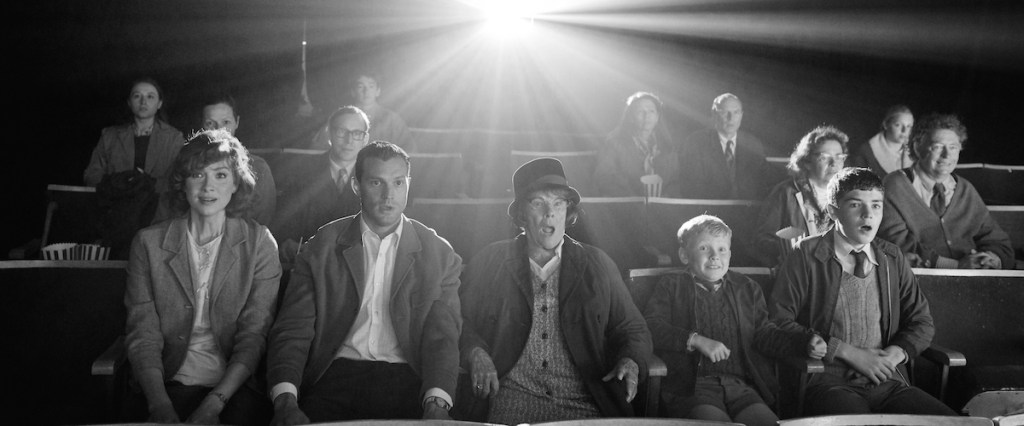
Belfast is based on director Kenneth Branaugh’s life as a child growing up during the Irish Troubles. Filmed beautifully in black and white, the film shows from nine-year-old Buddy’s eyes the confusing political turmoil around him, his struggling but loving family, and the hallmarks of growing up, from first crushes to peer pressure and school troubles. In many ways, it reminded me of Jojo Rabbit. While not nearly as funny or satirical (or devastating) as Jojo Rabbit, Belfast has an overall hopeful tone and messages of resilience and family.
The best part of the movie is its performances, which are all lovely, from Jude Hill as Buddy, to Ciaran Hinds and Judi Dench (both nominated for best supporting!) as his grandparents, to Caitriona Balfe as his mother (I think she deserved to have been nominated) and Jamie Dornan as his father.
When I saw the film, I walked away thinking it was a very sweet, well-made movie, if not one I could call the best of the year. While it’s valuable to see the Troubles being explored on screen, and the family drama feels universal yet deeply personal, I don’t know if Belfast really encompasses 2021 in filmmaking or breaks any new ground.
But it was later that I came to reconsider Belfast in a new light. In early February, Dua Lipa asked Stephen Colbert on his talk show about how his comedy and Christian faith overlap. In his answer–which you absolutely should watch, it’s a fascinating response– he brought up Belfast and how he liked how the movie “is funny, and it’s sad, and it’s funny about being sad. In that same way sadness is a little bit like an emotional death, but not a defeat, if you can find a way to laugh about it, because that laughter helps keep you from having fear of it.”
With that in mind, Belfast becomes a little more profound. It’s a tricky balance, to give sadness its full weight and still have humor and joy. Jojo Rabbit dilutes its sadness through snark and satire– to great effect. But Belfast is incredibly sincere, and in that way, pulls off a trickier feat.
Belfast seems to be in the top running for best picture, alongside Power of the Dog and CODA. Besides that, its best award chances may be either best supporting for Hines, or original screenplay for Branaugh.
Drive My Car
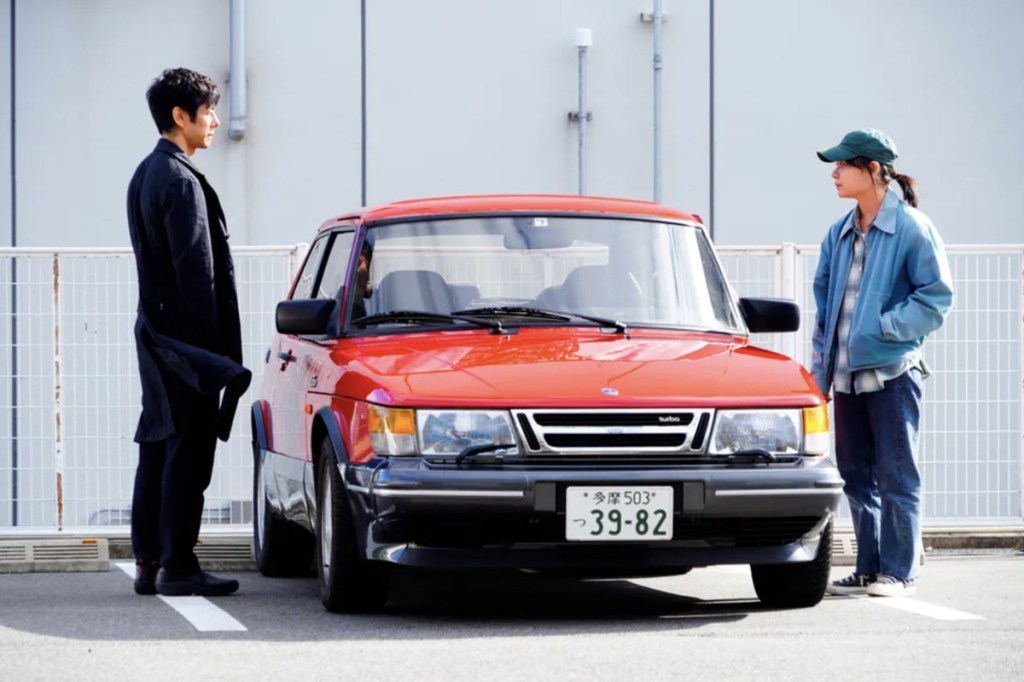
Also nominated for best international feature, adapted screenplay, and best director for Ryusuke Hamaguchi, Drive My Car snuck up on many as a heavy-hitter this year. The Japanese film will inevitably draw comparisons to 2019’s South Korean Oscar juggernaut Parasite, which won best picture, international feature, and best director for Bong Joon-Ho, along with original screenplay, editing, and production design. But beyond their nominations, the two films have little in common, and because of that, Drive My Car’s winning chances are much slimmer.
At three hours, Drive My Car is a meditative character drama about a widowed actor (Hidetoshi Nishijima) who goes to Hiroshima to direct a play, and as part of his residency, he is given a chauffeur, which ends up being a young woman (Tōko Miura). The two slowly begin to become friends and through this friendship and the play they process their past. The movie reflects on the value of art, language barriers, intergenerational friendships, and the regret and burdens that block us from connection with one another.
Like many of the nominees this year, it has a beautiful and cathartic ending that makes the whole movie better in retrospect, and there is much to admire and appreciate in the film. However, I couldn’t help but find it a bit tedious, never quite feeling like my patience was fully rewarded. But part of that may have been going in without any sense of what the movie was, so I think it might be the kind of film where it is better to go in having read some reviews or analysis of the film to better be able to appreciate what is carefully being built in the story and what literary references and allusions to be on the lookout for.
While there are things the Academy usually likes to reward in Drive My Car (it’s a story about actors making art, after all!), there is still a big barrier to the Oscars awarding international films in non-international feature categories. Parasite was an anomaly that it was able to break through, not only because it is a truly outstanding, deserving film, but it was also mainstream enough, with a semi-recognizable director, to appeal to an American audience.
Drive My Car then is a near lock for international feature, but probably nothing else, with maybe a sliver of a chance for adapted screenplay. But its inclusion shows progress in the academy recognizing and rewarding international films, which is an exciting step for Hollywood at large.
Dune
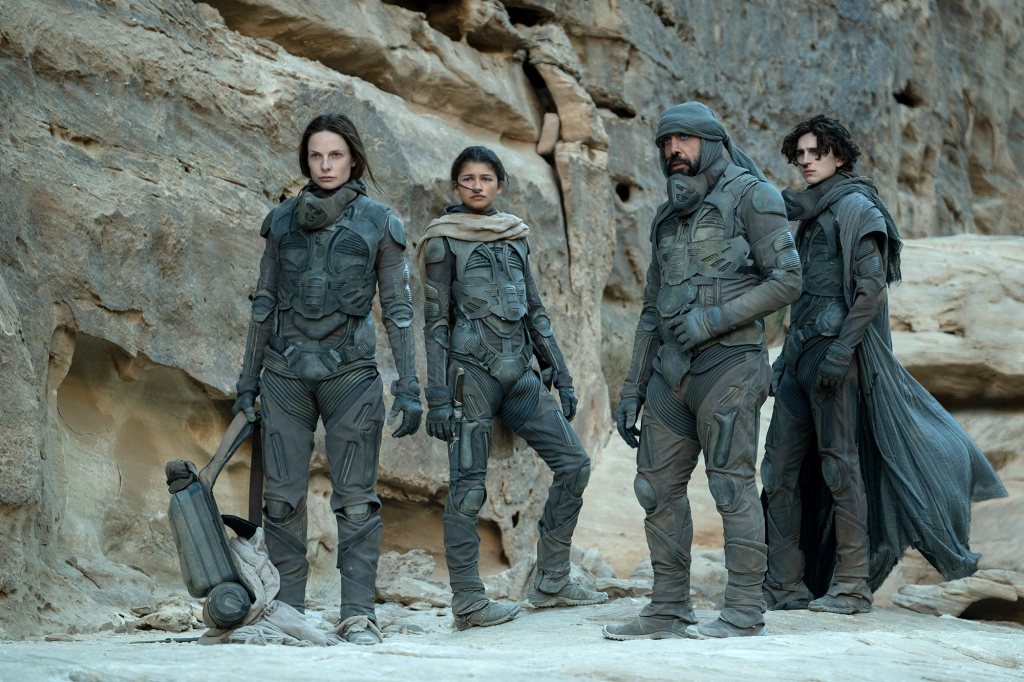
Dune is this year’s Mad Max: Fury Road. Like Mad Max, Dune was a genre hit with both audiences and critics that was nominated for a slew of technical awards along with best picture (10 nominations in all!). And it has a fighting chance in many of those categories, especially Han Zimmer’s score, sound, and special effects. But unlike, say, Return of the King, which swept its ceremony and got best picture, Dune is a part one of two, and feels very incomplete, so its best picture chances are very slim (and we’ll see about part 2).
Helmed by Denis Villeneuve (Blade Runner 2049, Arrival) and featuring an all-star cast (Timothee Chalamet! Zendaya! Oscar Issac! Jason Mamoa! Javier Bardem!) the film admirably translates its dense source material into a sprawling epic that really does feel like it can both satisfy fans and general audiences alike. Along with West Side Story, it may be the best feat of adaptation and remake this year, and deserves to be nominated. The story of a young man discovering his destiny on a new planet is full of classic science fiction and literary tropes, so we’ll see if this timelessness appeals to academy voters, or if it’s ultimately snubbed.
Don’t Look Up
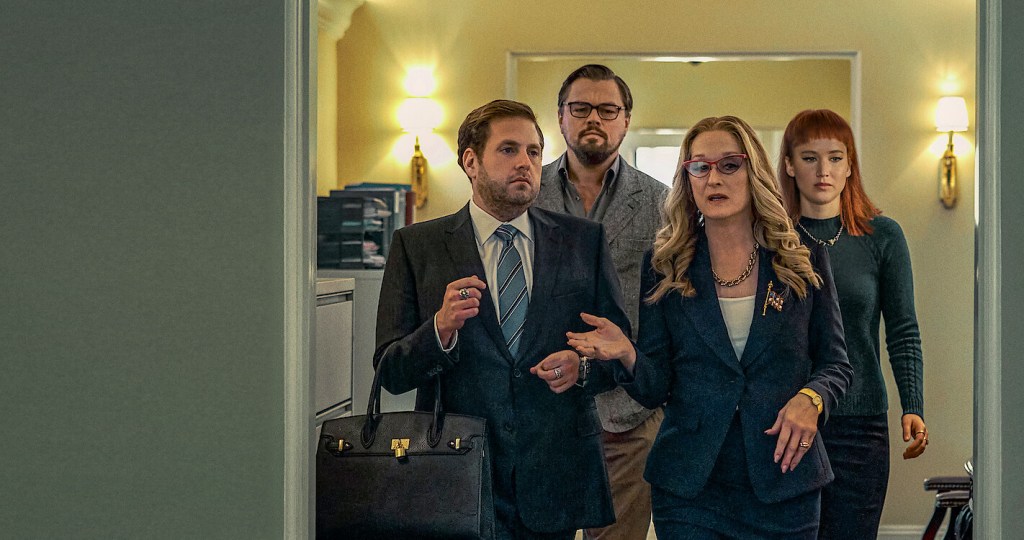
Maybe the most broadly polarizing film on this list, Don’t Look Up is a Netflix release directed by Adam McKay (The Big Short, Vice, Anchorman) and featuring an ensemble with the likes of Leonardo DiCaprio, Jennifer Lawrence, Meryl Streep, Jonah Hill, Cate Blanchett, Timothee Chalamet, and Ariana Grande. Don’t Look Up follows DiCaprio and Lawrence as an astronomy professor and his grad student, who discover a comet is on the fast-track to collide with Earth. In their efforts to warn the public they face opposition from everyone from the self-serving president (Meryl Streep) and her obstinate administration, to the media that refuses to alarm the public, to pop stars, activists, and tech billionaires who all want to co-op the comet to advance their own agenda. The comet serves as a clear metaphor for climate change, and the film satirizes the modern indifference to this threat. While I thought the movie fairly critiqued all sides of the political aisle, I have talked to many people who didn’t think the film was nearly as fair.
If there’s a common theme with these best picture nominees, I think I would say that it’s sincerity. Belfast and Licorice Pizza were both inspired by the director’s childhoods and fondly recreate their adolescent years. King Richard and CODA are both classic heartwarming stories about underdog families. Nightmare Alley, Dune, Drive My Car, West Side Story, and The Power of the Dog are all remakes or adaptations that lovingly breathe fresh air into their source material with clear respect for the originals, and tell stories of complex protagonists with clear empathy. But Don’t Look Up, is, to be frank, a mean movie about horrible people. And I say that as someone who actually liked it! But there’s no denying that Adam McKay, whose most recent work shows a general disdain for general audiences and no problem skewering everyone from the everyman to the most powerful politicians in the world, has made a movie that to many comes across as overly preachy and spiteful.
Besides best picture, Don’t Look Up is nominated for original screenplay, film editing, and Nicholas Britell’s score. It may have a fighting chance at original screenplay. But for a movie that touted its all-star cast as its greatest strength, the lack of acting noms is an indicator of how little the academy voters may actually care about this film. There’s always a chance for a surprise, but I think all signs point to this, once again, not being Adam McKay’s big year.
The Power of the Dog
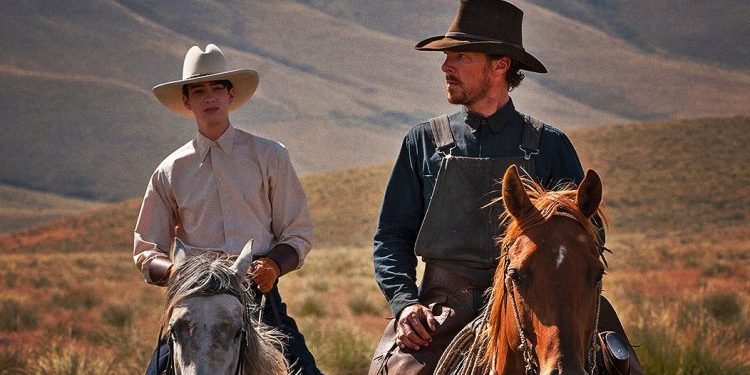
Netflix’s Power of the Dog, directed by Jane Campion, has been a critical darling, but treated with ambivalence by audiences, following a trend of the Oscars showing favor to small movies that few have seen (or will remember). I have mixed feelings about this. On the one hand, smaller films are often the most groundbreaking and move filmmaking forward, and shouldn’t those be recognized in a ceremony that aims to celebrate the art of filmmaking? But on the other hand, I think the Oscars should strike a balance to also recognize movies that have defined and shaped the year, and will be remembered in public memory, which I don’t really think Power of the Dog will be.
Okay, but is Power of the Dog good? And to that I say…. yes. It’s a movie I have a lot of respect for. It’s a slow-burn, acting tour-de-force about Phil (Benedict Cumberbatch) a spiteful cowboy who terrorizes his brother (Jesse Plemons) and his new wife and stepson (Kirsten Dunst and Kodi Smit-McPhee). But as the film progresses, you begin to realize the power dynamics in play are not quite what they seem, and Phil’s aggression is what ends up blinding him to even more sinister forces.
Power of the Dog is an anti-western, a movie that turns the historically macho and violent western genre conventions on their head to instead be a quiet, psychological movie about sexual repression, grief, resentment, and familial strife. A main undercurrent of the film is that Phil is suggested to be gay, and is mourning the loss of his mentor/partner, and his cruelty is a symptom of his grief and repression. The four main characters are carefully drawn to be fascinating foils of each other, and Campion’s directing shows clear precision and restraint.
My biggest problem with the film is that it’s sometimes so subtle you don’t know what’s going on or where the movie is going, and the twist at the end is so quiet that many people I know completely missed it (and I would have too if I hadn’t been spoiled beforehand). The ramifications of the ending cast the rest of the movie in a fascinating light when you really think about it, but I wish the film had found a way to build up to a more cathartic end, instead of tapering off like a whisper.
While it was considered the frontrunner for much of the race, CODA and possibly Belfast have gained enough momentum to catch up to Power of the Dog, meaning the race might be way more surprising than expected. Interestingly enough, we may also have a situation where voters don’t vote for Power of the Dog because they assume it’s the frontrunner anyways, so they vote for another film, and no majority ends up voting for it in the end. If Power of the Dog won, it would be a huge win for streaming services.
I think besides best picture, out of its 11 other nominations, its other best chance for a win is Jane Campion as director (she deserves it). And while not the frontrunner, I think Kirsten Dunst could be a dark horse for the best-supporting actress. And while he definitely won’t win, I’m rooting for Jesse Plemons, who I genuinely think should have been nominated for best supporting in 2019’s El Camino. He’s good in this movie and deserves the nomination, but he’s building a fascinating career and I definitely don’t think this will be the last time we see him nominated. As for Benedict Cumberbatch, I don’t think he’ll win, but I think this too will set him up nicely for a future win one day. And maybe, if it doesn’t win best picture, that will be Power of the Dog’s biggest lasting legacy: setting up its actors and director for even greater future success, and a new opportunity for the Western genre to reinvent itself.
Happy Oscars everyone!
– Madeleine D.



 madeleinelovesmoviesdotcom