Top 20 Movies of 2020 (So Far)

Screen Shot 2020-08-20 at 5.39.19 PM.png

Guest Review by Jonathan Dorst

Many movie theaters are reopening today. For how long, nobody knows, but hopefully for good. I last saw a movie in a theater in early March, so I’m ready (I think) to go back to seeing new releases on the big screen. And there are a number of tantalizing films set to come out in the last four-plus months of this year, including The Personal History of David Copperfield (8/28), Christopher Nolan’s Tenet (9/3), Quiet Place Part II (9/4), I’m Thinking of Ending Things (Netflix 9/4), Antebellum (9/18), Sofia Coppola’s On the Rocks (October), David Fincher’s Mank (October), Wonder Woman 1984 (10/2), Trial of the Chicago 7 (10/16), Wes Anderson’s The French Dispatch (10/16?), The Courier (10/16), Black Widow (11/6), Pixar’s Soul (11/20), Denis Villeneuve’s Dune (12/18), Coming 2 America (12/18), and Spielberg’s West Side Story (12/18).

But, if you think there haven’t been any good movies that have been released up to this point in 2020, you haven’t been paying attention. Some came out before the pandemic, some went to streamers or VOD when theaters were not an option, and some were released as planned through a streamer. One note: Although some multi-episode documentaries (like OJ: Made In America) have won Oscars and been considered a ‘feature,’ I chose not to include them on this list, so Tiger King and The Last Dance would be part of a top television list instead. One more note: As always, don’t take the inclusion of a film as a blanket endorsement of its content; you are responsible to research the content and determine if certain movies are appropriate for you.

20. Bad Education– Hugh Jackman shows off his versatility in this telling of a true story of embezzlement in the public school system.

19. Radioactive– A good biopic that makes the interesting decision to show the downside (in jarring flash-forwards) of the protagonist’s historical contribution.

18. Downhill– A not-as-good-as-the-original remake of a very good Danish film, still Will Farrell and Julia Louis-Dreyfus give good performances in this serious comedy.

17. The Truth– A bit of a cliched premise about an actress mother and her flawed relationship with her daughter, but it’s Juliette Binoche and Catherine Denueve, so it’s a must see.

16. Tigertail– A thoughtful film that tells the story of an immigrant’s struggle to connect in his new land while reconciling what he’s lost back in his homeland.

15. The Vast of Night– An interesting, slow-burn of a film about strange happenings in the sky in New Mexico in the 50’s that I suspect will get better with repeated viewings.

14. Arkansas– A minor, but enjoyable entry in the ‘loveable loser drug dealer’ genre; Liam Hemsworth is terrific playing against type.

13. The Invisible Man– An effective thriller that is a not-too-subtle metaphor for the psychological oppression that powerful men can administer on women.

12. The Old Guard– A superhero film that takes consequences seriously.

11. Da 5 Bloods– Spike Lee’s exploration of the Vietnam War and its effects, as well as his continued exploration of America’s racial history- the acting is great, but the tone and pacing is all over the place.

10. Young Ahmed– The Dardenne brothers’ latest about a young teenaged boy being influenced by a radical Islamic imam.

9. To the Stars– A movie about small-town Oklahoma in the ‘50s that tells the age-old tale of the shy, bullied kid who gets courage from the extroverted, courageous friend, but with some twists that keep it fresh.

8. Ordinary Love– Two great actors (Lesley Manville and Liam Neeson) telling a slice-of-life story that made me want to watch more of their life together.

7. Palm Springs– A very funny take on the Groundhog Day premise that doesn’t quite earn its happy ending but is still very memorable and enjoyable.

6. Athlete A– The emotional story of how USA Gymnastics failed to protect its female gymnasts from predators like Larry Nassar.

5. The Assistant– A day in the life of an administrative assistant who serves her unnamed boss in a Weinstein-like film production company; we see how powerful men got away with so much for so long as we watch her try to raise a red flag in an atmosphere where no one is motivated to change anything.

4. The Trip To Greece– The 4th film in the ‘Trip’ series, this is the most poignant as Rob and Steve follow in the footsteps of Odysseus and ponder their mortality. 

3. Driveways– A beautiful film about people in different stages of life connecting and making the best of their situation.

2. Sorry We Missed You- British filmmaker Ken Loach has been making great social commentary films for a long time, and this one takes aim at companies taking advantage of workers in this ‘gig economy’ while telling an affecting story of a family trying to thrive, or at least survive.

1. Hamilton– I know this really came out as a musical in 2015, but it’s not the first play to be filmed and released as a movie (consider Bergman’s The Magic Flute and Powell’s The Tales of Hoffman), and everything about this production is just. so. good.

Bonus: Worst Movie of the Year (so far, that I’ve seen)- Harley Quinn: Birds of Prey
A Guide to Beyonce’s “Black is King”

200728131808-restricted-screengrab-01-beyonce-black-is-king-super-tease.jpg

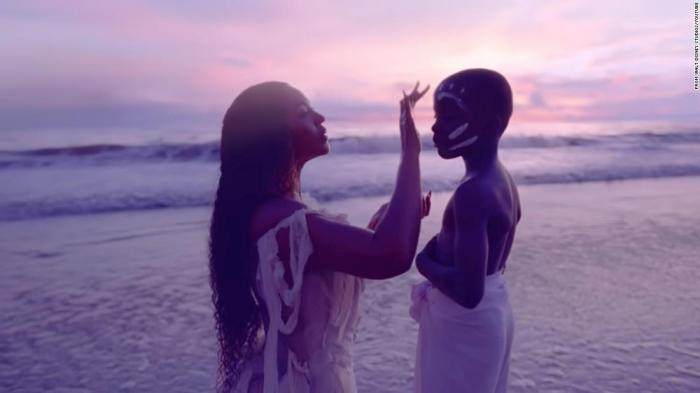
On July 31st, Disney+ released Black is King, a visual album by Beyonce. It functions as a sort of movie-length music video that puts visuals to Beyonce’s 2019 album The Lion King: The Gift, which was created by Beyonce for the release of last year’s live-action remake of The Lion King, where she voiced Nala. Black is King follows the storyline of the film abstractly, and there are short audio clips from the film to help move it along. 

Because this is debuting on Disney+, which markets itself as a family-oriented streaming service, and is not a typical film in most regards, I thought it would be helpful to try something different. Instead of a normal review, I’d like to offer some observations and questions that can guide your viewing of Black is King, whether you watched it and would like to learn more about what messages and artistic reference you may have missed, or you’re a parent interested in watching Black is King with your children and would like to cultivate a fruitful discussion of the film (although the film probably won’t interest young children, I’d suggest pre-teen and up). 

As always, this isn’t an endorsement of the film or a suggestion that it is appropriate for all ages and families.

Initial Feelings after Finishing the Film:

  1. How do you feel? Did you like the ending? Were you engaged throughout the movie, or did some parts feel boring?
  2. Did you like it? Give some reasons for why or why not.
  3. Did you like the music? Did it make you want to dance? Do you think it is catchy?
  4. Do you think the visuals matched the music? How so? Did any shot or visual stick out to you as memorable?
  5. There are a lot of spoken-word sections (where Beyonce or others are talking over the music and visuals). Were there any lines that stuck out to you?
  6. Do you imagine visual albums/ feature-length music video films growing in popularity? What are the pros and cons of the medium?

Talking about Race and Black Identity:

1. Black is King was filmed in various African countries. The music is inspired by African music traditions, there are cameos by artists from all over Africa, the costumes were inspired by African fashions, and there are references to various African mythologies and legends. Recognizing, of course, that Africa is not a monolith but is made up of different countries and hundreds of sub-cultures, did the film spark your interest in learning more about Africa, or in any particular parts of African culture?

2. Black is King is explicitly about Black empowerment. It encourages Black people to embrace their heritage, to take pride in their culture and community, and to use their gifts and talents to help build a better future. In a world where Black people are often seen as disposable and are overlooked, Black is King relishes in presenting Blackness as complex, regal, intellectual, spiritual, dynamic, and worthy of respect and attention. Many of the songs are pieces of activism, such as “BROWN SKIN GIRL,” which lovingly reminds Black girls of their beauty, fighting against the very-real stigmas of colorism.

If you are Black, how did Black is King make you feel? (Parents- as with all of these questions, remind your kids that it’s okay to feel ambivalent). Did the film feel relatable, or like Beyonce was talking to you? If you are white or non-Black, how did you feel? Black is King has no prominent white or non-Black characters- was that strange or unusual for you? Did you feel like you learned anything new? Did you feel inspired?

3. In her seminal work Sister Citizen, Melissa Harris-Perry makes the argument that “the internal, psychological, emotional, and personal experiences of black women are inherently political.” Her argument essentially says that because the perspective of Black women has been silenced for much of American history, and stereotypes about Black women persist so much in popular culture, when a Black woman is at the forefront of a narrative, it is inherently political and even transgressive in white-dominant cultures. First, what do you think about this as a theory? Is it fair? And then second- Is Black is King political? How or how not? Does it feel political?

4. Throughout the album, and especially in the song “MOOD 4 EVA(the song with Jay-Z that takes place in a mansion), Beyonce talks about her wealth and opulence (fairly standard for celebrities). But through this and her other work, she seems to make this statement: Beyonce and Jay-Z, in being successful and rich, and showing that off, is a source of empowerment for all Black people. Because Black Americans are more likely to be of lower-income, it is inherently progressive and even radical to present Black people who are wealthy and successful, because it presents both an idea of what could (and even should) be, and presents a positive representation of the abilities of Black people.  

What do you think of this? Is Beyonce right? Can showing off wealth and opulence be empowering, particularly for minority groups? Is Beyonce and Jay-Z’s (presented) lifestyle aspirational?

Homages and References:

1. Did Black is King help you appreciate The Lion King any more? Were you able to follow the storyline of Simba in Black is King, or was it too abstract? Do you think Black is King could stand alone, without the influence of The Lion King?

2. The opening sequence is a retelling of Exodus 2:1-10, where Moses’s mother puts him in a basket and sends him down the Nile to escape the slaughter of all the Hebrew boys. Moses is a large figure in African American music, especially in gospel songs that were sung by enslaved people to speak about freedom. What might Beyonce be referencing by showing it here? And are there any similarities between Moses and Simba from The Lion King?

3. There is a concept called the “Christ-Like Gaze” in film, outlined by this excellent article. It puts forth the idea that cinematography- the way the camera films subjects- can be used to look at people the way Christ looks at us. The three tenants of a “Christ-like gaze” in a movie is this: 

  1. The film sees people as being complex and filled with inherent worth and dignity. The movie doesn’t watch characters with cynical dispassion. Instead, a Christ-like gaze approaches the characters in warmth. Practically, this means the camera doesn’t objectify characters (such as focusing on body parts for sexual attention). There is often a focus on the facial expressions and eyes of a character. The camera is usually at eye-level with the subject.
  2. A Christ-like gaze means the film isn’t only concerned with the plot. The characters act beyond being used as plot devices. The story- and the camera- pays attention to little details and truths about life. Does the film take time to observe beauty? Are there any moments of quietness?
  3. Movies can (and should) depict suffering honestly, but a Christ-like gaze ends in hope. Hope is not blind optimism, nor is it the removal of consequences. But hope knows that there is a resurrection and healing coming.

So with all of that being said- does Black is King have a Christ-like gaze? Does the camera treat the Black bodies on-screen with care and present them as beautiful? How is the scenery treated? How do the choices in hair and costuming contribute to the presentation of Beyonce and the other stars? Is this an uplifting film, and in what regards?

Further reading:

NPR- “‘Black Is King’ Is A Sumptuous Search For Divine Identity”

Vox- Beyonce presenting herself as African Goddess Osun

The Root: Some of the cameos in Black is King

Vox- Framing Black Bodies as Art in “Apeshit”

            –  Madeleine D.


“No Bad Guys”: Clemency

clemency.jpg

“It’s my job.”

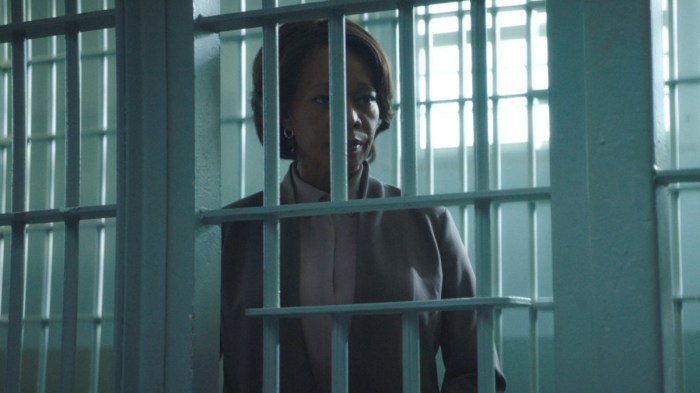
Chinonye Chukwu’s 2019 film Clemency, starring Alfre Woodard, examines the way this sentiment can be twisted to justify horrific behavior and unjust systems. Woodard plays Bernadine Williams, a prison warden who carries out executions. The film begins with a botched execution and follows Bernadine as she moves towards the next one, a highly public case where the man (Aldis Hodge) in question is largely thought to be innocent. As Bernadine faces public and private scrutiny, she continues to figuratively wash her hands of the issue- after all, she’s just doing her job.

It’s fascinating to compare Clemency to another 2019 movie, Just Mercy. There are plenty of differences between them of course- Clemency is fiction, Just Mercy is based on a true story and on the life of still-living attorney and advocate Bryan Stevenson. Clemency takes place in the present, Just Mercy in the past. Just Mercy speaks explicitly on race and interrogates a “justice” system that imprisons black men at a disproportionately high rate. Clemency, which stars a black woman as a warden and a black man as a prisoner, is full of interesting implications, but never explicitly talks about race. Yet they are both about the prison industrial complex, and specifically, capital punishment. Just Mercy is focused on the prisoner- in this case, wrongfully accused Walter McMillian- and his relentless, righteous lawyer Stevenson. In Just Mercy, little time is spent thinking about those working on the side of the system. Particularly since the film is about race and how racism played into McMillians’ wrongful conviction in 1980’s Alabama, there seems to be a clear right and wrong. The prosecutors, the prison guards- all presented as clear-cut representatives of a broken system, who are therefore complicit. 

But we are all complicit in all sorts of injustice. There is corruption and sin in every industry, no matter how seemingly neutral or even moral your job or workplace is. Most of us end up playing a game about the degree of separation; how close am I to the injustice? Surely if, say, I work at a retail store where I know the clothes we make use child labor overseas, I can take comfort in the fact that there is enough separation between me and the CEO or the foreman in the factory allowing that to happen. I’m alleviated of guilt.

Right?

The frustration and helplessness as we come to grips with the reality that everything we touch is stained and contaminated can feel overwhelming, so we dull ourselves to it. We turn a blind eye, we cope, we disassociate, we tell ourselves stories. And it is true, we can’t fix everything. But instead of allowing that to turn us towards lament, we turn to paralysis or detachment. 

Just Mercy is a great movie (and an even better book). But Clemency, the more understated spiritual sibling to Just Mercy, is a critical companion piece to getting a fuller and more nuanced understanding of the justice system and our state-sanctioned executions. Clemency is focused on the other side, those prosecutors and guards, as well as those people’s loved ones, who serve as instruments of the state. It suggests that those who work in the prison system have a form of PTSD and suffer alongside the prisoners in being a part of a system that dehumanizes everyone involved, a system that seems too big and unwieldy to ever fix. The film departs upon the viewer a wariness, a weight that you feel alongside Bernadine. From the nauseating first sequence to the chilling final one, the movie plunges you into the quickly dulling psyche and spirit of Woodard’s Bernadine as she desperately tries to cope and detach from her escalating guilt and ambivalence. 

Alfre Woodard carries the entire film effortlessly. She conveys a multitude of emotions with just a glance or a sigh. She strikes an intimidating figure, making it clear how Bernadine got to the position of warden, but she always leaves a vulnerable underbelly for the audience to see. Woodard is also able to establish, without the script ever drawing direct attention to it, that Bernadine is experiencing clear signs of trauma- nightmares, detachment, hypervigilance and sensitivity, avoidance, numbness. You can see her choosing to deaden her spirit, moment by moment, rather than fully comprehend all of the implications of what her job requires. In the final sequence, we see that spirit leave her altogether. 

“It’s my job” has been a justification for all sorts of horrific evil. But instead of self-righteous indignation towards Bernadine and the work she does, Clemency takes an observational, non-judgmental eye and instead focuses on the effect the work has on her soul. Clemency rises above feeling like an “issue” movie, yet whether it intends to or not, it offers a critical perspective needed for advocacy and greater awareness of the issue of capital punishment and criminal justice reform.  

– Madeleine D. 

P.S- 

I’m from Oklahoma, where we lead the country with the highest incarceration rate and rank #3 in executions. We also have the highest rate of female incarceration, which just keeps growing. If you’re interested in learning more about programs that offer support and counsel to female inmates, I highly recommend reading about the work of (and consider donating to) the following two Tulsa-based nonprofits. I’ve had the pleasure of getting to meet with some of the leadership of both nonprofits and see some of their operations, and I admire the outcome-driven, strategic work they are doing. 

Still She Rises– Provides comprehensive legal representation to indigent women in the criminal and civil legal system.

Women in Recovery – Intensive outpatient alternative for eligible women facing long prison sentences for non-violent drug-related offenses. The 18-month program focuses on each client’s holistic needs, including rehabilitation, therapy, legal counsel, family reunification, and job training/workplace readiness.